

The confirmation by the International Agency for Research on Cancer (IARC), a specialized cancer agency of the World Health Organization (WHO), that processed meats such as bacon, ham, hot dogs, and lunch meats are carcinogenic to humans has ignited a firestorm of responses from the meat industry, government bodies, and public health organizations. This landmark classification, detailed in IARC’s 114th monograph published in 2018, places processed meat in Group 1 of carcinogens, the highest category, signifying conclusive evidence of its link to cancer.
Genesis of a Global Cancer Research Authority
The establishment of the IARC itself is rooted in a profound act of advocacy. The agency’s inception can be traced back to the early 1960s, a period marked by significant global military spending. A grieving husband, having lost his wife to cancer, penned a powerful letter expressing his anguish and proposing a radical idea: that governments should allocate a fraction of their substantial military budgets – specifically, half of one percent – towards a concerted global effort to combat cancer. This impassioned plea resonated, leading to the formation of the IARC within the World Health Organization approximately 18 months later. Its foundational mandate was clear: cancer prevention through rigorous scientific evaluation.
The IARC’s Rigorous Evaluation Process
The IARC is renowned for its comprehensive monographs, extensive reports that meticulously assess the carcinogenic potential of various agents. These publications are widely regarded as authoritative scientific consensus documents. The 114th monograph, a significant undertaking, focused specifically on the consumption of red and processed meats. Over an extensive period, a panel of 22 international experts from 10 different countries meticulously reviewed more than 800 scientific studies. Their exhaustive analysis culminated in a 500-page report.
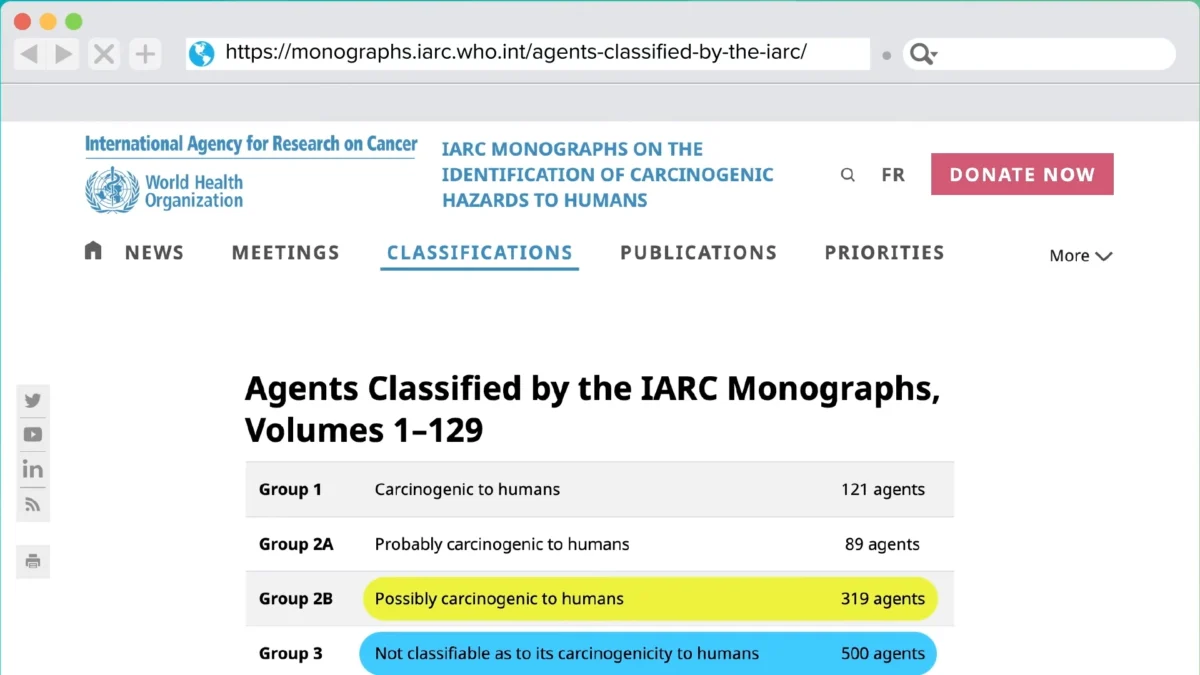
The findings were stark. Red meat was classified as "probably carcinogenic to humans" (Group 2A), indicating limited but suggestive evidence. However, processed meat was definitively placed in Group 1, the category reserved for agents with sufficient evidence of carcinogenicity in humans. This classification signifies that, based on the totality of available scientific evidence, the consumption of processed meat has been proven to cause cancer.
Defining the Risk: Processed Meats and Colorectal Cancer
The implications of this classification are far-reaching. Foods such as bacon, ham, hot dogs, breakfast sausages, and various deli meats, including turkey slices, fall under the umbrella of processed meats. The primary cancer linked to the consumption of processed meat is colorectal cancer, which encompasses cancers of the colon and rectum.
Colorectal cancer stands as the second leading cause of cancer-related deaths globally, surpassed only by lung cancer, which is predominantly linked to smoking. In the United States, it holds the same grim position as the second leading cause of cancer mortality. Crucially, this disease does not exclusively affect older demographics. It is also a significant cause of cancer and cancer-related fatalities among younger individuals, highlighting the broad public health concern associated with its risk factors.
Industry Retaliation and Public Relations Campaigns
The IARC’s findings were met with immediate and fierce opposition from the meat industry. Industry representatives swiftly dismissed the classification as a "dramatic and alarmist overreach." In Italy, one agricultural group issued a press release urging the public to "Just say no to terrorism on meat," framing the scientific findings as an attack on their livelihood.
The backlash escalated into concerted efforts to undermine the IARC’s credibility and funding. The Canadian meat industry, for instance, actively lobbied the Canadian government, urging the Health Minister to cease all funding for the IARC following its investigation into meat. Similarly, the U.S. meat industry pursued parallel actions, attempting to cut off financial support to the agency.
Internal documents and public statements revealed that the IARC has become a focal point of opposition from various corporate interests. These entities have sought to challenge the agency’s cancer evaluations on a range of substances, including agricultural chemicals like Monsanto’s Roundup pesticide, and now, processed meats. Their strategy involves discrediting the agency and diminishing its financial backing. A notable parallel can be drawn to the tactics historically employed by the tobacco industry, which engaged in extensive campaigns to sow doubt about the health risks associated with smoking. The chemical industry has echoed these sentiments, labeling IARC monographs as "dubious and misleading." This pattern of corporate pushback against scientific findings that threaten industry profits is a recurring theme, often mirroring the playbook of "Big Tobacco" and extending to sectors like "Big Booze" and "Big Food."
Challenging the Narrative: IARC’s Methodology
A common talking point disseminated by these industries is that the IARC "never met a carcinogen it didn’t like." This assertion, however, misrepresents the agency’s rigorous and selective evaluation process. The IARC does not arbitrarily label substances as carcinogenic. Instead, it dedicates its resources to investigating agents for which there is already a substantial body of scientific literature indicating a potential carcinogenic hazard to humans. This pre-selection process inherently means that many of the substances evaluated will indeed possess carcinogenic properties, as evidenced by the existing research.

Data available on the IARC’s classifications illustrates this point. A significant proportion of agents evaluated are categorized as "possibly carcinogenic to humans" (Group 2B) or lack sufficient data for a definitive determination. The classification of processed meat as Group 1 is a testament to the overwhelming weight of evidence compiled from numerous studies.
Official Responses: Navigating Public Health Recommendations
In the wake of the IARC report and the subsequent industry counter-offensives, various official bodies have issued statements and guidance. The World Health Organization, in response to questions and concerns following the publication of the meat and cancer report, clarified its position. The organization emphasized that it had not mandated an outright cessation of processed meat consumption. Instead, the report aimed to inform the public that reducing the intake of these products could significantly lower the risk of developing a leading cause of cancer death. The WHO’s stance was essentially: "Your body, your choice. The report indicates that consuming less of these products can reduce your risk."
The IARC itself maintains that its role is solely to evaluate scientific evidence regarding carcinogens. The responsibility for acting upon this information lies with individuals and public health authorities.
Cancer organizations have offered varying degrees of clarity and directness in their recommendations. The American Cancer Society, for instance, has been unequivocal regarding alcohol consumption, stating, "it is best not to drink alcohol." However, their guidance on processed meats has been perceived as more ambiguous, suggesting that individuals might mitigate risks by simply limiting their intake.
In contrast, the European Commission has provided more explicit dietary recommendations. To reduce cancer risk, they advocate for a diet rich in whole grains, pulses (such as beans, split peas, and lentils), fruits, and vegetables. Concurrently, they advise limiting the consumption of sugary, fatty, and salty foods, and explicitly recommend avoiding processed meats like sausages.
When directly questioned about the existence of a safe level of processed meat consumption, the IARC’s response was direct: it is currently unknown whether any safe level exists. This underscores the precautionary principle that underpins their classification and recommendations.
Broader Implications and Public Health Strategies
The IARC’s classification of processed meat as a carcinogen has significant implications for public health policy, dietary guidelines, and the food industry. The scientific consensus established by the IARC provides a critical foundation for public health initiatives aimed at reducing the burden of preventable cancers.
The ongoing debate highlights the complex interplay between scientific evidence, industry interests, and public perception. The strategies employed by industries to counter scientific findings, as exemplified by the historical tactics of the tobacco industry and the current responses from the meat and chemical sectors, underscore the importance of transparency and independent scientific evaluation.
Beyond cancer, emerging research suggests that processed meat consumption may have other adverse health effects. Studies have begun to explore the impact of processed meats on respiratory health, such as lung function, further contributing to the growing body of evidence concerning the negative health consequences of these products.
The information provided by organizations like the IARC serves as a vital tool for empowering individuals to make informed dietary choices. While the ultimate decision rests with each person, understanding the scientific basis for these recommendations is paramount in navigating a landscape often influenced by conflicting information and vested interests. The continued pursuit of research and clear communication of findings remains essential in the global fight against cancer and the promotion of long-term public health.

