

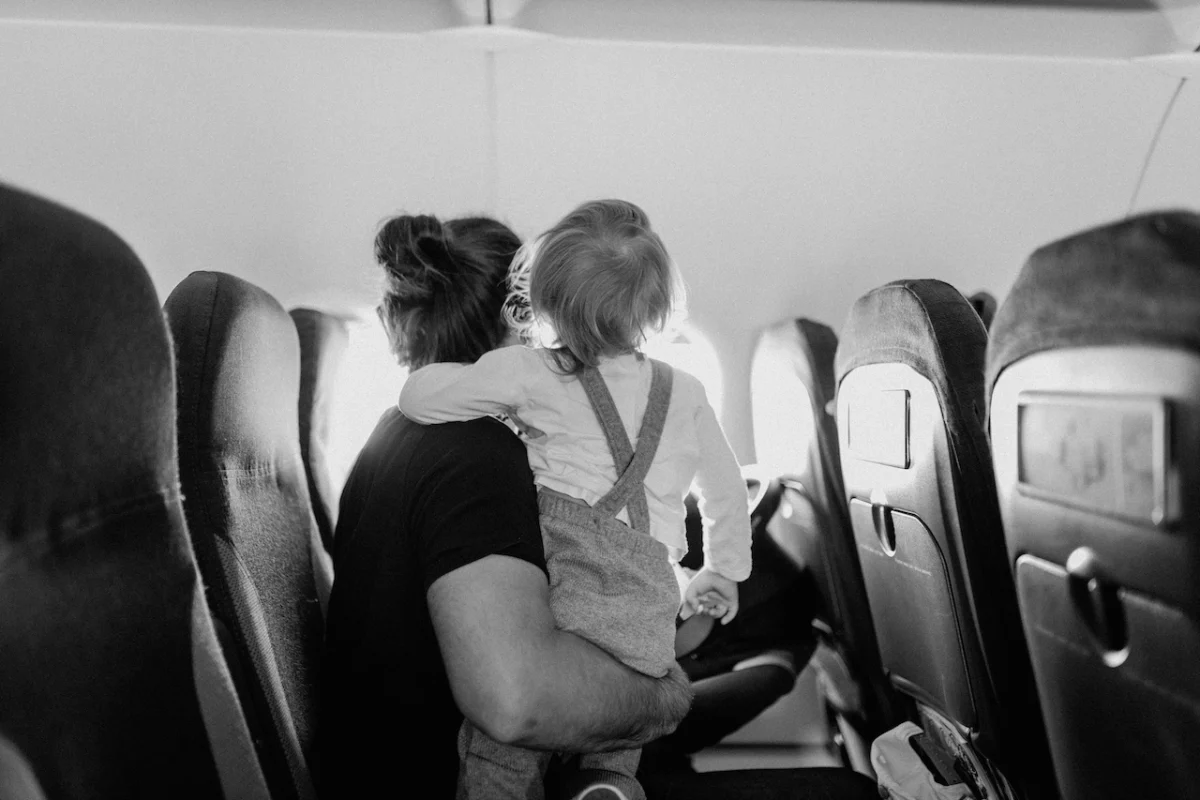
A seemingly ordinary flight from New York to Seattle on Alaska Airlines Flight #23 recently became a powerful testament to the universal call for compassion, transforming a cabin of strangers into a shared community. The incident, which began with the heart-wrenching cries of a distressed infant, ultimately blossomed into an act of collective kindness, echoing a profound spiritual principle found across diverse traditions: the imperative to care for the vulnerable. This event serves as a compelling illustration of how individual acts of empathy can cascade, fostering a sense of shared humanity and offering a potent antidote to the pervasive feelings of isolation and overwhelm often experienced in modern life.
The Universal Call to Care
At its core, every major spiritual and ethical tradition emphasizes a fundamental duty to protect and support those in need. Buddhism, Judaism, Islam, and Christianity, among others, all articulate a universal moral code centered on the well-being of the vulnerable – children, the sick, the elderly, and those facing hardship. This principle, often felt intuitively as an "of course," can, in the hurried pace of daily life, become overshadowed by competing priorities and a sense of personal obligation. The sheer volume of suffering reported globally, amplified by constant media saturation, can lead to a phenomenon of "compassion fatigue," where individuals feel overwhelmed and adopt a posture of detachment as a coping mechanism. The sight of homelessness, poverty, or personal distress, even in our immediate surroundings, can elicit a fleeting impulse of concern followed by a swift return to self-preservation, a shielding against the overwhelming reality of need.
However, as the Alaska Airlines incident demonstrates, moments of profound connection can arise when individuals choose to transcend this self-imposed barrier. The narrative of this flight offers a potent counterpoint to the cynicism and detachment that can characterize contemporary society, suggesting that the innate human capacity for empathy remains a powerful force capable of creating transformative experiences.
A Forty-Year Echo: From Helplessness to Healing
The genesis of this remarkable event can be traced back over four decades, to a similarly challenging transatlantic flight experienced by the article’s author. Traveling from New York to Rome with three young children, the author recalled the familiar "masked dread" that often accompanied their boarding, a reaction from flight attendants anticipating the potential disruption caused by a young family. On this particular occasion, the author’s six-month-old daughter became inconsolable for the first hour of the seven-hour journey. Amidst the escalating stress of her own children’s squabbles and her infant’s distress, the author, a young mother at the time, grappled with a profound sense of helplessness. The usual remedies – checking for ear pain, tummy ache, temperature, or diaper need – proved ineffective.
It was in this moment of acute distress that a fellow passenger intervened. A woman, without hesitation, offered her arms to hold the crying infant. The immediate cessation of the baby’s cries upon being cradled by the stranger brought an immense wave of relief not only to the author but, perceptibly, to the entire cabin. Upon returning the now-sleeping child, the woman’s simple, yet profound, response to the author’s offer of thanks was, "Do it for someone else." This directive became a guiding principle, a promise echoing through the years.
The Alaska Flight #23: A Modern Recurrence
Fast forward forty years, and the author found herself on Alaska Flight #23, once again experiencing the unsettling sound of a distressed infant. This time, however, the response was markedly different. The initial reaction from the 178 passengers was a collective, albeit unspoken, plea for the crying to cease, a familiar human response to discomfort. Yet, for the author, the wail of the baby, estimated to be around 18 months old, triggered a powerful recollection of her own past experience. Instead of embarrassment or frustration, she felt a "strange joy," the joy of recognizing a profound opportunity to fulfill a long-held promise.
The author penned a note to the baby’s mother, explaining her own past experience and offering to help once the seatbelt sign was extinguished. Crucially, the note also conveyed a message of solidarity: "Even if you don’t want to give your child to a complete stranger, just know that there’s at least one person on this flight who knows exactly how you feel, and who is showering you and your baby with love and compassion, no matter what." This act of empathy, reaching out across the aisle and generations, laid the groundwork for what was to unfold.
The Ripple Effect of a Shared Moment
As anticipated, when the opportunity arose, the baby, named Rory, readily accepted the author’s outstretched arms. Whispering stories and cradling Rory close, the author felt a profound sense of peace, a release of what she described as her "grandmother molecules." This initial act of comfort, a direct echo of the kindness she received decades prior, did more than just soothe the child; it began to shift the atmosphere of the entire cabin.
What followed was a remarkable demonstration of collective humanity. The author’s services were called upon multiple times during the flight, and with each instance, a palpable "quiet tenderness" grew among the passengers. Shyness began to dissipate, replaced by a burgeoning sense of shared responsibility. A man traveling with his grandchildren offered a toy monkey for Rory to hug. A young woman engaged in a playful game of peekaboo. The collective mood transformed from one of mild annoyance to a cohesive spirit of love and protection. The entire plane, in essence, became Rory’s "village," her "sangha," a term often used in Buddhist traditions to denote a community of practitioners.
This emergent sense of community, born from a single act of compassion, underscores the profound impact of breaking down perceived barriers. The author’s personal journey, from a feeling of helplessness as a young mother to a confident dispenser of comfort as an elder, mirrors the collective shift experienced by the passengers. The baby’s cries, far from being a mere annoyance, acted as a catalyst, "lancing the boil in my own heart" and liberating a deeper well of empathy that resonated with the shared human experience of pain and suffering.
The Deeper Practice: Compassion Beyond the Cushion
The author’s reflections draw a powerful connection between formal spiritual practice and the lived experience of compassion. While acknowledging the value of daily meditation and retreats with her teacher, Anam Thubten, she candidly admits to ongoing struggles with anger, harshness, and depression. This introspection highlights a core tenet of many spiritual paths: that true practice extends beyond the confines of personal meditation to encompass how one engages with the world. As Anam Thubten, her teacher, emphasizes, the most significant spiritual growth often occurs "once you get up from the cushion." Memorizing scriptures or performing rituals, while important, are ultimately insufficient without the infusion of compassion into daily life.
In his book, "Releasing the Knot of the Mind," Thubten suggests that perceived personal obstacles are often "part of the spiritual journey shared by many people." This perspective offers a powerful reframing, suggesting that the challenges we face, whether personal or encountered in public spaces like an airplane cabin, are not isolated incidents but shared human experiences. The potential for stillness, peace, and unconditional joy exists within the human mind, capable of expanding infinitely to embrace all beings, even amidst difficulty.
World Peace: An Intimate Reality
The author concludes by asserting that the experience on Alaska Flight #23 represents a tangible, albeit intimate, form of "world peace." It is not defined by grand geopolitical shifts but by the immediate, personal act of reaching out to a crying baby or a struggling parent. It is the recognition of kinship with every individual on that plane – the business executive, the teenager, the flight crew, and, most importantly, Rory and her mother.
The baby’s unrestrained cries, in this context, become a powerful expression of the world’s collective grief and suffering, finding solace and release in the outstretched arms of a compassionate stranger. This resonates deeply because, as the author posits, "Somewhere in our depths, we all feel it. We are you. We get it." This is the essence of compassion, the recognition of a shared spiritual journey and the inherent interconnectedness of all beings.
By following the example of the woman who had helped her forty years prior, the author became an active participant in Rory’s emergent "sangha." The distinction between "us and them" dissolved, replaced by a profound sense of unity. This transformation, from a plane of disconnected individuals to a community bound by shared empathy, offers a compelling vision of what is possible when we choose to actively embody the universal call to care for one another. The flight, in its unexpected unfolding, served as a microcosm of a world capable of profound connection, demonstrating that the seeds of peace are often sown in the smallest, most intimate acts of human kindness.

