

In the rapidly evolving landscape of the global fitness industry—valued at over $160 billion annually—the distinction between a standard personal trainer and an elite strength coach often resides in the ability to craft sophisticated, evidence-based programming. While many entry-level practitioners rely on randomized exercise selection, seasoned experts emphasize the necessity of systematic periodization to ensure long-term physiological adaptation and injury prevention. This comprehensive analysis explores the essential frameworks of strength programming, ranging from foundational linear models to advanced neuromuscular strategies such as post-activation potentiation and cluster sets.
The discipline of strength and conditioning has shifted significantly over the past two decades. What was once a collection of anecdotal "gym lore" has been codified into a rigorous academic field, supported by research from organizations such as the National Strength and Conditioning Association (NSCA). Central to this evolution is the concept of progressive overload—the gradual increase of stress placed upon the body during exercise. To manage this stress effectively, coaches utilize various loading schemes tailored to a client’s training age, recovery capacity, and specific performance goals.

The Foundation of Linear Periodization for Novice Trainees
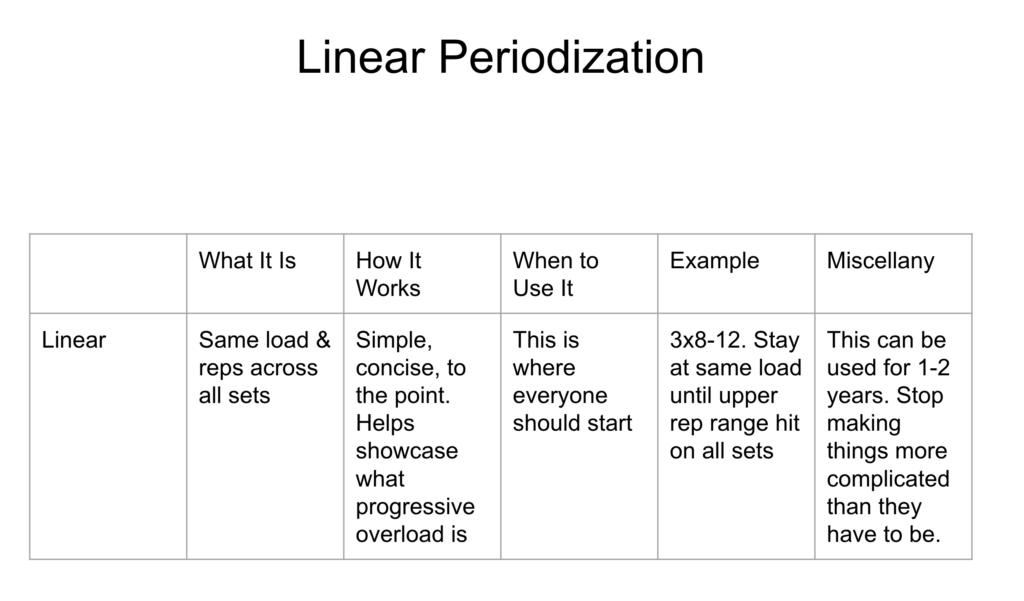
Linear periodization remains the most widely implemented and statistically validated method for introducing beginners to resistance training. This model follows a predictable trajectory: as training volume (reps and sets) gradually decreases over a macrocycle, intensity (the percentage of a one-rep maximum) increases. For the majority of the general population—often referred to in the industry as "gen-pop"—this model provides the necessary structure to build foundational movement patterns without overtaxing the central nervous system.
A standard introductory protocol often utilizes a 3×8–12 rep scheme. The objective is for the trainee to maintain a consistent load until they can successfully complete three sets of 12 repetitions with perfect technical form. Once this "ceiling" is reached, the load is increased, and the rep count is reset to the lower end of the range.
The Four-Week Progression Cycle
In a typical professional setting, a linear progression for a novice client might follow this chronological structure:

- Week 1: Introduction of the load (e.g., 100 lbs) for sets of 10, 9, and 8 reps.
- Week 2: Maintaining the load while increasing volume to sets of 12, 10, and 10.
- Week 3: Further volume accumulation, reaching 12, 12, and 11 reps.
- Week 4: Completion of the goal volume (3×12 at 100 lbs), signaling a requirement for increased intensity in the subsequent month.
This "rinse and repeat" methodology ensures that the musculoskeletal system adapts to the mechanical tension before higher intensities are introduced. Industry experts note that for recreational trainees, linear periodization can remain effective for months, if not years, before a more complex stimulus is required.
Transitioning to Fixed Loading and Volume Targets
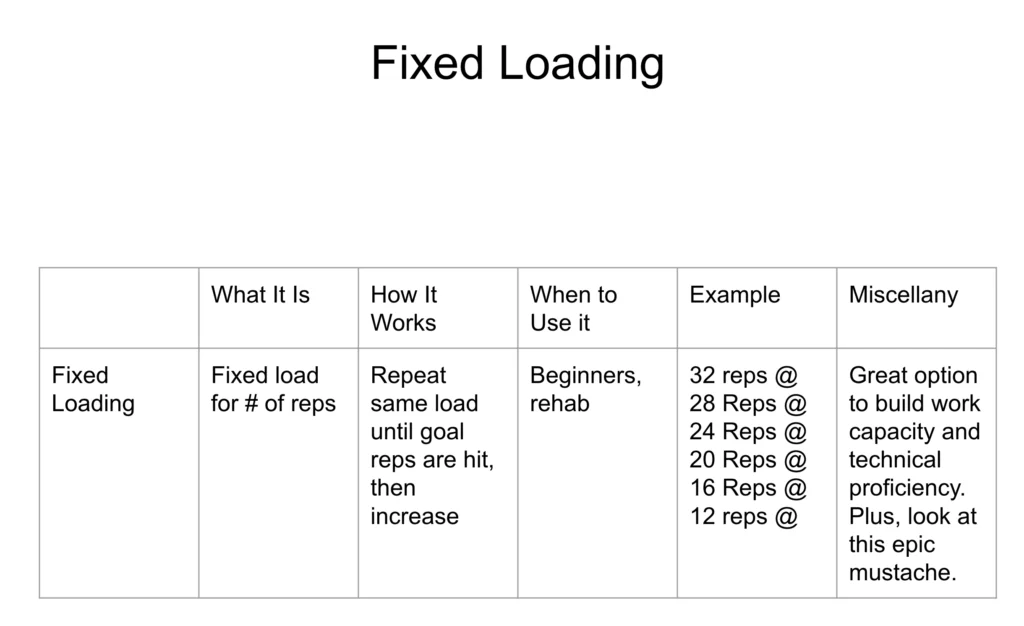
As a trainee moves into the intermediate phase, their ability to recover from high-intensity efforts changes, necessitating a shift toward "Fixed Loading." This strategy moves away from set-and-rep prescriptions and instead focuses on a total repetition goal for a single session using a specific weight.
Fixed loading allows for autoregulation, a concept where the trainee adjusts their effort based on daily readiness. For example, a coach may assign a trap bar deadlift with a target of 32 total repetitions at 225 lbs. Whether the client completes this in four sets of eight or eight sets of four is secondary to the accumulation of the total volume at that specific intensity. This method is particularly effective for hypertrophy (muscle growth) and work capacity, as it encourages the trainee to manage fatigue while pursuing a clear numerical objective.

Undulated Periodization: Managing Competing Demands
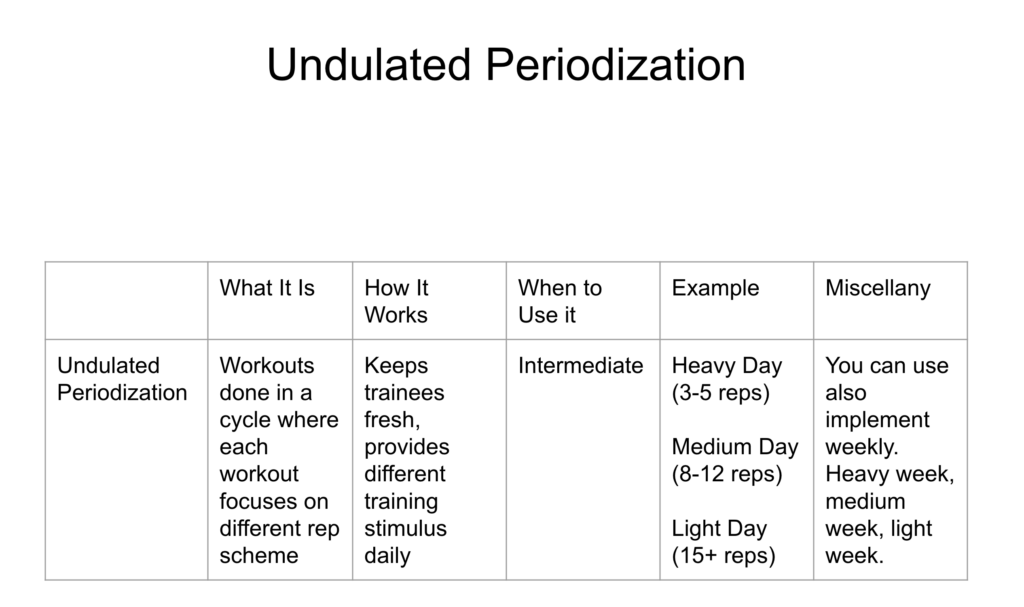
For athletes and advanced trainees, the "Undulated Periodization" model—also known as non-linear periodization—is often the preferred choice. Unlike the linear model, which focuses on one physical quality for weeks at a time, undulated programming rotates between different intensities and volumes within a single week or microcycle.
This approach is highly favored in collegiate and professional strength and conditioning departments because it accounts for the "competing demands" of an athlete’s schedule, including practices, games, and travel. By designating "Heavy," "Medium," and "Light" days, coaches can ensure that the athlete is exposed to maximal strength stimuli, hypertrophy work, and recovery-focused sessions without reaching a state of overtraining.
Implementation Strategies
There are two primary methods for implementing undulation:
- Weekly Emphasis: Week 1 focuses on heavy loads (3–5 reps), Week 2 on moderate loads (8–12 reps), and Week 3 on light/endurance loads (15+ reps).
- Session-to-Session Emphasis: Within a single week, Day 1 might focus on a heavy squat variation, Day 2 on a moderate bench press variation, and Day 3 on a high-repetition deadlift accessory.
Data suggests that undulated periodization may lead to superior strength gains in experienced lifters compared to linear models, primarily due to the frequent rotation of stimuli which prevents the "plateau effect."
Advanced Neuromuscular Strategies: Stage and Wave Loading
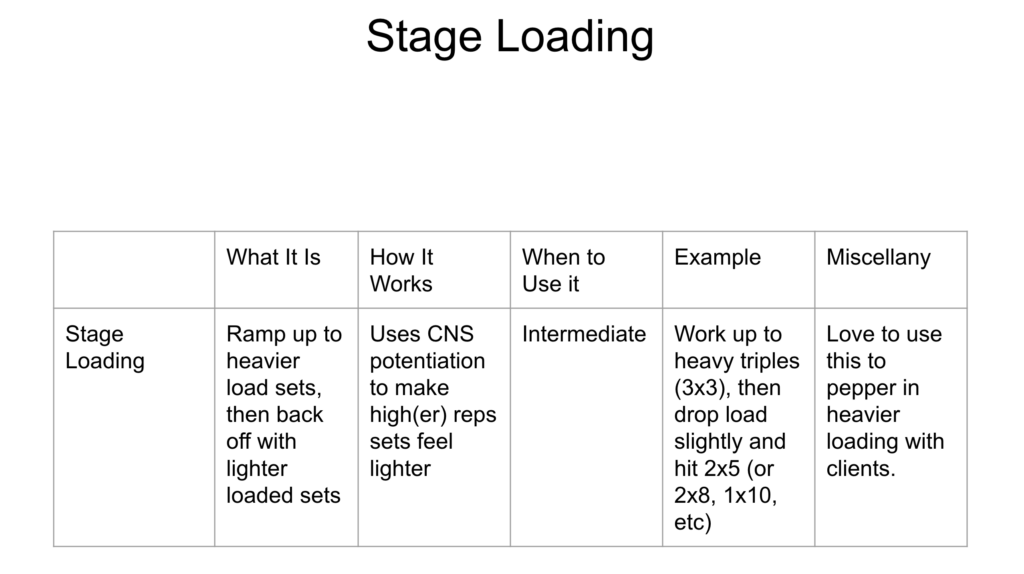
For elite performers, coaches often turn to methods that manipulate the nervous system to produce higher power outputs. "Stage Loading" and "Wave Loading" are both rooted in the physiological principle of Post-Activation Potentiation (PAP). PAP occurs when a heavy contractile effort enhances the subsequent force-generating capacity of the muscles.
Stage Loading Protocols
Developed and popularized in high-performance centers like Cressey Sports Performance, stage loading involves "ramping up" to a heavy set of 3–6 repetitions followed by "back-off" sets at a lighter load with higher repetitions. The initial heavy sets "potentiate" the nervous system, making the subsequent lighter sets feel significantly easier and allowing for greater bar speed and technical precision. A typical progression might involve three sets of three reps at 85% intensity, followed by two sets of ten reps at 65%.
Wave Loading Dynamics
Wave loading follows a similar logic but organizes the intensity in "waves" within a single workout. For instance, a coach might prescribe:
- Wave 1: 3 reps @ 300 lbs, 2 reps @ 310 lbs, 1 rep @ 320 lbs.
- Wave 2: 3 reps @ 310 lbs, 2 reps @ 320 lbs, 1 rep @ 330 lbs.
The completion of the first wave primes the central nervous system, often allowing the trainee to handle heavier loads in the second wave than they would have been able to achieve in a standard straight-set format.
High-Intensity Volumization: Rest/Pause and Cluster Sets
In the pursuit of maximal strength and hypertrophy, "Rest/Pause" and "Cluster Sets" are utilized to increase the density of a workout. While frequently confused, these two modalities serve distinct purposes in a professional program.
Rest/Pause Training is defined by taking a set to technical failure, resting for a brief period (typically 15–30 seconds), and then performing additional repetitions to failure with the same load. This method is primarily used for accessory movements to maximize metabolic stress and muscle fiber recruitment.
Cluster Sets, conversely, involve pre-planned rest intervals between individual repetitions or small groups of repetitions within a single set. For example, instead of performing a straight set of six repetitions, a trainee might perform three "clusters" of two repetitions with 20 seconds of rest in between.
Professional Implications of Cluster Sets
Data indicates that cluster sets allow for:
- Higher Average Power Output: Fatigue is mitigated by the intra-set rest, allowing for faster bar speeds.
- Greater Total Intensity: Trainees can often lift a higher percentage of their 1RM for more total repetitions than they could in a traditional set.
- Technical Integrity: By breaking the set into smaller segments, the trainee avoids the form breakdown often associated with high-repetition heavy lifting.
Industry Impact and Broader Implications
The integration of these advanced programming methodologies represents a broader shift toward "evidence-based practice" in the fitness industry. As the barrier to entry for personal training remains relatively low, the adoption of sophisticated periodization serves as a critical marker of professional expertise.
The implications of this shift are twofold. First, for the client, systematic programming reduces the risk of overuse injuries and ensures that training time is optimized for results. Second, for the industry, the move toward data-driven coaching enhances the credibility of fitness professionals in the eyes of the broader healthcare community.
As strength coaches like Tony Gentilcore and Tasha Wolf Whelan have demonstrated, the "art" of coaching is increasingly underpinned by the "science" of programming. By moving beyond randomized exercise and embracing structured loading schemes, practitioners can transform recreational clients into high-functioning trainees, ensuring that the global pursuit of health and performance is met with the highest standards of professional rigor. In an era where "fitness influencers" often prioritize aesthetics over substance, the commitment to these foundational and advanced programming principles remains the bedrock of sustainable athletic development.

