


One warm late summer evening, in a popular Upper East Side Manhattan steak house in the early 1940s, a profound lesson on the foundational elements of spiritual practice was subtly unveiled, not through complex doctrine, but through the innocent observation of a young boy and the subsequent reflection of a seasoned Zen teacher. This formative encounter, recollected by Les Kaye, a student of Shunryu Suzuki Roshi and author, illuminates the universal significance of "niceness" as a core tenet of spiritual engagement, extending far beyond mere social politeness. Kaye’s reminiscence, published on March 2, 2026, in Tricycle: The Buddhist Review, offers a contemporary lens on timeless principles of compassion and interconnectedness.
A Childhood Encounter and the Essence of "Nice"
The narrative unfolds with a young Kaye, perhaps eight or nine years old, accompanying his father to a dinner with his father’s business associates. The atmosphere was convivial, filled with the joviality and confidence of successful men. Amidst this setting, a seemingly innocuous question was posed to the boy: "So, young man, what are you going to be when you grow up?" Kaye’s response, "Nice," deviated from the expected aspirations of professions like doctor, lawyer, or engineer. His father’s friend pressed further, listing these conventional markers of success. Young Kaye, however, found himself unable to articulate the appeal of these careers, yet he possessed an intuitive understanding of what "nice" felt like. This early experience planted a seed, a nascent recognition of a quality that resonated deeply with his understanding of positive human interaction.
Kaye contrasts this personal recollection with his observations of New York City, a metropolis renowned for its dense population and relentless pace. He describes the palpable friction that can arise in crowded urban environments, citing the chaotic boarding of subways and buses as a microcosm of this everyday struggle. "People bump into each other and get in each other’s way," he notes, illustrating how the absence of orderly queues and consideration can lead to "friction, anger, and tension." This observation, while specific to New York, speaks to a universal human experience of navigating shared spaces, where the potential for discord is ever-present.
However, Kaye immediately counterbalances this depiction of urban chaos with the often-overlooked undercurrent of civility that coexists within such environments. He recalls hearing frequent expressions of politeness: "Pardon me," "Good morning," and "Please go ahead." These simple courtesies, he observed, created a sense of ease and order. "When politeness was expressed," Kaye writes, "I felt the world ebb and flow with a natural rhythm, without conflict, relaxed." This early perception underscores the profound impact of considerate behavior on the quality of our shared experience.

Elevating "Nice" Beyond Convention
Kaye argues that the concept of "nice" transcends mere social conventions. While these conventions are essential for the functioning of any community, their impact is often superficial, "touching only the surface of relationships." The spiritual path, as espoused in Zen practice and Buddhism more broadly, calls for a deeper cultivation of this quality. "Our practice asks us to take nice to the next level," Kaye asserts, "to make it inclusive beyond casual greetings and expand our motive from courtesy to empathy and taking care." This call to action signifies a shift from outward conformity to an internal disposition of genuine concern for others.
The Buddhist orientation towards the elimination of suffering provides the ethical framework for this expanded understanding of "nice." This process begins with a mindful attention to our interpersonal interactions, focusing on those immediately present. The alleviation of suffering, Kaye emphasizes, is not an intermittent activity but a continuous "attitude that continues without a break." It is a pervasive state of being, akin to a constant, gentle awareness rather than a switch that is flipped on and off as needed. This enduring commitment to easing the burdens of others, in both significant and minor ways, is a cornerstone of spiritual development.
The Monks and the Floating Leaf: A Parable of Practice
To further illustrate the profound importance of attending to ordinary activities, Kaye recounts a classic Zen story involving two monks on pilgrimage. Their journey, aimed at expanding their practice and understanding through study with renowned teachers, brings them to a well-known monastery by a creek. As they approach, they witness a single vegetable leaf floating downstream, an omen that causes them to pause in dismay and consider turning back. This subtle disruption, a deviation from perceived order, elicits a strong reaction.
The narrative then introduces another monk, who emerges from a side door with a long pole. This monk swiftly moves to the edge of the creek and retrieves the errant leaf. The two traveling monks, witnessing this act of meticulous care, "smile and quickly resume their journey to the temple." This seemingly small incident is rich with meaning. It highlights the dedication to maintaining purity and order, even in the smallest details, as a fundamental aspect of monastic life and, by extension, spiritual practice. The retrieved leaf, though insignificant in itself, represents the meticulous attention required to uphold the integrity of the environment and the community.
The "Inmost Desire" and a World of No Separation
Kaye connects this parable to the teachings of Shunryu Suzuki Roshi, his own teacher, who spoke of our "inmost desire." This desire, Kaye suggests, is the aspiration for a world permeated by "nice," a world characterized by "no separation, a world of caring and flowing." This vision of a harmonious existence, free from the arbitrary divisions and conflicts that plague human interaction, is the ultimate aim of spiritual endeavor. The tradition of creating such an environment, Kaye notes, is a long and cherished one.

To further articulate this vision, Kaye shares a poem penned by a member of Kannon Do, a Zen center, over two decades prior. The poem beautifully encapsulates the essence of effortless flow and deep interconnectedness:
"Those who flow as life flows
Need no other force
They feel neither wear nor tear.
May I flow like
Silk thread on a sharp needle
Through soft cloth."
This imagery evokes a sense of seamless integration with the unfolding of life, a state of being where actions are performed with precision and grace, without friction or resistance. The "silk thread on a sharp needle through soft cloth" suggests an effortless mastery, a capacity to navigate complexities with inherent ease and profound care. This is the "nice" that spiritual practice aims to cultivate – an active, embodied principle of harmonious existence.
The Broader Implications for Spiritual Practice and Society
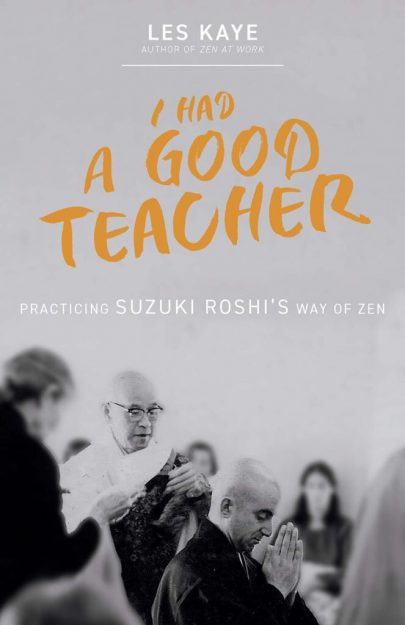
Kaye’s essay, derived from his book I Had a Good Teacher: Practicing Suzuki Roshi’s Way of Zen, underscores a critical insight: the most profound spiritual lessons are often found not in grand pronouncements but in the diligent and compassionate engagement with the mundane. The emphasis on "niceness" as a spiritual foundation offers a practical and accessible entry point for individuals seeking to cultivate a more mindful and compassionate existence.
In an era increasingly marked by division and polarization, the re-emphasis on universal principles of care and interconnectedness is particularly pertinent. The data on social fragmentation and the rise of mental health challenges linked to isolation and lack of social support further underscore the need for practices that foster genuine connection and empathy. A 2023 report by the World Health Organization highlighted the growing global concern over loneliness and its detrimental effects on physical and mental well-being, suggesting that the cultivation of "nice" in its deepest sense could have significant public health implications.
The implication for spiritual communities is clear: to move beyond abstract doctrines and to embed principles of care and consideration into the fabric of daily life. This involves not only personal practice but also the creation of environments where mutual respect, empathy, and a commitment to alleviating suffering are not just ideals but lived realities. The story of the monks and the leaf serves as a powerful reminder that even the smallest acts of attentiveness and care contribute to a larger tapestry of well-being.
The aspiration for a "world permeated by nice" is not a utopian fantasy but a tangible goal achievable through sustained individual and collective effort. By extending our understanding of "nice" from superficial politeness to a deep-seated commitment to empathy and the alleviation of suffering, we can begin to create the flowing, harmonious world that Les Kaye and the Zen tradition advocate for. This journey begins with recognizing the profound power inherent in our everyday interactions and choosing to engage with them, as the poem suggests, with the grace and precision of silk thread passing through soft cloth. The enduring relevance of this simple yet profound lesson lies in its universality, offering a pathway to a more peaceful and connected existence for all.

