

The incidence of breast cancer continues its concerning upward trajectory worldwide, presenting a significant public health challenge. In the United States alone, this trend has resulted in a substantial increase in diagnoses, with some estimates indicating a 40% rise by the turn of the century. While current medical strategies primarily focus on early detection and treatment as the mainstays for preventing mortality, a growing body of research is shifting focus towards primary prevention – identifying and mitigating risk factors to prevent the development of breast cancer altogether. This evolving understanding has brought to the forefront the potential role of infectious agents, particularly viruses, in the etiology of this prevalent cancer.
The Viral Hypothesis in Cancer Development
It is estimated that a significant portion of human cancers, as many as 20%, have an infectious origin. Viruses can contribute to cancer development through various mechanisms. They can directly trigger the disease by activating oncogenes (cancer-promoting genes) or deactivating tumor suppressor genes, which normally function to prevent uncontrolled cell growth. Alternatively, viruses can incite chronic inflammation within tissues, creating an environment conducive to tumor formation over time. In recent years, the hypothesis that specific viruses may be a direct cause of human breast cancer has gained considerable traction within the scientific community.
A Historical Parallel: The Mouse Mammary Tumor Virus
The scientific inquiry into a potential viral link to breast cancer has historical roots, drawing parallels from early discoveries in animal models. Approximately 40 years ago, groundbreaking research involving mice shed light on the mechanisms behind mammary tumors. Scientists observed that when newborn mouse pups from strains with a high incidence of mammary cancer were fostered by mothers from low-incidence strains, and vice versa, the cancer rates in the pups mirrored those of their foster mothers, not their biological ones. This crucial observation demonstrated that the predisposition to mammary cancer was not genetic but rather transmitted environmentally, likely through a non-genetic agent. This realization prompted a pivotal question: could a similar phenomenon be occurring in humans?

The Rise of Bovine Leukemia Virus (BLV) in Dairy Herds
The question of a similar transmission pathway in humans led researchers to investigate the bovine leukemia virus (BLV). BLV had been identified as a virus capable of causing cancer in cattle. At the time of its initial identification, approximately 10% of U.S. dairy cows were infected with BLV. However, over the subsequent decades, the prevalence of BLV within American dairy herds has dramatically increased. Current estimates suggest that nearly half of all U.S. dairy cows are now infected. This escalation in BLV prevalence can be tracked through various epidemiological surveys and industry reports.
- Early 1980s: Approximately 10% of U.S. dairy cows infected with BLV.
- Subsequent Decades: The percentage of affected herds rose significantly. Initial assessments indicated that around 66% of herds tested positive for BLV.
- Further Increases: Milk testing revealed a further increase, with around 80% of herds showing positive results. This trend was particularly pronounced in larger, industrial farming operations, where BLV prevalence approached 100% of herds.
- Present Day: Current data indicates that over 94% of U.S. dairy herds are affected by BLV, underscoring a persistent and pervasive proliferation of the virus within the nation’s dairy industry.
This exponential increase in BLV infection rates within dairy cattle populations raises significant questions about potential human exposure pathways, particularly given the close relationship between humans and dairy farming.
Linking Dairy Consumption, Breast Cancer, and BLV
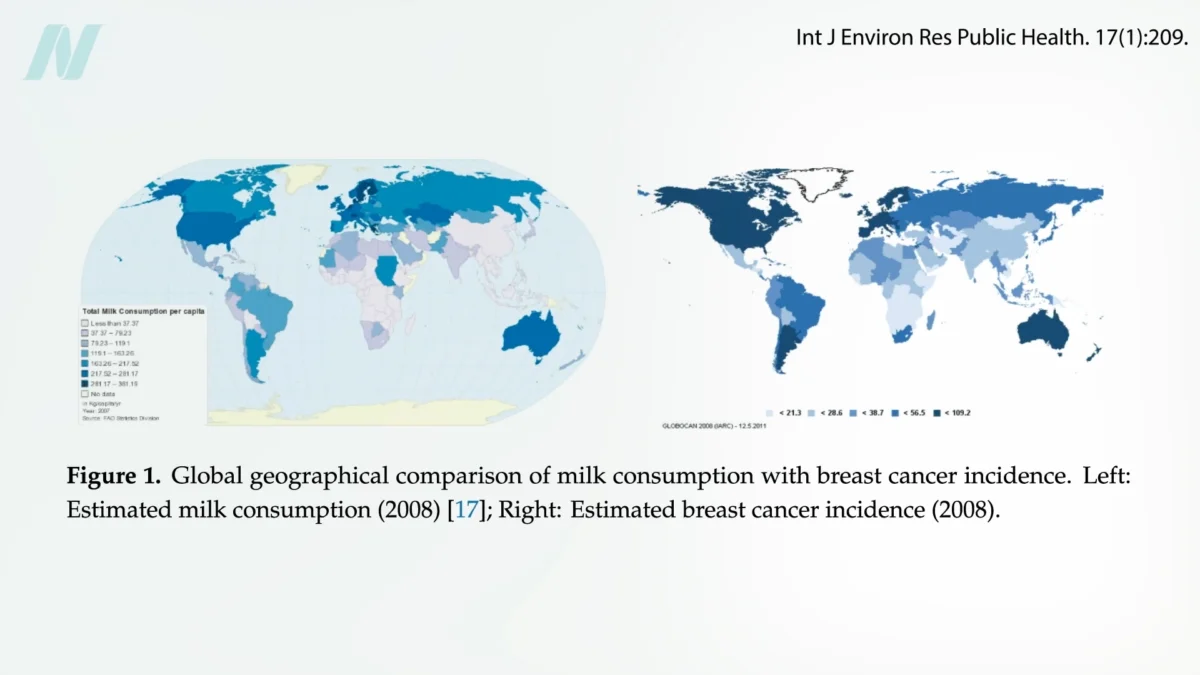
A long-standing observation in nutritional epidemiology has been the correlation between high milk consumption and increased breast cancer incidence in certain countries. While this correlation has been noted for years, the precise mechanisms linking dairy products to cancer risk have remained a subject of intense study. Beyond the presence of BLV, dairy products contain various components that have been implicated in cancer risk, including saturated fat and naturally occurring growth hormones like Insulin-like Growth Factor 1 (IGF-1), which can promote cell proliferation.
However, the potential role of BLV adds a new layer of complexity to this established correlation. Research suggests that the link between dairy consumption and breast cancer incidence is not solely a macro-level observation between nations but may also manifest at an individual level. Studies have indicated that women who consume less dairy, including those who are lactose intolerant, may exhibit a decreased risk of developing breast cancer.
Evidence of BLV in Dairy Products and Human Exposure
Crucially, scientific investigations have confirmed the presence of BLV in both beef and dairy products. Approximately half of the milk and meat samples tested have returned positive for the virus. This contamination pathway is not limited to the final products; BLV can be detected in the environment of dairy farms, including airborne particles, surfaces, and the raw milk itself.
While pasteurization is a common method used to kill pathogens in milk, not all dairy products undergo this process. Raw, aged cheeses, for instance, may retain the virus. Furthermore, the consumption of undercooked meat, such as hamburgers prepared to be "pink in the middle," presents another potential avenue for human exposure to BLV.
Confirming Human Exposure and Infection
The scientific community has gathered substantial evidence confirming that humans are indeed exposed to BLV. Studies have demonstrated the presence of the virus in human populations. More significantly, research has provided evidence of active BLV infections in individuals.
The Pivotal Discovery: BLV in Cancerous Breast Tissue
A critical turning point in this line of research occurred in 2015 with the publication of studies revealing that BLV infection rates were significantly higher in cancerous breast tissue compared to healthy breast tissue. This finding provided a direct link between BLV presence and the development of breast cancer, suggesting a potential etiological role for the virus.
Subsequent research has quantified the potential impact of this association. It is now estimated that as many as 37% of breast cancer cases may be attributable to exposure to the bovine leukemia virus. This figure highlights the substantial public health implications if a causal relationship is definitively established.
Implications and Future Directions
The mounting evidence linking BLV to breast cancer necessitates a comprehensive re-evaluation of current public health strategies and agricultural practices.
- Public Health Messaging: The findings underscore the importance of public health campaigns that educate consumers about potential dietary risks associated with certain food products. Emphasis on primary prevention, including dietary choices that may reduce exposure to infectious agents like BLV, could become a more prominent component of breast cancer prevention initiatives.
- Agricultural Practices: The pervasive presence of BLV in dairy herds raises questions about the sustainability and safety of current dairy farming practices. Further research into methods for controlling and eradicating BLV within cattle populations is warranted. This could involve improved biosecurity measures, enhanced veterinary diagnostics, and potentially the development of vaccination strategies for cattle.
- Regulatory Scrutiny: Regulatory bodies may need to consider enhanced surveillance and testing protocols for BLV in milk and meat products. The implications for food safety regulations and labeling practices are significant.
- Further Research: While the evidence is compelling, further rigorous scientific investigation is required to definitively establish a causal link between BLV infection and human breast cancer. This includes large-scale epidemiological studies, in-depth molecular analyses of viral mechanisms in human cells, and potentially clinical trials to assess the impact of interventions aimed at reducing BLV exposure.
The meat and dairy industries are key stakeholders in this unfolding scientific narrative. Their responses to these findings, whether through increased transparency, investment in research, or adaptation of practices, will be crucial in addressing this complex public health issue. As research continues, the potential for BLV to be a significant contributor to the global burden of breast cancer remains a critical area of focus for scientists, public health officials, and consumers alike. The ongoing exploration of this link promises to reshape our understanding of cancer prevention and the intricate relationship between human health and animal agriculture.

