

The strength and conditioning industry has undergone a significant transformation over the last decade, shifting from a niche discipline focused on elite athletics to a multi-billion-dollar global sector encompassing personal training, online coaching, and wellness consulting. As the market saturates with digital influencers and certified professionals, the criteria for what constitutes a "successful" coach have become increasingly blurred. While superficial markers such as physical appearance, social media following, and aggressive motivational tactics often dominate public perception, industry veterans and educational leaders argue that true professional excellence is rooted in practical experience, psychological adaptability, and pedagogical sophistication.
The Evolution of the Coaching Paradigm
Historically, the role of a strength coach was confined to the weight rooms of professional sports teams or collegiate athletic departments. However, the rise of the "fitness influencer" era has decoupled coaching authority from physical presence. According to market research, the global personal fitness trainer market was valued at approximately $14 billion in 2023 and is projected to grow as health consciousness rises. This expansion has introduced a paradox: while more information is available than ever before, the quality of practical instruction is frequently diluted by the "digital-first" coaching model.
Professional standards now face a critical juncture. The transition from in-person instruction to remote programming, accelerated by the global pandemic in 2020, has created a class of experts who may possess theoretical knowledge but lack the "tactile intuition" developed through thousands of hours of floor-based coaching. Analysts suggest that the long-term viability of the profession depends on reconciling these digital efficiencies with the foundational requirement of hands-on practice.
The Practical Imperative: The Necessity of In-Person Instruction
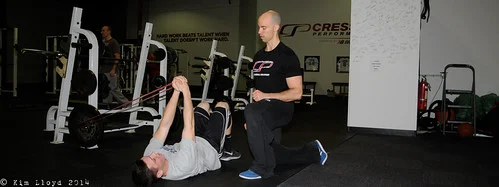
A primary indicator of a successful coach is the ongoing commitment to active, in-person instruction. The digital age has fostered a environment where "expertise" is often measured by social media metrics rather than client outcomes. However, the nuances of human movement—such as the subtle shift in a lifter’s center of gravity during a deadlift or the psychological cues required to overcome a performance plateau—are most effectively mastered in a physical environment.
Data from vocational studies in the fitness sector indicates that coaches who maintain a "hybrid" model—balancing remote programming with at least 15 to 20 hours of weekly in-person sessions—report higher levels of job satisfaction and better client retention. This hands-on engagement serves as a laboratory for the coach, allowing for the real-time testing of theories and the refinement of verbal and non-verbal communication. Industry leaders emphasize that the ability to coach complex movements via a digital interface is almost entirely dependent on the skills first honed on the gym floor. Without this foundation, the "expert" status remains superficial, lacking the integrity of practiced application.
Psychological Versatility and the Introversion-Extroversion Spectrum
The stereotypical image of a strength coach—loud, hyper-extroverted, and aggressively motivating—is increasingly viewed as an incomplete representation of the profession. Modern coaching theory recognizes that psychological versatility is a hallmark of success. While extroversion can facilitate high-energy environments, introversion offers distinct advantages in one-on-one and small-group settings.
Research into leadership styles suggests that introverted coaches often excel in active listening and patience, traits that are essential for long-term client development. Rather than being a liability, an introverted disposition allows for a more observant approach to coaching, where the focus remains entirely on the client’s feedback and movement patterns. The industry is seeing a shift toward "personality-agnostic" coaching, where the professional embraces their natural temperament rather than performing a "persona." This authenticity reduces cognitive load for the coach and fosters a more genuine, trust-based relationship with the athlete, which is a key driver of long-term adherence to training programs.
Pedagogical Advanced: External Cueing and the "Pull" Methodology
The technical proficiency of a coach is best measured by their ability to simplify complex information. In recent years, the work of experts such as Nick Winkelman, author of The Language of Coaching, and Brett Bartholomew has highlighted the efficacy of "external cueing" over "internal cueing."
Internal cues focus on specific body parts (e.g., "squeeze your glutes"), whereas external cues focus on the intended outcome or environment (e.g., "drive the floor away"). Studies in motor learning have consistently demonstrated that external cues lead to faster skill acquisition and better retention because they allow the athlete’s nervous system to self-organize the movement.
Beyond cueing, the concept of "Pull" versus "Push" coaching represents a significant evolution in trainer-client dynamics:
- Push Coaching: Characterized by direct instruction, advice-giving, and solving the client’s problems for them. While necessary for absolute beginners, over-reliance on this method can create dependency.
- Pull Coaching: Involves asking open-ended questions, paraphrasing, and encouraging the client to solve problems autonomously.
This transition toward autonomy-supportive coaching aligns with Self-Determination Theory (SDT), which posits that individuals are more likely to remain committed to a behavior when they feel a sense of competence and choice. Successful coaches strive to educate their clients, effectively "coaching themselves out of a job" by fostering independence in the trainee.
The Commitment to Continuous Education
The strength and conditioning field is characterized by rapidly evolving research in biomechanics, nutrition, and recovery. A defining trait of top-tier professionals is a rejection of the "expert" plateau. Established figures in the industry, such as Dan John and Mike Boyle, are noted for their presence at seminars and their willingness to revise long-held beliefs in light of new evidence.
This commitment to lifelong learning serves as a safeguard against the Dunning-Kruger effect—a cognitive bias where individuals with limited knowledge overestimate their competence. In a profession where misinformation can lead to physical injury, the humility to admit what one does not know is a critical component of professional ethics. High-level coaches often consume vast amounts of literature across diverse fields—including psychology, business, and biology—to provide a holistic service to their clients.
Sustainability and the Mitigation of Professional Burnout
The fitness industry is notorious for high turnover rates, with many trainers exiting the profession within the first 24 months. This is often attributed to a "hustle culture" that glorifies excessive work hours and early-morning "grinding" at the expense of mental and physical health.
While a high work ethic is necessary for establishing a career, the "rise and grind" mentality is frequently unsustainable. Physiological and psychological data suggest that a coach’s effectiveness diminishes after a certain number of consecutive hours on the floor. A coach working their 12th hour of the day is unlikely to provide the same level of attention and safety oversight as they did during their first hour.
Successful, long-term coaches prioritize professional sustainability. This includes:
- Setting Boundaries: Establishing clear working hours to prevent burnout.
- Financial Diversification: Moving away from a purely "dollars-for-hours" model toward hybrid or group training.
- Self-Care: Recognizing that a coach’s own health is a prerequisite for guiding others.
The industry is beginning to push back against the "grind" narrative, redefining professional success not by how many hours one survives in a day, but by the quality of the impact made during those hours.
Strategic Implications for the Future of the Industry
The shift toward a more nuanced, professionalized version of strength coaching has broad implications for the healthcare and sports sectors. As the medical community increasingly looks toward "exercise as medicine" to combat chronic lifestyle diseases, the demand for highly skilled, empathetic, and scientifically grounded coaches will grow.
The distinction between a "trainer" and a "coach" is becoming more pronounced. While a trainer may simply provide a workout, a successful coach provides a framework for physical and psychological transformation. This requires a mastery of communication, a deep well of practical experience, and a sustainable approach to business. For the next generation of professionals, success will likely be found not in the pursuit of viral fame, but in the quiet, consistent application of these five core principles. By focusing on practical coaching, psychological authenticity, effective pedagogy, continuous growth, and personal sustainability, strength coaches can elevate the profession and provide unparalleled value to their clients.

