

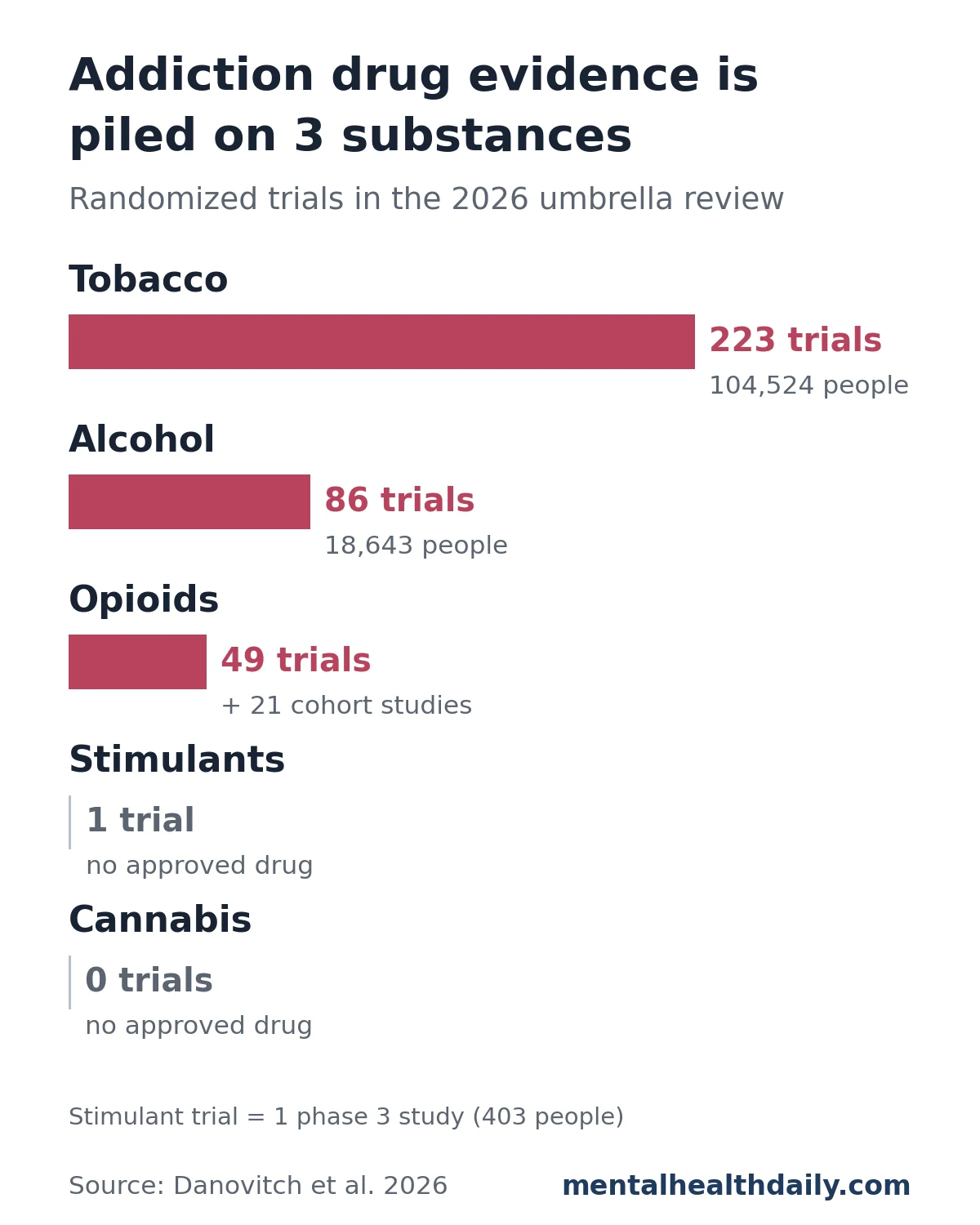
A comprehensive 2026 umbrella review, synthesizing findings from 16 systematic reviews and encompassing 371 clinical trials, has provided a critical global assessment of pharmacotherapy for substance use disorders. Published in CNS Drugs by Danovitch et al., the review highlights robust medication evidence for tobacco and opioid use disorders, identifies modest benefits for alcohol use disorder, and critically underscores a profound lack of approved pharmacological interventions for stimulant or cannabis use disorders. This landmark synthesis offers a panoramic view of the current state of medication-assisted treatment, revealing both significant advancements and pressing unmet needs in the global fight against addiction.
The Global Burden of Substance Use Disorders and the Evolving Role of Medication
Substance use disorders (SUDs) represent a formidable public health challenge worldwide, impacting millions of lives and incurring staggering economic and social costs. Historically, addiction was often viewed through a moral lens or primarily as a problem addressable solely through willpower or counseling. However, scientific understanding has evolved, firmly establishing addiction as a chronic, relapsing brain disease. This shift has propelled the development and adoption of pharmacological treatments, recognizing that for many individuals, medication can be a crucial component of recovery, alongside behavioral therapies and support systems. Despite this progress, public awareness and clinical integration of addiction medications remain inconsistent across healthcare systems globally.
The Danovitch et al. review, current as of January 1, 2026, systematically mapped the entire landscape of approved medications for SUDs, identifying 41 distinct approved drug products, corresponding to 25 unique molecules, across alcohol, opioid, tobacco, and sedative use disorders. This extensive catalog underscores the significant, albeit uneven, progress in developing pharmacological tools to combat these conditions.
Methodology: An Umbrella Review for Comprehensive Insights
The methodology employed in this study, an "umbrella review," represents a high-level synthesis of evidence. Unlike traditional systematic reviews or meta-analyses that pool data from individual trials, an umbrella review aggregates and critically appraises existing systematic reviews and meta-analyses. This approach allows researchers to gain a broad understanding of an entire therapeutic field in a single pass, offering a birds-eye view of accumulated evidence. The Danovitch team meticulously collected the relevant reviews, graded their quality, and summarized the findings from the most robust among them.
A key aspect of their rigorous approach was addressing potential overlap in trials cited across different reviews. The researchers calculated a "corrected covered area" of 0.34%, indicating a very low degree of overlap (anything under 5% is considered slight). This minimized the risk of double-counting evidence, ensuring the findings reflected distinct bodies of research. While the umbrella review inherits the strengths and limitations of its underlying studies, its systematic integration provides an invaluable summary of the current scientific consensus regarding addiction pharmacotherapy.
A Deep Dive into Specific Substance Use Disorders
Tobacco Use Disorder: A Model of Pharmacological Success
Smoking cessation medications stand out as having the deepest and most consistently positive evidence base among all addiction pharmacotherapies. The review highlighted that tobacco cessation drugs are supported by an impressive body of research involving over 100,000 randomized participants across numerous trials. This wealth of data provides a high degree of confidence in their efficacy.
- Varenicline (Chantix/Champix): This partial nicotinic receptor agonist consistently emerged as the most effective single agent. The review found that varenicline more than doubled smoking quit rates compared to placebo, expressed as a risk ratio (RR) of greater than 2. A pivotal study, the EAGLES trial, further cemented varenicline’s standing by randomizing 8,144 smokers to varenicline, bupropion, nicotine patch, or placebo. Varenicline outperformed placebo (Odds Ratio [OR] 3.61), the nicotine patch (OR 1.68), and bupropion (OR 1.75). Crucially, the EAGLES trial also demonstrated that varenicline did not significantly increase moderate or severe psychiatric side effects, even in individuals with pre-existing psychiatric disorders, addressing a prior concern.
- Nicotine Replacement Therapy (NRT): Available in various forms (patches, gum, lozenges, inhalers, nasal sprays), NRT provides controlled doses of nicotine to reduce withdrawal symptoms, thereby aiding cessation. Its efficacy is well-established, offering solid alternatives.
- Bupropion (Zyban/Wellbutrin): Originally an antidepressant, bupropion is also effective in reducing nicotine cravings and withdrawal symptoms.
- Cytisine: While not globally available, cytisine is a cost-effective, plant-derived nicotinic acetylcholine receptor agonist widely used in some parts of the world, particularly Eastern Europe, with demonstrated efficacy comparable to other first-line treatments.
The success in developing effective pharmacotherapies for tobacco use disorder serves as a testament to sustained research efforts and highlights what is achievable with dedicated investment.
Opioid Use Disorder: Balancing Retention and Harm Reduction
The ongoing global opioid crisis underscores the critical importance of effective treatments for opioid use disorder (OUD). The review focused on two primary types of medication-assisted treatment (MAT) that replace illicit opioids with prescribed, longer-acting alternatives: methadone and buprenorphine. Both have been shown to be highly effective in reducing illicit opioid use, improving retention in treatment, and, most importantly, significantly lowering mortality rates. Naloxone, an opioid antagonist that rapidly reverses overdose, is also a critical component of OUD management, though not a treatment for the disorder itself.
- Methadone: As a full opioid agonist, methadone fully activates the mu-opioid receptor. It is typically dispensed in highly regulated clinics due to its potential for misuse and the need for careful dose titration. The Degenhardt et al. meta-analysis, cited in the review, found that methadone demonstrated superior retention in treatment. Six-month retention on buprenorphine was 24% lower than on methadone across 16 trials (RR 0.76) and 23% lower across 21 observational studies involving 155,111 people (RR 0.77). Staying in treatment is a central outcome measure for OUD, as research consistently shows a significant spike in death risk when individuals leave treatment.
- Buprenorphine: This partial opioid agonist has a "ceiling effect" on its opioid activity, making it safer in cases of overdose compared to full agonists. Buprenorphine, often combined with naloxone (e.g., Suboxone), can be prescribed in outpatient settings by qualified physicians, broadening access to care. While retention favored methadone, a smaller Cochrane analysis indicated no significant difference in urine-confirmed illicit opioid use between the two drugs (RR 0.81, 95% CI 0.57–1.17). The Danovitch et al. review concluded that the trade-off involves methadone offering better retention, while buprenorphine offers comparable or potentially better suppression of illicit use among those who remain in treatment.
- Mortality Data: The stakes of OUD treatment are starkly illustrated by mortality data. A 2017 BMJ meta-analysis of 19 cohorts found all-cause death rates of 11.3 per 1,000 person-years during methadone treatment, plummeting to 36.1 after leaving it. For buprenorphine, the rates were 4.3 during treatment versus 9.5 after cessation, with the first four weeks post-treatment identified as a particularly dangerous period. These figures powerfully advocate for sustained engagement in MAT.
- Long-Acting Injectable Naltrexone: For individuals who are opioid-free for a period, long-acting injectable naltrexone (Vivitrol) offers another treatment option. As an opioid antagonist, it blocks the effects of opioids for approximately one month. It is not associated with physical dependence and can be an effective tool for relapse prevention following detoxification.
Alcohol Use Disorder: Modest Progress, Nuanced Approaches
The evidence base for alcohol use disorder (AUD) medications, while present, is characterized by smaller effect sizes, fewer trials per drug, and more frequent disagreements among reviews compared to tobacco or opioid literature. This underscores the complexity of AUD and the challenges in developing universally effective pharmacological interventions. Most of the findings for AUD medications in the umbrella review were drawn from a 2023 JAMA meta-analysis by McPheeters et al.
- Naltrexone: Available in oral (ReVia) and long-acting injectable forms, naltrexone is an opioid antagonist that reduces alcohol cravings and the pleasurable effects of drinking. It has demonstrated the broadest benefits for AUD, primarily by reducing heavy drinking and lowering the risk of relapse by approximately 7% to 17% compared to placebo. It is particularly suited for individuals whose goal is to reduce heavy drinking rather than achieve complete abstinence.
- Acamprosate (Campral): This medication is thought to restore the balance of neurotransmitters in the brain that are disrupted by chronic alcohol use. Its primary benefit, as highlighted in the review, was in helping individuals maintain abstinence. In head-to-head trials, acamprosate and naltrexone did not show significant differences in overall efficacy, but their distinct mechanisms offer different profiles: acamprosate for abstinence, naltrexone for reducing heavy drinking.
- Disulfiram (Antabuse): Disulfiram works by blocking the enzyme that breaks down alcohol, leading to an unpleasant physical reaction (nausea, vomiting, flushing, headache) if alcohol is consumed. Its effectiveness is largely dependent on patient adherence, often requiring supervised dosing, making it a viable option for highly motivated individuals or those with strong support systems.
The nuanced profiles of these medications suggest that personalized treatment approaches, considering an individual’s specific goals (abstinence vs. reduced drinking) and lifestyle, are particularly important for AUD.
The Treatment Desert: Stimulant and Cannabis Use Disorders
Perhaps the most striking and concerning finding of the Danovitch et al. review is the stark absence of any approved medication for stimulant use disorder (e.g., cocaine, methamphetamine) or cannabis use disorder (CUD) anywhere in the world within the review’s scope. This represents a critical unmet medical need, leaving millions of individuals reliant solely on behavioral therapies, which, while effective, may not be sufficient for all.
- Stimulant Use Disorder: The review noted the single completed Phase 3 stimulant trial, ADAPT-2, which investigated injectable naltrexone every three weeks combined with daily oral bupropion in 403 adults with methamphetamine use disorder. This trial showed a positive outcome, offering a glimmer of hope. However, it remains an unapproved combination for this indication, and its isolated success stands against a long history of pharmaceutical failures. A 2019 Addiction meta-analysis of pharmacotherapies for methamphetamine and amphetamine found that most tested drugs—including antidepressants, anticonvulsants, aripiprazole, naltrexone alone, varenicline, and atomoxetine—showed no significant benefit. Only methylphenidate showed low-strength evidence of benefit. The lack of approved medications is particularly alarming given the rising prevalence and associated harms of stimulant use globally.
- Cannabis Use Disorder: For cannabis use disorder, the situation is even more dire, with zero completed trials leading to an approved medication. Despite increasing cannabis legalization and normalization in many regions, the recognition of CUD as a clinical entity is growing, and the absence of pharmacological options leaves a significant gap in treatment resources.
This critical gap highlights a profound disparity in research funding and development success across different SUDs. The biological complexities of stimulant and cannabis addiction, coupled with perhaps less historical investment compared to tobacco or opioids, contribute to this significant therapeutic void.
Pipeline Agents and Future Prospects
While the current landscape for some SUDs is bleak, the review did acknowledge a few pipeline agents that could offer future hope. For alcohol use disorder, dutasteride, low-dose ondansetron, and zonisamide each had one Phase 3 trial with favorable results, though Danovitch et al. cautiously described these single-trial findings as "hypothesis-generating." Ondansetron, for instance, showed benefits in a prespecified heavy-drinking subgroup but missed its primary endpoint in the full trial population.
More broadly, GLP-1 receptor agonists, such as semaglutide, are generating significant interest. These medications, primarily used for diabetes and weight loss, are currently in Phase 2 and 3 trials for several substance use disorders. Their potential lies in their influence on reward pathways and appetite regulation, which may translate into benefits for reducing cravings and addictive behaviors. However, as of 2026, none were approved for addiction indications, underscoring that significant research and regulatory hurdles remain.
Limitations of the Umbrella Review and Broader Implications
While comprehensive, the Danovitch et al. umbrella review has inherent limitations. It is a snapshot in time, reflecting approvals and evidence up to January 1, 2026. As an aggregation of reviews, it inherits any biases or methodological limitations present in the underlying studies. Furthermore, the review focused solely on medication, omitting the crucial role of behavioral therapies, psychosocial support, and harm reduction strategies, which are integral components of comprehensive addiction treatment. It also implicitly highlights differences in regulatory approval processes and medication availability across different countries.
The findings carry significant implications for public health, clinical practice, and research policy:
- Public Health: The review underscores the importance of integrating evidence-based pharmacotherapy into public health strategies for addiction. Ensuring access to effective medications for tobacco, opioid, and alcohol use disorders can dramatically improve outcomes and reduce societal burdens.
- Clinical Practice: Healthcare providers must be educated and empowered to prescribe and manage addiction medications. Reducing barriers to access, such as the X-waiver for buprenorphine prescribers (though this was rescinded in the US in 2023, the sentiment for reducing barriers remains relevant in other contexts and for other drugs), is crucial.
- Research Funding: The stark absence of approved medications for stimulant and cannabis use disorders necessitates a significant increase in research funding and development efforts. This gap represents a major equity issue in addiction treatment.
- Policy Advocacy: Policymakers should champion initiatives that promote medication access, support research into underserved areas, and destigmatize addiction as a treatable medical condition. The success seen in tobacco cessation offers a blueprint for what focused effort can achieve.
In conclusion, the 2026 umbrella review by Danovitch et al. provides an invaluable benchmark for understanding the current landscape of addiction pharmacotherapy. It celebrates the successes in treating tobacco and opioid use disorders, offers practical guidance for alcohol use disorder, and, most urgently, issues a compelling call to action for intensified research and development into effective medications for stimulant and cannabis use disorders. The journey toward comprehensive, evidence-based addiction care continues, with medication playing an increasingly vital, yet still evolving, role.

