

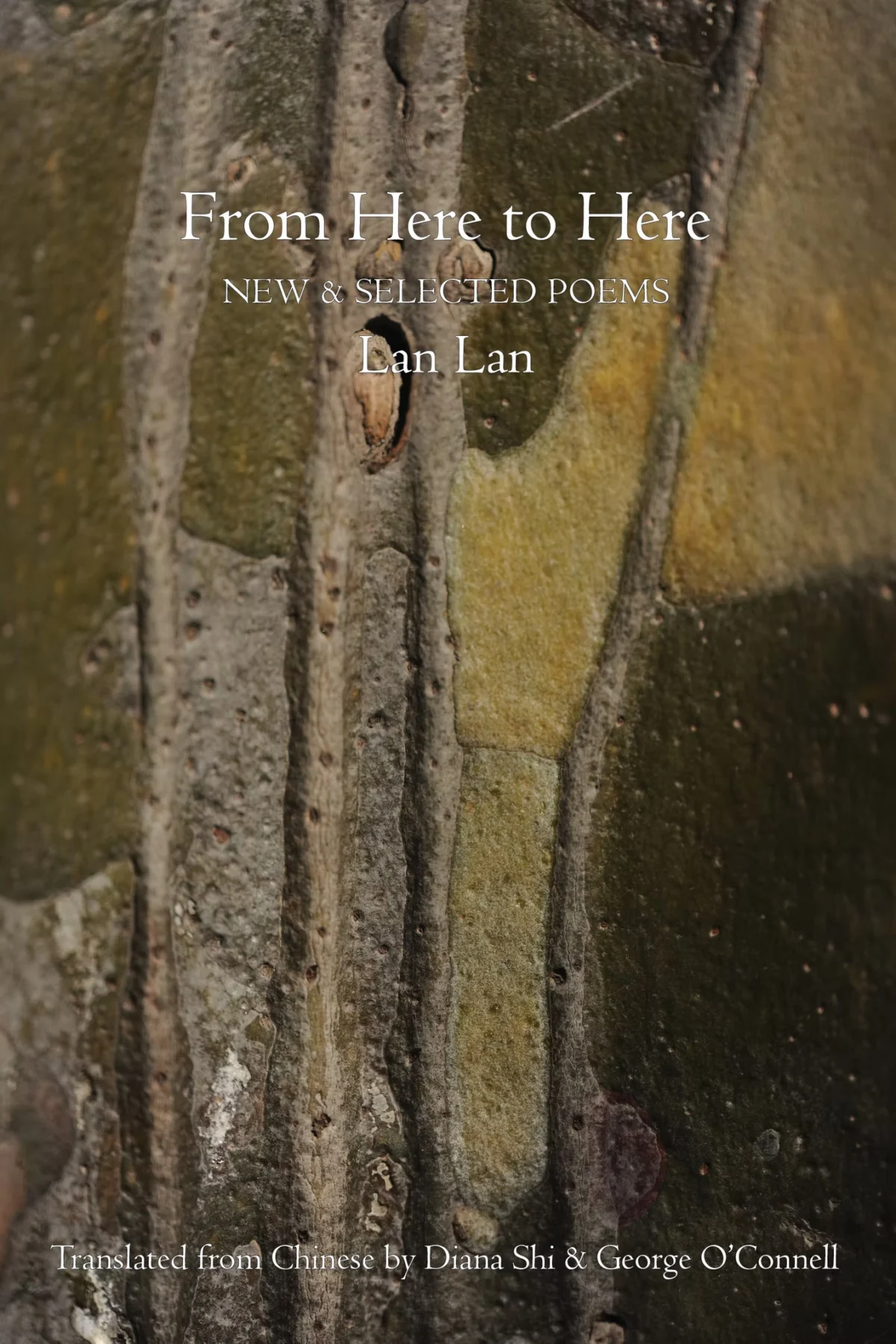
Eminent Chinese poet Lan Lan is set to captivate audiences in Brooklyn on Wednesday, July 22, as Tricycle hosts a special poetry reading at the Poetry Society of America. The event will showcase selections from her acclaimed collection, "From Here to Here," offering a rare opportunity for New York’s literary community to engage with the profound and evocative work of one of China’s most celebrated contemporary voices. Joining Lan Lan on stage will be fellow prominent poet Wang Jiaxin, alongside two other distinguished contemporary poets, promising an evening rich in literary exchange and cultural insight. Attendees can secure their place at this anticipated gathering by registering through the provided link for the Tricycle Summer Poetry Reading.
The collection "From Here to Here" represents a significant contribution to contemporary Chinese literature, presenting a body of work that has garnered critical acclaim both domestically and internationally. Lan Lan, whose publishing career began at the remarkable age of 14, has established herself as a prolific and influential author. Her extensive bibliography includes numerous poetry volumes, prose poems, essays, literary criticism, and collections for children. Her influence extends beyond China’s borders, with foreign language collections published in Russian, Thai, and Spanish, underscoring her global reach. Among her many accolades are the prestigious Poetry and People International Poetry Prize, the Yuan Kejia Poetry Award, the Chinese Media Literature Prize, and the Su Shi Poetry Award. Her contributions to the cultural landscape have been further recognized by her designation as an honorary citizen of Chios and Oinousses, islands historically linked to the ancient Greek poet Homer.
The selection of poems featured in "From Here to Here" offers a window into Lan Lan’s distinctive poetic sensibility, characterized by its lyrical depth, keen observation of the natural world, and poignant reflections on memory, time, and human experience. The poem "Wild Sunflower," for instance, conjures a potent image of transient beauty and impending autumnal change. The lines, "Come autumn, this wild sunflower’s head / will be severed," immediately establish a tone of melancholy and the inevitability of loss. The sunflower’s face, "melding / with the sunset’s golden smoke," becomes a symbol for fleeting moments and the vastness of a past summer, now receding into memory. The poem grapples with themes of passage and remembrance, asking, "What passage then? What crossed horizons of buckwheat blooms?" The sense of enduring grief is palpable as the speaker declares, "Old tales drowned in grief / for which once more I perish." The "unreal wild sunflower" and its "unreal / voice, singing" highlight the subjective nature of perception and the haunting persistence of the past. The piercing imagery of the "Autumn wind the poison thorn stabbing in my chest" underscores the emotional vulnerability and enduring pain associated with memory.

"In My Village" shifts focus to a more intimate portrayal of rural life, where the passage of time is marked by natural rhythms. "In my village, time runs swift. / One flock of birds takes wing / as another lands," illustrating a sense of constant, yet gentle, movement. The wind, personified as a messenger, announces the arrival of summer, a season that brings with it the vibrant life of the fields: "Quail at noon / plunge through tall grass. / In the fields, foxtail / sees the wheat breed grain." This poem connects the observer to the natural processes, suggesting a profound empathy: "Whoever stops to cherish this / shall cherish me." The poem concludes with a tender image of community and quiet celebration: "In my village / candlelight saves its window for a serenade. / Through the fragrance of roses, / go there. All night long, / the murmuring creek / restless in moonlight." This paints a picture of a village steeped in tradition and simple pleasures, where human connection is interwoven with the natural world.
"Rain in a Small Town" offers a more complex and atmospheric exploration of memory and perception, particularly in the context of familial and communal spaces. The rain acts as a catalyst, drawing elements of life closer: "In rain, everything draws close, / wood-wheeled carts, black umbrellas, / the red door of home, freshly painted." This initial scene evokes a sense of domestic warmth and shared experience, with parents recalling "ordinary things / from years ago, their faces / plain as sculptor’s clay." However, the poem then pivots, revealing the unsettling nature of memory and change: "In rain, everything moves off, / the dripping Chinese parasol trees, blurred roads, / dim headlights." The familiar landscape becomes indistinct, and human presence is rendered as shadowy forms. The external world, with its "creaky windlass" and "storefronts gaze on pavement," seems both distant and vaguely ominous. The latter half of the poem delves into a sense of alienation and the erosion of familiarity: "Less familiar people. / Less familiar noise and silence." The speaker’s solitary reflection beneath a fir tree, listening to an "old temple bell," suggests a search for grounding amidst this disquiet. The final image, "Through foggy mist, / a flame licks itself / like a Buddha lamp in a rundown temple," is particularly striking, conveying a sense of introspection, perhaps even spiritual contemplation, in a setting that is both sacred and decaying.
The translations of these poems by Diana Shi and George O’Connell are crucial to their reception in the English-speaking world. Shi and O’Connell have a long-standing collaborative history in translation, having jointly launched Pangolin House, an international journal of poetry and art, in 2012. Their expertise in bridging linguistic and cultural divides is evident in their nuanced rendering of Lan Lan’s work. George O’Connell, an award-winning poet himself, has received significant recognition for his translation work, including two US National Endowment for the Arts Literature Translation Fellowships. His academic background includes serving as a Fulbright professor at Peking University and National Taiwan University. Diana Shi has also had a prolific career, with notable translations including extensive selections from Arthur Sze’s work into Chinese and Jane Hirshfield’s I Wanted Only a Little published in 2024. Their joint translation of Lan Lan’s "From Here to Here" is published by Slapering Hol Press, further cementing their commitment to promoting international poetry.
The event on July 22nd is more than just a poetry reading; it is a cultural bridge, facilitating dialogue and understanding between Chinese and American literary circles. The Poetry Society of America, a venerable institution dedicated to fostering a vibrant poetry community, provides an ideal venue for such an exchange. Tricycle, a leading magazine and online resource for Buddhist teachings and practices, often features poetry that resonates with themes of mindfulness, impermanence, and the human condition. Their involvement in hosting this event suggests an appreciation for how poetry can serve as a vehicle for profound contemplation and connection. The inclusion of Wang Jiaxin, himself a significant poet whose work has also been translated by O’Connell and Shi, indicates a curated selection aimed at presenting a cohesive and compelling literary experience. Wang Jiaxin’s translations, such as Darkening Mirror, demonstrate his own engagement with Western literary traditions, making his presence alongside Lan Lan a thoughtful pairing.

The broader implications of such literary events extend beyond the immediate audience. In an era where global interconnectedness is increasingly vital, the sharing of artistic expressions from different cultures fosters empathy and challenges preconceived notions. Lan Lan’s poetry, with its universal themes presented through a distinct Chinese lens, offers a valuable perspective on shared human experiences. The "Wild Sunflower" speaks to the ephemeral nature of beauty and life, a sentiment understood across all cultures. "In My Village" celebrates the simple joys and rhythms of community, a theme that resonates deeply in a rapidly modernizing world. "Rain in a Small Town" captures the complex interplay between memory, family, and the changing landscape of the self, a universal human journey.
The act of translation itself is a significant cultural undertaking. The painstaking work of Shi and O’Connell ensures that the subtle nuances, emotional depth, and stylistic intricacies of Lan Lan’s poetry are accessible to an English-speaking audience. Their dedication to this project, as evidenced by their prolific output and critical acclaim, highlights the vital role translators play in expanding our literary horizons and fostering cross-cultural appreciation. The publication of "From Here to Here" by Slapering Hol Press further contributes to the growing body of translated Chinese literature available in the United States, enriching the literary landscape for both readers and writers.
As the literary community anticipates this summer event, it signifies a moment of cultural dialogue and artistic appreciation. The Poetry Society of America, in partnership with Tricycle, is providing a platform for a distinguished poet to share her craft and insights. The presence of Wang Jiaxin and other contemporary poets further enhances the event’s significance, creating a rich tapestry of voices and perspectives. The selection of Lan Lan’s work, particularly from a collection as introspective and evocative as "From Here to Here," promises an evening that will resonate with attendees long after the final poem has been read, underscoring the enduring power of poetry to connect us to ourselves, to each other, and to the world around us. The event serves as a reminder of the vital role that poetry plays in fostering understanding and illuminating the shared human experience across diverse cultural landscapes.

