

Weight stigma, often described as the "last acceptable" form of bias, is a deeply entrenched societal issue with profound implications across various facets of life, particularly within healthcare settings. This pervasive discrimination and stereotyping against individuals perceived as overweight or obese manifests in myriad ways, impacting mental health, physical well-being, and access to essential services. While often dismissed as mere prejudice, a growing body of research illuminates the tangible and detrimental effects of weight bias, revealing a disturbing pattern of mistreatment and inequity that begins in childhood and extends into adulthood, even within the medical profession itself.
The Widespread Reality of Weight Stigmatization
The sheer frequency of weight stigmatization is staggering. A study involving fifty overweight women who meticulously documented instances of bias over a single week recorded more than a thousand occurrences. This translates to an average of approximately three instances of harassment, encountering physical barriers, or receiving perceived poorer service per day for overweight women. While obese men report experiencing discrimination at roughly one-third the rate of women of similar size, it remains a daily concern for them as well.
This is not a matter of subjective perception; empirical evidence underscores the reality of this bias. Research employing professional actors to portray job applicants with theatrical prosthetics to appear overweight consistently demonstrated significantly higher rates of discrimination compared to when the same actors appeared at their normal weight. This employment bias was found to be particularly pronounced against overweight women, highlighting a gendered dimension to weight-based discrimination.
Societal Perceptions: A Hierarchy of Disgust
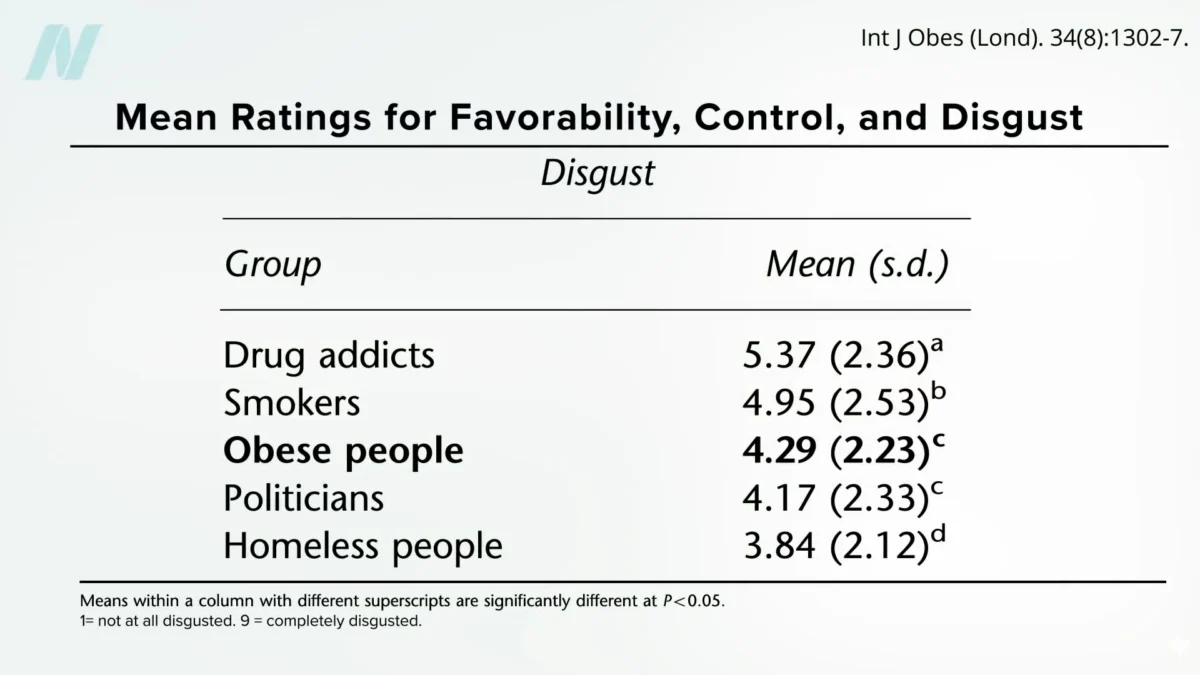
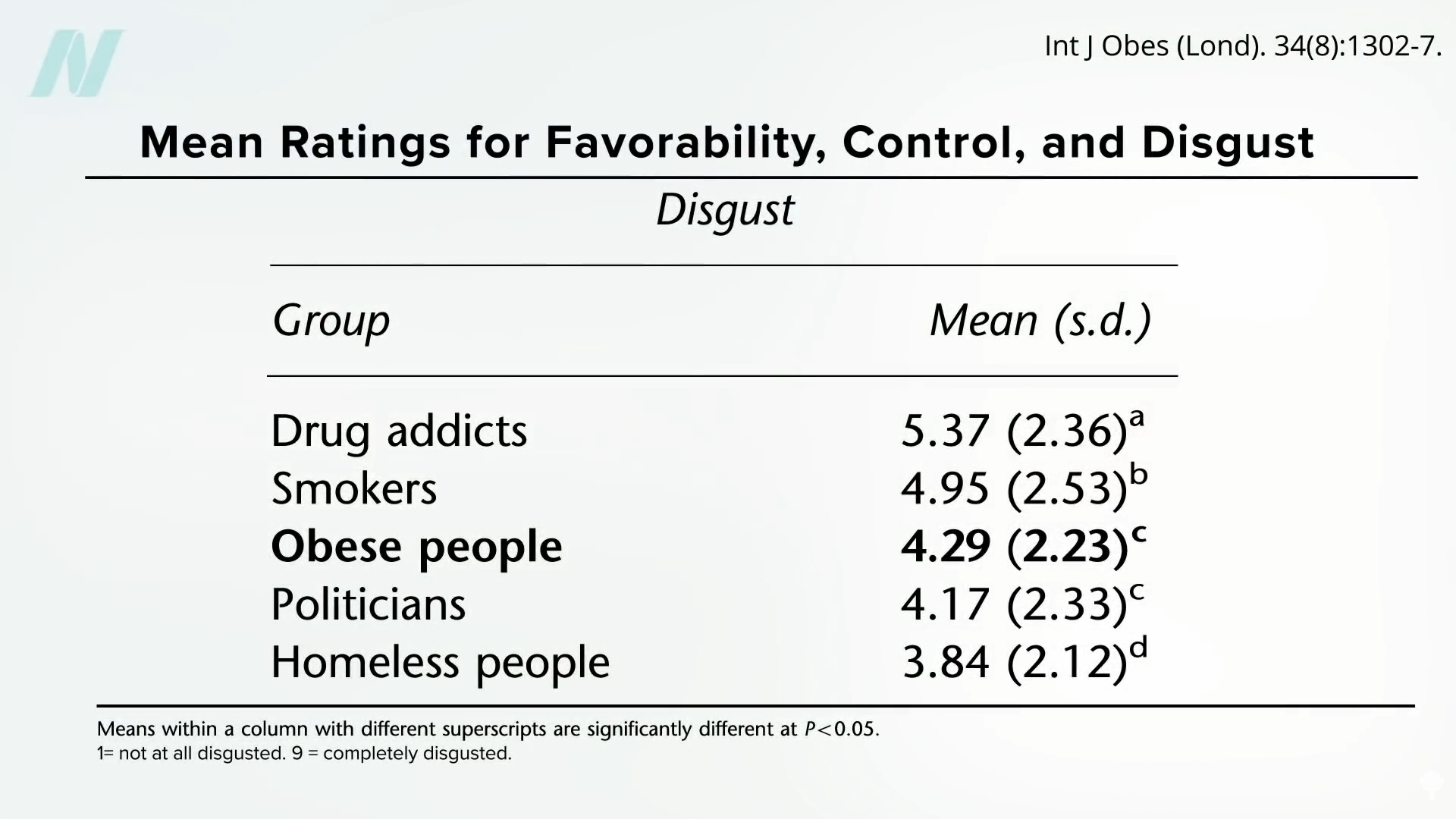
Attitudes towards individuals based on their weight can be starkly revealed through surveys. In a comparative analysis of sixteen stigmatized social groups, including those experiencing homelessness, individuals struggling with addiction, and smokers, obese people were found to be perceived as more disgusting than all but drug addicts and smokers. Further research indicated a virtual tie in perceived disgust between obese individuals and politicians, underscoring the depth of negative societal sentiment. This suggests a societal inclination to view obesity not merely as a health condition but as a moral failing or character flaw.
The Early Roots of Weight Bias
The harmful effects of weight stigma begin at an alarmingly young age. Children as young as three years old have been observed to describe overweight peers using negative descriptors such as "mean," "stupid," "lazy," and "ugly." This negative language and association unfortunately intensify with age, indicating that societal prejudices are internalized from a very early stage of development.

A landmark study published in 1961 provided early, albeit concerning, evidence of this trend. Children in summer camps and schools across diverse social, cultural, and ethnic backgrounds were shown pictures of various children, including those with physical disabilities and an obese child, and asked to rank whom they liked best. In every group tested, the obese child consistently ranked last, indicating a remarkable uniformity in negative perception.
The grim reality of this trend was further highlighted by a 40-year follow-up study published in 2003. This research, aptly titled "Getting Worse: The Stigmatization of Obese Children," revealed that the obese child was liked even less in the follow-up study than in 1961. This deterioration in attitudes mirrors broader societal shifts, with national surveys recording a nearly 70% increase in perceived weight discrimination since the mid-1990s.
The Role of Educators and Parents
The pervasiveness of weight bias is further perpetuated by attitudes within educational institutions. A significant portion of teachers and school staff surveyed expressed the belief that becoming obese is "one of the worst things that could happen to a person." This sentiment can influence how educators interact with and support their students.
Even parents, who are typically expected to provide unconditional support, can exhibit bias. Studies have indicated that parents may offer less encouragement and support for higher education for their overweight daughters compared to their thinner siblings. As noted by prominent obesity researchers, "It is strong prejudice indeed when parents discriminate against their own children," underscoring the deeply ingrained nature of these negative perceptions.
Weight Stigma Within the Medical Profession
Perhaps one of the most concerning arenas where weight stigma is prevalent is within healthcare. A representative national survey revealed that over half of physicians held negative views of obese patients, describing them as "awkward, unattractive, ugly, and noncompliant." Alarmingly, about a quarter of nurses agreed or strongly agreed with the statement, "Caring for an obese patient usually repulses me."
This antagonism has tangible and serious health consequences. Obese women, for instance, face higher risks for certain cancers, including cervical, endometrial, and ovarian cancers. However, they are less likely to receive recommended screenings. Studies show that morbidly obese patients have approximately half the odds of receiving their recommended pelvic exams. While patient avoidance may play a role, some healthcare providers actively turn away obese patients. A survey of OB/GYN practices in Florida found that as many as one in seven refused to see heavier women, setting weight cut-offs for new patients as low as 200 pounds.
Even physicians who outwardly appear to welcome obese patients have been found to allocate them less time and attention. In a study where physicians were presented with a migraine patient’s chart, varying only the described weight of the patient, those presented with an obese patient reported intending to spend approximately 28% less time with them compared to an average-weight patient. Furthermore, recorded doctor-patient visits have revealed that physicians tend to build less emotional rapport with overweight and obese patients.
The Paradox of Obesity Specialists
The issue is not confined to general practitioners; even obesity specialists themselves have exhibited increasingly explicit anti-fat attitudes. Between 2001 and 2013, surveys indicated a worsening trend, with obesity specialists describing fat people as significantly more lazy, stupid, and worthless compared to thin individuals. This bias has even permeated the medical literature, with examples such as a statement in the Annals of Internal Medicine labeling obesity as an "aesthetic crime: it is ugly."
A Facade of Respect?
Despite these deeply held negative attitudes, there is a concerning paradox: obese patients often report satisfaction with their healthcare providers. A study titled "Obese Patients Overestimate Physicians’ Attitudes of Respect" found that while physicians harbored negative sentiments towards their obese patients, the patients themselves expressed satisfaction with their care. This discrepancy leads researchers to question the authenticity of the patient-physician relationship, suggesting that physicians may be adept at concealing their biases, thereby creating a false sense of respectful care. This ability to mask disdain raises profound questions about the integrity of medical interactions and the potential for subtle, unacknowledged discrimination to persist.
The Broader Implications and Future Directions
The pervasive nature of weight stigma extends beyond individual encounters, creating systemic barriers to health and well-being. The fear of judgment, dismissal, or mistreatment can deter individuals from seeking necessary medical care, leading to delayed diagnoses and worsened health outcomes. This cycle of stigma and avoidance perpetuates health disparities, disproportionately affecting marginalized communities who may already face barriers to healthcare access.
Addressing weight stigma requires a multi-faceted approach. Education and training for healthcare professionals are crucial to challenge ingrained biases and promote culturally competent care. Public awareness campaigns can help to destigmatize obesity and foster a more compassionate societal understanding of weight diversity. Furthermore, policy changes that protect individuals from weight-based discrimination in employment, housing, and healthcare are essential to create a more equitable society.
The research presented here, drawn from studies and observations over several decades, paints a clear and troubling picture of weight stigma as a persistent and damaging force. The data unequivocally demonstrates that this is not a matter of individual sensitivity but a systemic issue requiring urgent attention and concerted action from individuals, institutions, and policymakers alike. The next step in understanding this complex issue involves exploring "The Burden of Weight Bias," delving deeper into the profound psychological and physiological toll it exacts on those who experience it.

