

The common corporate criticism leveled against the scientific nutrition literature—that the credibility of observational studies is inherently questionable—warrants a thorough examination. While randomized controlled trials (RCTs) are widely recognized as the gold standard for assessing interventions, particularly pharmaceutical drugs, their application in nutrition research presents significant methodological challenges. These challenges necessitate the reliance on observational studies, which, despite their limitations, provide crucial insights into the long-term relationship between diet and health outcomes. The assertion that observational data is inherently inferior, often amplified by industry-funded research, overlooks the practical realities of nutritional science and the distinct requirements for establishing dietary recommendations versus medical prescriptions.
The Imperative of Observational Studies in Nutrition
The development of diet-related diseases, such as cardiovascular disease and certain cancers, often unfolds over decades. This protracted latency period makes it exceptionally difficult, if not impossible, to conduct RCTs that adhere to the rigorous standards applied in drug trials. For instance, participants cannot realistically consume a placebo food that perfectly mimics the taste and experience of, say, a high-fat diet, nor can they be expected to adhere to strictly assigned dietary regimens for the many years required to observe definitive health outcomes like cancer incidence or mortality.
Consequently, researchers must turn to observational studies. These studies involve tracking large cohorts of individuals over extended periods, meticulously recording their dietary habits and monitoring the development of various diseases. By analyzing these vast datasets, scientists can identify correlations between specific foods or dietary patterns and the prevalence of particular health conditions. The argument often put forth by critics is that these correlations do not equate to causation, and that confounding factors—lifestyle habits, genetics, socioeconomic status—can distort the findings.
However, a comparative analysis of data from population-based observational studies and RCTs reveals a striking degree of convergence in their findings. Research comparing the outcomes of these two study designs has indicated that, on average, there are minimal discrepancies. The effects observed in both types of studies tend to be not only in the same direction but also of a similar magnitude in approximately 90% of the treatments examined. This suggests that, despite their methodological differences, observational studies often yield results that are remarkably consistent with those from more controlled experimental designs.
A pertinent example often cited to illustrate the complexities of interpreting study results is the historical debate surrounding hormone replacement therapy (HRT). Early observational studies suggested that women taking certain HRT medications, like Premarin, experienced a lower incidence of heart attacks. This finding, however, was starkly contradicted by subsequent large-scale randomized controlled trials, which indicated an increased risk of cardiovascular events for women on HRT. A deeper dive into the data from these studies revealed that the discrepancies were largely attributable to the timing of HRT initiation. When the initiation of therapy was considered in relation to the age of the women and their pre-existing cardiovascular health, the findings from both observational and randomized studies became more aligned, highlighting the importance of nuanced interpretation and the potential for different study designs to capture different facets of a complex relationship.
Differentiating Evidence Thresholds: Drugs vs. Dietary Advice
The argument for demanding the highest level of scientific certainty—typically through RCTs—is particularly strong when it comes to prescribing powerful pharmaceutical drugs. Prescription medications are significant contributors to morbidity and mortality. In both Europe and the United States, iatrogenic causes, including adverse drug reactions, rank among the leading causes of death, trailing only heart disease and cancer. Annually, a substantial number of deaths in the United States are attributed to the side effects of prescription drugs, even when taken as directed. Given these profound risks, it is imperative that the benefits of any prescribed medication demonstrably outweigh its potential harms, necessitating the most robust evidence available, such as randomized, double-blind, placebo-controlled trials.
In stark contrast, issuing dietary advice, such as encouraging increased consumption of fruits and vegetables or advising a reduction in sugary beverages, carries a fundamentally different risk profile. While adverse health consequences can arise from poor dietary choices, the immediate and severe risks associated with dietary recommendations are generally far lower than those associated with potent pharmaceuticals. Therefore, the level of certainty required to support public health guidance on diet may reasonably be less stringent. It is a matter of proportionality: the higher the potential for harm, the higher the burden of proof required to justify an intervention.
The Weaponization of "Low-Quality Evidence" by Industry
The critique of observational studies is not always an academic exercise; it can be strategically employed by industries with vested interests in shaping public health discourse. A notable instance of this phenomenon involves research funded by the sugar industry. A paper published in a prominent medical journal concluded that dietary guidelines advising a reduction in sugar consumption were untrustworthy due to their reliance on "low-quality evidence." This assertion, however, is a prime example of what critics describe as "the inappropriate use of the drug trial paradigm in nutrition research."
The methodology employed in such analyses often relies on frameworks like the Grading of Recommendations Assessment, Development, and Evaluation (GRADE). While GRADE is a valuable tool for assessing the quality of evidence for clinical interventions, its rigid application to nutrition research, which is heavily reliant on observational data, can lead to misleading conclusions. When judged by stringent GRADE criteria, which prioritize RCTs, many observational findings supporting dietary recommendations might indeed be classified as "low quality." However, this classification fails to acknowledge that for many nutritional questions, RCTs are simply not feasible or ethical to conduct.

Alternative Frameworks for Nutritional Evidence
Recognizing the limitations of applying drug-centric evidence grading systems to nutrition, alternative frameworks have been developed. One such system is NutriGrade, which is specifically designed to assess and grade the evidence base for nutritional recommendations. A key strength of NutriGrade is its explicit consideration of funding bias. In this system, studies with industry funding are systematically downgraded, reflecting the potential for financial interests to influence research outcomes. This approach is particularly relevant given the historical tendency of industries to fund research that supports their commercial interests, often by challenging public health recommendations. The sugar industry’s apparent preference for the GRADE system, which devalues observational data, can be seen as a strategic maneuver to undermine dietary guidelines that are not favorable to their products.
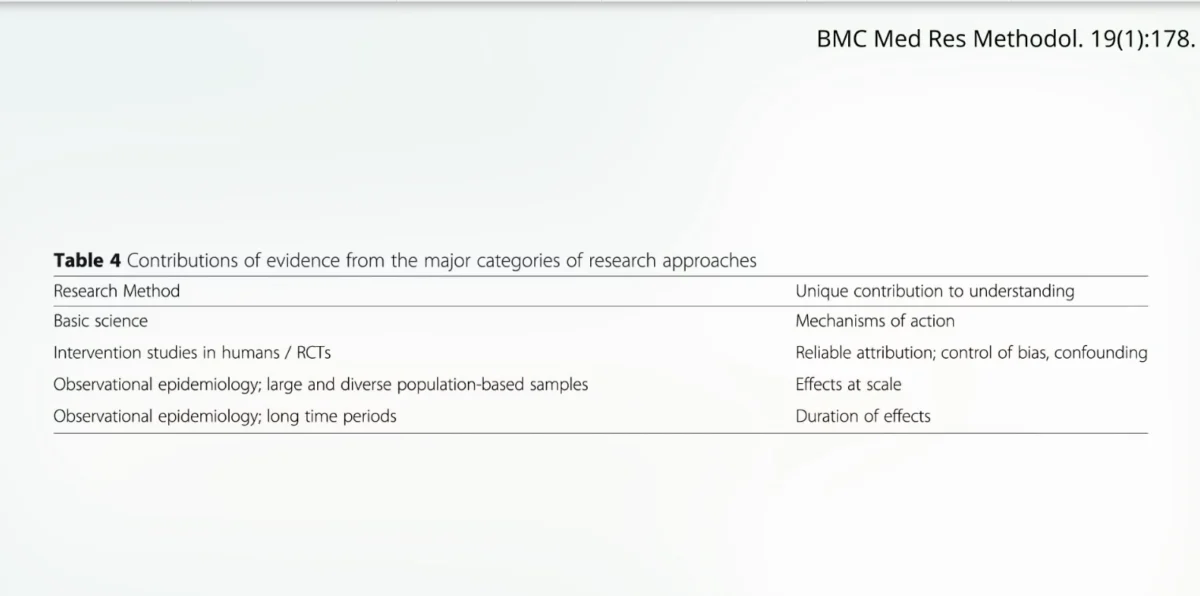
Another pertinent framework is HEALM (Hierarchies of Evidence Applied to Lifestyle Medicine). HEALM was developed precisely because existing tools like GRADE are not practical for questions that cannot be fully addressed through randomized controlled trials. This system acknowledges that different research methodologies offer unique contributions to our understanding of health. Laboratory experiments can elucidate precise biological mechanisms, RCTs can establish cause-and-effect relationships, and large-scale population studies can track health trends across hundreds of thousands of individuals over decades. Each has a role to play in building a comprehensive scientific consensus.
The Trans Fat Case Study: A Triumph of Combined Evidence
The experience with trans fats serves as a compelling example of how diverse research methodologies can converge to inform crucial public health policy. Randomized controlled trials provided evidence that trans fats increased risk factors for heart disease, such as elevated LDL cholesterol and reduced HDL cholesterol. Simultaneously, large population studies demonstrated a clear association between higher trans fat intake and an increased incidence of heart disease. The combined weight of evidence from both RCTs and observational studies built an irrefutable case for the detrimental effects of trans fat consumption. This robust scientific consensus ultimately led to the widespread removal of artificial trans fats from the U.S. food supply, a public health intervention credited with preventing an estimated 200,000 heart attacks annually.
It is important to acknowledge that conducting RCTs to observe hard endpoints like heart attacks and mortality directly from trans fat consumption would have been logistically and ethically prohibitive. It would have required randomizing individuals to consume potentially harmful amounts of trans fats for years. In such scenarios, the principle of "letting the perfect be the enemy of the good" is unacceptable when tens of thousands of lives are at stake. Public health officials must operate with the best available balance of evidence, even when it does not meet the absolute highest standard of proof.
Precedent in Environmental and Public Health Regulations
The reliance on a balance of evidence, even in the absence of RCTs, is not unique to nutrition. Public health officials frequently make critical decisions based on the totality of available data, which may include observational studies, animal research, and mechanistic insights. For instance, the establishment of tolerable upper limits for exposure to environmental toxins like lead and polychlorinated biphenyls (PCBs) did not arise from randomized trials where children were deliberately exposed to varying doses of lead to observe neurological damage. Instead, these limits are determined by synthesizing evidence from numerous sources, including epidemiological studies of exposed populations and toxicological research. This approach underscores the pragmatic necessity of drawing conclusions from the best available evidence when direct experimentation is impossible or unethical.
Industry-Funded Studies: A Pattern of Undermining Guidelines
The pattern of industry-funded research challenging dietary guidelines is particularly evident in the context of red and processed meat consumption. A meat industry-funded institution, working with the same individual who helped conceive the sugar industry-funded study, produced a paper arguing that dietary guidelines recommending reduced meat consumption are not trustworthy. This paper employed the GRADE methodology, leading to the predictable conclusion that the evidence supporting these guidelines was "of low quality." This tactic mirrors the approach used in the sugar industry-funded study, suggesting a coordinated effort to discredit evidence-based public health recommendations by selectively applying research evaluation frameworks.
The authors of these industry-funded papers often highlight inconsistencies in dietary recommendations over time as a basis for questioning their validity. However, this argument often overlooks the natural evolution of scientific understanding. Guidelines are expected to change as new evidence emerges and research methodologies improve. The sugar industry paper, for example, pointed to the variability in sugar recommendations over two decades. While some recommendations might have varied, the most recent guidelines have shown remarkable consistency in advocating for reduced sugar intake. The exception was a 2002 Institute of Medicine guideline, partly funded by an entity with ties to major sugar companies, which suggested that a quarter of one’s diet could be sugar without adverse effects. This outlier highlights how industry funding can influence research outcomes and subsequently be used to cast doubt on the scientific process itself.
A Broader Context: Industry Influence on Health Guidelines
This examination of industry influence on nutrition research is part of a broader series exploring how various industries impact dietary and health guidelines. Previous discussions have addressed how the "big sugar" industry has actively worked to undermine dietary recommendations aimed at reducing sugar consumption. The strategies employed—funding research that questions scientific consensus, selectively interpreting evidence, and promoting alternative research methodologies that devalue observational data—are not isolated incidents but rather recurring tactics used to protect commercial interests.
The implications of these industry-driven critiques are significant. They can sow public confusion, erode trust in scientific institutions, and ultimately hinder progress in addressing major public health challenges like obesity, heart disease, and diabetes. As the scientific community continues to grapple with the complexities of nutrition research, it is crucial to remain vigilant against the manipulation of evidence and to champion research methodologies that are appropriate for the questions at hand, while ensuring transparency and accountability for all stakeholders. The ongoing dialogue surrounding the validity of observational studies in nutrition is not merely an academic debate; it is a critical juncture in the ongoing effort to safeguard public health against both disease and the insidious influence of vested interests.

