


For over eighteen months, a compelling dialogue has unfolded between the ecopsychology community and David Malinsky, a writer, photographer, and fervent admirer of nature. Malinsky’s profound connection to the Great Basin Bristlecone Pines, ancient trees he affectionately terms "Old Friends in High Places," has illuminated a unique perspective on exploration, resilience, and the profound relationship between humanity and the natural world. This ongoing correspondence offers a window into the beauty and wisdom Malinsky encounters during his journeys to these venerable beings, inviting others to engage in a shared conversation about their significance.
The Ancient Sentinels of the Great Basin
The Great Basin Bristlecone Pine (Pinus longaeva) is not merely a tree; it is a living testament to time and endurance. Native to the arid, high-altitude regions of the American West, these trees are renowned for their extraordinary longevity, with some individuals dating back millennia. The oldest known non-clonal organism on Earth, a bristlecone pine named Methuselah, has been reliably dated to over 4,850 years old, with another specimen, identified only as "The Great Basin," estimated to be over 5,000 years old. Their ability to thrive in harsh, nutrient-poor soils and extreme climatic conditions—often at elevations exceeding 10,000 feet—is a remarkable feat of biological adaptation.
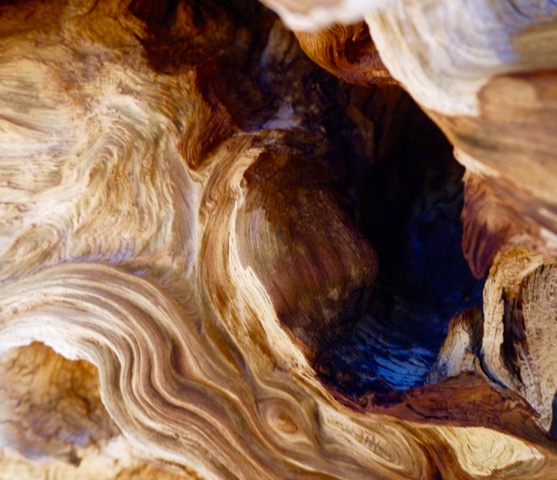
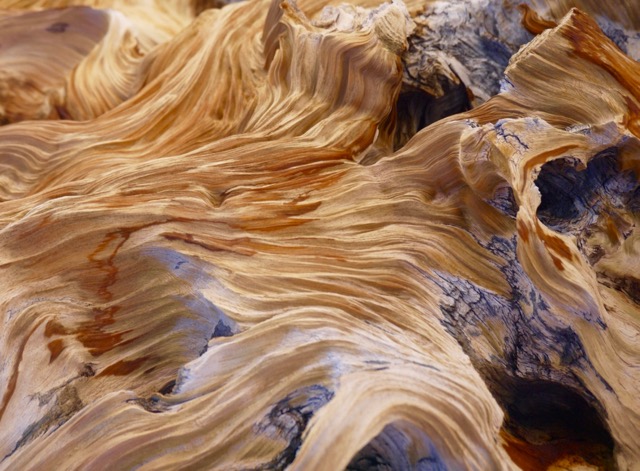
These ancient trees are characterized by their gnarled, twisted forms, often appearing sculpted by the very elements that shape their environment. Their bark is typically thick and furrowed, protecting them from harsh winds and extreme temperature fluctuations. Bristlecone pines grow incredibly slowly, adding only a fraction of an inch to their diameter each year. This slow growth rate contributes to their dense, resinous wood, making them highly resistant to insect infestation and disease. They often grow in sparse, rocky areas where little else can survive, a testament to their hardiness and specialized ecological niche.
Malinsky’s Philosophy: Embracing the Unknowable Path
Malinsky’s reflections, shared through his correspondence, transcend a simple appreciation of these trees. He posits a philosophy centered on the courage to explore beyond predefined targets, a concept he articulates through a powerful metaphor of an arrow’s flight. "Daring to take a path towards what may be unknowable can be among the most noble pursuits of the human spirit," Malinsky writes. He contrasts the certainty of reaching a "bullseye" with the limitations it imposes, suggesting that true growth lies in venturing beyond such defined objectives.
This perspective encourages a mindset of open exploration, where the journey itself becomes the primary focus, rather than the achievement of a singular, predetermined outcome. Malinsky emphasizes that even a successful shot, one that hits the bullseye, has reached its limit. He advocates for viewing such achievements as tools for a specific purpose, but not as the definition of one’s being. The release of the bowstring, in his analogy, symbolizes the act of embarking on a path, and the subsequent arc represents the unfolding experience, which should not confine the explorer’s identity.
The Expansive Nature of Perception
A core tenet of Malinsky’s message is the importance of broadening one’s perspective to perceive the richness of the surrounding world. He cautions against a narrow focus, arguing that it leads to missed opportunities for observation and understanding. "Without narrowing the focus on the bullseye, there can be so much to see, much that will be missed if our sights are too confined," he states. This sentiment suggests that by allowing our vision to expand, we can embrace a more comprehensive and nuanced experience of our environment and ourselves.
Malinsky encourages individuals to cultivate a consciousness that can accommodate a multitude of experiences and observations without the need for immediate categorization or reduction to a singular point. "You do not have to reduce all of this to a single place; there is room in your consciousness for all of it, if you allow it in," he asserts. This idea resonates with principles of mindfulness and open awareness, suggesting that a more expansive mental landscape allows for deeper engagement with the complexities of life and nature.
The Genesis of Self Through Uncharted Territories
Malinsky’s writings further explore the transformative power of venturing into uncharted territories. He proposes that the initial steps taken on a path beyond established targets are not merely about reaching a destination, but about embarking on a profound journey of self-discovery. "It is in taking a path beyond established targets that you begin the journey of yourself, a path whose first steps may appear as though on the way to a ‘Where’, but as you venture will almost magically turn into as much a ‘Who’," he explains. This transformation from seeking a place to understanding oneself underscores the deep connection between external exploration and internal growth.
The experience of self-discovery is often accompanied by a growing internal awareness and an enhanced appreciation for the surroundings. Malinsky describes this as a feeling of something "growing with each step" and developing senses "appreciating what surrounds the path even more." This heightened sensory awareness and inner growth signal a pivotal moment, a precursor to significant personal revelations. He suggests that at this juncture, traditional notions of maps and predefined routes become obsolete, as the individual’s path becomes an organic extension of their evolving self and their connection to nature.
Trusting Nature and the Unfolding Path
The concept of trust is central to Malinsky’s philosophy, particularly the trust placed in both nature and oneself. He posits that this cultivated trust enables individuals to navigate the complexities and uncertainties of life with greater equanimity. "Your path has no end, for both you and Nature are constantly evolving, and it is in that trust of Nature that you can place yourself, and explore the labyrinths ahead filled with the joy of anticipation, instead of trepidation," he writes. This perspective reframes challenges not as obstacles to be feared, but as opportunities for exploration and growth within a dynamic, evolving natural world.
Embracing the "Darkness" as Illumination
Malinsky’s reflections extend to the perception of what might appear as "darkness" or uncertainty. Instead of succumbing to fear, he advocates for approaching these unknown aspects with an open spirit. "Once you develop that trust, both of Nature and of yourself, when you come across what appears to be a darkness you do not fear. That darkness is only a place that is currently without illumination, and should you venture forward with an open spirit, your path may well take you to where it is intended to all along — the place where it is you that are the light," he states. This powerful assertion reframes challenges and unknowns as potential sites of illumination, suggesting that by embracing them with openness and trust, individuals can become sources of light themselves.

The Ecological Significance of Bristlecone Pines
The Great Basin Bristlecone Pine holds significant ecological importance. Its ability to survive in extreme environments makes it a crucial component of high-altitude ecosystems. These trees provide habitat and food sources for specialized insects and birds adapted to the harsh conditions. Their role in soil stabilization in fragile alpine environments is also vital, preventing erosion on steep slopes. Furthermore, the study of bristlecone pines has provided invaluable data for climate science through dendrochronology, the science of dating events using tree rings. The exceptionally slow and consistent growth of these trees, coupled with their long lifespans, allows scientists to reconstruct past climate patterns with remarkable accuracy, offering insights into historical temperature fluctuations, precipitation levels, and even major environmental events over thousands of years.
The Broader Implications of Malinsky’s Perspective
David Malinsky’s insights, inspired by his deep connection with the Great Basin Bristlecone Pines, offer a compelling framework for personal and environmental engagement. His philosophy encourages a shift from outcome-oriented pursuits to process-oriented exploration, emphasizing the value of the journey and the continuous evolution of self and nature. In an era often characterized by rapid change and uncertainty, his message of embracing the unknown, cultivating trust, and expanding perception provides a grounding and inspiring approach to navigating the complexities of modern life.
The invitation to join Malinsky’s listserve ([email protected]) signifies a desire to foster a community of like-minded individuals who are inspired by the resilience of nature and the potential for profound personal growth through exploration. This initiative aims to create a platform for sharing experiences, insights, and responses, thereby amplifying the impact of Malinsky’s observations and fostering a collective appreciation for the wisdom held within the ancient bristlecone pines and the natural world at large. The ongoing dialogue serves as a reminder of the enduring lessons that nature offers, lessons in patience, resilience, adaptation, and the profound beauty of an ever-unfolding journey.

