


Born in rural Nepal, Shertok’s early life was shaped by an environment far removed from the world of letters he would eventually inhabit. He recalls a childhood where technology was a rare commodity, primarily represented by his father’s transistor radio. In this setting, poetry was confined to academic textbooks, leading him to believe that becoming a writer required advanced degrees or the venerable image of literary giants like Rabindranath Tagore. This perception, however, was to undergo a significant transformation when Shertok pursued psychology in the United States.
A pivotal moment in his understanding of poetry’s therapeutic potential occurred during his enrollment in a program at the Mayo Clinic. There, he engaged with cancer patients, assisting them in transforming their personal narratives into poems. Witnessing the profound impact these personalized verses had on the patients, Shertok grasped the intrinsic value of honoring individual stories. He came to understand that "poetry can keep people alive in a certain way," a realization that would later resonate deeply with his experiences following the devastating 2015 Nepal earthquake.
The 7.8 magnitude earthquake that struck Nepal in April 2015 marked a tragic chapter in the nation’s history. The seismic event resulted in over 8,000 fatalities, injured nearly 20,000 people, and left millions displaced, with widespread destruction of homes and infrastructure. In the immediate aftermath, Shertok initiated the "Healing Through Poetry: Nepal Earthquake Relief Project." This initiative organized writing workshops designed to empower earthquake survivors to articulate their experiences of grief, uncertainty, and frustration, particularly concerning the perceived inadequacy of the Nepalese government’s response and support. This project underscored Shertok’s commitment to using poetry as a tool for healing, expression, and advocacy.
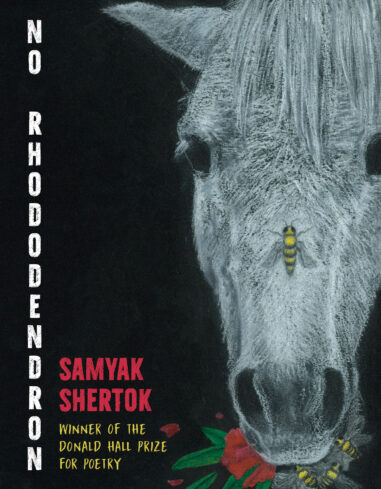
Shertok’s collection, No Rhododendron, directly confronts the enduring scars left by the Nepalese Civil War, a protracted conflict that spanned from 1996 to 2006. This internal strife, fought between the Nepalese monarchy and Maoist rebels, resulted in an estimated 17,000 deaths and significant societal disruption. Shertok’s poetry meticulously examines the layers of grief and mourning that persist long after the cessation of hostilities. He deliberately bends and reconfigures established poetic forms to forge what he terms a "new ghost language." This linguistic innovation serves as a vehicle to explore how the insidious effects of political violence continue to fracture and haunt the lives of survivors and subsequent generations.
The development of this "ghost language" is central to Shertok’s poetic philosophy. He posits that one of poetry’s most crucial functions is to foster a deeper comprehension of these persistent forms of haunting. By giving language to these spectral presences, he aims to facilitate their eventual release. As Shertok articulated in an interview with the Nepali Times, "Each poem is a being. A poem begins with a haunting, and ends when you are able to release the haunt." This cyclical process of confronting and releasing underscores the cathartic and transformative power he attributes to his art.
The Poetic Landscape of No Rhododendron
No Rhododendron is not a linear narrative but a series of deeply resonant poems that invite readers into the complex emotional and historical terrain of Nepal. The collection’s title itself, No Rhododendron, subtly hints at the absence or loss of a national symbol, potentially alluding to a fractured sense of identity or the erasure of cultural heritage. Rhododendrons are Nepal’s national flower, often symbolizing resilience and beauty, and their exclusion from the poetic landscape suggests a deeper commentary on national trauma and identity.

A Blessing
The poem "A Blessing," dedicated to Li-Young Lee, offers a vivid sensory experience of familial memory and tradition. It paints a picture of Shertok’s grandfather, Apa, preparing a special dish, a "monk’s half-moon" curry made with pumpkin blossoms and lamb. The detailed description of the ingredients—fenugreek seeds crackling in ghee, baby pumpkins rendered translucent, a paste of wild herbs steeped in buttermilk, and smoked fatted lamb—evokes a sense of rich culinary heritage. The ritual of serving those not present, placing filled clay bowls on the edge of the hearth, highlights a deep-seated respect for community and remembrance. The poem concludes with an almost ecstatic enumeration of flavors and sensations: "cliff-forged flesh, aged smoke, / foraged fragrance, rain-honeyed dark, earthed moonmilk, / petrichor pistils, salt, butter gossip of the butterflies, fire / of the fireflies, summer, sweet summer, sweet impossible summer." This passage, imbued with a sense of abundance and sensory richness, serves as a poignant counterpoint to the themes of loss and violence that permeate other parts of the collection. It anchors the reader in a moment of profound connection and sensory immersion, a tangible memory of a benevolent past.
How to Sky-Bury Your Father Tongue
This poem delves directly into the complexities of linguistic inheritance and ancestral haunting. Set during a residency at the Vermont Studio Center, the poem opens with the subtle intimation of a haunted room, a motif that quickly expands to encompass the spectral presence of Shertok’s own past and homeland. The mention of a "Resident Poet" and the handing of a key serve as a narrative catalyst, prompting reflections on his birth village, the stone house, the water mill, and the suspension bridge, elements that resurface in his memory despite his departure for Kathmandu and his subsequent fear of returning.
The poem weaves together personal anxieties with collective trauma. The news of the 2015 earthquake reaches him while he is an ocean away, triggering a cascade of images: the fleeing crowds, the collapsing stone house, and the chilling realization of a baby left asleep in the prayer room, his yet-to-be-named niece. This moment of profound vulnerability is juxtaposed with the mundane, yet unsettling, experiences of other artists in residence—a fiction writer hearing animal sounds beneath her bed, a multimedia artist suggesting a buried child, and a painter humorously attributing noises to upstairs activities. Shertok’s silence in these exchanges underscores his internal grappling with a more profound, ancestral haunting.
The poem explores the concept of houses being haunted without their inhabitants’ knowledge, suggesting that "the house mistook it / for a type of love." This metaphorical framing extends to the Buddhist prayer flags fluttering beside the Red Mill, carrying mantras meant to purify the sky. Shertok then turns to his "father tongue," a language he did not inherit. He recounts his father’s attempts to teach him Lama, a dialect of Tibetan spoken by some in Nepal, and the shared realization that they would rather "drown ourselves / in the Mikli-Phoom," a local river. The only Lama word he remembers is "Sertok," meaning "Golden steeple," the very name his father gave him.
The poem traces the evolution of his name. In primary school, Hindu teachers who spoke only Devanagari misheard "Sher-Tok" as "Lion," leading his classmates to creatively interpret it as "Lion, Bite!" This linguistic slippage, coupled with his parents’ Buddhist faith, led him to adopt "Samyak," meaning "Buddha’s Middle Way," while flying over the Atlantic, seeking solace in the "whitest clouds." This journey of naming and renaming reflects a broader quest for identity amidst cultural fragmentation.

The poem continues to explore the ethereal connections between places and people, with "Messenger pigeons weave / and unweave a prayer shawl from the Red Mill roof to the Gihon / and back." The presence of Houdini, the "Resident Cat," and an Asian American artist from New York who calls him "Sam" further illustrate the layered identities and interactions he navigates. The reflection, "Gilded father tongue," encapsulates his complex relationship with his linguistic heritage. He grapples with the nature of ghosts, questioning, "Do things become / ghosts once we stop calling them by their names? And what / of the disappearing tongue, the one we never learnt?"
The poem concludes with Shertok meditating in his studio, the wind carrying pine needles and dead leaves. The image of Houdini making a pigeon disappear and spitting out feathers prompts a profound question about swallowed sky, a metaphor for lost potential or consumed essence. His father’s prolonged dying, holding his breath for nine nights, is revisited, leaving Shertok with the poignant question, "Do I have his permission?" This moment of agonizing delay, perhaps a struggle to utter a word or convey a final message, underscores the unresolvable nature of familial disconnect and unspoken grief. The poem ends with the image of a robin repeatedly hitting the window, its claws scratching an "illegible note," mirroring the inarticulable nature of loss and the persistent attempts to communicate across the veil of absence.
The Last Himalayan Beekeeper
In "The Last Himalayan Beekeeper," Shertok pays homage to his grandmother, Ama, portraying her as the last in a line of traditional Himalayan beekeepers. Her method of harvesting honey, described as using song rather than juniper smoke to appease the bees, highlights a harmonious and almost spiritual connection with nature. The evocative line, "A home is one blossom / and a thousand stings," encapsulates the inherent duality of love and pain, creation and destruction, that characterizes life and memory. The imagery of bees flying into her hair and falling as rhododendrons when she combs it suggests a deep symbiosis, where the natural world is intricately woven into her being.
The poem emphasizes Ama’s unique ability to handle bees without being stung, a testament to her profound connection. The memory of her feeding him raw honey each night before he left home, teaching him "to hold / bees in my throat, one / for every ancestor," signifies a profound act of ancestral transmission and a symbolic inheritance of lineage. The assertion, "Let it be said / not a single bee died," reinforces the idea of a life lived in balance and respect for the natural world.
However, the poem shifts to the present, where Shertok experiences the consequences of this disconnection. He is "stung / in the windpipe" each time he misremembers the "word / of the Horse-Ghost," suggesting that the loss of ancestral knowledge and connection brings physical and emotional pain. With each "perished / bee," Ama, the symbol of this lost connection, "becomes / more smoke." The stark reminder, "if you plunge your hand into an abandoned / hive, you will still get stung," serves as a metaphor for the unavoidable pain that arises from confronting neglected legacies.
The poem culminates in a powerful exchange between Ama and Shertok. Ama, plucking stingers from his tongue, binds them to her "crown," which becomes "more thorn than rhododendron." Shertok pleads, "Let me sky-bury them, Ama, / while they are still alive." This plea signifies a desire to address and release the ancestral burdens while they still hold a semblance of life, before they fully transform into unmanageable specters. Ama’s response, "No, / Tamang she opens / the wounds with crushed hooves / your mouth is our last hive," is a profound declaration. It positions Shertok’s own voice and language as the final sanctuary for their collective memory and heritage, a repository where the "wounds" of the past must be tended, even if painful, to preserve what remains. The use of "Tamang," likely a reference to his ethnic heritage or a term of endearment, adds a layer of intimacy and ancestral connection to this critical moment.
Broader Implications and Cultural Significance
Samyak Shertok’s work arrives at a crucial juncture in global literary discourse, where themes of diaspora, post-colonial trauma, and the reclamation of marginalized voices are gaining prominence. His "ghost language" can be seen as a significant contribution to the ongoing exploration of how language itself can be reshaped to accommodate experiences that defy conventional articulation. This linguistic innovation offers a framework for understanding how historical trauma, political violence, and displacement can create an epistemic rupture, necessitating new forms of expression.
The collection’s engagement with Nepalese history, particularly the Civil War and the earthquake, brings to light the often-unseen consequences of conflict and natural disaster on individual and collective psyches. By focusing on the lingering effects and the intergenerational transmission of trauma, Shertok’s poetry contributes to a broader understanding of human resilience and the enduring power of memory. His work challenges the notion that healing is solely a personal journey, emphasizing instead the interconnectedness of individual lives with the historical and cultural fabric of their homeland.
The literary establishment’s response to No Rhododendron has been largely positive, with critics praising Shertok’s originality and emotional depth. His ability to blend the personal with the political, the intimate with the epic, has been highlighted as a key strength. The University of Pittsburgh Press, known for its commitment to diverse voices, has provided a crucial platform for Shertok’s work, ensuring that his unique perspective reaches a wider audience.
As Shertok continues to develop his craft, his "ghost language" and experimental elegies promise to offer further insights into the complex interplay of identity, memory, and trauma. His work serves as a powerful reminder that the voices of those affected by conflict and loss, though often silenced, can find potent expression through art, offering not only a testament to their struggles but also a path towards understanding and, ultimately, release. The ongoing relevance of his explorations suggests that Samyak Shertok is poised to become a significant figure in contemporary literature, shaping how we engage with narratives of grief, resilience, and the enduring power of the human spirit.

