

The relentless pace of modern life often propels us toward hasty solutions, leaving little room for the profound understanding that emerges from patient observation and deep connection with our surroundings. In a world that rewards speed, a different kind of wisdom, one that unfolds with time and mindful engagement, is increasingly vital. This contemplative approach, echoed in Zen Buddhist traditions as "beginner’s mind," encourages us to approach even the familiar with fresh eyes, shedding preconceived notions to foster genuine insight.
This philosophy was powerfully illustrated during a recent session led by Amy Anderson, an urban forager based in Boulder, Colorado, on the unceded ancestral lands of the Arapaho, Ute, and Cheyenne peoples. Anderson’s workshop offered more than just practical knowledge about identifying edible plants in the region; it served as an invitation to cultivate a fundamentally different relationship with the living world.
Anderson emphasized the necessity of observing subtle ecological shifts, a practice many have collectively overlooked. She guided participants to notice the precise timing of plant emergence – when flowers, leaves, and seeds first appear each spring – and to consider whether these cycles are accelerating due to the escalating climate crisis. For instance, reports indicate that many plant species in Colorado are now appearing two to four weeks earlier than in previous years, a trend underscoring the urgency of ecological awareness. A core tenet of Anderson’s teaching, which resonated deeply, was the principle of harvesting from native plants with such discretion that one’s presence remains imperceptible. This ethos directly mirrors the Zen teaching of "Leave no trace," translating into a tangible sense of responsibility towards the delicate balance of living ecosystems.
This concept of interconnectedness is beautifully articulated by Thich Nhat Hanh, who coined the term "interbeing." Interbeing describes the understanding that nothing exists in isolation, and the perceived boundaries between self and the world are, at their root, useful constructs. As Buddhist teacher Kaira Jewel Lingo eloquently states, "Touching this interbeing, we can experience deep reverence for life and the earth, accepting that whatever we do to the Earth (or any living being) we are really doing to ourselves." Foraging, in this context, becomes an edible manifestation of interbeing, grounding this philosophical understanding in tangible experience.
Anderson further instructed participants to observe which birds and animals rely on the same leaves and fruits that humans might harvest, stressing the importance of leaving ample resources for these co-inhabitants. This ecological mindfulness extends to understanding the intrinsic value of native plants, which have evolved over millennia in intricate relationships with their local ecosystems, serving as true anchors of biodiversity. In contrast, non-native plants, often termed weeds, can aggressively outcompete native species, disrupting the vital dependencies of local insects, birds, and soil organisms. Consequently, Anderson highlighted the importance of strategically harvesting invasive weeds, not only for human consumption but also to mitigate their ecological impact. The most profound and authentic ecological literacy, she suggested, is often imparted by Indigenous and animist elders, whose wisdom is unhurried by the demands of modern efficiency and who can guide us toward becoming "keystone species" – organisms that play a crucial role in maintaining the health and stability of their surrounding ecosystems.
Reindigenizing and Belonging to the Land
At its core, foraging transcends mere environmental activism; it represents a slow, deliberate cultivation of relationship with the places we inhabit. In an era defined by interconnected global crises – a phenomenon increasingly termed "polycrisis" – this deep sense of belonging to our local ecosystems is arguably one of the most radical and essential practices we can undertake. Following the lead of Indigenous elders and scholars, this profound re-connection with the land can be described as "reindigenizing." For many, reindigenizing involves a return to ways of knowing and being that view the land not as a mere resource to be exploited, but as a living, breathing community.
The late Larry Ward encapsulated this sentiment with a simple yet profound instruction: "Pick a place that you want to get intimate with, that you want to look at deeply and learn how to respect all the beings that are there. It would take years and years for me to crawl around on the ground to meet all the beings that are in the field behind me." This instruction serves as a guiding principle for both foraging and reindigenizing.
However, the question arises: in the modern world, who has the privilege and opportunity to cultivate such a deep relationship with the land? Historically, all human ancestors lived in profound connection with their local ecosystems. Yet, today, Indigenous peoples worldwide have been forcibly severed from their ancestral lands, lands that were once integral and sacred parts of their identities and cultures. The contemporary imperative calls for the protection and revitalization of the ecological wisdom embedded within living Indigenous cultures, while simultaneously encouraging a remembrance and reclamation of our own ancestral indigeneity, however distant that connection may feel.
Communities of color, often referred to as the global majority, bear the legacy of profoundly broken relationships with the land, a consequence not only of historical colonization but also of ongoing systemic injustices. Enslaved Africans were compelled to labor on lands to which they had no legal claim. In the United States, Black farmers experienced a devastating loss of land, with an estimated 90 percent – approximately 12 to 14 million acres – disappearing between 1910 and 1997. This dispossession was a direct result of systemic racism embedded in governmental policies, private lending practices, and acts of terror, which collectively dismantled a critical source of Black wealth and land ownership in the 20th century. Similarly, Chicanx and other farmworker communities are disproportionately exposed to hazardous pesticides, face limited access to the very food they cultivate, and are often among the first to be displaced by rising land values. These deeply ingrained historical wounds profoundly shape who feels secure on the land, who has access to green spaces for foraging, and whose connection to local ecosystems has been most violently disrupted. A comprehensive understanding of our relationship with the land necessitates a simultaneous reckoning with all of these histories.
Foraging as a Response to Polycrisis, Not a Lifestyle Choice
The practice of foraging offers tangible benefits that extend beyond individual well-being, acting as a potent response to the multifaceted challenges of our time. By reducing reliance on synthetic fertilizers, foraging diminishes the associated greenhouse gas emissions. It fosters a personal stake in preserving the integrity and diversity of local ecosystems, countering the trend towards manicured or chemically treated landscapes. Furthermore, it provides a source of nutritionally rich food that can supplant the often depleted offerings of industrial agriculture, making a portion of our food supply accessible and affordable, irrespective of income. Foraging also supports the vital soil biology that plays a crucial role in carbon sequestration. Perhaps most significantly, it facilitates the rebuilding of a tangible, felt connection between people and the living environments they inhabit – a connection systematically dismantled by industrial civilization.
The overarching reality is that we are confronting more than just an ecological crisis. Our array of crises – ecological breakdown, resurgent authoritarianism, public health emergencies, widening inequality, and cultural disconnection – are not isolated incidents. They are interwoven manifestations of a single, fractured system. The concept of polycrisis compels us to resist the allure of addressing problems in isolation, recognizing that piecemeal solutions are inherently insufficient.
A culture that delegates its sustenance to a globalized commodity system while simultaneously degrading its local ecological substrate is fundamentally ill-equipped to navigate these complex challenges, regardless of the sophistication of its climate models. Conversely, a culture that perceives weeds as food, views local ecosystems as natural pantries, and understands itself as an integral part of ecological systems, rather than separate from them, is a culture poised to effectively respond to the polycrisis.
Learning to identify and consume wild plants and weeds is not presented as the singular or most critical solution, but rather as something far more profound: a convergence point for confronting the polycrisis. It represents a singular shift in practice and perception that influences multiple facets of our relationship with the world. Systems thinkers posit that the most impactful leverage points within complex systems are not technologies or policies, but paradigm shifts – fundamental changes in the goals, values, and worldviews that shape our actions. A culture that recognizes the inherent value of all life, that sees the natural world as a source of sustenance and wisdom, and that acknowledges its embeddedness within the web of life, is a culture capable of profound and resilient response.
BIPOC Reclamation and the Enduring Connection to Wild Foods
For readers from Black, Indigenous, and People of Color (BIPOC) communities, it is crucial to acknowledge the inherent risks associated with foraging in public or urban green spaces. Racial profiling, over-policing, and the criminalization of mere presence on land are not abstract concerns but present realities that must be addressed in any honest discourse about reclaiming our relationship with the land.
Despite these challenges, it is vital to recognize that the ancestral connection between BIPOC communities and wild, living foods has never been entirely severed. This relationship has been suppressed, criminalized, displaced, and mourned, but it persists. The systemic suppression of this connection by structural racism has, in many ways, been a foundational cause of the climate crisis. Yet, this inherent knowledge endures: in grandmothers who possess an intuitive understanding of which leaves to gather; in diaspora kitchens where bitter greens from ancestral lands are prepared with generations-old wisdom; among the Bhil and Lepcha elders in India who have never ceased to perceive the land as a living relative; within African American foodways that carry plant knowledge born of the South – knowledge that served as a vital form of survival and resistance; and in Chicanx communities where "quelites," wild greens harvested from fields and roadsides, have been a continuous source of nourishment for millennia, transcending colonization, migration, and immense hardship.
This knowledge did not vanish; it merely fell silent. And it can be reawakened. The systems that sought to convince us that land was not for us, that wild foods were not true sustenance, and that our presence in green spaces was inherently suspicious, were based on a profound deception. Their narratives served to protect an economic order that required our separation from the land and our dependence on their manufactured goods.
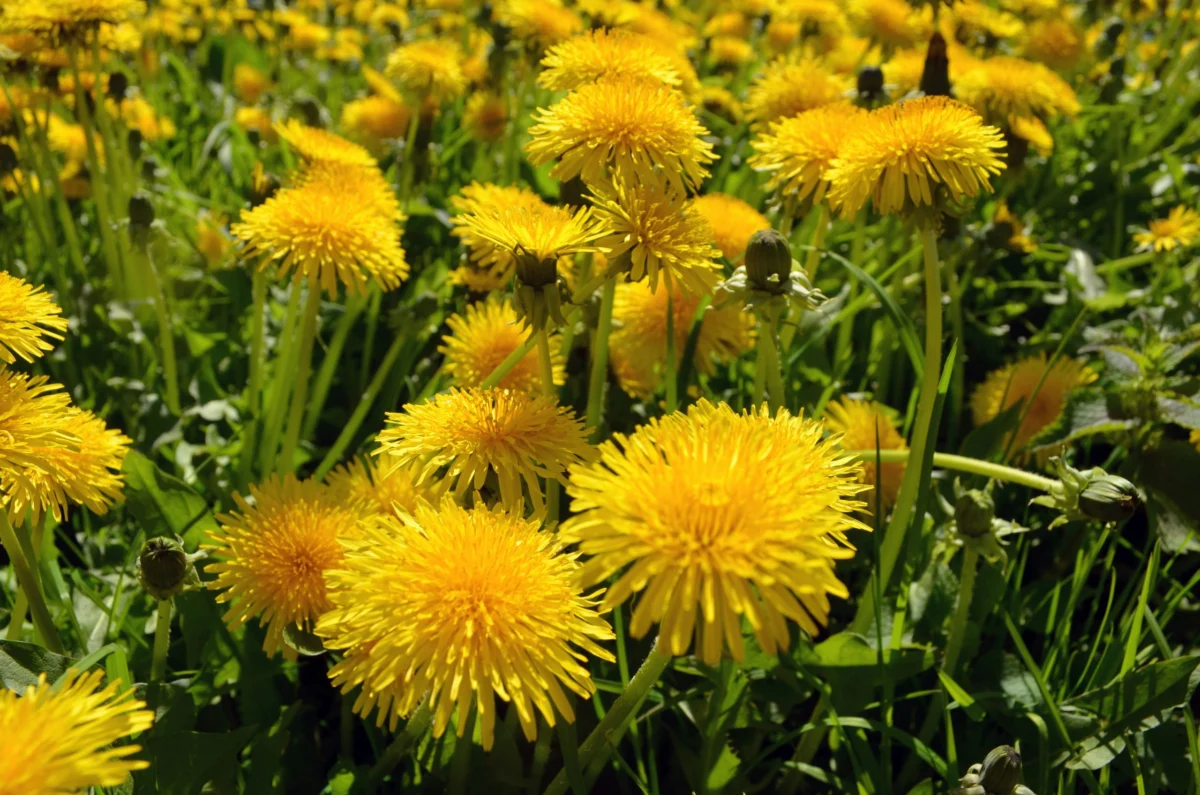
The dandelion pushing through a sidewalk crack operates independently of these systems. It simply embodies life’s persistent drive to find a way through, offering its bounty without demand. As Zen poet and ecologist Gary Snyder wrote, the practice of "reinhabitation" involves learning to live in a place as if intending to stay, treating the land as a teacher rather than a mere backdrop. For many BIPOC communities, this is not a novel practice to be adopted but an ancient one to be remembered.
This insight may be the most profound teaching: not that foraging is solely a political act, though it can be, but that the land has always been waiting for us, and it never stopped offering its gifts.
The Intertwined Relationship Between Inner Trauma Healing and Ecological Presence
A quiet prerequisite for healing our relationship with the land, often overlooked in environmental discourse, is the cultivation of inner presence. We cannot truly perceive the natural world if we are not, at least some of the time, present for ourselves. Observing the subtle shifts in a flower’s bloom, noticing the avian dependence on a particular berry, or simply sitting still enough to discern an ecosystem’s message all become impossible when our minds are trapped in cycles of worry, self-criticism, unresolved conflicts, or the pervasive dread that accompanies living through cascading crises. Deep ecological attention demands more than simply disconnecting from technology; it requires a profound inner attunement.
This attunement, I believe, necessitates a degree of inner settledness, which for most individuals involves tending to the often-unacknowledged layers of trauma. These layers are not exceptional but are the ordinary inheritance of the human experience: formative childhood experiences that leave indelible marks, the cumulative impact of systemic injustices absorbed into the body over time, losses that have never been fully grieved, and the increasingly pervasive specter of climate dread.
When these unprocessed stresses and traumas reside within our nervous systems, they maintain a state of hypervigilance, a constant scanning for threats that pulls us away from the present moment and into the cacophony of our internal landscape. From such a place, we cannot embody the slow, attentive, reciprocal presence that foraging – and genuine ecological relationship – demands.
There is a pathway through this, though it is not a shortcut. My experience as a Zen Buddhist leader facilitating grief-rage ceremonies has shown me that healing begins with learning to belong to our own hurt and angry parts. It involves turning toward our pain rather than away from it, allowing it to be witnessed, and through that witnessing, slowly releasing its hold on our attention. When we can sit with what is most tender and difficult within ourselves without fleeing, we discover that we can extend that same capacity to the world. We become capable of sitting with a dying ecosystem not merely intellectually, but fully, as we might sit with a loved one who is suffering. This represents an entirely different quality of presence.
This healing is not solely an individual endeavor. Trauma, as research and experience consistently show, heals most effectively within community – in spaces where vulnerability is welcomed, where grief is allowed to move through a group, and where no one is forced to carry their pain in silence. The environmental movement urgently needs such spaces. Beloved Buddhist systems thinker Joanna Macy, whose "Work That Reconnects" has guided countless activists, including myself, in navigating ecological grief rather than circumventing it, describes this process as "honoring our pain for the world" – a crucial passage between numbness and authentic action.
The practice of slowing down to observe the living world around us and the practice of tending to our inner lives are not separate pursuits; they are deeply nourishing to one another. This does not imply that an environmental advocate must achieve complete personal healing before engaging with the natural world. As many participants in Ecodharma retreats have discovered, some individuals first slow down and perceive the pain of the natural world, which then unlocks their capacity to engage with their own inner human pain.
At its essence, it means that the practice of slowing down to notice the living world around us, and the practice of tending to our inner lives, are not separate. They are mutually reinforcing. Every moment of genuine presence within a living ecosystem is also a moment of returning to ourselves. And each time we learn to stay with something difficult within us, we become incrementally more capable of staying – truly staying – with the world outside. Buddhism has taught me that the most precious gift we can offer the world is our true presence. The weeds, it turns out, are one of the most accessible places to cultivate this profound gift.
This article was adapted from a piece originally published on Kritee Kanko’s website.

