

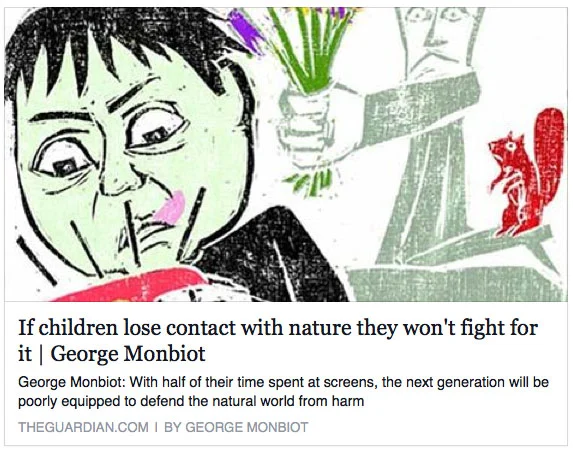
The assertion that a decline in children’s connection with the natural world will diminish future environmental advocacy, as articulated by George Monbiot in a widely discussed UK Guardian article, has ignited a robust debate regarding the multifaceted influences shaping youth engagement with nature. While Monbiot’s central premise – that direct experience fosters a protective instinct – resonates with many environmentalists and educators, his subsequent attribution of this disconnect primarily to the pervasive influence of digital screens has drawn nuanced counterarguments. These counterpoints suggest a more complex interplay of societal shifts, technological opportunities, and individual pathways to nature appreciation.
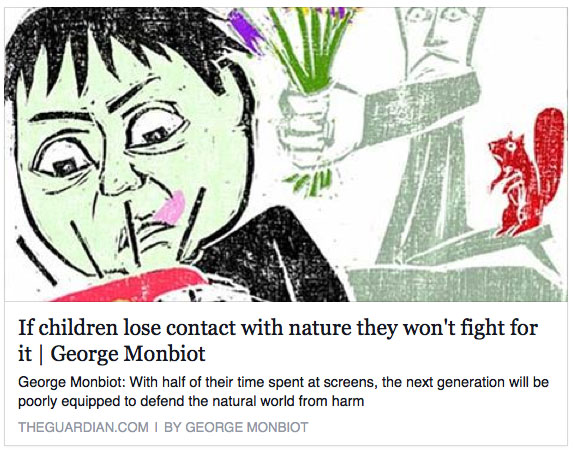
The original article, published on November 19, 2012, by The Guardian, a prominent British daily newspaper, framed the issue as a critical juncture for environmental stewardship. Monbiot’s piece highlighted a perceived societal trend where increased screen time for children directly correlates with a reduced engagement with outdoor environments. This, he argued, creates a generation less likely to develop the deep emotional bonds and understanding necessary to champion environmental causes in the future. The article’s title itself, "If Children Lose Contact With Nature They Won’t Fight For It," encapsulates this urgent concern, positioning the issue as a direct threat to the long-term viability of environmental movements.
Amy Lenzo, writing from the perspective of ecopsychology, acknowledged the undeniable truth in Monbiot’s titular statement. However, she expressed reservations about what she termed a "lazy and inaccurate argument" that places the entirety of the blame on digital engagement. Lenzo posited that while societal conditions have indeed altered children’s freedoms and access to the natural world – encompassing far more than just the rise of the internet – digital platforms themselves might also offer pathways back to nature connection for many, including children.
The Shifting Landscape of Childhood and Nature Exposure
The debate is situated within a broader societal context of changing childhood experiences. Historically, children had greater unsupervised access to natural spaces. Factors contributing to this shift include increased urbanization, a rise in parental concerns about safety, and altered community structures that may offer fewer informal opportunities for outdoor exploration. Data from various studies underscore this trend. For instance, research from the Natural England organization has indicated a significant decline in the proportion of children spending time in nature over recent decades. A report published in 2010, for example, highlighted that the average child in the UK spent less time outdoors than a prison inmate. This decline is often linked to increased time spent indoors, with studies consistently showing a correlation between increased screen time and reduced physical activity and outdoor engagement. A 2017 report by the Children’s Society found that a significant percentage of children spent less than an hour outdoors per day, a figure that has been on a downward trend for years.
This evolving environment presents a challenge for fostering the kind of deep, personal connection that Monbiot argues is crucial for developing environmental advocates. The argument suggests a causal link: without direct sensory experiences of nature – the feel of soil, the scent of pine, the sound of birdsong – the emotional resonance that fuels a lifelong commitment to conservation is unlikely to develop. This perspective draws on established psychological principles, such as the concept of "biophilia," which suggests an innate human tendency to connect with nature and other living systems.
The Digital Dilemma: A Barrier or a Bridge?
Monbiot’s critique of digital engagement is rooted in the idea that virtual experiences, however immersive, cannot fully replicate the richness and complexity of direct sensory interaction with the natural world. He implies that passive consumption of nature through screens may create a superficial understanding, lacking the emotional depth that translates into a commitment to protect it. The argument is that while children may see images of endangered species or read about environmental issues online, this mediated experience may not evoke the same protective instincts as, for example, witnessing the impact of pollution firsthand on a local stream or experiencing the awe of a vast forest.
However, the counterargument, as articulated by Lenzo, proposes a more nuanced view of digital technology. It suggests that these platforms, often viewed as antagonists to nature connection, can also serve as powerful tools for inspiration, education, and community building around environmental issues. Lenzo’s personal experience growing up as an introvert in the Arizona desert, where her passion for nature was ignited through books, serves as a foundational point. She argues that today’s digital "books" – with their multimedia capabilities – can be even more effective in drawing children into the "mystery and magic" of the natural world.
This perspective highlights the potential of digital media to:
- Educate and Inspire: Documentaries, interactive websites, virtual reality experiences, and educational apps can provide children with access to environments and phenomena they might otherwise never encounter. This can spark curiosity and a desire to learn more, potentially leading to real-world exploration. For instance, a child fascinated by a documentary on coral reefs might be inspired to learn about ocean conservation efforts and perhaps even plan a future trip to a protected marine area.
- Facilitate Connection: Online communities and social media platforms can connect children with like-minded peers and environmental organizations, fostering a sense of belonging and collective action. Sharing experiences, photos, and information online can create a virtual campfire, so to speak, where environmental stewardship is discussed and encouraged.
- Democratize Access: For children in urban environments or those with limited mobility, digital platforms can offer a vital gateway to experiencing and learning about nature. This can be particularly important in bridging geographical or physical barriers that might otherwise limit their exposure.
Reconciling Direct Experience with Digital Engagement
The core of the debate, therefore, is not necessarily about choosing between screen time and outdoor time, but about how these different forms of engagement can be integrated and leveraged. The emphasis shifts from a binary opposition to a more holistic approach that acknowledges the unique strengths of both direct and mediated experiences.
Lenzo’s assertion that "we are all of the land, and belong to it" underscores a fundamental ecopsychological principle. The challenge, from this viewpoint, is to effectively communicate this message through contemporary means. This involves imbuing online engagement with a sense of nature connection, rather than allowing it to foster disconnection. Practical suggestions for this include:
- Mindful Online Presence: Encouraging users to remain grounded and aware of their physical embodiment even while online. This means remembering that online interactions are with real people in real environments, fostering empathy and a sense of shared reality.
- Sensory Language and Imagery: Utilizing descriptive language and high-quality photography or videography that evokes sensory experiences of the natural world. This can help bridge the gap between the virtual and the tangible, stimulating imagination and memory.
- Bridging the Virtual and Real: Using online platforms to plan and inspire real-world outdoor activities, share discoveries from nature walks, or participate in citizen science projects that have tangible environmental impacts.
The Motivational Power of Nature Connection
Both sides of the argument implicitly agree on the profound motivational power of a personal relationship with nature. The principle that "we protect what we know and love" is a cornerstone of conservation psychology. Direct experiences of nature can foster a sense of awe, wonder, and responsibility that is difficult to replicate through abstract knowledge alone. This emotional connection is often cited as the primary driver for individuals who dedicate their lives to environmental activism, scientific research, or policy advocacy.
Studies in environmental education consistently demonstrate that experiential learning in natural settings leads to higher levels of environmental literacy, pro-environmental attitudes, and behavioral intentions. For example, research published in the Journal of Environmental Education has shown that programs incorporating outdoor, hands-on activities are more effective in fostering long-term environmental commitment than those relying solely on classroom instruction. These experiences can create lasting memories and a deep-seated appreciation for the intrinsic value of the natural world.
Broader Implications and Future Directions
The ongoing dialogue surrounding children’s contact with nature and the role of digital technology has significant implications for educators, parents, policymakers, and environmental organizations.
- Educational Strategies: Educational institutions may need to re-evaluate curricula to ensure a balance between digital learning tools and experiential outdoor education. This could involve integrating nature-based learning into standard subjects, developing more robust outdoor education programs, and utilizing technology to enhance, rather than replace, real-world experiences.
- Parental Guidance: Parents play a crucial role in mediating their children’s engagement with both screens and nature. Encouraging balanced media consumption, facilitating outdoor exploration, and modeling an appreciation for the natural world are key strategies.
- Technological Innovation: There is an opportunity for the development of digital tools that are specifically designed to foster nature connection, such as interactive nature guides, augmented reality experiences that overlay information onto real-world environments, and platforms that facilitate citizen science participation.
- Policy and Urban Planning: Urban planning and public policy can significantly influence children’s access to green spaces. Creating and maintaining accessible parks, nature reserves, and green corridors in urban areas can provide crucial opportunities for outdoor engagement.
Ultimately, the conversation initiated by Monbiot’s article, and enriched by perspectives like Lenzo’s, highlights the complex challenges and opportunities in cultivating a generation of environmental stewards. While the decline in direct contact with nature is a valid concern, the potential of digital technologies to serve as a bridge to understanding and appreciating the natural world should not be overlooked. The path forward likely involves a thoughtful integration of both, ensuring that technology serves as a catalyst for, rather than a barrier to, a deep and abiding connection with the planet. The emphasis should be on fostering a generation that not only knows about nature but feels its importance on a profound, personal level, equipping them with the passion and understanding to champion its cause.

