

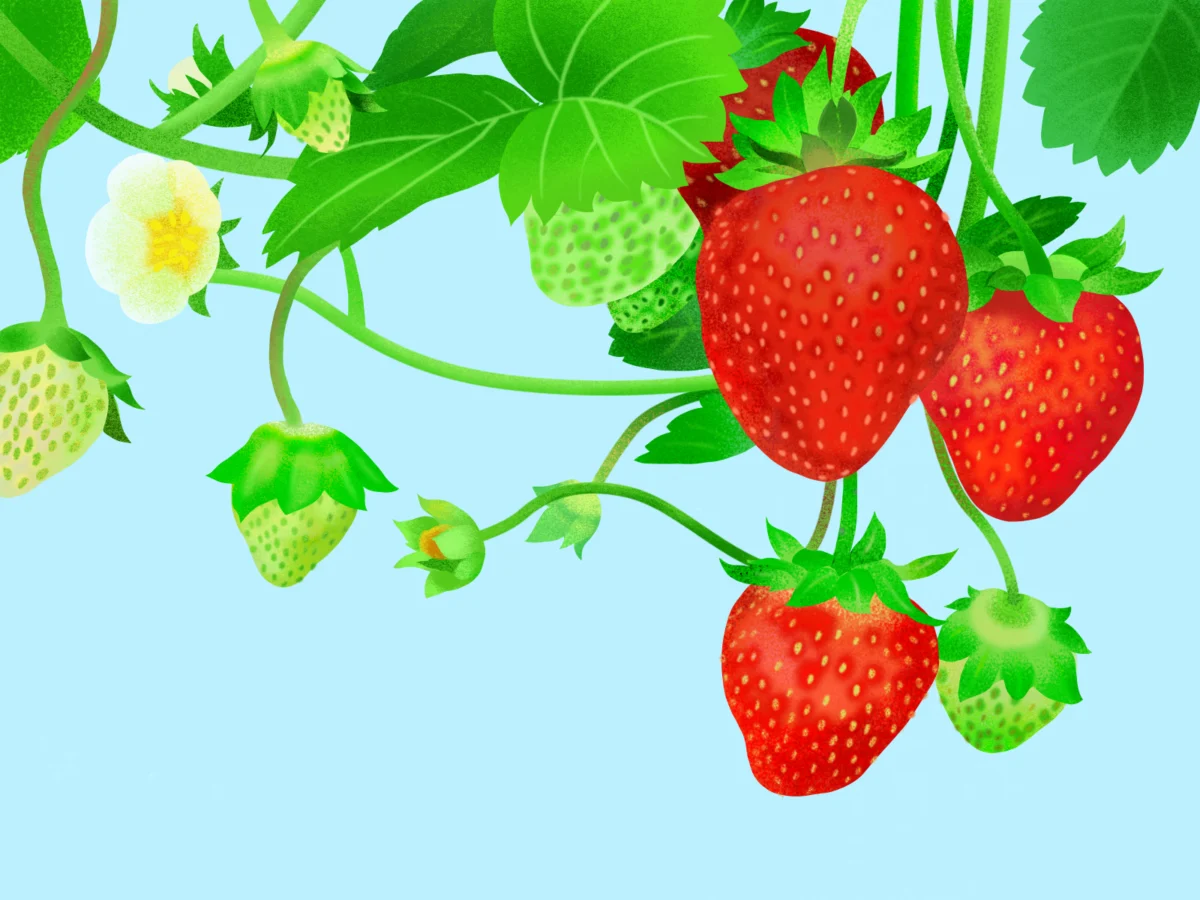
The Tricycle Haiku Challenge, a platform dedicated to fostering the art of Japanese short-form poetry, has concluded its latest round, celebrating the transient beauty of summer through the lens of the humble strawberry. This month’s theme, "Strawberry," inspired poets to capture the essence of fleeting moments, drawing parallels between the ephemeral nature of the fruit and the preciousness of life itself. The winning haiku, along with several honorable mentions, exemplifies the form’s power to evoke deep emotion and philosophical reflection through concise imagery.
The Winning Haiku: A Melancholy Gleam of Awareness
The top honor was awarded to Stevie Rosenfeld for her haiku:
seemingly aware
of day’s end, wild strawberries
flirt with the last light
This poem masterfully encapsulates the haiku’s core principle: conveying profound meaning through simple, evocative images. The "melancholy gleam" often associated with haiku finds its expression here as the poet imbues the wild strawberries with a sense of awareness of the day’s impending end. This anthropomorphism creates a powerful connection between the natural world and human consciousness, suggesting a shared experience of time’s passage.
The analysis accompanying the announcement highlights the intimate relationship between our inner experiences and outward perceptions, a hallmark of haiku. "Haiku reveal that our inner experiences and outward perceptions are more intimately connected than we think," the article states. This connection is further explored through a contemplation of mortality. Just as a wild strawberry has a brief, intense season on the vine, lasting at most three days, human life, too, is fleeting when compared to geological timescales. The sequoia’s millennia-long lifespan or the bristlecone pine’s thousands of years stand in stark contrast to our average seven decades, and even the short life of a strawberry.
Rosenfeld’s winning haiku is lauded for "breaking down the barrier between the human and natural worlds." The strawberries, "flirting with the last light," are presented not merely as passive objects but as active participants in the twilight scene. This playful imagery suggests a "perennial love affair between the summer sun and the season of growth and fruition." However, this beauty is tinged with a "feeling of melancholy, because the setting of the sun means one less day of life." The poem subtly acknowledges a shared mortality, a tacit understanding between the poet and the plant, both belonging to the Earth and destined to return to it. This profound sense of belonging, interwoven with the inevitability of return, imbues the poem with a tender sadness.
Honorable Mentions: Diverse Perspectives on the Strawberry
The Tricycle Haiku Challenge also recognized several "honorable mentions" that further illustrate the multifaceted inspiration drawn from the strawberry:
Nancie Zivetz-Gertler’s haiku offers a poignant reflection on memory and personal history:
your first hand thrown bowl
it’s holding strawberries now
I thought you should know
This poem connects the simple act of holding strawberries in a cherished object to a deeper emotional resonance, suggesting a narrative of continuity and perhaps a gentle remembrance of a person or a past event.
Tracie Renee’s contribution captures a sensory experience tinged with the essence of summer:
caught in the downpour
eating just-picked strawberries
I taste only sun
Here, the unexpected rain becomes a backdrop for the pure, unadulterated joy of tasting freshly picked strawberries, with the flavor described as embodying the very essence of sunshine, a powerful synesthesia that links the fruit to the peak of summer warmth and light.
The Strawberry as a Symbol: From Ancient Wisdom to Modern Poetry
The choice of "strawberry" as the season word is deeply rooted in symbolism and cultural significance. Historically, strawberries have been associated with sweetness, the preciousness of the moment, and the brevity of life, aligning perfectly with the haiku aesthetic. The article delves into a Zen parable that powerfully illustrates this connection. The story of a man hanging precariously over a precipice, pursued by tigers representing birth and death, and with mice (day and night) gnawing at his lifeline, culminates in his discovery of a strawberry. In his final moments, he plucks and savors the fruit, exclaiming, "How sweet!"
This parable, often interpreted as a lesson on impermanence, is re-examined for its deeper ecological and existential implications. The strawberry, in this context, is not merely a symbol of fleeting pleasure but a profound revelation of interconnectedness. Unlike the man, who experiences himself as separate from the natural world, the strawberry "doesn’t worry about birth or death because it is ONE with birth and death." It exists fully in the present, a "sacrament" offering a truth that can be understood "with the belly, but not with the head." This "plant medicine" doesn’t offer grand pronouncements or altered states of consciousness; rather, it embodies a fundamental truth: "Everything that eats is also eaten. This is the truth of all life."
The article further enriches the understanding of the strawberry by providing factual context. In the northeastern United States, the strawberry harvest typically runs from June to mid-July, with warmer climates extending the season. Wild strawberries, often smaller and sweeter than cultivated varieties, appear earlier. Becka Chester, the season word editor, adds botanical and cultural details, noting that the strawberry is a member of the rose family, native to the Americas. Its fruit is botanically complex, not a true berry but an enlarged receptacle. The small white flowers have been linked to purity and innocence, and the heart shape to romantic love, particularly in Japanese culture.
The introduction of strawberries to Japan in the 19th century coincided with their adoption by haiku poets as a summer season word. The article specifically mentions Suzuki Masajo (1906-2003), a pioneering poet who brought themes of love into haiku, traditionally a domain reserved for the longer tanka form. Her famous haiku, "still longing for love / I pop a ripe strawberry / right into my mouth," accompanied by her reflection on the temptation of new love triggered by the memory of first love evoked by the fruit, further demonstrates the strawberry’s enduring power as a muse for poets exploring themes of desire, memory, and the passage of time.
The Tricycle Haiku Challenge: Fostering Poetic Engagement
The Tricycle Haiku Challenge aims to engage a broad audience with the art of haiku and its underlying philosophical principles. The call for submissions for the "Strawberry" theme specifically requested poems written in the traditional 5-7-5 syllable structure, focusing on a single, present moment and keeping the subject matter focused on the season word. This approach encourages poets to practice mindfulness and hone their observational skills.
The challenge provides resources for participants, including previous month’s themes and haiku tips. The "Haiku Tip: Grasp with the Belly, Not the Head!" section, drawing from the Zen parable, underscores the importance of experiential understanding over intellectual analysis in appreciating the essence of a moment, much like savoring a strawberry.
The Tricycle Haiku Challenge actively promotes engagement beyond the submission process. Participants are encouraged to join the Tricycle Haiku Challenge group on Facebook to read additional poems of merit from recent months. Furthermore, a direct link is provided for submitting haiku for the current challenge, ensuring continuous participation and community building around this contemplative poetic form. The ongoing success of these challenges signifies a sustained interest in haiku as a means of exploring life’s profound truths through the simple observation of the world around us.

