


In the annals of medical history, before the life-saving advent of insulin revolutionized the management of diabetes, a simple, yet remarkably effective, dietary intervention offered a lifeline to countless individuals grappling with this chronic condition. The "oatmeal diet," pioneered by the esteemed German physician Carl von Noorden, emerged as a groundbreaking treatment in the early 20th century, demonstrating a potent capacity to control blood sugar levels and extend the lives of those afflicted with diabetes. Published in 1903, von Noorden’s findings initially met with considerable skepticism from the medical establishment, a common reaction to revolutionary ideas that challenge prevailing paradigms. However, over the subsequent years, the sheer weight of empirical evidence gradually eroded this skepticism, solidifying the oatmeal diet’s place as a cornerstone of diabetic care.
The transformative impact of von Noorden’s research was soon recognized by prominent physicians of the era. Dr. James B. Herrick, a highly respected doctor, began incorporating the oatmeal diet into his clinical practice. Initially approaching the regimen with considerable doubt, Dr. Herrick was astonished by the dramatic improvements observed in his patients. His observations culminated in a pivotal proclamation in 1909, asserting that no child or adolescent diagnosed with diabetes should be denied the potential benefits of this "oatmeal cure." This endorsement from a leading medical figure lent significant credibility to the dietary approach and signaled a shift in how diabetes was being managed.
Further bolstering the reputation of the oatmeal diet was Dr. Elliott Joslin, a visionary physician and the founder of what would become the world’s oldest and largest diabetes clinic. Dr. Joslin, known for his meticulous research and compassionate patient care, described the effects of the oatmeal diet as "sometimes magical." He regarded the underlying mechanism of the oatmeal cure as an "unsolved mystery," a sentiment echoed by contemporary physicians who referred to it as "one of the greatest puzzles in diabetes." Despite the lack of a definitive scientific explanation at the time, certain crucial observations provided vital clues. Foremost among these was the critical necessity of strictly excluding animal protein from the diet. Physicians noted that the presence of animal protein invariably "annihilated" the favorable effects of the oatmeal-based regimens, a finding that now, over a century later, aligns with our contemporary understanding of insulin resistance.
The Scientific Basis of Oatmeal’s Efficacy
Modern scientific inquiry has illuminated the physiological underpinnings of why the oatmeal diet proved so effective. The exclusion of animal protein is now understood to be paramount because animal protein intake is strongly correlated with increased insulin resistance, the fundamental driver of prediabetes and type 2 diabetes. Conversely, plant-based foods, including oats, have been shown to enhance insulin sensitivity, effectively counteracting the detrimental effects of insulin resistance. This stark contrast highlights the profound impact of dietary composition on metabolic health.
The efficacy of oatmeal in managing diabetes is not merely historical conjecture; it is supported by a robust body of contemporary scientific evidence. Extensive research, including more than a dozen randomized controlled trials, has consistently demonstrated that the regular consumption of whole grains, with oats taking center stage, is associated with a significantly lower risk of developing diabetes. These studies have revealed that oats can substantially improve both short-term and long-term blood sugar control, while also contributing to lower cholesterol levels.
At the heart of oatmeal’s beneficial effects lies a specific type of fermentable fiber known as beta-glucan. Beta-glucan is a soluble fiber that plays a crucial role in the body’s metabolic processes. One of the key mechanisms by which oatmeal contributes to improved health outcomes is its ability to modulate the gut microbiome. By favorably influencing the composition and activity of intestinal bacteria, beta-glucan can trigger a cascade of positive physiological responses.
The Power of Fiber: A Prebiotic Phenomenon
The fiber present in oatmeal, particularly beta-glucan, acts as a powerful prebiotic. Prebiotics are non-digestible compounds that selectively stimulate the growth and activity of beneficial bacteria residing in the gut. These gut microbes, in turn, ferment the fiber to produce short-chain fatty acids (SCFAs). SCFAs are a group of fatty acids that play a critical role in maintaining gut health and exerting systemic anti-inflammatory effects throughout the body.

Dozens of randomized controlled trials have provided compelling evidence that the types of fiber found in oats and beans can significantly improve long-term blood sugar control in individuals with diabetes. The underlying reason for this improvement is that the gut bacteria, selectively promoted by dietary fiber intake, can help alleviate the pathological processes associated with type 2 diabetes. Specifically, oat fiber has been shown to act as a potent prebiotic, fostering the proliferation of beneficial bacterial species such as Lactobacillus and Bifidobacteria. These bacteria are integral to a healthy gut ecosystem and contribute to improved metabolic function.
When considering the historical success of the oatmeal diet, it becomes clear that its effectiveness stemmed from a synergistic combination of factors: the strict exclusion of animal protein and animal fat, coupled with a rich abundance of prebiotic fiber. This dietary profile created an environment within the body that was conducive to better blood sugar regulation, making it unsurglishable that oatmeal-based diets became an integral part of clinical routines for diabetes management.
The Speed of Change: Rapid Improvements Observed
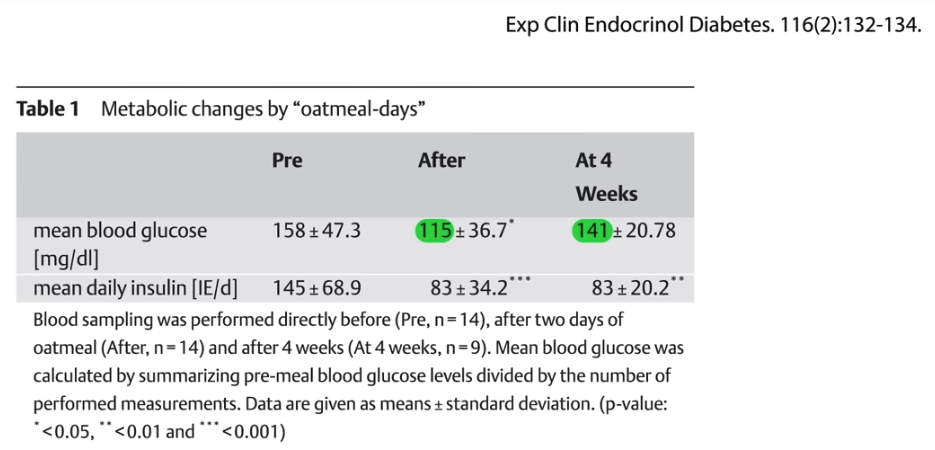
The impact of dietary interventions, particularly those rich in whole grains and fiber, can be remarkably rapid. Several studies have indicated that even short periods of consuming oatmeal can yield beneficial effects that persist for a considerable duration. In one notable randomized, controlled, crossover trial, individuals with diabetes who incorporated oatmeal into their diet experienced a significant reduction in their insulin needs, with a decrease of approximately 40% observed in just two days. This dramatic improvement was observed in comparison to a control group that followed a calorie-restricted diabetic diet without the inclusion of oats.
Furthermore, objective measures of long-term blood sugar control, such as HbA1c levels, taken up to four weeks after the intervention period, reflected the sustained benefits of the short-term oatmeal consumption. This suggests that the positive metabolic changes induced by oats can have a lasting impact on glucose regulation.
More recent studies have corroborated these findings, demonstrating similar rapid and sustained improvements. In one study, a two-day intervention with oatmeal led to a significant reduction in the required insulin dosage and an amelioration of blood sugar levels. The beneficial effects were noted to last for up to four weeks, even after participants resumed their regular diets. For individuals with uncontrolled type 2 diabetes, this two-day oatmeal regimen resulted in a remarkable 40% reduction in insulin dose, accompanied by a near-normalization of average blood sugar levels. The sustained improvement in blood glucose control, observed for weeks after the intervention ceased, underscores the potent and enduring impact of dietary fiber on metabolic health.
The mechanism behind these rapid improvements is linked to the gut microbiome’s response to dietary fiber. When individuals consume diets rich in oats, beans, fruits, vegetables, and nuts, there is a significant increase in the population of gut bacteria that produce beneficial SCFAs. This surge in SCFA-producing bacteria is directly correlated with a reduction in fasting blood sugar levels, with some studies reporting a drop of approximately 25% within one month. The greater the diversity and abundance of these fiber-promoted SCFA producers, the more pronounced the improvement in blood sugar control, as reflected in better hemoglobin A1c levels.
Potential Downsides and Necessary Precautions
While the benefits of oatmeal for diabetes management are substantial, it is crucial to acknowledge potential downsides and the necessity of medical supervision. If an individual embarks on an oatmeal-intensive diet, their physician must be prepared to rapidly adjust or "deprescribe" their blood sugar medications. Failure to do so could lead to dangerously low blood sugar levels (hypoglycemia) due to the potent glucose-lowering effects of oats.
Furthermore, oatmeal interventions may not be suitable for all patients, particularly those who have difficulty recognizing or reporting the symptoms of hypoglycemia. The very effectiveness of oatmeal as a diabetes management tool means it can "work a little too well," necessitating close medical supervision to ensure safety and efficacy. This underscores the importance of a personalized approach to dietary interventions for diabetes.
Understanding Oatmeal’s Glycemic Profile
The glycemic index (GI) of a food indicates how quickly it raises blood sugar levels. While all whole grains are beneficial, the form in which they are consumed can influence their GI. Intact whole grains generally have a lower GI than processed grains.
Oat groats, the whole kernel of oats with the inedible outer husk removed, are the foundation of various oat products. When oat groats are sliced into smaller pieces, they become steel-cut oats (also known as pinhead or Irish oats). These are considered a low-glycemic-index food, typically scoring below 55.
Coarsely grinding oat groats produces Scottish oatmeal, while steaming and flattening them results in "old-fashioned" or rolled oats. Both of these varieties have a glycemic index of 55.
Instant oats, on the other hand, undergo more extensive processing, including longer steaming and thinner rolling. This processing increases their glycemic index, with instant oats scoring around 79. While this is considered a high-GI food, it is still generally less problematic than many refined breakfast cereals, which can have GI values in the 80s or 90s. Therefore, when choosing oatmeal for its health benefits, opting for steel-cut or rolled oats is generally preferable for a more gradual and sustained release of glucose into the bloodstream.
Enhancing the Oatmeal Experience
Oatmeal, a classic whole-grain breakfast, offers a versatile and nutritious foundation for a variety of meals. Its inherent health benefits can be further amplified through thoughtful preparation and the addition of complementary ingredients. A popular approach involves creating a "BROL" base, an acronym that likely refers to a blend of beans, rolled oats, and legumes, or a similar combination of plant-based whole foods.
For those with a preference for sweetness, oatmeal can be transformed into a delightful dessert-like experience. A "chocolate-covered-cherry sensation" can be crafted using frozen dark red cherries, cocoa powder, dates, and a source of healthy fats like walnuts or pumpkin seeds. This combination not only satisfies a sweet craving but also provides antioxidants, healthy fats, and additional fiber.
The savory potential of oatmeal is equally vast. By incorporating ingredients such as sautéed greens, mushrooms, herbs, curry spices, or roasted vegetables, oatmeal can be reimagined as a hearty and flavorful main course. Exploring recipes for "savory oatmeal" reveals a diverse culinary landscape, offering endless possibilities for delicious and health-promoting meals. This adaptability makes oatmeal a sustainable and enjoyable component of a diabetes-friendly diet, catering to a wide range of palates and preferences. The continued exploration and integration of plant-based whole foods, exemplified by the historical and contemporary understanding of oatmeal’s benefits, offer a promising path towards better metabolic health and disease prevention.

