

For the past eighteen months, a unique correspondence has unfolded between the ecopsychology community and David Malinsky, a writer, photographer, and ardent nature enthusiast. Malinsky has cultivated a profound and personal connection with the Great Basin Bristlecone Pines (Pinus longaeva), trees he affectionately refers to as "Old Friends in High Places." This ongoing dialogue, initiated through email exchanges and culminating in a recent publication, offers a rare glimpse into the serene beauty and philosophical depth Malinsky experiences during his expeditions to observe these ancient beings. His work serves as an invitation to engage with the natural world on a deeper, more introspective level, encouraging others to share their own reflections and participate in a growing conversation by contacting him directly via email at [email protected] to join his listserve.
The Unfolding Narrative: A Journey of Discovery
Malinsky’s communications, characterized by their evocative prose and keen observational skills, transcend mere description. They delve into the philosophical underpinnings of encountering life forms that have witnessed millennia of Earth’s history. His recent sharing, a curated sequence of thoughts accompanied by striking imagery, invites readers to ponder the nature of exploration, the limitations of fixed objectives, and the transformative power of embracing the unknown.
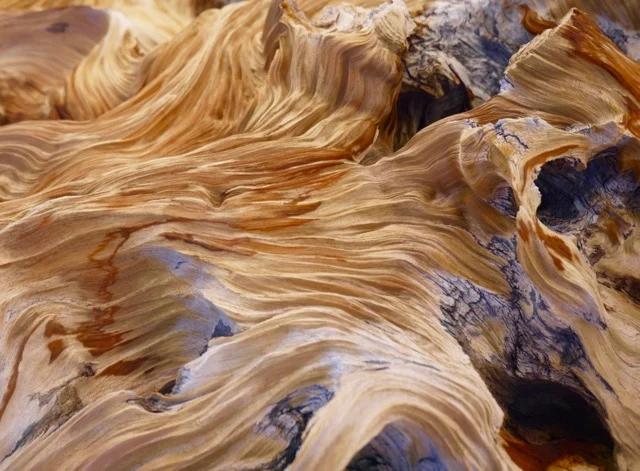
The initial offering from Malinsky presents a compelling metaphor: "Daring to take a path towards what may be unknowable can be among the most noble pursuits of the human spirit. Known targets bring tangible opportunities for achievement, but also limitations; even a well-aimed arrow is forced to halt its arc, having reached a bullseye. Allow the arrow to be what it is, a tool for a particular purpose, but after your fingers release the bowstring do not let the confines of the arc define you. It was what you did, but only a small piece of who you are." This passage, presented alongside a photograph of a gnarled bristlecone pine, underscores a central theme in Malinsky’s work: the liberation that comes from moving beyond rigid goals and embracing the journey itself. He elaborates, "Without narrowing the focus on the bullseye, there can be so much to see, much that will be missed if our sights are too confined. You do not have to reduce all of this to a single place; there is room in your consciousness for all of it, if you allow it in."
The Bristlecone Pines: Living Legacies of Time
The Great Basin Bristlecone Pine is a species of significant scientific and ecological interest. Thriving in harsh, high-altitude environments across the arid mountain ranges of California, Nevada, and Utah, these trees are renowned for their extraordinary longevity. Some individuals have been carbon-dated to be over 4,000 years old, making them among the oldest known non-clonal organisms on Earth. Their ability to survive and even flourish in such challenging conditions— characterized by extreme temperatures, high winds, limited water, and nutrient-poor soils—is a testament to their remarkable resilience and unique evolutionary adaptations.
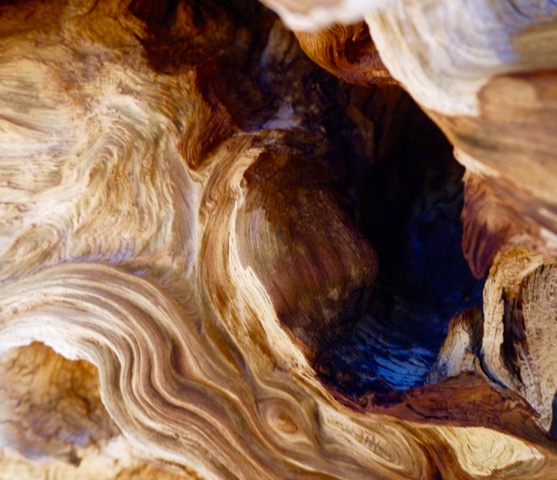
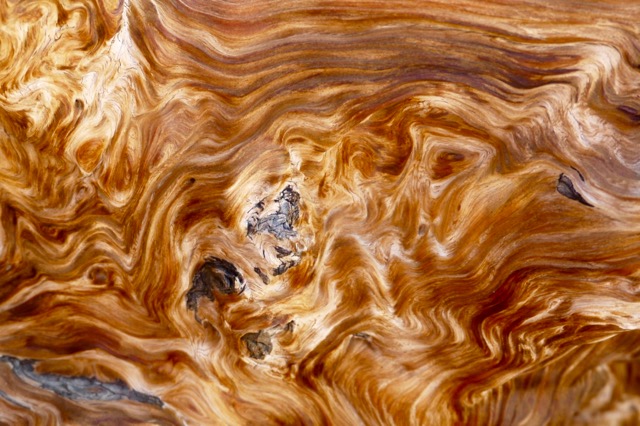
These ancient trees often exhibit contorted, sculptural forms, shaped by centuries of wind erosion and their own slow, deliberate growth. Their wood is exceptionally dense and resistant to decay, allowing dead portions of the tree to persist for hundreds of years, creating intricate, almost artistic patterns. This slow, persistent existence in desolate landscapes has long captivated the imagination of those who encounter them, inspiring awe and contemplation about the passage of time and the enduring strength of life.
The Uncharted Path: Discovering the "Who" Beyond the "Where"
Malinsky’s reflections continue to guide the reader on a metaphorical journey: "It is in taking a path beyond established targets that you begin the journey of yourself, a path whose first steps may appear as though on the way to a ‘Where,’ but as you venture will almost magically turn into as much a ‘Who,’ person and place becoming one." This profound insight suggests that true self-discovery is not found in reaching pre-defined destinations but in the process of exploration itself, where the external landscape becomes interwoven with the internal landscape of the individual.
He further elaborates on the sensory and emotional experiences that accompany this unfolding: "When you feel something inside of yourself growing with each step, and your developing senses appreciating what surrounds the path even more, then you are on the verge of the most important discovery you can make, and any notions of maps can be discarded. Your path has no end, for both you and Nature are constantly evolving, and it is in that trust of Nature that you can place yourself, and explore the labyrinths ahead filled with the joy of anticipation, instead of trepidation." This perspective emphasizes a fundamental shift from a goal-oriented mindset to one of open-ended engagement with the natural world, fostering a sense of wonder and an acceptance of continuous change.
Embracing the Darkness: Finding Light in the Unknown
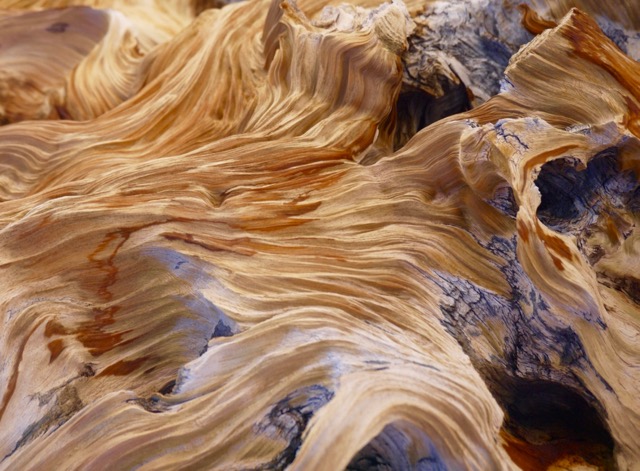
The final segment of Malinsky’s shared thoughts addresses the inevitable challenges encountered on any journey, particularly one that ventures into the less understood territories of self and nature: "Once you develop that trust, both of Nature and of yourself, when you come across what appears to be a darkness you do not fear. That darkness is only a place that is currently without illumination, and should you venture forward with an open spirit, your path may well take you to where it was intended to all along—the place where it is you that are the light."
This powerful conclusion suggests that perceived obstacles or "darkness" are not inherently negative but rather opportunities for growth and self-realization. By cultivating trust in both the external environment and one’s internal compass, individuals can navigate these moments not with fear but with an open spirit, ultimately discovering their own capacity to illuminate and transform their surroundings.
Supporting Data and Ecological Context
The Great Basin Bristlecone Pines inhabit some of the most extreme environments in North America. Their habitat typically lies between 9,000 and 11,500 feet (approximately 2,700 to 3,500 meters) in elevation. These high-altitude deserts are characterized by:
- Low Precipitation: Annual rainfall can be as low as 10-12 inches, often falling as snow.
- Extreme Temperatures: Summer temperatures can soar, while winter temperatures plummet well below freezing, with frequent freeze-thaw cycles.
- High Winds: Exposed mountain slopes are subject to relentless winds that can shape the trees and desiccate exposed tissues.
- Nutrient-Poor Soils: The thin, rocky soils offer minimal nutrients, forcing the trees to develop highly efficient resource acquisition strategies.
Despite these harsh conditions, bristlecone pines are incredibly resilient. Their slow growth rate, sometimes as little as one inch in diameter per century, allows them to conserve energy and resources. Their unique wood structure, described as "resinous" and "dense," provides excellent insulation and resistance to insects and disease. The ability of bristlecone pines to survive extreme drought conditions is further enhanced by their capacity to shed entire branches, effectively reducing their surface area and water demand during prolonged dry spells.
The oldest known individual bristlecone pine, nicknamed "Methuselah," is located in the White Mountains of California and was verified to be 4,853 years old in 2012. Another, "Prometheus," was discovered to be 4,900 years old before it was unfortunately cut down in 1964 for research purposes, highlighting the ongoing tension between scientific study and conservation of these ancient living specimens.
Broader Impact and Implications
David Malinsky’s work, while personal in its expression, resonates with broader themes in environmental psychology and ecocentric philosophy. His emphasis on the journey over the destination and the embrace of the unknown aligns with principles of mindfulness and deep ecology, which advocate for a more profound and interconnected relationship with the natural world.
The implications of Malinsky’s perspective extend beyond individual introspection. In an era increasingly defined by rapid change and a focus on immediate results, his encouragement to slow down, observe, and trust in natural processes offers a valuable counterpoint. The bristlecone pines themselves serve as potent symbols of endurance, adaptability, and the profound wisdom that can be gained from observing life forms that operate on vastly different timescales than our own.
The ongoing conversation facilitated by Malinsky through his listserve provides a platform for individuals to explore these themes collectively. By sharing their experiences and reflections, participants can foster a deeper appreciation for the natural world and its capacity to inform and enrich human understanding. This communal engagement, rooted in the awe-inspiring presence of ancient trees, underscores the potential for nature-based experiences to cultivate resilience, wisdom, and a more harmonious coexistence with the planet. The call to action—to contact Malinsky and join the conversation—invites others to embark on their own journeys of discovery, guided by the enduring spirit of the "Old Friends in High Places."

