

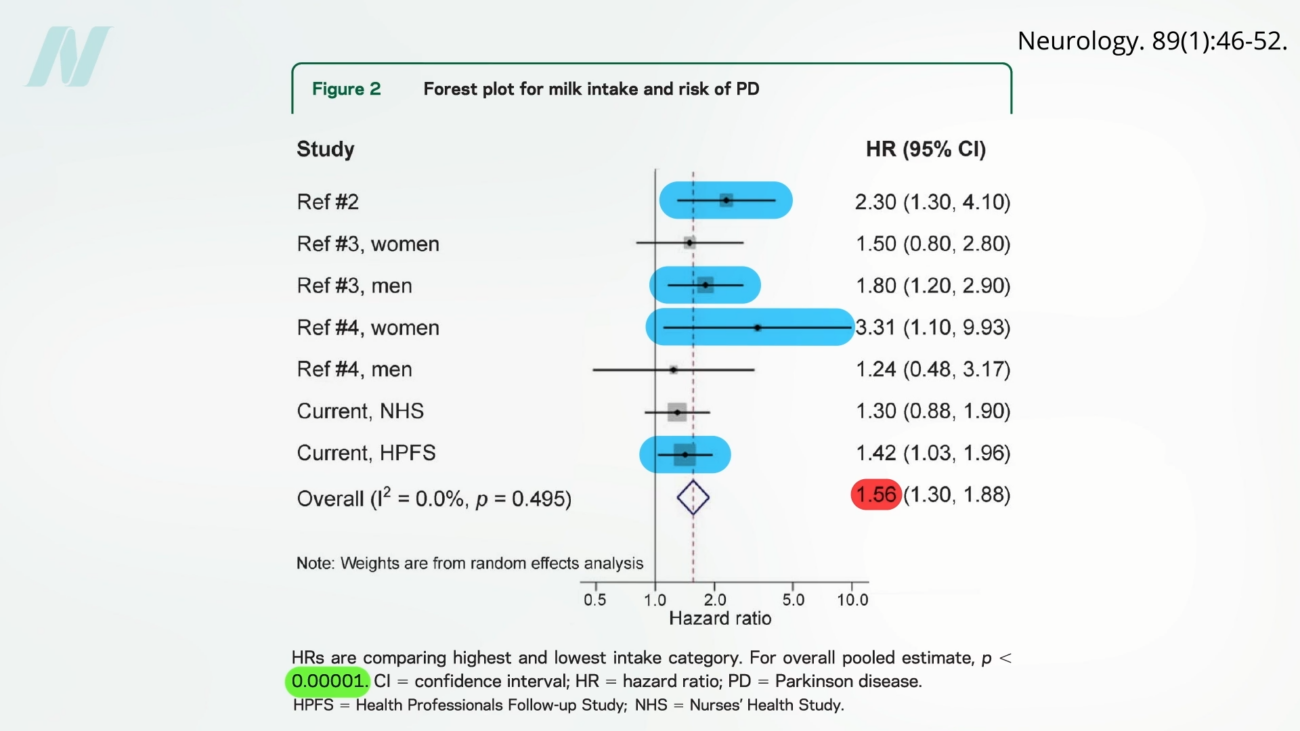
Parkinson’s disease, a progressive neurodegenerative disorder affecting millions worldwide, has long been a subject of intensive scientific inquiry. While the exact etiology remains multifaceted, a growing body of research has pointed towards lifestyle factors, with dairy consumption emerging as a consistently strong dietary association with an increased risk of developing the debilitating condition. This observed correlation, validated across numerous large-scale prospective studies, including the extensive Harvard cohorts—the Nurses’ Health Study and the Health Professionals Follow-up Study—which collectively monitored over 100,000 individuals for decades, warrants a deeper investigation into the potential mechanisms driving this link. The aggregate findings from these studies, analyzing over a thousand newly diagnosed Parkinson’s cases, revealed a significant association, with individuals consuming the highest quantities of milk exhibiting approximately a 50% elevated risk compared to their non-milk-drinking counterparts. This statistical significance, underscored by a p-value below 0.00001, suggests a robust connection that transcends random chance.
Investigating the Root Cause: Pesticides or Sugars?
For years, the scientific community grappled with a definitive explanation for the observed correlation between milk consumption and Parkinson’s disease. A comprehensive review published a few years prior to recent developments concluded that "despite clear-cut associations between milk intake and incidence of Parkinson’s, there is no rational explanation." However, subsequent research began to illuminate potential pathways, focusing on two primary contenders: the banned pesticide heptachlor and the milk sugar galactose.
The Heptachlor Epoxide Hypothesis
One of the earliest and most compelling clues emerged from a study that examined the density of substantia nigra neurons in deceased individuals, correlating these findings with their midlife milk consumption habits. Parkinson’s disease is characterized by the degeneration of dopaminergic neurons in the substantia nigra, a critical region of the brain responsible for motor control. Symptoms typically manifest only after a substantial loss of these neurons has occurred.
This groundbreaking study meticulously analyzed the brains of individuals who had participated in long-term dietary studies. Researchers found a direct correlation between the amount of milk consumed in midlife (ages 40s, 50s, and 60s) and the remaining neuron density in the substantia nigra at autopsy. Across all examined quadrants of this brain region, neuron density was highest in those who abstained from milk and lowest in those who were the most frequent consumers.
Even when individuals diagnosed with Parkinson’s disease were excluded from the analysis, a stark difference persisted. Those who consumed approximately two cups (473 mL) of milk daily exhibited up to a 40% reduction in critical nerve cells in most quadrants of the substantia nigra. This significant neuronal loss prompted further investigation into the potential toxic agents present in milk that could be responsible for this observed damage.
A crucial finding within this research was the detection of pesticide residues. Among the brains of individuals who had consumed the most milk, residues of heptachlor epoxide, a metabolite of the now-banned pesticide heptachlor, were found in an astonishing 9 out of 10 samples. Heptachlor, a persistent organic pollutant formerly used as an insecticide, was banned in many countries due to its environmental persistence and potential health risks, including its carcinogenic properties and its ability to bioaccumulate in fatty tissues. The widespread presence of heptachlor epoxide in the brains of high milk consumers offered a plausible explanation for how milk consumption could be causally linked to an increased risk of Parkinson’s disease. The bioaccumulation of this neurotoxic pesticide, potentially through dietary exposure via dairy products, could contribute to the progressive destruction of dopaminergic neurons.
The Galactose Pathway: A New Avenue of Investigation
While the heptachlor epoxide hypothesis provided a strong environmental toxicology angle, another significant line of inquiry emerged, focusing on the intrinsic composition of milk itself: galactose. Lactose, the primary sugar found in milk, is broken down in the human digestive system into glucose and galactose. Galactose, a monosaccharide, has garnered attention due to its potential role in accelerating brain aging and inducing cellular damage.
Researchers discovered that galactose is efficiently absorbed by the brain within hours of ingestion. Crucially, studies indicate that at doses exceeding 100 mg/kg, galactose can induce pathological alterations in brain cells that bear a striking resemblance to those observed in Parkinson’s disease. This dose, it is noted, can be easily reached and surpassed by individuals consuming just two glasses (473 mL) of milk daily, which serves as the primary dietary source of galactose for many.
Further research suggests that dopaminergic neurons, the very cells critical for preventing Parkinson’s disease, may be particularly vulnerable to galactose-induced damage. This heightened susceptibility is attributed to their greater vulnerability to oxidative stress, a process that galactose appears to exacerbate. The accumulation of oxidative damage within these neurons can lead to their dysfunction and eventual death, mirroring the pathological hallmarks of Parkinson’s.

The implications of the galactose hypothesis extend beyond Parkinson’s disease. Studies have also linked higher milk consumption to increased mortality rates, a phenomenon that was observed irrespective of the milk’s fat content. This suggests that the issue might not be solely related to saturated fats but rather to other components of milk, such as lactose and its breakdown product, galactose. Even skim milk, which is fat-free, still contains lactose.
The efficacy of lactose-free milk products, such as those enhanced with the lactase enzyme to break down lactose, has also been questioned in the context of this hypothesis. While these products may prevent lactose intolerance symptoms by pre-digesting lactose into galactose, the end result is still the ingestion of the same amount of galactose, just at an earlier stage of processing. Therefore, individuals consuming lactose-free milk may still be exposed to the same potential risks associated with galactose.
Moreover, the role of galactose in cognitive decline has also come under scrutiny. Research indicates that increased milk intake in midlife may be associated with a greater rate of cognitive decline. This finding aligns with the established use of D-galactose in laboratory animal models to experimentally induce brain aging, a process that mimics cognitive decline through oxidative stress. Individuals who consume more than one glass (237 mL) of milk daily appear to be at a higher risk of experiencing a decline in global cognitive function compared to those who consume milk infrequently.
Broader Implications and Future Directions
The ongoing research into the milk-Parkinson’s link has profound implications for public health recommendations and individual dietary choices. While the definitive causal agent—heptachlor epoxide or galactose—is still under rigorous investigation, the consistent association between dairy consumption and an increased risk of Parkinson’s disease, coupled with the potential mechanisms of neurotoxicity, necessitates a cautious approach.
The findings suggest that reducing or eliminating dairy intake, particularly for individuals with a family history of Parkinson’s disease or those concerned about neurodegenerative risks, may be a prudent dietary strategy. Further research is warranted to precisely quantify the thresholds of galactose intake that pose a significant risk and to explore the synergistic effects of other dietary and environmental factors.
The scientific community continues to explore related avenues, including the potential role of alpha-synuclein, a protein implicated in Parkinson’s disease, in dairy products, although confirmation remains pending. Investigations into uric acid levels and their potential role in modulating Parkinson’s disease risk are also ongoing, adding another layer of complexity to understanding this intricate neurological disorder.
The journey to fully elucidate the intricate relationship between diet and neurodegenerative diseases is far from over. However, the current evidence strongly suggests that dairy consumption, whether due to residual pesticides or the inherent properties of milk sugars, plays a significant role in the development and progression of Parkinson’s disease. Continued scientific investigation, coupled with informed public health discourse, will be crucial in mitigating the impact of this prevalent and devastating condition.
Doctor’s Note:
Previous explorations into the dietary triggers of Parkinson’s disease have examined the role of meat consumption and the potential impact of lactose. The research into uric acid and its "sweet spot" in relation to Parkinson’s disease also highlights the complex interplay of biological factors. For comprehensive insights into Parkinson’s disease and related research, further resources are available through scientific publications and reputable health organizations.

