

The Galapagos Islands, a volcanic archipelago situated approximately 600 miles off the coast of Ecuador, have solidified their status as a premier global destination for ecotourism and scientific inquiry. As international awareness regarding the region’s unparalleled biodiversity continues to grow, the Ecuadorian government and the Galapagos National Park Authority (GNPA) have faced the dual challenge of accommodating increasing visitor numbers while safeguarding one of the world’s most delicate ecosystems. Historically, tourism was concentrated on the central islands of San Cristobal and Santa Cruz; however, a pivotal regulatory shift in 2011 fundamentally altered the landscape of travel within the archipelago. By implementing new route frequencies and itinerary restrictions, the GNPA successfully decentralized tourism, incentivizing small-ship cruise operators to explore the more remote, uninhabited reaches of the islands. This strategic move has not only mitigated the environmental pressures of mass tourism but has also unlocked a series of unique experiences that remain inaccessible to land-based travelers.
Historical Context and Regulatory Evolution
The management of the Galapagos Islands has undergone significant transformation since the establishment of the Galapagos National Park in 1959. As Ecuador’s first national park, the area was designated a UNESCO World Heritage site in 1978. Despite these protections, the late 20th and early 21st centuries saw a surge in "land-based" tourism, leading to overcrowding in port towns and increased pressure on local infrastructure.
In response to these challenges, the 2011 regulations were introduced to optimize the flow of visitors. These rules mandated that cruise vessels could only visit the same site once every 15 days, effectively forcing a broader distribution of ships across the 18 main islands and dozens of smaller islets. For the traveler, this necessitated a shift toward small-ship cruising—vessels typically carrying 16 to 100 passengers—as the primary vehicle for reaching the archipelago’s "outer loop" locations. These remote sites offer biological and geological encounters that cannot be replicated on day trips from the inhabited hubs of Puerto Ayora or Puerto Baquerizo Moreno.
1. High-Altitude Marine Exploration: Scuba Diving at Wolf Island
Located in the far northwest of the archipelago, Wolf Island (alongside its neighbor, Darwin Island) represents the pinnacle of marine biodiversity in the Eastern Tropical Pacific. Due to its extreme isolation—roughly 100 miles from the nearest major landmass—Wolf Island is strictly off-limits for land-based excursions. The GNPA prohibits any terrestrial landings on the island to protect its pristine environment, making live-aboard cruise vessels the sole means of access.
The waters surrounding Wolf Island are defined by the convergence of major oceanic currents, including the cold Humboldt Current and the warm Panama Current. This creates a nutrient-rich environment that attracts massive schools of scalloped hammerhead sharks, Galapagos sharks, and, most notably, whale sharks. In 2016, the Ecuadorian government further protected this region by creating the Darwin and Wolf Marine Sanctuary, which covers 15,000 square miles and prohibits all fishing. While the currents are notoriously strong, requiring advanced certification for divers, the site offers a rare opportunity to witness marine "megafauna" in a density found nowhere else on Earth.
2. Ornithological Density on Genovesa Island
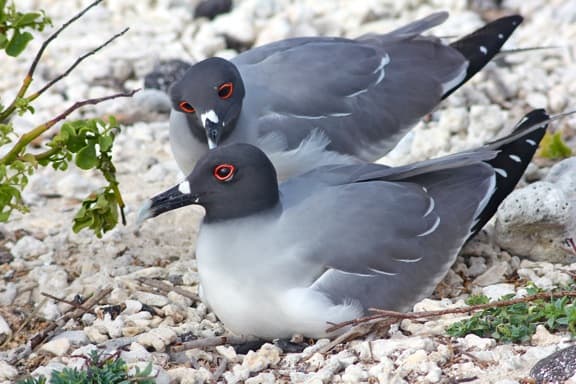
Genovesa Island, often referred to as "Bird Island," is a collapsed volcanic caldera that serves as a vital nesting ground for hundreds of thousands of seabirds. Because it is located in the northern reaches of the archipelago, it requires a long-distance navigation that most day-tour boats cannot achieve. The island is one of the few places where visitors can observe three species of boobies—Blue-footed, Red-footed, and Nazca—in close proximity.
The unique topography of Genovesa, particularly the steep cliffs known as Prince Philip’s Steps, provides an ideal habitat for storm petrels and the short-eared owls that hunt them. Small-ship cruises allow for early morning landings, providing photographers and naturalists with the opportunity to document mating rituals and nesting behaviors without the interference of large crowds. Data from the Charles Darwin Foundation indicates that Genovesa hosts the largest colony of Red-footed boobies in the world, a species rarely seen on the southern islands.
3. The Maritime Heritage of Post Office Bay on Floreana Island
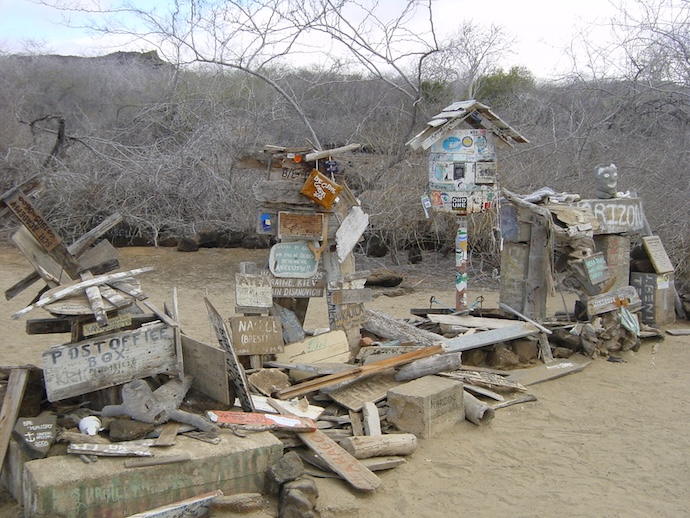
While the Galapagos are primarily known for natural history, Floreana Island offers a compelling look into human history and the early era of Pacific exploration. In the late 18th century, British whalers established a rudimentary postal system at what is now known as Post Office Bay. Sailors would place letters in a wooden barrel, and passing ships headed toward the letters’ destinations would pick them up for delivery.
This tradition survives today, maintained exclusively by the cruise industry. Travelers leave unstamped postcards in the barrel and sort through the existing pile to find mail addressed to locations near their own homes. This "hand-delivery" system is a living link to the 1800s. Furthermore, Floreana was the site of the "Galapagos Affair," a series of mysterious disappearances and deaths among European settlers in the 1930s, a narrative that adds a layer of cultural intrigue to the island’s volcanic landscapes.
4. Prehistoric Congregations on Fernandina Island
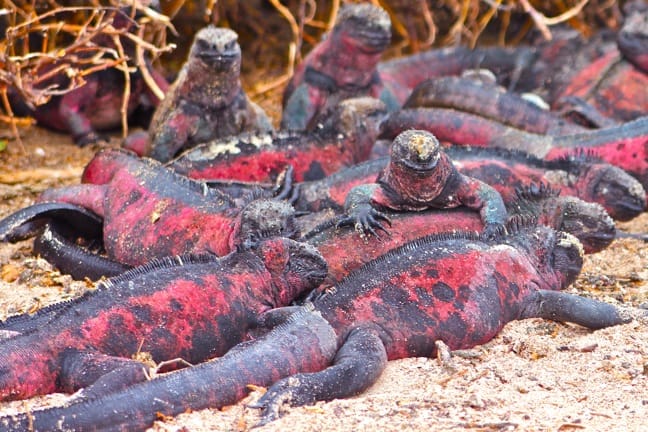
Fernandina is the youngest and most volcanically active island in the archipelago. Its western position makes it one of the most pristine environments on the planet, as it has been largely shielded from invasive species. The island is the primary stronghold for the marine iguana (Amblyrhynchus cristatus), the world’s only seafaring lizard.
At Punta Espinoza, cruise passengers can witness hundreds of these endemic reptiles basking on black lava rocks to regulate their body temperature. Scientific analysis of these iguanas reveals remarkable evolutionary adaptations, such as the ability to shrink their skeletons during El Niño events when food (algae) is scarce. Observing these "miniature Godzillas" as they forage underwater is an experience restricted to the western itineraries of specialized cruise vessels, as the distance from the central islands makes Fernandina inaccessible to land-based tourism.
5. Evolutionary Divergence at Wolf Volcano
Isabela Island, the largest in the chain, is formed by six shield volcanoes. Wolf Volcano, the highest peak at 5,600 feet, is a site of immense scientific importance. The isolation provided by the volcano’s rugged terrain has led to the development of unique subspecies found nowhere else, even on other parts of Isabela.
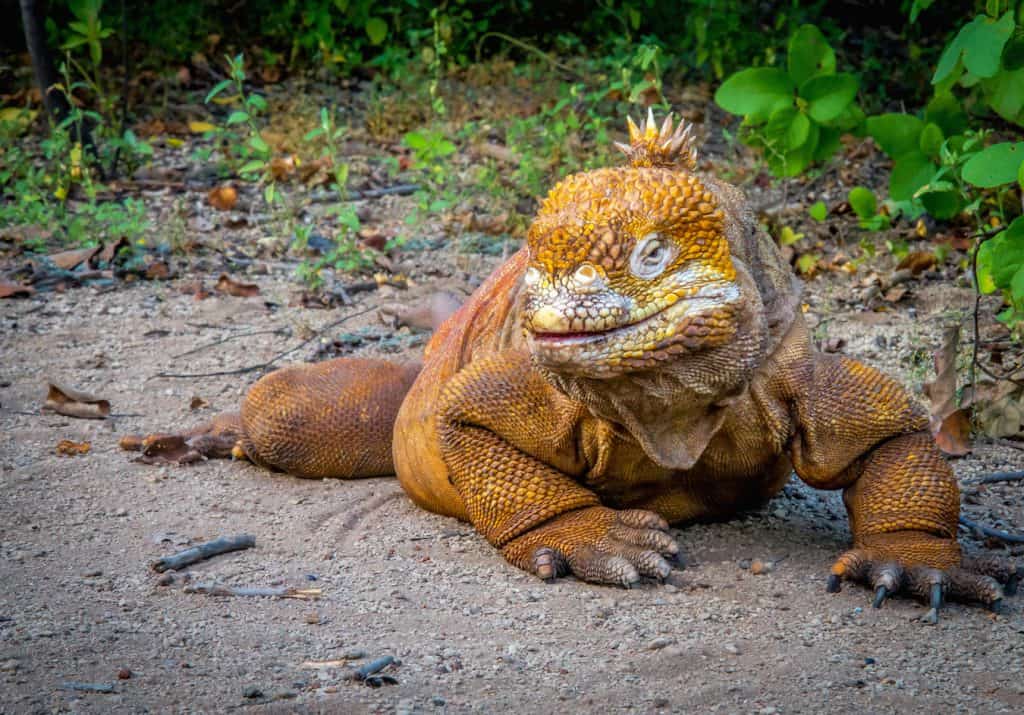
In 2009, researchers officially identified the Pink Land Iguana (Conolophus marthae) near the slopes of Wolf Volcano. This species represents a distinct evolutionary lineage that diverged from other land iguanas millions of years ago. Additionally, the volcano is home to tortoises with genetic markers linked to the extinct Pinta Island tortoise, made famous by "Lonesome George." Small-ship cruises that navigate the northern coast of Isabela provide the only logistical framework for visiting these remote volcanic slopes, where conservationists are currently working to "back-breed" tortoises to restore extinct lineages.
6. Aquatic Speed: Swimming with Galapagos Penguins in Tagus Cove
Tagus Cove, located on the western coast of Isabela, served as a historic anchorage for pirates and whalers, whose ship names are still visible on the surrounding cliffs. Today, the cove is a critical habitat for the Galapagos Penguin, the only penguin species found north of the equator.
The cold, nutrient-rich waters of the Cromwell Current upwell here, providing the sustenance necessary for these birds to thrive in a tropical climate. Unlike the larger penguin colonies in Antarctica, Galapagos penguins are often found in small groups or pairs. Snorkeling excursions from cruise ships allow for intimate encounters with these birds as they hunt. Because the penguins are highly sensitive to water temperature and human disturbance, the GNPA strictly limits the number of people allowed in the water at Tagus Cove at any given time, a regulation enforced through the cruise permitting system.
7. The Megacolonies of Española Island
Española is the southernmost island and one of the oldest in the archipelago. It is home to several "island-endemic" species, meaning they are found on Española and nowhere else on Earth. This includes the Española mockingbird and the waved albatross.
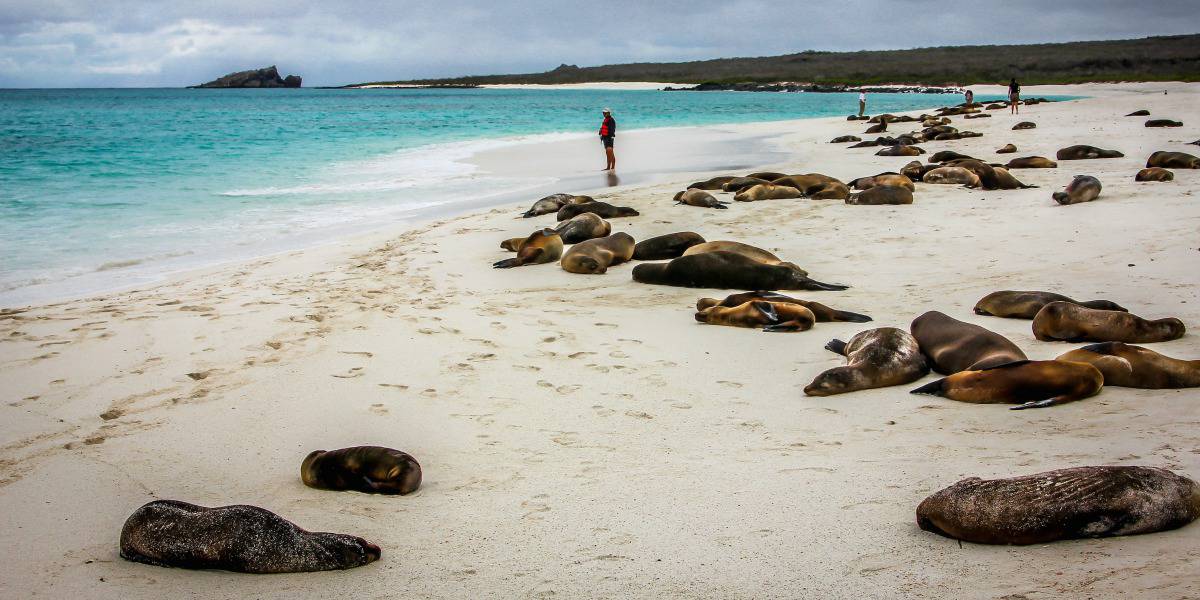
Gardner Bay provides a spectacular setting for observing one of the largest sea lion colonies in the Galapagos. The lack of natural predators has resulted in a population that is remarkably unafraid of humans, allowing for close-up observations of social structures and maternal bonds. Furthermore, from April to December, the island hosts the entire world population of adult waved albatrosses. The sight of these massive birds—boasting wingspans of up to eight feet—performing their complex "sword-fighting" mating dance is a highlight of the cruise season.
Analysis of Broader Impacts and Future Implications
The shift toward regulated, cruise-based tourism has had profound implications for the Galapagos economy and environment. According to the Galapagos Report, tourism accounts for over 80% of the archipelago’s economic activity. By funneling visitors into structured, naturalist-led cruise itineraries, the GNPA has been able to maintain high standards of environmental education while preventing the "trampling effect" seen in other high-traffic global destinations.
However, challenges remain. The rise of "last-chance tourism"—travelers visiting specifically because they fear the environment will soon disappear—has increased the carbon footprint of the region. In response, many cruise operators are transitioning to hybrid propulsion systems and strict zero-waste-to-landfill policies. The 2011 regulations served as a blueprint for sustainable management, but as climate change alters ocean temperatures and threatens endemic species like the Galapagos penguin and marine iguana, the role of small-ship cruises as "floating classrooms" for conservation becomes increasingly vital.
The Ecuadorian Ministry of Tourism has indicated that future policies will likely continue to favor low-impact, high-value tourism. This ensures that the unique experiences found at the archipelago’s remote edges remain preserved for future generations, maintaining the delicate balance between the islands’ status as a "living laboratory of evolution" and a bucket-list destination for global travelers.

