

The landscape of Parkinson’s disease research has evolved dramatically since James Parkinson first meticulously described its characteristic motor symptoms in the early 19th century. While his seminal work laid the foundation for understanding the neurological underpinnings of this progressive neurodegenerative disorder, contemporary research has broadened its focus to encompass a wider array of influencing factors, notably the intricate relationship between nutrition and disease progression. Emerging scientific inquiry suggests that dietary choices, once relegated to the periphery of medical understanding, now play a pivotal role in both mitigating the risk of developing Parkinson’s and potentially managing its debilitating symptoms. Among the most scrutinized dietary elements is coffee, a ubiquitous beverage with a complex profile of compounds that have sparked significant interest for their potential therapeutic applications.
The Evolving Understanding of Parkinson’s and Nutrition
Parkinson’s disease is characterized by the progressive loss of dopaminergic neurons in the substantia nigra, a region of the brain crucial for motor control. This neuronal degeneration leads to the hallmark symptoms of tremor, rigidity, bradykinesia (slowness of movement), and postural instability. For decades, the focus of treatment was primarily on managing these motor symptoms through pharmacological interventions aimed at replenishing dopamine levels. However, a growing body of evidence points towards a more holistic approach, emphasizing the impact of diet on neuroprotection and disease modulation.
Early observations and epidemiological studies have indicated a correlation between certain dietary patterns and Parkinson’s risk. High intakes of animal fats, heavy metals like mercury, and iron have been anecdotally and scientifically linked to an increased susceptibility to the disease. Conversely, a diet rich in plant-based foods and antioxidants appears to confer a protective effect. This protective mechanism is largely attributed to the ability of plant-derived nutrients to combat oxidative stress and inflammation, two key pathological processes implicated in the pathogenesis of chronic degenerative diseases, including Parkinson’s.
Plant-based diets, in particular, are recognized for their capacity to preserve cellular integrity by neutralizing free radicals and reducing inflammatory responses. These mechanisms are vital in safeguarding delicate neural tissues from damage. In contrast, diets heavily reliant on animal products, especially those high in saturated fats and animal proteins, have been associated with a heightened risk not only for Parkinson’s disease but also for other major chronic illnesses such as cancer, cardiovascular disease, and type 2 diabetes. This suggests a systemic inflammatory and oxidative burden that can predispose individuals to neurodegeneration.
Nuances of Plant-Based Nutrition and Potential Pitfalls
While the general consensus favors plant-based diets for their neuroprotective qualities, it is crucial to acknowledge that not all plant-derived substances are inherently beneficial. A notable example of this complexity is the fruit Annona muricata, commonly known as soursop or graviola. While soursop has been associated with potential benefits such as lowering blood pressure and uric acid levels, it also contains neurotoxic compounds. Scientific literature highlights a concerning link between the consumption of soursop and an atypical form of Parkinson’s disease. Population studies have indeed documented an association between the excessive intake of soursop and the development of neurodegenerative disorders, underscoring the importance of understanding the specific bioactive components of plant foods and their potential adverse effects.
This cautionary tale underscores the need for nuanced dietary recommendations. The broad category of "plant-based diets" encompasses an immense diversity of edible species, estimated to be around 20,000 worldwide. Research into the specific anti-Parkinson’s properties of this vast array of plants is still in its nascent stages, with only a limited number having been thoroughly investigated for their therapeutic potential.
Coffee and Caffeine: A Closer Examination of a Popular Stimulant
Among the plant-derived substances that have garnered significant attention for their potential role in Parkinson’s disease is coffee. The beverage, rich in caffeine and a complex blend of antioxidants, has been the subject of numerous studies exploring its influence on both disease prevention and symptom management. Multiple research endeavors suggest that regular coffee consumption may exert a protective effect against the initial development of Parkinson’s disease and potentially even slow its progression.
Further bolstering this notion, some studies have indicated a correlation between coffee or caffeinated tea consumption and a reduced risk of premature mortality among Parkinson’s patients. One such investigation revealed that individuals with Parkinson’s disease who regularly consumed coffee or caffeinated tea appeared to halve their risk of dying prematurely. However, it is imperative to distinguish between correlation and causation. While these associations are compelling, they do not definitively prove that caffeine is the sole or even primary factor responsible for these observed benefits. Rigorous scientific investigation is required to establish a causal link.
The Initial Promise: Caffeine’s Short-Term Efficacy in Clinical Trials
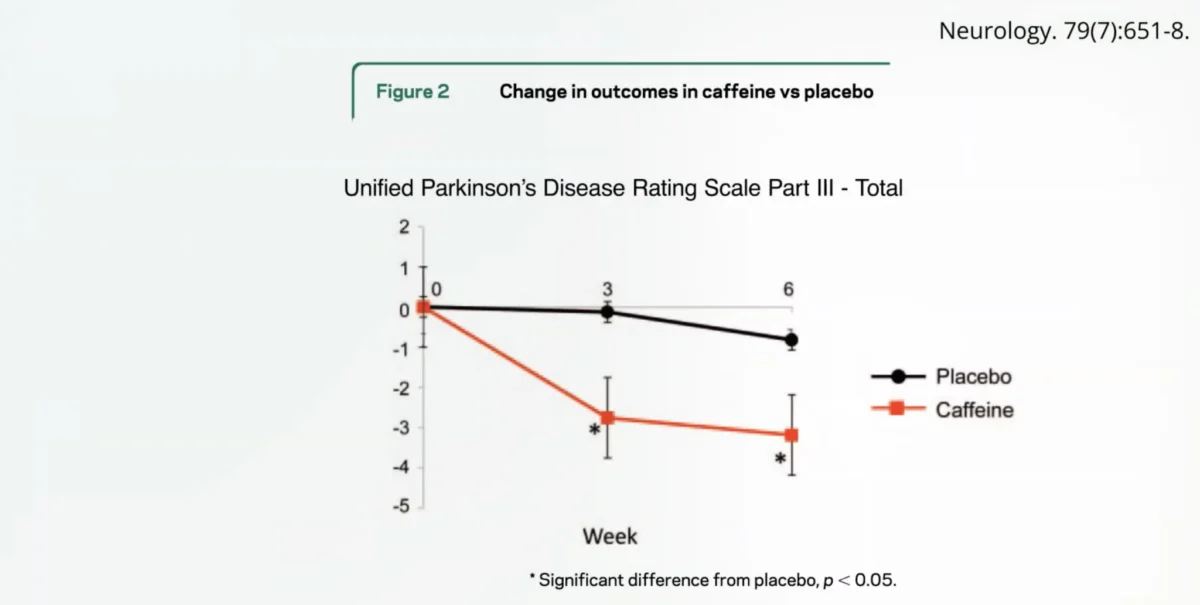
To address the question of causation, researchers embarked on a series of controlled clinical trials designed to rigorously assess the therapeutic potential of caffeine in Parkinson’s disease. One such pivotal study, a six-week randomized, placebo-controlled, double-blind trial, aimed to evaluate caffeine as a potential treatment for Parkinson’s symptoms. Participants in the caffeine group were administered doses equivalent to approximately one cup of coffee twice daily. This dosage was gradually increased to the equivalent of two cups of coffee twice daily, a regimen comparable to consuming four cups of black tea or six cups of green tea twice a day.
The results of this initial study were encouraging. Within a three-week period, participants receiving caffeine demonstrated a statistically significant improvement in their Parkinson’s symptoms when compared to those in the placebo group. This rapid onset of benefit suggested that caffeine might indeed offer a viable, accessible, and potentially cost-effective therapeutic option for individuals grappling with the motor and non-motor manifestations of the disease. The study’s findings were visually represented in accompanying graphical data, illustrating the marked symptomatic relief observed in the caffeine intervention group.
The implications of these findings were substantial. Coffee, being widely available and relatively inexpensive, presented the prospect of a simple, safe, and accessible treatment modality. The immediate improvement in symptoms offered a glimmer of hope for patients seeking tangible relief from their daily struggles. However, a critical limitation of this initial trial was its short duration.
The Unraveling of Sustained Benefit: The Tachyphylactic Effect and Longer-Term Studies
A key concern with caffeine, particularly in its role as a stimulant and in combating conditions like sleepiness, is its known "tachyphylactic" property. This phenomenon refers to the diminishing effect of a drug or substance with repeated exposure over time. While the initial study showed promise, the question remained whether these benefits would persist beyond the initial weeks of intervention. The possibility that caffeine’s positive impact might wane with continued use loomed large.
This concern prompted further investigation. Five years after the initial short-term study, a more comprehensive, longer-term trial was conducted to assess the sustained efficacy of caffeine in Parkinson’s patients. In this subsequent study, participants were randomized to receive a daily dose of caffeine equivalent to approximately two cups of coffee, administered twice a day, for a duration exceeding six months. This extended timeframe was designed to provide a more robust assessment of caffeine’s enduring effects.
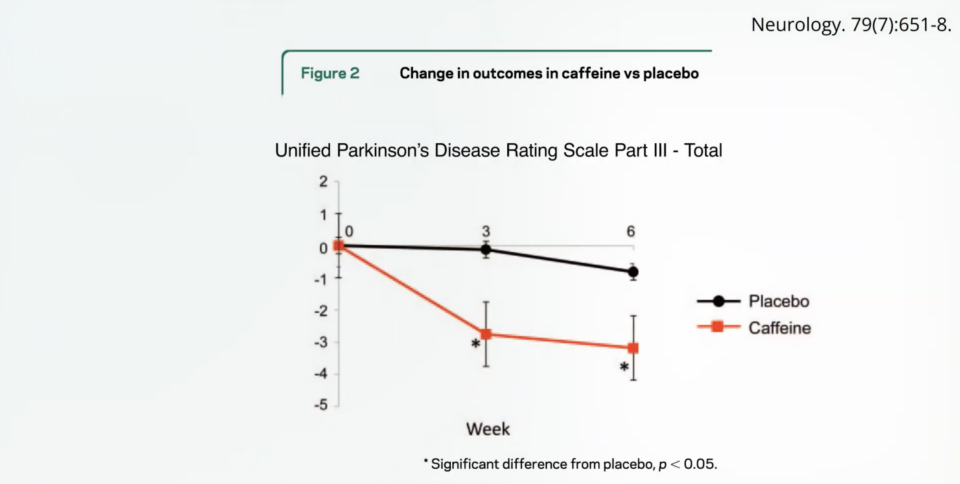
The results of this longer-term study, however, painted a less optimistic picture. Contrary to the initial findings, the extended administration of caffeine did not yield any significant benefit over the placebo group. The symptomatic improvements observed in the earlier, shorter study had apparently dissipated over time. This outcome was a significant setback, suggesting that while caffeine might offer a temporary respite, it could not be relied upon as a sustainable symptomatic therapy for Parkinson’s disease.
Analysis of Implications: A Short-Term Aid, Not a Long-Term Solution
The contrasting outcomes of the short-term and long-term studies provide critical insights into the complex pharmacological profile of caffeine in the context of Parkinson’s disease. The initial rapid improvement in symptoms likely stemmed from caffeine’s acute impact on neurotransmitter systems, possibly including its adenosine receptor antagonism, which can influence dopamine signaling. This could temporarily ameliorate motor deficits and other symptoms.
However, the tachyphylactic properties of caffeine, combined with the progressive nature of Parkinson’s disease itself, appear to limit its long-term therapeutic utility. As the disease continues its relentless march, causing further neuronal degeneration, the transient benefits offered by caffeine may become insufficient to counteract the underlying pathology. The lack of sustained benefit in the longer study indicates that caffeine cannot be recommended as a primary symptomatic treatment for Parkinsonism.
This conclusion carries significant implications for how coffee and caffeine are viewed in the management of Parkinson’s disease. While enjoying a morning cup of coffee may still be a pleasurable ritual for many individuals with Parkinson’s, and might offer some immediate, albeit temporary, relief, it should not be considered a substitute for evidence-based medical treatments. The research unequivocally demonstrates that while caffeine may provide a short-lived boost, its efficacy diminishes with consistent, prolonged use, rendering it an unreliable strategy for long-term symptom management.
The Future of Nutritional Research in Parkinson’s
The exploration of coffee and caffeine’s role in Parkinson’s disease highlights a broader, more promising avenue of research: the potential of plant-based nutrition as a complementary and supportive approach to managing chronic neurodegenerative conditions. The vast, largely uncharted territory of edible plant species offers a rich resource for identifying compounds with genuine, sustained therapeutic potential. Future research will likely focus on:
- Identifying Specific Bioactive Compounds: Moving beyond broad dietary patterns to pinpoint specific nutrients, phytochemicals, and antioxidants within plants that exhibit anti-inflammatory, antioxidant, and neuroprotective properties relevant to Parkinson’s.
- Investigating Synergistic Effects: Exploring how different plant-based compounds might work together to enhance therapeutic outcomes, potentially leading to the development of multi-component nutritional interventions.
- Conducting Longer-Term, Rigorous Clinical Trials: Designing and executing robust studies with extended follow-up periods to accurately assess the sustained efficacy and safety of promising nutritional strategies.
- Personalized Nutrition Approaches: Recognizing that individual responses to dietary interventions can vary, research may also delve into personalized nutrition plans based on genetic predispositions and specific disease phenotypes.
While the promise of a quick fix through a daily cup of coffee for Parkinson’s symptoms has been tempered by scientific evidence, the journey of discovery in nutritional neuroscience is far from over. The ongoing quest to understand and harness the power of plant-based foods offers a beacon of hope for individuals living with Parkinson’s disease, suggesting that a comprehensive, scientifically-grounded dietary strategy may indeed play a crucial role in improving quality of life and potentially slowing disease progression. The intricate relationship between what we eat and how our brains function continues to be a fertile ground for groundbreaking medical advancements.

