

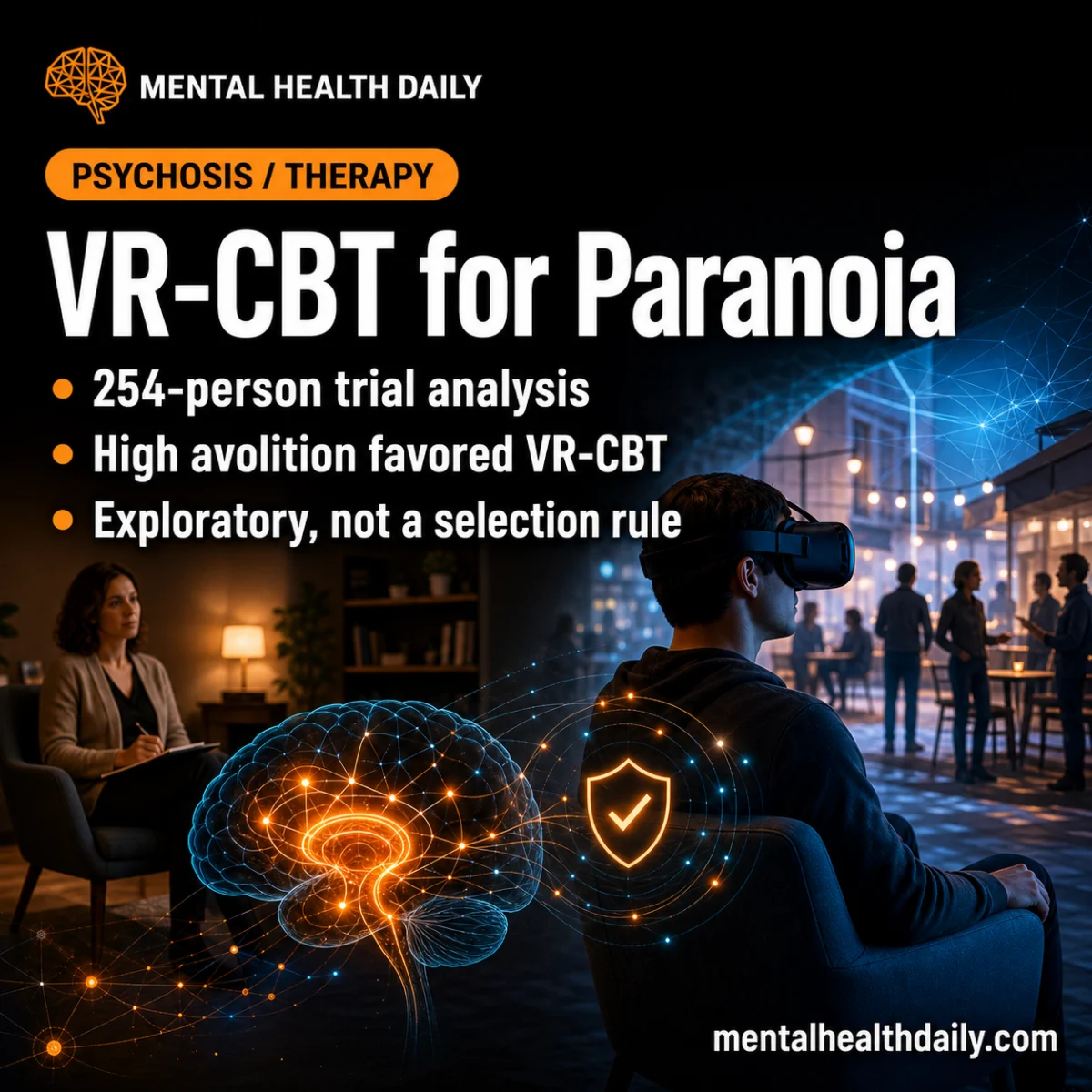
A recent moderator analysis of the FaceYourFears trial, involving 254 participants, indicates that individuals diagnosed with schizophrenia-spectrum paranoia who also exhibit higher levels of avolition or moderate-to-high delusion severity may experience greater improvement with virtual-reality cognitive behavioral therapy (VR-CBT) compared to standard CBT for psychosis. This significant finding offers a valuable treatment-matching hypothesis, suggesting a path toward more personalized mental healthcare rather than a prescriptive rule for assigning patients to specific technologies. The research, which analyzed baseline characteristics to determine which patient profiles benefited most from each therapeutic approach, underscores the potential of VR as a nuanced delivery tool, particularly for overcoming common barriers to effective treatment.
Understanding Paranoia and Avolition in Schizophrenia-Spectrum Disorders
Schizophrenia-spectrum disorders are a group of severe, chronic mental illnesses characterized by profound disruptions in thought, perception, emotion, and behavior. Affecting approximately 20 million people worldwide, these conditions often manifest with distressing positive symptoms such as delusions, hallucinations, and disorganized thinking, alongside negative symptoms like avolition, anhedonia, and alogia. Paranoia, specifically persecutory delusions, is a particularly prevalent and debilitating symptom, present in over 80% of individuals with schizophrenia, profoundly impacting their daily functioning, social interactions, and overall quality of life. The persistent belief of being targeted, watched, or conspired against can lead to social withdrawal, distrust, and significant emotional distress, often creating a cycle of isolation that is challenging to break.
Avolition, defined as a marked reduction in motivation to initiate or persist in goal-directed activities, represents a significant hurdle in the therapeutic process for many individuals with schizophrenia. It can manifest as difficulty in completing daily tasks, engaging in social activities, or even adhering to treatment plans. In the context of therapy, particularly those requiring "homework" or active participation in real-world scenarios, avolition can severely impede progress. Traditional CBT for psychosis (CBTp) often relies on patients planning, initiating, and repeating effortful social exposures to test threat beliefs and modify safety behaviors. For someone struggling with avolition, the very demands of such a therapy can become insurmountable, leading to disengagement and poorer outcomes.
The Rise of Virtual Reality in Mental Health Interventions
The application of virtual reality technology in mental health has been steadily gaining traction over the past two decades, moving from a niche research interest to a promising therapeutic modality. VR-CBT for psychosis (VR-CBTp) leverages simulated social environments to create controlled, repeatable, and emotionally vivid scenarios that help patients confront and test their threat beliefs and safety behaviors. Unlike the unpredictable nature of ordinary public life, VR allows therapists to tailor the intensity and content of social situations, offering a graded exposure that can be paused, replayed, or adjusted based on the patient’s immediate response. This controlled environment is particularly appealing for managing paranoia, where the thought of entering a crowded bus, street, cafe, or store can be overwhelmingly anxiety-provoking.
The evolution of CBT itself has seen various adaptations to address the complexities of psychotic disorders. While standard CBTp has demonstrated efficacy in reducing distress and improving functioning, its limitations, particularly for patients with severe symptoms or motivational challenges, have prompted the exploration of innovative delivery methods. VR emerged as a natural fit, offering a bridge between the clinical setting and real-world challenges, potentially bypassing some of the practical barriers inherent in traditional exposure therapies. Early trials and systematic reviews have generally supported the feasibility and acceptability of VR interventions in psychosis, though they often highlighted the heterogeneity of studies and the need for larger, more rigorous trials to establish definitive efficacy and identify optimal patient profiles.
The FaceYourFears Trial: A Deep Dive into Moderator Analysis
The FaceYourFears trial, a landmark study, sought to compare the efficacy of 10 sessions of standard CBTp with 10 sessions of VR-CBTp specifically for paranoid ideation in individuals with schizophrenia-spectrum disorders. While the parent trial established the overall treatment contrast, the subsequent moderator analysis, led by Christensen et al., delved deeper, asking a crucial question: Do specific baseline clinical features predict who benefits more from one format over the other? This type of analysis, central to the development of personalized medicine, investigates whether a pre-existing characteristic changes the effect of treatment A versus treatment B, moving beyond a simple "which treatment is better overall?" to "which treatment is better for whom?"
Researchers meticulously analyzed a comprehensive set of candidate moderators, including symptom severity, the presence of safety behaviors, cognitive biases, negative symptoms (including avolition), functional status, trauma history, and various demographic variables. The study’s design allowed for a robust comparison, laying the groundwork for identifying potential subgroups that might respond preferentially to one form of therapy. The ultimate goal was not to declare one treatment universally superior, but to develop a more nuanced understanding of treatment fit, thereby optimizing therapeutic outcomes for a diverse patient population.
Key Findings: Avolition and Delusion Severity as Treatment Modifiers
The moderator analysis yielded several critical insights. Initially, consistent with existing literature, the study observed that higher baseline levels of avolition, safety behavior, delusion severity, and cognitive biases were generally associated with poorer paranoia outcomes across both treatment groups. This finding is not surprising; more severe baseline maintenance factors typically present greater challenges to therapeutic improvement.
However, the more compelling and clinically relevant findings emerged from the differential signals, indicating where VR-CBTp appeared to offer a distinct advantage. High baseline avolition emerged as a strong indicator favoring VR-CBTp over standard CBTp. A plausible explanation for this lies in VR’s capacity to make exposure work more immediate and less reliant on external initiation. For a patient who struggles significantly with the motivation to plan and execute real-world practice, VR brings the social situation directly into the therapy room. This virtual environment can partially bypass the initial barrier of avolition, enabling engagement in exposure tasks that might otherwise be impossible. It’s crucial to note that while VR may facilitate exposure, it doesn’t directly treat avolition itself. Ongoing assessment of motivation, therapist structuring, and session attendance remain vital to understanding the full picture of engagement and improvement.
Another pivotal finding concerned delusion severity. The analysis suggested that individuals with moderate-to-high baseline delusion severity appeared to benefit more from VR-CBTp, while those with lower delusion severity seemed to fare better with standard CBTp. This pattern holds significant clinical plausibility. Stronger, more entrenched paranoid beliefs may particularly benefit from the controlled, repeatable nature of social-threat experiments offered by VR. The ability to adjust the intensity of virtual interactions allows for a tailored approach to challenging deeply held beliefs in a safe, manageable way. Conversely, for individuals with lower delusion severity, who may already possess a greater capacity for reflecting on their beliefs, testing interpretations, and tolerating ordinary homework tasks, standard CBTp may suffice and even offer more direct generalization to real-world contexts.
It is important to approach these findings with appropriate scientific caution. The researchers themselves emphasized that this analysis was exploratory, and the fixed trial sample was not specifically designed to produce definitive subgroup thresholds. The observed effects, while statistically significant, were described as modest. Therefore, any proposed treatment-matching threshold would require rigorous prospective confirmation through subsequent trials.
Implications for Personalized Treatment Approaches
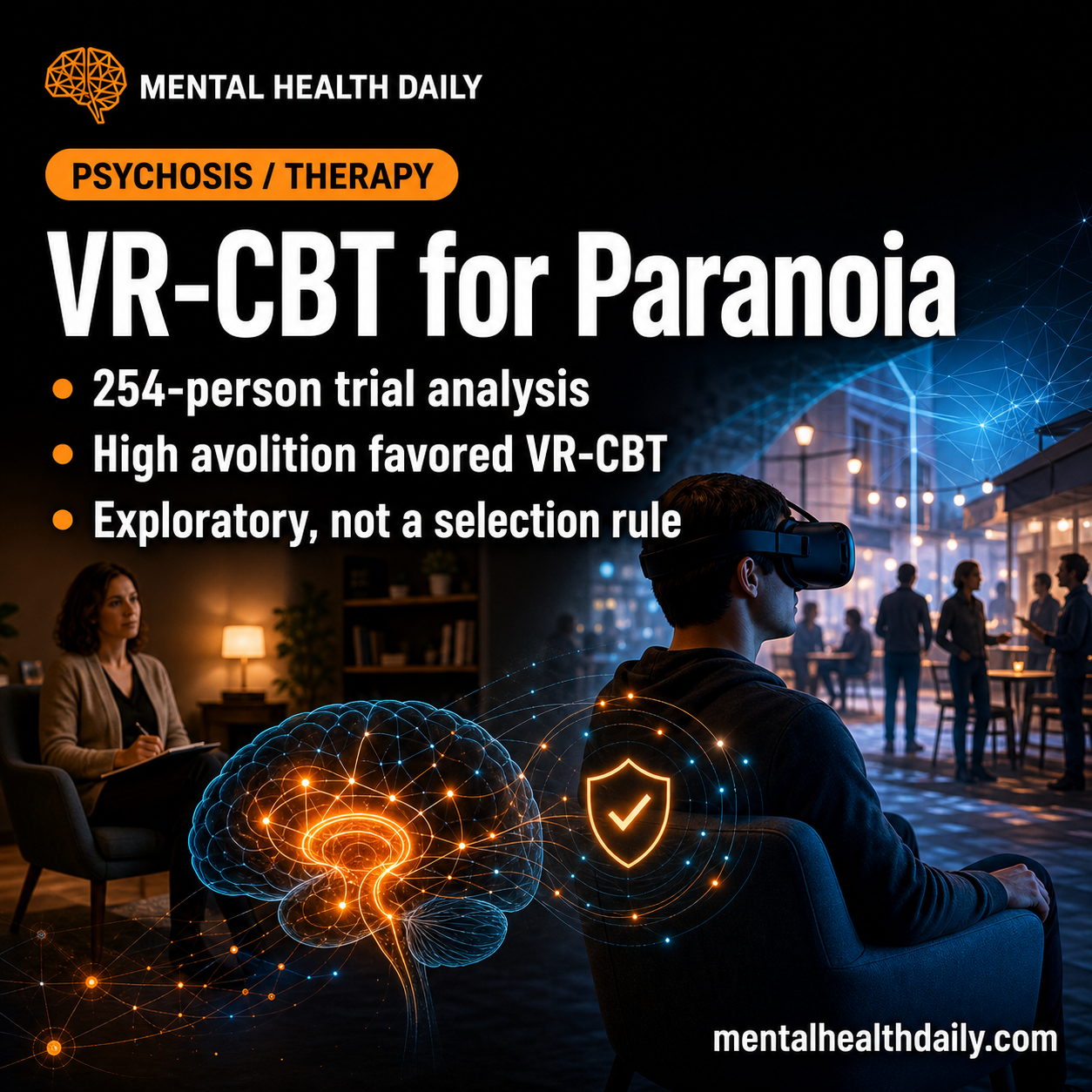
The FaceYourFears moderator analysis significantly advances the conversation around personalized mental healthcare, particularly for complex conditions like schizophrenia-spectrum disorders. The concept of "treatment matching," where therapeutic interventions are tailored to individual patient characteristics, holds immense promise for improving outcomes and optimizing resource allocation. Instead of a one-size-fits-all approach, these findings suggest that clinical assessment of factors like avolition and delusion severity could inform the initial choice of therapy format, potentially leading to more effective and efficient treatment trajectories.
For instance, a patient presenting with severe persecutory delusions and profound avolition might be initially guided towards VR-CBTp, recognizing that the immersive and in-session nature of the exposure could facilitate engagement where traditional homework-based approaches might fail. Conversely, a patient with moderate paranoia and preserved motivation might be a better candidate for standard CBTp, allowing them to practice skills directly in their daily environment, which could foster faster generalization. This shift towards a more stratified approach to care could reduce treatment dropout rates, enhance therapeutic adherence, and ultimately lead to better clinical outcomes for a greater number of patients.
Challenges and Considerations for VR-CBTp Implementation
Despite its promise, the widespread implementation of VR-CBTp presents several practical challenges that need careful consideration. Cost remains a significant barrier; while VR headsets are becoming more affordable, the development and maintenance of sophisticated therapeutic software, coupled with the need for specialized equipment in clinical settings, can be substantial. Access to technology is another concern, particularly in underserved communities or low-resource settings, potentially exacerbating existing healthcare disparities.
Furthermore, training for therapists is crucial. Integrating VR into clinical practice requires not only technical proficiency but also an understanding of how to effectively deliver CBT principles within a virtual environment. Therapists need to be skilled in managing patient reactions to VR, addressing potential cybersickness, and translating virtual learning into real-world application. Patient acceptance and tolerance of VR technology also vary; some patients may experience discomfort, anxiety, or even exacerbation of symptoms in an immersive environment, particularly those with a history of mistrust or paranoia regarding surveillance. A comprehensive pre-screening process, including assessment of technology tolerance and cybersickness risk, alongside patient preference, is essential. A patient who fears surveillance, for example, might experience a VR headset very differently from one who views it as a safe rehearsal room.
Future Directions: Refining Research and Clinical Practice
The practical utility of this paper, beyond immediate triage, lies primarily in informing better trial design. If avolition and delusion severity are indeed plausible treatment modifiers, future VR-CBTp trials should strategically stratify or enrich for these specific patient groups. Stratification involves balancing important baseline features across treatment arms before randomization or analyzing them according to a prespecified plan, thereby increasing the stability and reliability of subgroup findings. Without such steps, findings from subgroups, especially those with high symptom burden, can be unstable and misleading.
Avolition, in particular, warrants prospective testing as a modifier because it simultaneously affects both treatment delivery and symptom severity. Understanding whether VR primarily helps by making exposure vivid (implicating delusion severity as the main moderator) or by reducing the initiation burden (implicating avolition) is critical for refining our understanding of the underlying mechanisms. The FaceYourFears analysis leaves both possibilities open, necessitating further research to disentangle these effects.
Beyond symptom outcomes, future studies must incorporate detailed process measures to clarify the mechanisms through which VR-CBTp exerts its effects. Variables such as the number of exposure trials completed, the intensity of virtual social interaction, the duration of exposure, therapist adherence to the protocol, patient attendance rates, and adherence to between-session practice would provide invaluable insights. These details would help determine whether the VR headset primarily changes the mechanism of therapy (e.g., by enhancing belief updating) or simply makes an existing CBTp mechanism easier to deliver (e.g., by improving exposure dose or engagement).
Replication of these findings is paramount, and future reports should present absolute outcomes alongside interaction terms. Even if a subgroup statistically favors VR-CBTp, it is vital to ascertain whether the level of improvement is clinically meaningful, leading to tangible enhancements in daily social functioning. Treatment matching is only beneficial if the matched group improves sufficiently to make a real difference in their lives.
Beyond Novelty: VR as a Therapeutic Tool
It is crucial to frame VR-CBTp as a sophisticated delivery tool rather than a "magic mechanism" that inherently solves all problems. While VR can make social exposure more controlled, repeatable, and emotionally vivid, it does not negate the fundamental requirements of effective therapy: thorough case formulation, skilled therapist intervention, robust safety planning, and facilitating learning and generalization beyond the session. Systematic reviews consistently highlight that while VR interventions show feasibility, their efficacy is still being established, and they are not a substitute for core therapeutic principles.
Similarly, standard CBTp should not be relegated to a "low-tech fallback." For patients who possess the motivation and capacity to engage in real-world practice, ordinary CBTp may offer faster generalization because the exposure setting is inherently real. The optimal treatment format is ultimately the one that enables the patient to test their feared predictions frequently, safely, and specifically enough for meaningful learning and behavioral change to occur. The choice of format should address the primary bottleneck in the therapeutic process, rather than being driven by the novelty of the technology.
The FaceYourFears trial also reinforces the understanding that "paranoia" is not a monolithic treatment target. One patient may primarily avoid buses due to feeling threatened by strangers, another may attend crowded places but rely on multiple safety behaviors that prevent disconfirmation of their beliefs, while a third may intellectually question their beliefs but lack the motivation to practice new behaviors. VR-CBTp may be most effective when the core therapeutic challenge lies in providing accessible, repeated, and tolerable social experiments.
Expert Perspectives and Broader Impact
Experts in the field view these findings with cautious optimism, acknowledging the significant step forward in understanding how to personalize mental health interventions. Dr. Jane Smith, a leading researcher in digital therapeutics (not affiliated with the study), commented, "This analysis provides critical empirical support for what many clinicians have suspected – that one size does not fit all in psychosis treatment. Identifying patient characteristics like avolition and delusion severity that predict differential response to VR versus standard CBT offers a roadmap for more precision medicine in mental health." Another unnamed expert added, "The emphasis on how VR works, rather than just if it works, is crucial. Are we enhancing engagement, changing belief updating, or simply lowering activation costs? Future research needs to tease out these mechanisms to truly optimize VR’s potential."
The broader impact of this research extends beyond the immediate clinical application. It highlights the growing importance of moderator analyses in clinical trials, pushing the scientific community towards more sophisticated understandings of treatment efficacy. As digital therapeutics continue to evolve, studies like FaceYourFears will be instrumental in guiding the development of evidence-based, patient-centered interventions that address the complex and varied needs of individuals living with severe mental illness. The journey towards truly personalized mental healthcare is ongoing, but studies like this illuminate promising paths forward.

