

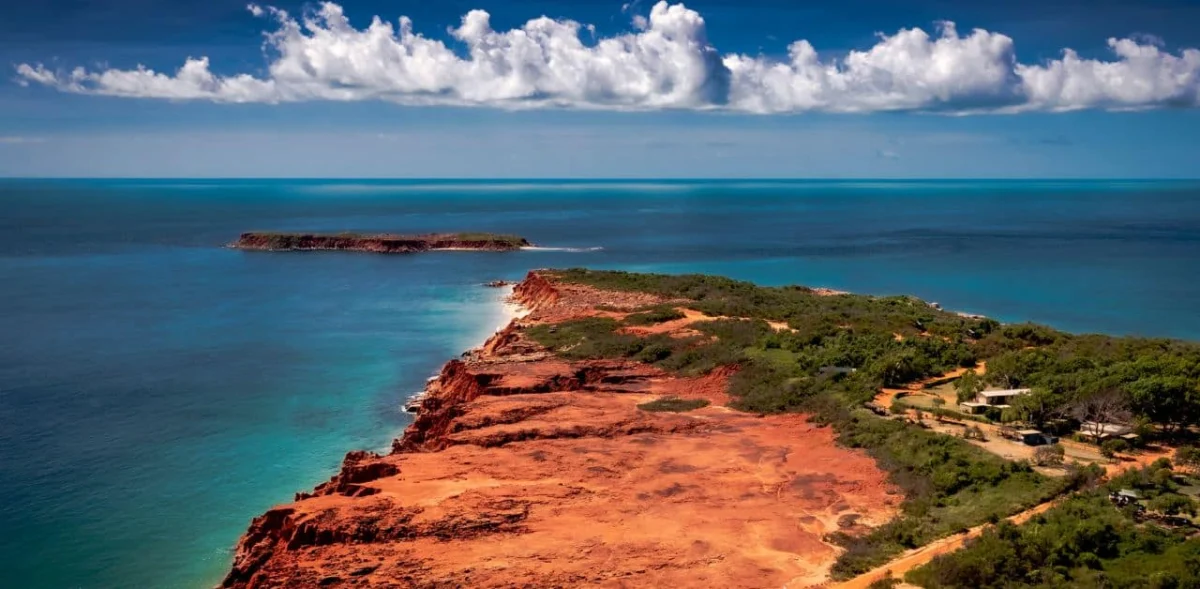
The Kimberley region of Western Australia represents one of the world’s last great wilderness frontiers, spanning an area of approximately 423,517 square kilometers—an expanse nearly twice the size of Victoria and three times the size of England. Situated in the northernmost part of Western Australia, the Kimberley is defined by its ancient geological formations, rugged coastlines, and deep cultural heritage. Unlike the densely populated metropolitan hubs of Sydney, Melbourne, or Brisbane, the Kimberley maintains a population density of fewer than 0.1 people per square kilometer, preserving a pristine environment that serves as a global benchmark for untamed natural beauty.
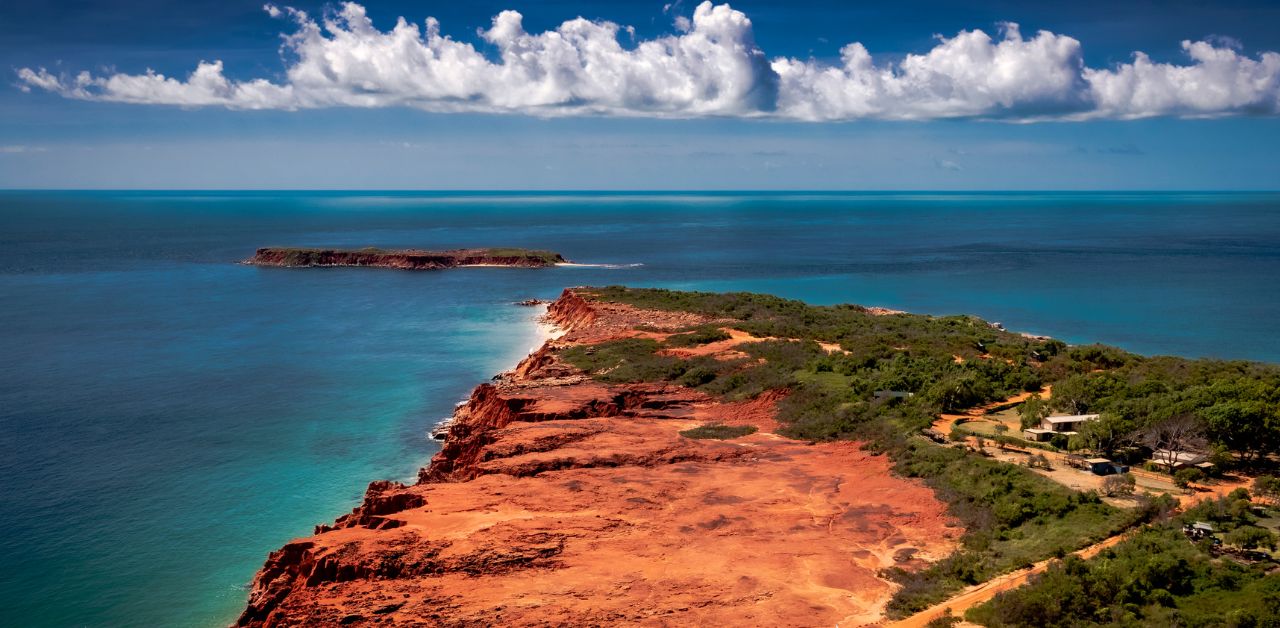
As a primary gateway for both domestic and international travelers, the Kimberley offers a landscape of stark contrasts, ranging from white-sand coastal beaches and coral atolls to scorched red earth, deep sandstone gorges, and sprawling savanna woodlands. The region’s significance is not merely aesthetic; it is a critical site for biodiversity and one of the most culturally significant landscapes in the Southern Hemisphere.
Historical Context and Indigenous Stewardship
The human history of the Kimberley is among the oldest in the world. Archaeological evidence confirms that Indigenous Australians have inhabited the region for over 40,000 years, with some estimates suggesting an even longer presence. Today, the Kimberley is home to numerous Aboriginal groups, each maintaining distinct languages, traditions, and spiritual connections to the "Country."
A defining feature of the Kimberley’s modern socio-political landscape is the success of Native Title claims. Approximately 70% of the Kimberley region is recognized under Native Title, a legal framework that acknowledges the traditional rights and interests of Indigenous people over their ancestral lands. This high percentage represents a significant achievement in the context of the Australian Native Title Act of 1993. This stewardship ensures that tourism development within the region often requires consultation with Traditional Owners, fostering a model of sustainable and culturally respectful travel.
Regional Infrastructure and Tourism Logistics
Due to its vast scale and lack of paved infrastructure, the Kimberley presents unique logistical challenges. The region is largely seasonal, with travel primarily occurring during the "Dry Season" (May to October), when humidity is low and most roads are accessible. The "Wet Season" (November to April) sees dramatic monsoonal activity, which, while replenishing the region’s famous waterfalls, often renders inland routes impassable.
Tourism in the Kimberley has evolved into a sophisticated industry centered on two main hubs: Broome in the west and Kununurra in the east. In recent years, small-ship expedition cruising has emerged as a premier method for exploring the inaccessible coastline, allowing visitors to reach remote falls and archipelagos that remain unreachable by traditional ground vehicles.
1. Broome: The Western Gateway and Pearling Capital
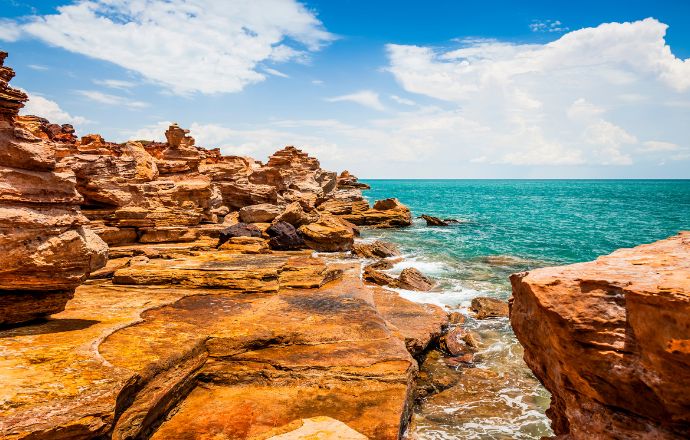
Broome serves as the primary entry point for the Kimberley. Historically known as the "Pearling Capital of the World," Broome’s identity was forged in the late 19th century by a multi-cultural workforce of Japanese, Malay, Filipino, and Indigenous divers. This heritage is still visible today in the town’s architecture and its thriving pearling industry, exemplified by operations such as Willie Creek Pearls.
The town’s most iconic natural attraction is Cable Beach, a 22-kilometer stretch of white sand famous for its turquoise waters and sunset camel treks. Beyond the beach, Roebuck Bay offers significant ecological value; it is recognized by the Ramsar Convention as a wetland of international importance. The Broome Bird Observatory monitors the bay’s massive populations of migratory shorebirds, which travel from as far as Siberia.
2. Mitchell Falls: A Quadruple-Tiered Marvel
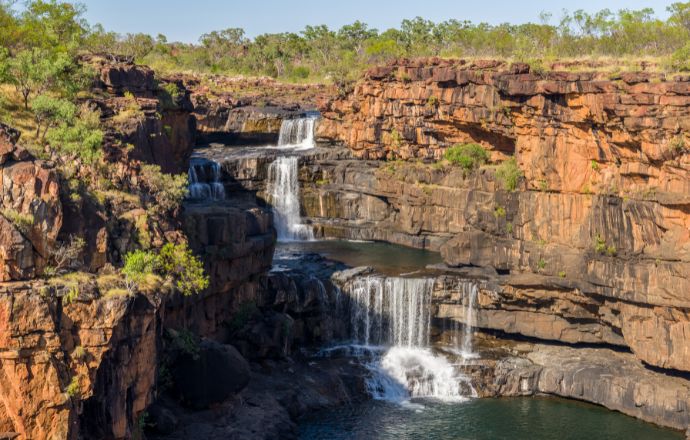
Located within the Mitchell River National Park on the Ngauwanyin land, Mitchell Falls (Punamii-Uunpuu) is one of Australia’s most photographed natural landmarks. The falls are characterized by a spectacular four-tiered drop, carving through ancient sandstone into deep emerald pools.
The surrounding park is a sanctuary for biodiversity. It is home to more than 50 species of mammals, 220 species of birds, and 86 species of reptiles and amphibians, including the elusive monjon (the world’s smallest rock wallaby) and the olive python. Access to the falls typically involves a rigorous hike via the Punamii-Uunpuu Trail or a scenic helicopter flight, providing a perspective of the complex river systems that define the northern Kimberley.
3. Bungle Bungle Range: UNESCO World Heritage Excellence
The Bungle Bungle Range, located within Purnululu National Park, remained largely unknown to the non-Indigenous world until 1983. In 2003, the park was inscribed on the UNESCO World Heritage List due to its outstanding geological value. The range is famous for its orange-and-black striped sandstone domes, which resemble giant beehives.
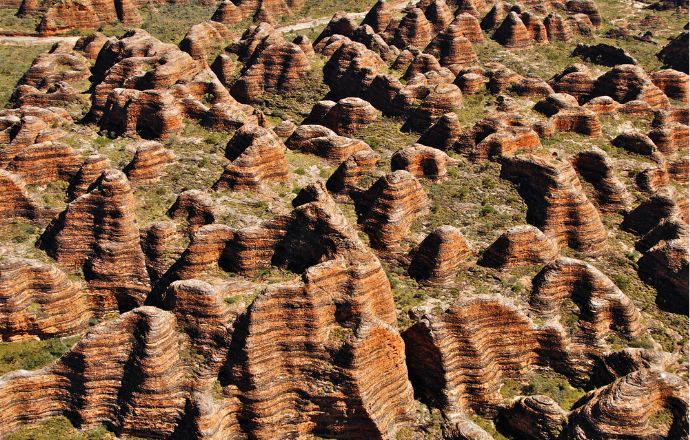
These formations are the result of 350 million years of erosion and the presence of cyanobacteria, which create the dark grey bands. While the Karjaganujaru people have acted as custodians of this land for millennia, the park’s extreme remoteness—located approximately 300 kilometers south of Kununurra—requires specialized 4WD transport or aerial tours. The park’s interior features hidden wonders such as Cathedral Gorge, a natural amphitheater with world-class acoustics.
4. Lacepede Islands: An Avian Sanctuary
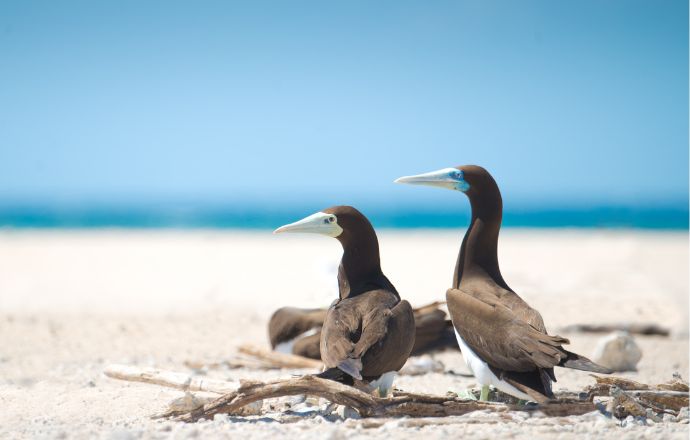
Situated approximately 120 kilometers off the coast of Broome, the Lacepede Islands are a chain of four low-lying coral atolls. These islands are strictly protected as a Class A Nature Reserve, serving as one of the most important breeding sites in the eastern Indian Ocean for the Brown Booby and the Lesser Frigatebird.
The islands are also the Western Australian coast’s most significant breeding ground for the Green Sea Turtle. Because the islands are composed of coral rubble and sand, they are sensitive to human interference, meaning landings are generally restricted. However, expedition cruises utilize zodiacs to allow travelers to observe the massive bird colonies and marine life from the water, highlighting the region’s commitment to conservation-led tourism.
5. King George Falls: The State’s Tallest Twin Drops
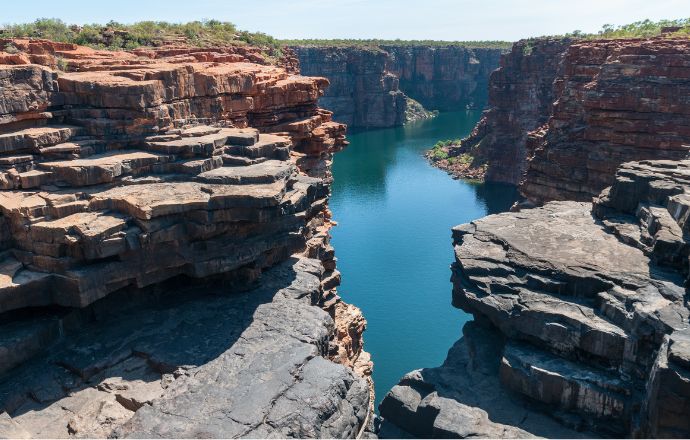
The King George River culminates in a breathtaking spectacle where the river plunges 80 meters over a sandstone cliff into a tidal gorge. These twin falls are the highest in Western Australia. The sheer scale of the vertical red rock walls provides a dramatic backdrop that has been featured in major cinematic productions, including Baz Luhrmann’s Australia.
The falls are most impressive early in the dry season when the river volume is at its peak. Because there are no roads leading to the King George River, it is exclusively accessible via cruise ship or flight. This isolation has preserved the pristine nature of the surrounding plateau, which remains an essential site for studying the Kimberley’s unique flora.
6. Horizontal Falls: A Tidal Phenomenon
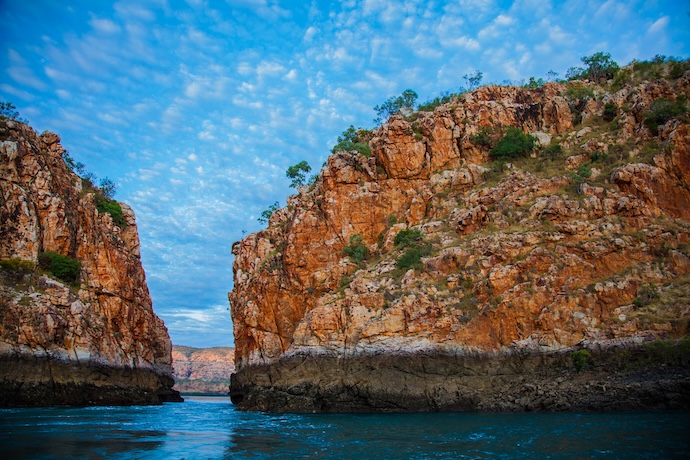
Described by Sir David Attenborough as "one of the greatest natural wonders of the world," the Horizontal Falls in Talbot Bay are not waterfalls in the conventional sense. Instead, they are a powerful tidal phenomenon caused by massive volumes of water being forced through two narrow mountain gaps in the McLarty Range.
The Kimberley experiences some of the largest tidal ranges in the world, often exceeding 10 meters. As the tide changes, water builds up on one side of the gaps faster than it can flow through, creating a horizontal waterfall effect that reaches heights of up to four meters. Navigating these gaps in high-powered boats is a staple of Kimberley adventure tourism, demonstrating the raw power of the region’s marine environment.
7. El Questro Wilderness Park: A Model for Outback Tourism
Spanning 700,000 acres, El Questro was formerly a working cattle station that has been transformed into a premier wilderness destination. It represents a successful pivot from pastoralism to eco-tourism. The park offers a microcosm of the Kimberley’s diverse landscapes, featuring thermal springs (Zebedee Springs), rainforest pockets, and rugged salt flats.
El Questro is a hub for active exploration, with trails like the Emma Gorge walk leading visitors through towering cliffs to a turquoise plunge pool fed by a droplet waterfall. The park’s management emphasizes environmental preservation, regulating visitor numbers to ensure the "Wilderness Park" status is maintained despite its popularity.
8. Buccaneer Archipelago: A Geological Labyrinth
Comprising between 800 and 1,000 islands, the Buccaneer Archipelago is a drowned mountain range that dates back two billion years. The islands are composed of Precambrian sandstone, creating a jagged, labyrinthine coastline that is a haven for marine biodiversity.
The archipelago’s waters are home to a vast array of species, including humpback whales (during their migration), dugongs, and various shark species. The area is also significant for its high-grade iron ore deposits, though much of the archipelago remains untouched. For travelers, the archipelago offers secluded snorkeling spots and world-class fishing, accessible primarily via expedition vessels operating out of Derby or Broome.
9. Gibb River Road: The Iconic 4WD Route
The Gibb River Road is a 660-kilometer former stock route that bisects the heart of the Kimberley. For many, driving "The Gibb" is the ultimate Australian road trip. It connects Derby with Kununurra and provides the only ground access to many of the region’s most famous gorges, including Windjana Gorge and Bell Gorge.
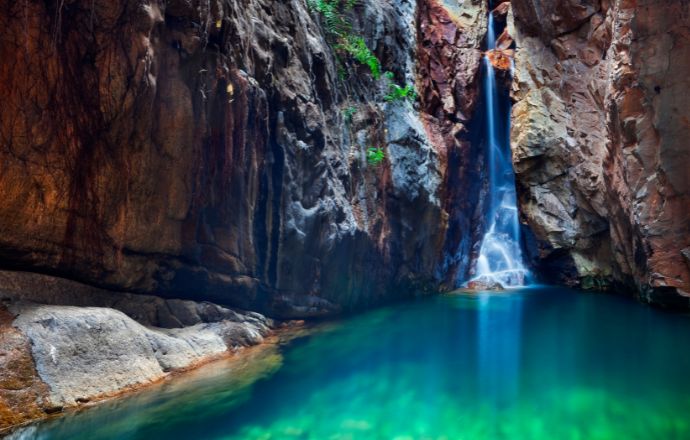
Windjana Gorge is of particular interest to geologists and wildlife enthusiasts; it is part of an ancient Devonian limestone reef system that existed 350 million years ago. Today, it is one of the best places in Australia to observe freshwater crocodiles in their natural habitat. The road remains unsealed and requires high-clearance 4WD vehicles, serving as a reminder of the region’s rugged and uncompromising nature.
10. Jar Island: Art and Ancient History
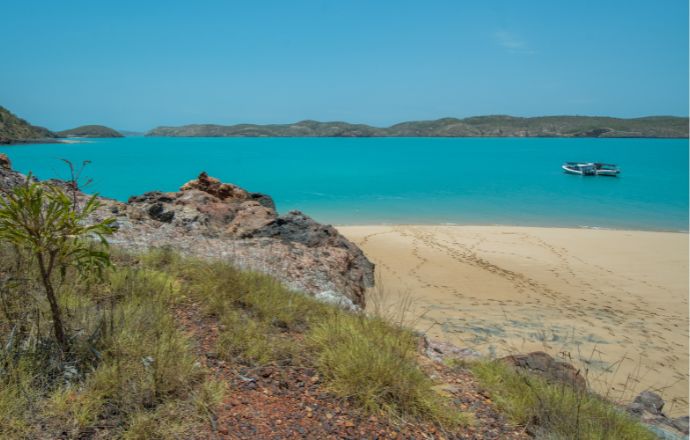
Located in the Vansittart Bay, Jar Island is a site of immense archaeological and cultural importance. The island is famous for its galleries of Gwion Gwion (formerly known as Bradshaw) rock art. These paintings, characterized by fine lines and intricate human figures adorned with tassels and ornaments, are estimated to be between 15,000 and 20,000 years old, predating the Wandjina art style.
The island also holds evidence of more recent historical interactions. Shards of pottery (from which the island takes its name) indicate the presence of Macassan traders from Indonesia, who visited the northern Australian coast for centuries to harvest sea cucumbers (trepang). This blend of ancient Indigenous art and evidence of early international trade makes Jar Island a crucial site for understanding Australia’s place in the broader Indo-Pacific history.
Broader Implications and Future Outlook
The Kimberley stands at a crossroads between economic development and environmental conservation. While tourism provides a vital economic pillar, the region also faces pressure from mining and pastoral interests. The expansion of the Great Kimberley Marine Park and the ongoing creation of new terrestrial national parks reflect a growing state and federal commitment to preserving this landscape.
Furthermore, the Kimberley is a frontline for observing the impacts of climate change in northern Australia. Rising sea temperatures and changing fire regimes present ongoing challenges for the management of the region’s fragile ecosystems. As the Kimberley continues to gain global recognition, the balance between providing access to these "top 10" locations and protecting their inherent wildness remains the central priority for stakeholders, traditional owners, and conservationists alike. Through a combination of regulated tourism and Indigenous-led land management, the Kimberley is poised to remain Australia’s preeminent destination for those seeking a connection with the ancient and the untamed.

