

The landscape of the professional fitness industry is witnessing a subtle but significant shift in how veteran practitioners approach their personal conditioning and mental health. Tony Gentilcore, a fitness professional with more than two decades of experience and a co-founder of prominent training facilities, recently announced a significant change in his professional routine: for the first time in over 25 years, he has officially joined a commercial gym as a paying member. While seemingly a routine action for the general public, the move highlights a growing trend among high-level strength and conditioning coaches who are seeking to balance the demands of facility ownership with the psychological and physical requirements of personal training.
Gentilcore’s career has been defined by his presence in high-performance environments. Having spent the majority of his professional life either employed by or owning elite-level strength facilities, his return to a commercial setting represents a departure from the "strength and conditioning bubble" that often prioritizes free weights and athletic performance over the varied equipment found in mass-market fitness centers. This decision serves as a case study in the importance of environmental variety and the psychological concept of "separation of church and state" within a professional context.
A Chronological History of Training Environments
The trajectory of Gentilcore’s training history mirrors the evolution of the American fitness industry over the last three decades. Understanding this timeline provides necessary context for why his recent move to a commercial gym is viewed as a milestone in his career.
The Formative Years (1990–1995)
The journey began in the early 1990s, a period characterized by the rise of home fitness and the proliferation of entry-level weight sets. Gentilcore’s introduction to resistance training occurred in 1990 with a standard home set—plastic-covered cement weights and a basic bench. This era was marked by self-directed learning and the utilization of rudimentary equipment, common for many who entered the fitness world before the digital age of information.
As he transitioned into high school, his training moved to the school’s weight room, a "dungeon-style" facility equipped with universal gyms and basic barbells. This environment provided the foundational strength required for collegiate-level aspirations, specifically in baseball. This period represents the "hardcore" roots of many veteran coaches, where equipment was often limited and the focus was on high-intensity, basic movements.
The Commercial Introduction and Professional Pivot (1996–2002)
In 1996, a commercial gym opened in Gentilcore’s rural hometown, providing his first exposure to a wider array of equipment and the social dynamics of a public fitness space. This experience was short-lived as he moved toward a professional career in fitness. By 2002, Gentilcore had transitioned from a trainee to a fitness professional. For the next five years, his training was inextricably linked to his workplace. Every workout occurred within the facilities that employed him, a common practice for coaches that allows for convenience but can eventually lead to professional burnout.

The Elite Strength and Conditioning Era (2007–Present)
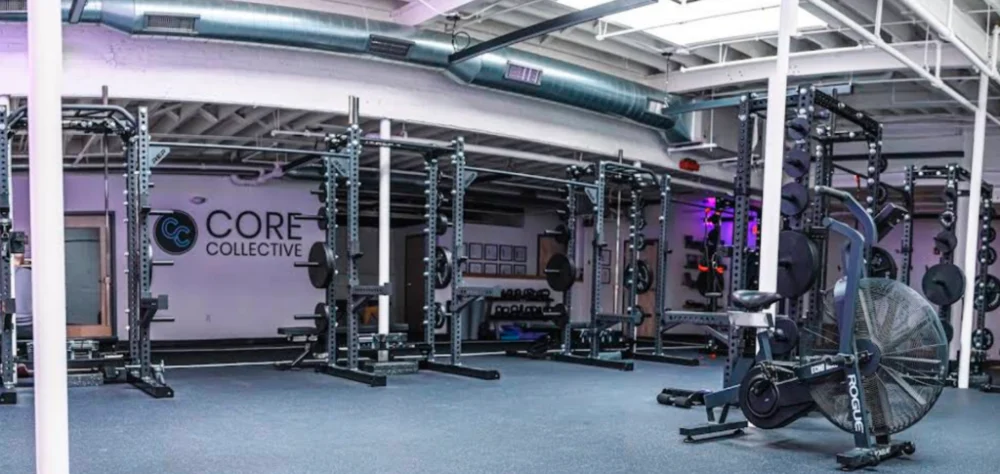
A pivotal moment occurred in 2007 when Gentilcore co-founded Cressey Sports Performance (CSP). This facility became a hub for professional athletes and serious strength enthusiasts, fostering an environment where high-level performance—such as 400-pound deadlifts and full-range-of-motion pull-ups—was the standard. Following his time at CSP, Gentilcore moved to the Core Collective in Brookline, Massachusetts, a facility he currently operates.
For over a quarter of a century, Gentilcore’s training has taken place within these specialized bubbles. These environments are characterized by specialty bars, power racks, and a culture of extreme performance. However, they often lack the specialized machinery found in commercial gyms, such as leg presses, Hammer Strength machines, and functional trainers.
The Psychological Drivers of Environmental Change
The decision to join a commercial gym was driven by more than just a desire for new equipment; it was a response to the psychological monotony of training in the same space where one conducts business. In professional psychology, the "separation of concerns" is a design principle that can be applied to lifestyle management. For a gym owner, the facility is a place of administrative stress, client management, and constant professional vigilance.
Gentilcore noted that working out where he works had become "monotonous and boring." This sentiment is echoed by many in the industry who find that they cannot fully disconnect from their professional responsibilities while training in their own facilities. By moving his personal workouts to a neighborhood commercial gym 1–2 times per week, Gentilcore has effectively established a boundary between his professional identity as a coach and his personal identity as a trainee.
Comparative Analysis: Performance Facilities vs. Commercial Gyms
The shift also highlights the technical differences between specialized strength and conditioning (S&C) facilities and commercial fitness centers. To provide a factual analysis of why a professional might seek a commercial membership, one must look at the equipment and training modalities offered by each.
| Feature | S&C Performance Facility | Commercial Gym |
|---|---|---|
| Primary Focus | Athletic performance, compound lifts | General health, hypertrophy, variety |
| Equipment | Power racks, platforms, specialty bars | Machines, cables, cardio equipment |
| Environment | Loud, high-energy, community-driven | Varied, "third-space" atmosphere, individualistic |
| Programming | Periodized, goal-oriented | Flexible, machine-assisted |
Commercial gyms offer access to machines that utilize different resistance curves and provide stability that free weights cannot. For a veteran coach like Gentilcore, the reintroduction of the "pec deck," "leg press," and "Hammer Strength" machines provides a novel stimulus for muscle hypertrophy while reducing the systemic fatigue often associated with heavy barbell training.
Supporting Data: The Post-Pandemic Fitness Landscape
Gentilcore’s move comes at a time when the commercial gym industry is seeing a robust recovery following the COVID-19 pandemic. According to reports from the Health & Fitness Association (formerly IHRSA), the fitness industry saw a significant rebound in 2023 and 2024. Total industry revenue in the United States reached record highs, and membership numbers have surpassed pre-2020 levels.

Data indicates that "hybrid" training—where individuals maintain home gym equipment but also hold commercial memberships—is on the rise. Gentilcore’s decision to maintain his professional facility while paying for a commercial membership aligns with this consumer trend. The desire for a "third space"—a location outside of home and work where one can focus on personal development—has become a priority for many professionals who have transitioned to remote or self-employed work structures.
Industry Implications and Professional Reactions
While Gentilcore’s announcement was personal, it has sparked a conversation within the fitness community regarding the sustainability of the "hardcore" coaching lifestyle. Many younger coaches view training in their own facility as a badge of honor, but veterans often find that this leads to a lack of objectivity in their own training.
Professional Inferences and Reactions
Industry peers have noted that Gentilcore’s move is a pragmatic approach to longevity. "When you own the business, every time you look around the room during a rest set, you see something that needs to be fixed, a client who needs help, or a floor that needs sweeping," says one industry observer familiar with the Brookline fitness scene. "Joining a commercial gym allows a professional to be ‘just another member,’ which is a powerful tool for mental recovery."
Furthermore, the move challenges the "elitism" often found in the strength and conditioning world, which sometimes looks down upon machine-based training. By publicly embracing the commercial gym environment, Gentilcore validates the use of diverse training tools for even the most experienced lifters.
Broader Impact on Training Methodology
The long-term impact of this shift on Gentilcore’s training methodology remains to be seen, but early reports indicate a "welcome jolt" to his progress. The change in "vibe" and the ability to focus without distractions are cited as the primary benefits. This suggests that for high-level athletes and coaches, the environment may be just as important as the programming itself.
In conclusion, Tony Gentilcore’s decision to join a commercial gym after 25 years as a professional is a significant indicator of a broader trend toward professional boundaries and training variety. It underscores the necessity of environmental changes to combat psychological stagnation and highlights the functional benefits of diverse equipment that specialized facilities may lack. As the fitness industry continues to evolve, the integration of different training environments may become a standard practice for professionals seeking to maintain their passion and performance over a multi-decade career.
The move serves as a reminder that even for those at the top of the industry, the basics of the "commercial gym experience"—from the silent camaraderie of the weight floor to the specific mechanical advantages of a leg press—hold enduring value. Gentilcore’s "separation of church and state" may well become a blueprint for other facility owners looking to rediscover the joy of their own training.

