

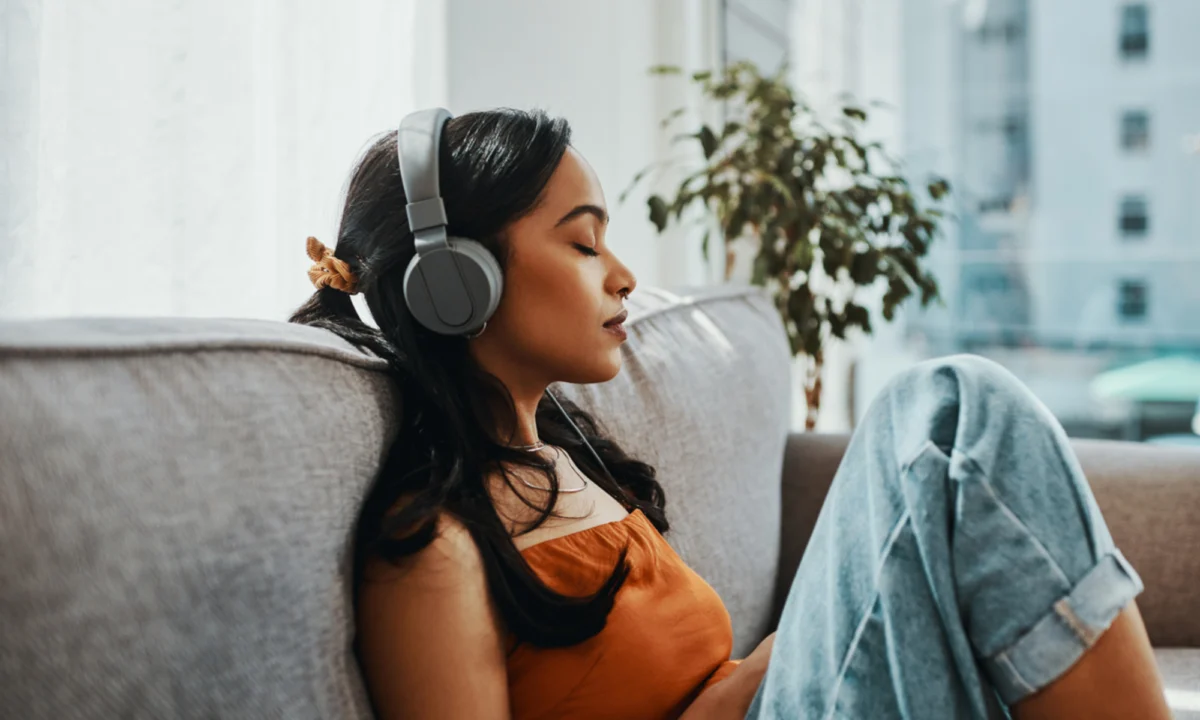
Reaching for a calming playlist when anxiety spikes isn’t just intuitive; science now strongly supports its efficacy. However, emerging research reveals that the duration of music exposure may be more significant than the genre or specific track selection in mitigating anxiety symptoms. Furthermore, when music is combined with a specialized sound technology known as auditory beat stimulation (ABS), the reduction in anxiety is not only noticeable but also scientifically validated to be meaningful.
Unveiling the Science: Music, ABS, and Anxiety Relief
A pivotal study published in PLOS Mental Health in 2025 delved into the potential dose-response relationship between music listening and anxiety reduction. This comprehensive investigation recruited 144 participants who were grappling with moderate trait anxiety and were already undergoing pharmacological treatment for their condition. The participants were strategically divided into four distinct groups. Three groups were exposed to music embedded with auditory beat stimulation for varying durations: 12 minutes, 24 minutes, and 36 minutes. The control group, conversely, listened to 24 minutes of pink noise, a broadband sound that is often used as a baseline in auditory research due to its consistent frequency distribution.
The findings of this 2025 study were compelling. All three music conditions, irrespective of the duration, demonstrated superior outcomes in reducing anxiety symptoms compared to the pink noise control group. Notably, the 24-minute music session emerged as the most effective, yielding the strongest overall reduction in anxiety. Intriguingly, this 24-minute intervention performed comparably to the 36-minute session and significantly outperformed the 12-minute exposure, suggesting a distinct optimal window for therapeutic benefit.
This latest research builds upon a foundational study published in PLOS ONE in 2022, which also explored the impact of music and ABS on anxiety. That earlier investigation involved 163 participants, all of whom were also receiving medication for anxiety. The 2022 research indicated that for individuals experiencing moderate trait anxiety, the synergistic combination of music and auditory beat stimulation was particularly potent in alleviating both somatic anxiety – the physical manifestations of worry, such as a racing heart, shortness of breath, or muscle tension – and cognitive anxiety, characterized by persistent and intrusive worry loops.
The cumulative evidence from these studies strongly suggests that while music alone offers a degree of solace, playlists enhanced with auditory beat stimulation provide a more pronounced and targeted therapeutic effect. Moreover, the data points towards approximately 24 minutes as a potential sweet spot for achieving significant anxiety relief.
Decoding Auditory Beat Stimulation (ABS)
Auditory beat stimulation is far more than just a pleasant or relaxing auditory experience. It is a sophisticated technique that involves embedding specific sound frequencies into audio tracks. The primary objective of this method is to gently guide the brainwaves of the listener towards a more tranquil and relaxed state. This is fundamentally different from simply listening to slow or soothing music, which primarily affects mood through subjective perception. ABS, on the other hand, actively engages with the brain’s electrical activity to promote relaxation from within.
The mechanism behind ABS relies on a phenomenon known as binaural beats. When a listener hears two slightly different frequencies, one in each ear, the brain interprets these distinct auditory inputs as a third, phantom "beat" that occurs at the difference between the two original frequencies. This perceived beat can encourage the listener’s brainwaves to synchronize with that specific frequency. This process is termed brainwave entrainment, a principle that suggests the brain’s electrical activity can be influenced by external rhythmic stimuli.
The specific frequency ranges utilized in these studies are significant. The 2022 PLOS ONE study employed frequencies within the theta range (4-7 Hz). Theta brainwaves are typically associated with states of deep relaxation, drowsiness, and creative insight. The more recent 2025 PLOS Mental Health study utilized frequencies in the alpha range (10 Hz). Alpha brainwaves are linked to a state of calm, alert focus and are often observed during meditation or periods of relaxed wakefulness. The fact that both theta and alpha range frequencies, when integrated into music via ABS, demonstrated benefits for anxiety suggests that this therapeutic approach is robust and can be effective across different brainwave states conducive to relaxation.
The 24-Minute Sweet Spot: Why Duration Matters
The consistent emergence of the 24-minute mark as an optimal duration for anxiety reduction warrants closer examination. Researchers propose several plausible explanations for this phenomenon.
Firstly, the brain requires a certain amount of time to transition from its typical, often agitated state, into a more relaxed mode. Similar to the initial phases of meditation, the first few minutes of listening might be spent by the brain attempting to quiet down intrusive thoughts and external stimuli. The more profound benefits of ABS, therefore, are likely realized once this initial resistance is overcome and the brain begins to attune to the specific frequencies.
Secondly, the 24-minute duration appears to strike an effective balance between achieving sustained brainwave entrainment and maintaining a manageable time commitment for the listener. While the 36-minute session in the 2025 study also showed significant benefits, the researchers highlighted that the 24-minute interval offered a superior compromise between therapeutic efficacy and practicality. In the context of busy modern lives, a 24-minute intervention is more likely to be integrated into daily routines consistently, thereby maximizing its long-term impact.
It is also crucial to acknowledge that both studies incorporated participants who were already receiving conventional anxiety medication. This critical detail underscores the role of music with ABS as a complementary or supplementary tool, rather than a standalone replacement for established therapeutic interventions. For individuals actively managing anxiety through medication, therapy, or other established strategies, incorporating ABS-enhanced music can be a valuable addition to their existing treatment regimen, potentially amplifying the benefits of their current care.
Practical Application: Integrating ABS into Your Wellness Routine
For individuals seeking to leverage these findings for their own well-being, several practical approaches can be adopted. The core recommendation is to seek out music playlists or audio tracks specifically designed with auditory beat stimulation. Many wellness apps and streaming services now offer content categorized by binaural beats or ABS. When selecting content, consider the intended outcome. For general relaxation and anxiety reduction, theta or alpha wave frequencies are often recommended.
When embarking on a session, finding a quiet and comfortable environment is paramount. This could be a dedicated meditation space, a cozy corner of your home, or even during a commute if distractions can be minimized. Using high-quality headphones is highly recommended, as they are essential for delivering the distinct frequencies to each ear, which is the fundamental mechanism of binaural beats.
The research strongly suggests dedicating approximately 24 minutes to the listening session. This timeframe allows for the brain to engage effectively with the entrainment process. During this period, it is beneficial to adopt a passive listening approach, allowing the sounds to wash over you. While active engagement with the music is not detrimental, the primary goal is to facilitate the brain’s natural response to the auditory stimuli.
For those who find traditional music distracting, or who are looking for a more focused approach, instrumental tracks or ambient soundscapes incorporating ABS may be preferable. The key is to find audio content that you find personally conducive to relaxation and that is demonstrably designed with ABS principles.
Consistency is often the cornerstone of therapeutic practices. Integrating a 24-minute ABS listening session into your daily or weekly routine, perhaps during your morning wake-up, evening wind-down, or as a mid-day reset, can contribute to sustained improvements in anxiety management. Regular practice allows the brain to adapt and maintain these calmer states more readily over time.
Broader Implications and Future Directions
The implications of these studies extend beyond individual anxiety management. They contribute to a growing body of evidence supporting the use of sound-based therapies in mental health. As awareness of the interconnectedness between auditory perception and neurological states increases, we can anticipate further research into the precise mechanisms and applications of ABS.
The findings also highlight the importance of personalized approaches to wellness. While 24 minutes appears optimal on average, individual responses may vary. Further research could explore how factors such as baseline anxiety levels, personality traits, and even musical preferences might influence the effectiveness of ABS. Moreover, the development of more sophisticated ABS technologies, potentially tailored to specific neurological profiles or therapeutic goals, remains an exciting area for future innovation.
The scientific community is increasingly recognizing that accessible, low-risk interventions can play a significant role in complementing traditional medical treatments for mental health conditions. Auditory beat stimulation, as demonstrated by these studies, presents a promising avenue for individuals seeking to proactively manage their anxiety and enhance their overall sense of well-being. While it is not a panacea, and professional medical advice should always be sought for persistent or severe anxiety, the evidence suggests that carving out those 24 minutes can offer a tangible pathway to greater calm and emotional resilience.
The journey towards understanding the profound impact of sound on the human mind is ongoing. As research progresses, we are likely to uncover even more innovative ways to harness the power of auditory experiences for holistic health. The humble act of listening, when informed by scientific insight, can transform into a potent tool for navigating the complexities of modern life and fostering a more tranquil inner world.

