

The exploration of dietary strategies to address prevalent health concerns such as weight management, polycystic ovary syndrome (PCOS), and elevated cholesterol levels has long been a focus of nutritional science. Recent research has turned its attention to the humble onion, investigating its potential role in modulating these conditions. While preliminary studies suggest intriguing possibilities, a closer examination of the evidence reveals a nuanced picture, highlighting the importance of dose, preparation, and statistical significance in drawing definitive conclusions. This article delves into the findings of several studies examining the effects of onion consumption, specifically onion powder and raw red onion, on body fat, metabolic profiles in overweight individuals, and markers associated with PCOS and cholesterol levels.
Onion Powder and Body Fat Reduction: A Closer Look at the Evidence
The notion that a small, everyday ingredient could significantly impact body composition has spurred scientific inquiry. One study, "Effect of Steamed Onion (ONIRO) Consumption on Body Fat and Metabolic Profiles in Overweight Subjects," aimed to quantify the impact of steamed onion powder on overweight individuals. Researchers employed a rigorous methodology, utilizing steamed onions to mitigate the characteristic pungency and aroma, thus facilitating their incorporation into a placebo-controlled trial. Participants were administered a daily dose of approximately one-eighth of a teaspoon (300 mg) of dried onion powder.
The initial interpretation of the abstract presented compelling results. Advanced imaging techniques, including Dual-energy X-ray absorptiometry (DEXA) scans and Computed Tomography (CT) scans, reportedly indicated a significant reduction in body fat mass, as well as decreases in overall, visceral, and subcutaneous fat areas. These findings, if robust, would suggest a potent effect of even minute quantities of onion powder on fat reduction.
However, a deeper analysis of the study’s data reveals a more complex reality. Upon closer inspection of the DEXA scan results, no statistically significant difference in fat loss was observed between the group receiving placebo capsules and the group consuming the onion powder. While the onion powder group showed a loss of approximately 0.64 kg (nearly 1.5 pounds) of body fat compared to their baseline, this difference was not statistically significant when compared to the placebo group. This suggests that the observed fat loss could be attributed to random variation rather than a direct effect of the onion powder. Similarly, the CT scan data, while showing a greater reduction in overall and visceral fat in the onion powder group, also failed to reach statistical significance when compared to the placebo. This discrepancy between the abstract’s claims and the detailed statistical analysis underscores a critical principle in scientific reporting: the importance of statistical significance in differentiating true treatment effects from chance occurrences.
A subsequent study, investigating the impact of a larger dose of onion powder – approximately four teaspoons (9 g) daily – also failed to demonstrate a significant acceleration in the loss of visceral, total, or subcutaneous fat compared to a placebo. Intriguingly, in this particular trial, the placebo itself consisted of four teaspoons (9 g) of onion powder, complicating direct comparisons. The study did note that both yellow and white onions appeared to contribute to a reduction in abdominal body fat, without a significant difference observed between the two varieties. While these studies suggest a potential, albeit not statistically significant, impact on body fat, the current body of evidence does not provide sufficient confidence to recommend onion powder solely for weight loss purposes. The lack of robust statistical significance across these trials necessitates further investigation with larger sample sizes and more refined methodologies.
Polycystic Ovary Syndrome (PCOS) and Dietary Considerations
Polycystic Ovary Syndrome (PCOS) represents a significant endocrine disorder affecting a substantial proportion of reproductive-aged women, estimated to be between 5% and 10%. Characterized by a spectrum of symptoms including irregular menstrual cycles, PCOS is also closely linked to a pre-diabetic state, marked by decreased insulin sensitivity. The management of PCOS often presents challenges due to the potential side effects associated with pharmacological interventions, prompting a growing interest in dietary approaches. This has led researchers to explore the potential benefits of dietary components, such as raw red onion, in mitigating some of the metabolic and hormonal imbalances associated with PCOS.

The rationale for investigating onions in the context of metabolic health stems from preclinical and clinical observations. Studies involving animal models have demonstrated that onion extracts can improve blood sugar control and insulin sensitivity in diabetic rats. Furthermore, research in humans has indicated that onion consumption can lead to reduced blood sugar levels in individuals with diabetes. While these findings are promising, their direct applicability to individuals with PCOS, who are often in a pre-diabetic state, requires careful consideration.
Metabolic Effects of Onions: Blood Sugar and Insulin Sensitivity
A study examining the "Metabolic Effects of Onion and Green Beans" provided initial insights into the impact of onion consumption on individuals with diabetes. In this research, participants with diabetes were allocated to consume either a small onion (60 g) daily or a diet supplemented with a substantial amount of green beans (600 g). Both interventions demonstrated positive effects on blood sugar levels. The group consuming onions observed a reduction of approximately 10% in their blood sugar levels compared to a control diet, while the green bean group experienced a reduction of roughly 15%. This suggests that onions, as part of a balanced diet, can contribute to improved glycemic control in individuals with diabetes.
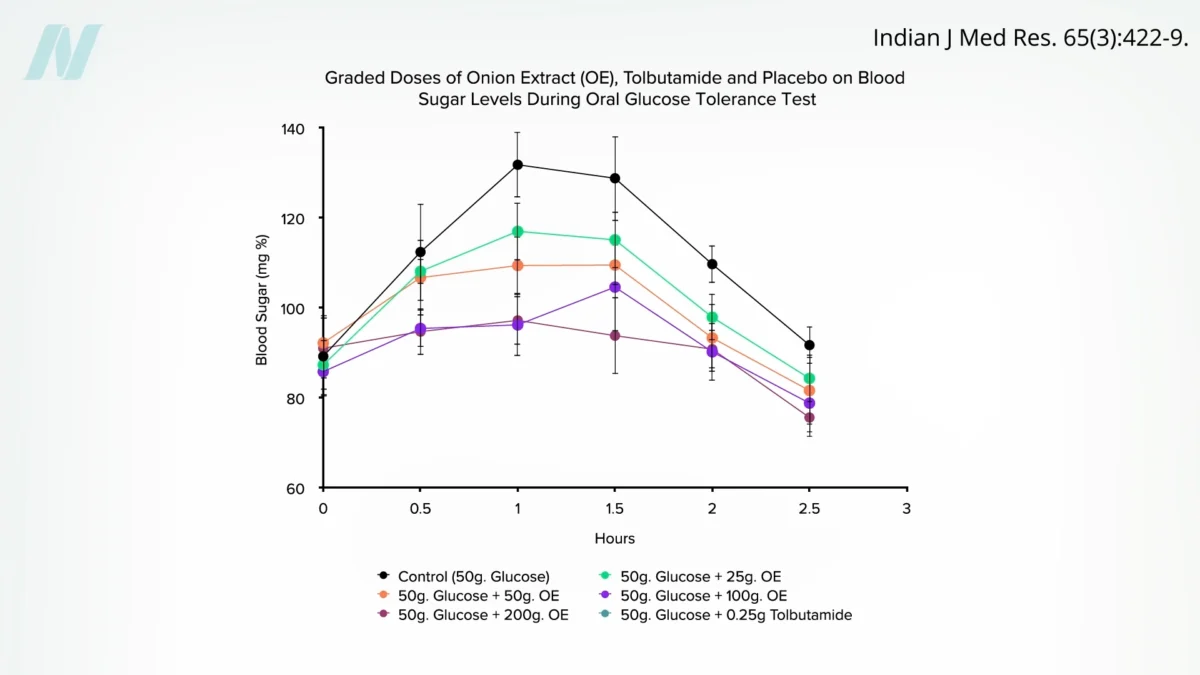
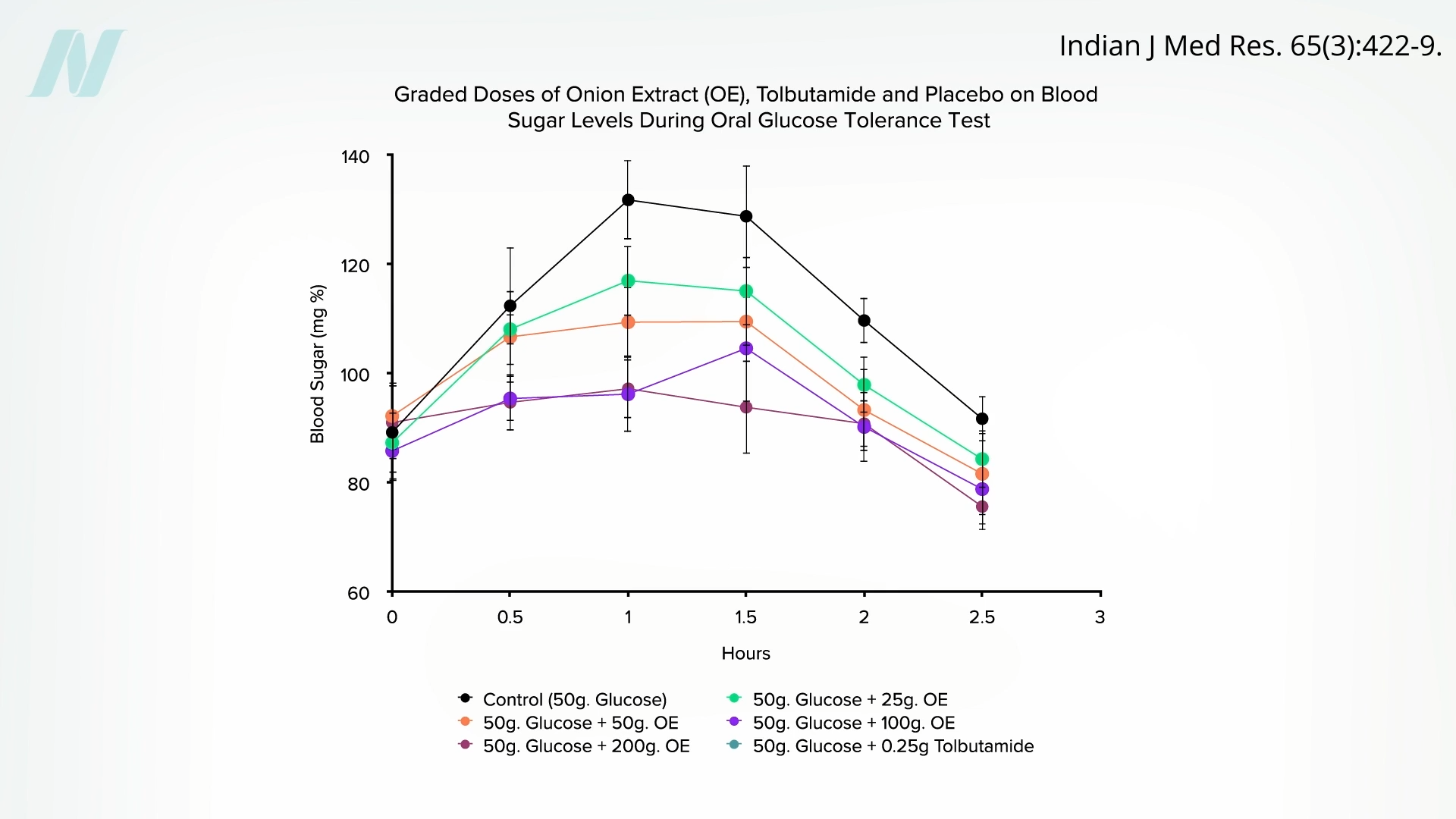
Further investigation into the effects of onions on blood sugar regulation, particularly in non-diabetic individuals, revealed a more specific mechanism. While onions do not appear to lower normal blood sugar levels – a desirable outcome indicating the absence of hypoglycemia – they have shown a remarkable ability to dampen the blood sugar spike following a high-sugar load. In one experiment, participants who consumed approximately 50 g of corn syrup experienced a significant surge in blood sugar levels. However, when the same amount of sugar was administered alongside increasing doses of onion extract, the subsequent blood sugar spike was considerably attenuated. This effect was comparable to that observed when an antidiabetic drug was administered, suggesting a potent role for onion compounds in modulating postprandial glucose response.
This blunting effect on blood sugar was also observed in the context of physiological stress. When individuals were administered a shot of adrenaline, which typically elevates blood sugar, the co-administration of onion extract significantly mitigated this rise. This observation, coupled with the findings from the corn syrup study, points towards a mechanism whereby onions may interfere with pathways that lead to glucose release or enhance glucose uptake.
Despite these promising findings regarding blood sugar regulation, direct clinical trials specifically targeting women with PCOS have yielded less conclusive results regarding improvements in blood sugar and insulin resistance markers. A review of available literature, including a Cochrane review on dietary interventions for PCOS, found no significant differences in blood sugar levels or other markers of insulin resistance between PCOS patients consuming high-onion versus low-onion diets. Furthermore, no significant differences in inflammatory markers were observed between these groups. This suggests that while onions may possess beneficial properties for glycemic control in certain populations, their direct impact on the specific metabolic dysregulation seen in PCOS may be limited or require further elucidation.
Cholesterol Management and Cardiovascular Health in PCOS
Beyond metabolic concerns, women with PCOS face an elevated risk of cardiovascular disease, with studies indicating they are over seven times more likely to experience a heart attack and develop heart disease, the leading cause of mortality among women. High cholesterol levels are a significant contributing factor to this increased risk. Consequently, research into dietary strategies that can effectively lower cholesterol in this demographic is of paramount importance.
Preliminary evidence suggests that consuming raw red onion may have a beneficial effect on cholesterol profiles. One study indicated that individuals who consumed more red onion experienced a modest reduction in LDL (low-density lipoprotein) cholesterol, often referred to as "bad" cholesterol. However, the observed decrease was only around 5 mg/dL, a difference that was not statistically significant when compared to a group that consumed fewer onions. While this finding suggests a potential trend towards cholesterol reduction, the magnitude of the effect and the lack of statistical significance highlight the need for more robust research to confirm these benefits.
Historical research from approximately 50 years ago offers an intriguing, albeit dated, perspective on the interaction between onions and dietary fat. In one study, participants who consumed a substantial amount of butter (100 g) experienced a significant increase in their cholesterol levels within hours. However, when this same amount of butter was consumed alongside either raw or boiled onion (approximately 50 g), the subsequent rise in cholesterol was considerably blunted. The cholesterol increase was reduced to approximately 9 points or 3 points, respectively, compared to the butter-only group. While this study’s methodology and dietary context are not directly applicable to modern dietary recommendations, it provides an early indication that components within onions might play a role in mitigating the cholesterol-raising effects of high-fat meals. The "moral of the story," as humorously noted in the original context, is the adverse impact of consuming excessive amounts of butter, with onions potentially offering a partial counteraction.
Future Directions and Broader Implications
The current body of scientific literature presents a mixed but promising picture regarding the role of onions in health management. While the dramatic claims suggested by initial interpretations of some study abstracts may not be fully substantiated by rigorous statistical analysis, the underlying research points towards potential benefits. The observed blunting effect of onion extracts on blood sugar spikes, even in non-diabetic individuals, warrants further investigation into their application for managing reactive hypoglycemia and potentially improving overall metabolic health.
For women with PCOS, the lack of significant impact on blood sugar and insulin resistance markers in specific trials does not negate the importance of a healthy diet. The established link between PCOS and increased cardiovascular risk underscores the need for continued exploration of dietary strategies that can address multiple risk factors. While the direct impact of raw red onion on cholesterol in PCOS patients requires more definitive evidence, its potential to contribute to a heart-healthy diet remains a valid area of research.
It is crucial to acknowledge the limitations of existing studies, including variations in onion types, preparation methods, dosages, and study populations. Future research should aim to standardize these factors to facilitate more direct comparisons and robust conclusions. Furthermore, understanding the specific bioactive compounds within onions responsible for these observed effects, such as quercetin and sulfur-containing compounds, could lead to more targeted interventions and potentially the development of functional foods or supplements.
In conclusion, while the notion of a "miracle food" offering a simple solution to complex health issues is often an oversimplification, the ongoing investigation into the dietary benefits of onions highlights the power of whole foods in promoting well-being. The scientific community continues to unravel the intricate mechanisms by which dietary components interact with human physiology. As research progresses, a clearer understanding of the precise role of onions in weight management, metabolic health, and cardiovascular risk reduction will undoubtedly emerge, potentially informing more personalized and effective dietary recommendations for a wide range of health concerns. The journey from preliminary findings to evidence-based clinical practice is often lengthy and complex, requiring meticulous scientific inquiry and a critical evaluation of data.

