

The well-intentioned effort to promote healthier eating through menu labeling and the introduction of "healthy" options in fast-food establishments has, paradoxically, been shown to drive consumers toward even less healthy choices. This phenomenon, rooted in intricate aspects of human psychology, has been the subject of extensive research, revealing a counterintuitive effect where the mere presence of a healthy alternative can inadvertently license more indulgent behavior.
The Rise and Fall of Calorie Labeling
In 2017, a significant regulatory shift occurred across the United States with the mandated implementation of calorie labeling on menus in national chain restaurants. The objective was clear: to equip consumers with the nutritional information necessary to make informed decisions about their food intake when dining outside the home. The expectation was that this transparency would empower individuals to manage their caloric consumption and align it with their daily energy needs, thereby contributing to improved public health outcomes.
However, the efficacy of this widespread initiative has been met with considerable skepticism and, in practice, has yielded negligible results. Studies analyzing the impact of these labels have indicated that they are largely ineffective in altering consumer behavior, with an average reduction of a mere eight calories per meal observed across various studies. This insignificant decrease suggests that simply displaying calorie counts on menus does not translate into meaningful shifts in dietary habits for the majority of diners.
The limited impact of calorie labeling was, in retrospect, predictable. The ease with which such regulations were often passed, sometimes with minimal industry resistance, hinted at their potential futility. For instance, McDonald’s, a global fast-food giant, voluntarily began displaying calorie information nationally in 2012. This move followed a labeling mandate in New York City that had been implemented earlier and subsequently found to have no discernible overall effect on consumer behavior. Research from that period suggested that while calorie labeling might enhance the perception of a restaurant’s commitment to customer well-being, it did not fundamentally deter individuals from ordering high-calorie items. The continued popularity of signature items like the Big Mac, even with visible calorie counts, underscored this point.
The Paradoxical Effect of "Healthy" Menu Additions
Concurrently with the introduction of calorie labeling, fast-food chains began to diversify their menus by adding healthier options. McDonald’s, for example, announced plans to incorporate seasonal produce into its offerings. While on the surface these additions appear to be unequivocally positive steps towards promoting healthier eating, research has unveiled a more complex reality. The introduction of a healthy option can, in fact, lead individuals to make even less healthy choices, a phenomenon that has been termed "vicarious goal fulfillment."
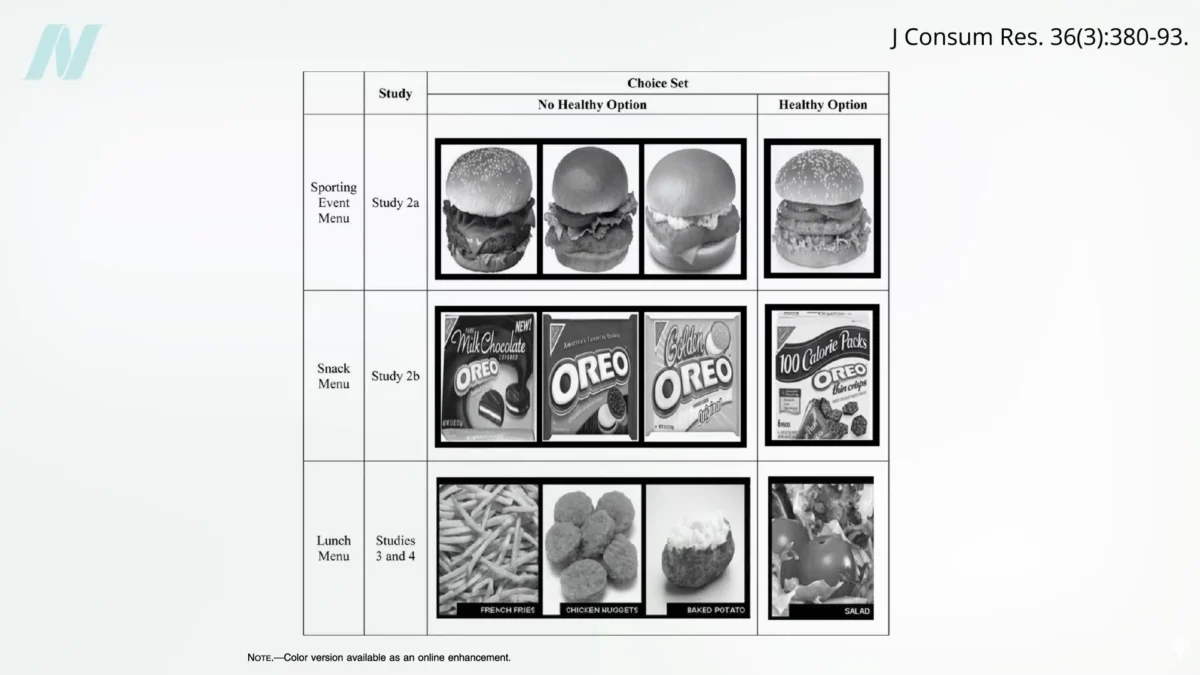
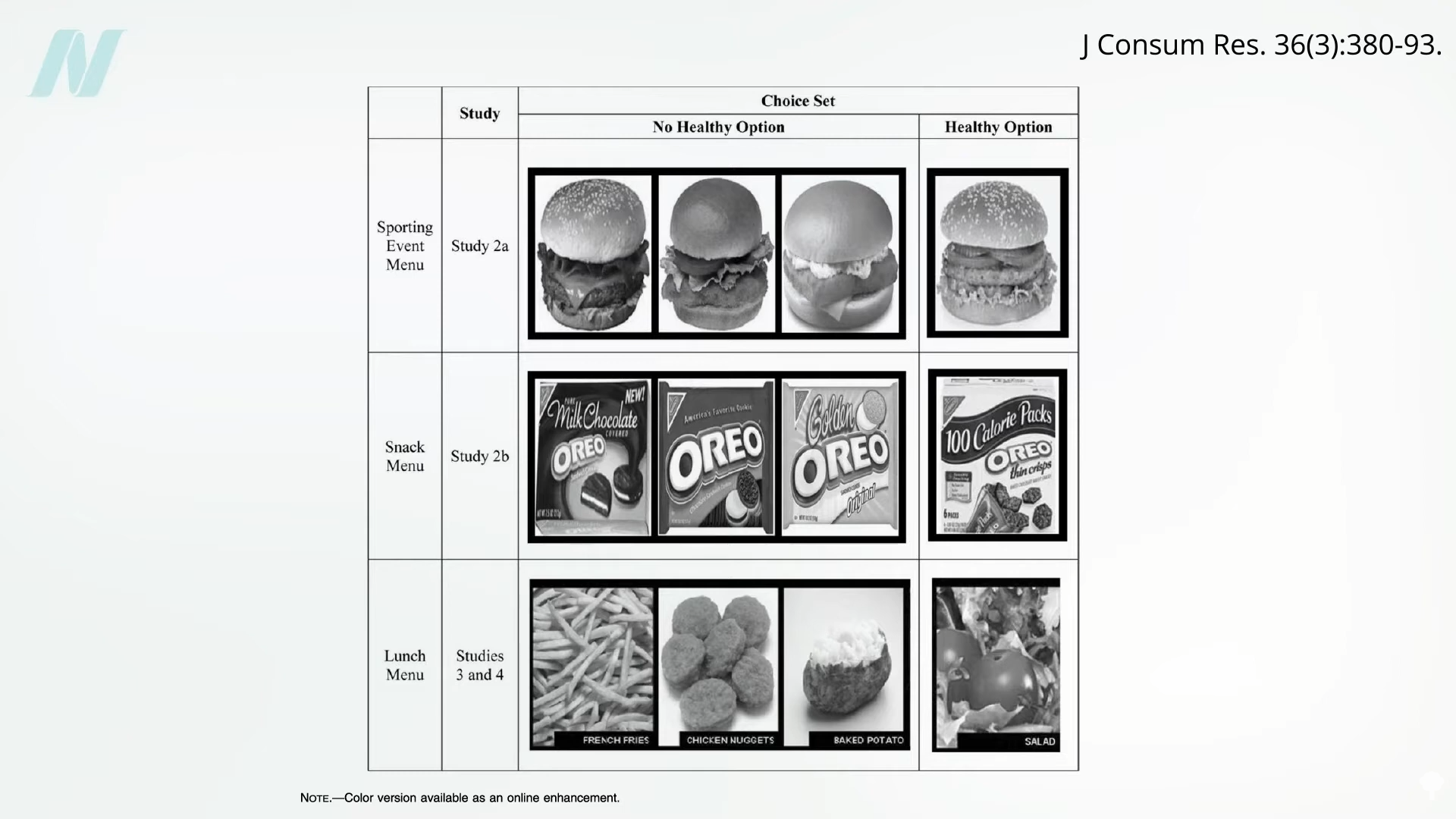
This counterintuitive effect was illustrated in a series of experiments examining consumer choices when presented with different side dish options. When individuals were offered a choice between an unhealthy option, such as French fries, and a more neutral option, like a baked potato, approximately 10% opted for the fries. However, when a third, even healthier option, such as a side salad, was introduced, a surprising shift occurred. Instead of a greater proportion choosing the salad or the baked potato, the preference for French fries significantly increased, tripling to 33%. This indicates that the presence of a healthy alternative did not steer consumers towards moderation but, rather, amplified their desire for the most indulgent choice.

A similar pattern emerged when participants were presented with main course options: a bacon cheeseburger, a chicken sandwich, or a veggie burger. In a scenario where no overtly "healthy" option was present, with choices limited to a cheeseburger, chicken sandwich, or fish sandwich, approximately 17% chose the burger. However, when the fish sandwich was replaced with a veggie burger, the preference for the bacon cheeseburger more than doubled to 37%. This stark increase, solely attributable to the introduction of a healthy alternative, highlights the psychological mechanisms at play.
Unpacking the Psychology: Vicarious Goal Fulfillment and Self-Licensing
The academic paper that detailed these experimental findings was aptly titled "Vicarious Goal Fulfillment: When the Mere Presence of a Healthy Option Leads to an Ironically Indulgent Decision." The underlying theory suggests that by merely seeing a healthy option, such as a salad or a veggie burger, individuals mentally register their intention to make a healthier choice at some future, unspecified time. This mental commitment to future healthy behavior then serves as a psychological "permission slip" to indulge in less healthy options in the present. It’s a form of psychological compensation, where the anticipation of future good deeds justifies present indulgences.
This concept is closely related to another well-documented psychological phenomenon known as "self-licensing." Self-licensing occurs when individuals justify engaging in behavior that deviates from their goals after having previously engaged in behavior that aligns with those goals. For example, someone who has recently lost weight might feel licensed to indulge in a donut, rationalizing that their past efforts in weight loss make such a treat permissible. This perceived reward for virtuous behavior can, paradoxically, undermine long-term progress.
The implications of self-licensing extend to various lifestyle choices. Research involving smokers demonstrated this effect when participants were given either vitamin C supplements or placebo pills, with the pills being identical in reality. Smokers who believed they were taking supplements designed to improve their health subsequently smoked more cigarettes than those who were told they were receiving placebo pills. The subconscious reasoning might be that having taken a step towards better health, they could afford to engage in more risky behavior. This "living a little" mentality, fueled by a perceived health-conscious action, could ultimately lead to a shortened lifespan.
Further studies have explored how this self-licensing effect can manifest in dietary habits and exercise routines. In one experiment, participants who believed they were taking dietary supplements reported less desire to exercise and subsequently engaged in less physical activity. Compared to a control group who were informed they were taking placebos, the misled participants were also more likely to choose buffet-style dining over a meal described as "healthy and organic."
A seminal study titled "The Liberating Effect of Weight Loss Supplements on Dietary Control" directly investigated the impact of perceived health interventions on eating behavior. Participants were randomly assigned to take either a known placebo or a purported weight-loss supplement, which was, in fact, the same placebo. Under covert observation at a buffet, those who believed they were taking a weight-loss supplement consumed more food and selected less healthy items. Furthermore, they consumed approximately 30% more candy during a subsequent "taste test" and ordered more sugary beverages. The investigators concluded that individuals who rely on dietary supplements for health protection may face a "hidden price: the curse of licensed self-indulgence."
The "What the Hell Effect" and Perceptual Distortions
The research on vicarious goal fulfillment has revealed that it is not only making progress towards a goal but even the mere consideration of making progress that can trigger this licensing effect. These studies consistently showed participants moving towards the unhealthiest choice, rather than simply a moderate option. For instance, in a scenario involving different types of Oreos – chocolate-covered, regular, and golden – the introduction of a "lower-calorie" Oreo option doubled the likelihood that participants would select the most indulgent chocolate-covered variety. This phenomenon is often referred to as the "what the hell effect." Once an individual deviates from their intended healthy behavior, even slightly, they may rationalize further indulgence by thinking, "What the hell, I’ve already strayed, so I might as well go all the way." This can lead to a complete abandonment of dietary goals for that particular occasion.
Beyond influencing direct choices, the presence of healthy foods can also warp consumers’ perceptions of less healthy options. In experiments designed to assess calorie estimation, participants were shown a burger and asked to estimate its caloric content, with an average guess of 734 calories. However, when the same burger was presented alongside three celery sticks, the estimated caloric content dropped to 619 calories. While most participants recognized that the celery contributed calories, the visual juxtaposition of the burger with the ostensibly healthy celery made the burger appear less calorically dense. This "health halo" effect was observed across various food pairings, including an apple with a bacon-and-cheese waffle sandwich, a side salad with beef chili, and carrots next to a cheesesteak. In each instance, the presence of a healthy accompaniment led to a significant underestimation of the main item’s calories.
This perceptual distortion can explain why consumers might order more dessert and sugary drinks when purchasing a "healthier" sub sandwich from a chain like Subway compared to a Big Mac from McDonald’s, even if the Subway sub in question is calorically denser. The perception of having made a healthier choice in the main course can create a license to indulge in less healthy accompaniments.
Even a simple textual reference to healthy foods can induce similar perceptual shifts. When participants were shown an advertisement for a Big Mac, they estimated its calorie content at 646 calories. However, when the same advertisement included the text "For your health, eat at least five fruits and vegetables per day," the estimated calorie count for the Big Mac dropped to 503 calories. This suggests that the mere promotion of healthy eating habits can create a "health halo" around less healthy products, bolstering consumer loyalty and potentially positive brand perception for establishments like McDonald’s, without necessarily contributing to the actual health of their patrons.
Implications for Public Health Initiatives
The findings from these studies carry significant implications for the design and implementation of public health initiatives aimed at promoting healthier eating habits. While calorie labeling and the introduction of healthy options are well-intentioned, their effectiveness is tempered by complex psychological biases. The "vicarious goal fulfillment" and "what the hell effect" demonstrate that the human mind does not always respond to information or choices in a purely rational manner.
Instead of solely focusing on providing information or introducing alternatives, future strategies may need to address these underlying psychological mechanisms more directly. This could involve educational campaigns that specifically highlight these cognitive biases and empower individuals to recognize and counteract them. Furthermore, menu design and marketing strategies could be re-evaluated to avoid inadvertently triggering these indulgence-driving psychological responses.
The research underscores that achieving meaningful improvements in public health through dietary changes requires a nuanced understanding of human behavior, acknowledging that simple informational interventions may not be sufficient. The paradox of healthy options leading to worse choices serves as a potent reminder of the intricate interplay between our intentions, our perceptions, and our ultimate decisions when it comes to food.
Doctor’s Note: For further exploration of related topics, readers may find the author’s video on optimism bias, "Why Don’t People Eat Healthier?", and videos on the ban of trans fats and the testing of ultra-processed junk food to be of interest.

