

The age-old perception that time spent asleep is time lost is increasingly being challenged by scientific evidence highlighting the critical role of sufficient, restful sleep in maintaining overall health and preventing a spectrum of acute and chronic conditions. This growing understanding has spurred renewed interest in natural remedies for insomnia, with recent research turning its attention to a common household vegetable: lettuce. A novel randomized, double-blind, placebo-controlled trial has been initiated to rigorously assess the efficacy of lettuce seeds as a natural sleep aid, focusing on lactucin, the compound identified as lettuce’s primary hypnotic component.
The Pervasive Problem of Sleep Deprivation
The global burden of sleep deprivation is substantial and carries significant health consequences. Studies consistently demonstrate a strong correlation between insufficient sleep and an elevated risk of mortality and disease. For instance, a study published in Nature Communications revealed that restricting sleep to just six hours per night for a single week can profoundly alter gene expression, impacting over 700 genes. Among the most concerning impacts is endothelial dysfunction, a condition where the lining of blood vessels, responsible for proper arterial relaxation and dilation, is impaired. Research indicates that a mere two-hour reduction in nightly sleep, from seven to five hours, for approximately a week can lead to significant impairment in arterial function.
The severity of such sleep deficits cannot be overstated. The magnitude of functional impairment observed in individuals with restricted sleep has been reported to be comparable to that seen in individuals who smoke, have diabetes, or suffer from coronary artery disease. This alarming comparison underscores the profound physiological impact of sleep loss. Consequently, individuals who consistently sleep less than seven hours per night face a statistically significant increase in their risk of premature death, ranging from 12% to 35% compared to their counterparts who achieve a full seven hours. In the United States alone, an estimated 28% of adults routinely experience less than the recommended seven hours of sleep, highlighting the widespread nature of this public health challenge. Experts universally acknowledge that sufficiently long and restful sleep sessions are an indisputable cornerstone of good health, making the pursuit of effective sleep solutions a critical endeavor.
Exploring Natural Avenues for Sleep Enhancement
While medical interventions exist for sleep disorders, including the use of Continuous Positive Airway Pressure (CPAP) machines for sleep apnea, a common condition linked to obesity, many individuals struggle with primary sleep onset or sleep maintenance difficulties without an underlying medical diagnosis. The search for natural dietary remedies has led researchers to explore various food items with a history of traditional use. Previously, research has highlighted the potential of kiwifruit and tart cherries as beneficial for insomnia sufferers. Now, the focus has shifted to the humble lettuce, scientifically known as Lactuca sativa.
Historically, lettuce has been recognized for its sedative and sleep-inducing properties, with evidence of its use dating back to the Roman Empire. The plant contains a substance called lactucin, which is responsible for the slightly bitter taste of lettuce and is believed to be its primary hypnotic agent. While anecdotal evidence and historical usage suggest a connection between lettuce and sleep, rigorous scientific validation has been a more recent pursuit.
From Toads to Humans: The Scientific Journey of Lactucin
Early scientific investigations into lactucin’s effects were conducted on animal models. Studies demonstrated that lactucin could indeed induce sleep in toads and enhance sleep duration and quality in rodents, including mice and rats. Romaine lettuce, specifically, was chosen for these studies due to its relatively higher lactucin content compared to other varieties. These animal studies provided a crucial foundation, suggesting a plausible biological mechanism for lettuce’s purported sleep-inducing properties.
The critical question then became whether these findings would translate to human subjects. Approximately a decade ago, a pioneering study attempted to answer this very question. This initial research involved a randomized trial where individuals suffering from insomnia were administered lettuce seed oil, an extract derived from lettuce seeds. The results were encouraging: nearly 70% of participants in the lettuce seed oil group reported significant improvement in their insomnia, describing their condition as "very much or much improved," compared to only 20% in the placebo group. The researchers concluded that lettuce seed oil could serve as a safe and effective sleep aid, particularly for geriatric patients experiencing sleep difficulties. This demographic was specifically targeted due to the higher prevalence of insomnia among older adults, affecting an estimated 20% to 40% of this population at least a few nights per month.
Addressing Limitations and Advancing Research
Despite the promising outcomes of the initial lettuce seed oil study, it had notable limitations that necessitated further investigation. The trial was single-blind, meaning the researchers were aware of which participants were receiving the lettuce supplement and which were receiving the placebo. This lack of complete blinding could have introduced a degree of bias in the assessment of outcomes. The researchers themselves acknowledged the challenges and financial constraints in pursuing such studies, noting that while pharmaceutical companies have substantial resources for research, funding for studies on natural remedies like lettuce can be more difficult to secure.

Recognizing the need for more robust evidence, researchers have now conducted a more sophisticated study: a double-blind, placebo-controlled trial. This advanced design ensures that neither the participants nor the researchers are aware of who is receiving the active treatment or the placebo, thereby minimizing potential bias. This latest trial moved beyond just a seed extract to investigate the effects of a whole food component – lettuce seeds themselves.
The Innovative Approach to a Lettuce Placebo
A significant challenge in conducting a double-blind, placebo-controlled trial with a whole food is the creation of a convincing placebo. While a whole head of lettuce is impractical for capsule delivery, whole lettuce seeds proved to be a viable option. The seeds can be ground and encapsulated, allowing for the preparation of identical-looking capsules for both the active treatment and the placebo group.
In this recent randomized, double-blind, placebo-controlled trial, 100 pregnant women experiencing insomnia were enrolled. This demographic was chosen due to the particularly high incidence of sleep disturbances during pregnancy, with nearly 80% of pregnant women reporting such issues. Traditional pharmaceutical sleep aids often carry significant risks for both the fetus and the mother. For instance, medications like Ambien, frequently prescribed for insomnia, have been linked to adverse pregnancy outcomes such as low birth weight, premature birth, and increased rates of Cesarean sections. Similarly, the use of Valium during pregnancy has been associated with birth defects, including limb deficiencies. This highlights the urgent need for safer, natural alternatives.
Participants in the trial were randomly assigned to receive either capsules containing a quarter teaspoon of ground lettuce seeds or a placebo for a period of two weeks. The results of this rigorously designed study demonstrated a statistically significant improvement in sleep quality among the group receiving lettuce seeds, as measured by a validated sleep quality index score. Crucially, no adverse side effects were reported by the participants in the lettuce seed group, further underscoring the potential safety and efficacy of this natural intervention.
Broader Implications and Future Directions
The findings from this latest trial offer a compelling case for the role of lettuce seeds as a natural and safe sleep aid, particularly for populations facing challenges with conventional sleep medications, such as pregnant women. The study’s double-blind, placebo-controlled design lends considerable weight to its conclusions, addressing the limitations of earlier research.
The implications of these findings extend beyond pregnancy-related insomnia. Given the widespread issue of sleep deprivation across various demographics, lettuce seeds present a promising avenue for a widely accessible and affordable natural remedy. Further research could explore optimal dosages, the specific types of lettuce seeds most effective, and long-term effects. Investigating the precise mechanisms by which lactucin and other compounds in lettuce seeds interact with sleep-regulating pathways in the human brain could also yield valuable insights.
The success of this research underscores the importance of revisiting traditional remedies with modern scientific methodologies. As the global health community continues to grapple with the pervasive impact of insufficient sleep, exploring the potential of readily available natural compounds like those found in lettuce offers a hopeful and sustainable path toward improved public health and well-being. The continued scientific exploration of lactucin and other plant-based compounds holds significant promise for developing effective, safe, and accessible solutions for the millions worldwide who struggle with sleep.
Doctor’s Note:
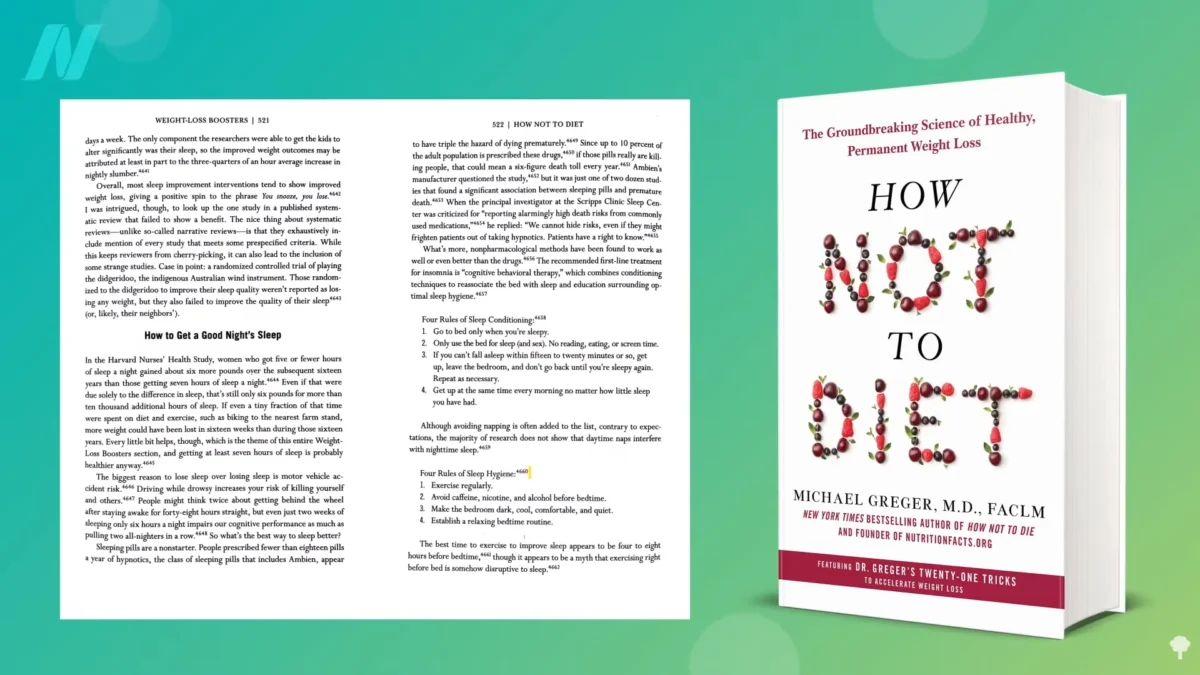
This article references previous discussions on natural sleep remedies, including the benefits of kiwifruit and tart cherries for insomnia. For those interested in comprehensive strategies for improving sleep, the book How Not to Diet offers detailed guidance on sleep enhancement, including the "Four Rules of Sleep Conditioning" and the "Four Rules of Sleep Hygiene." These resources are available through local public libraries and independent bookstores. All proceeds from the author’s book sales are dedicated to charitable causes.

