

The stark disparity between the impact of healthy lifestyle choices and pharmaceutical interventions on heart attack risk is a critical public health revelation. While medications currently offer a modest 20% to 30% reduction in the likelihood of experiencing a heart attack, adopting a healthy lifestyle can potentially eliminate up to 90% of this risk. This dramatic difference underscores the profound impact of foundational health behaviors in combating cardiovascular disease, the leading cause of death for both men and women globally.
The Silent Onset of Atherosclerosis
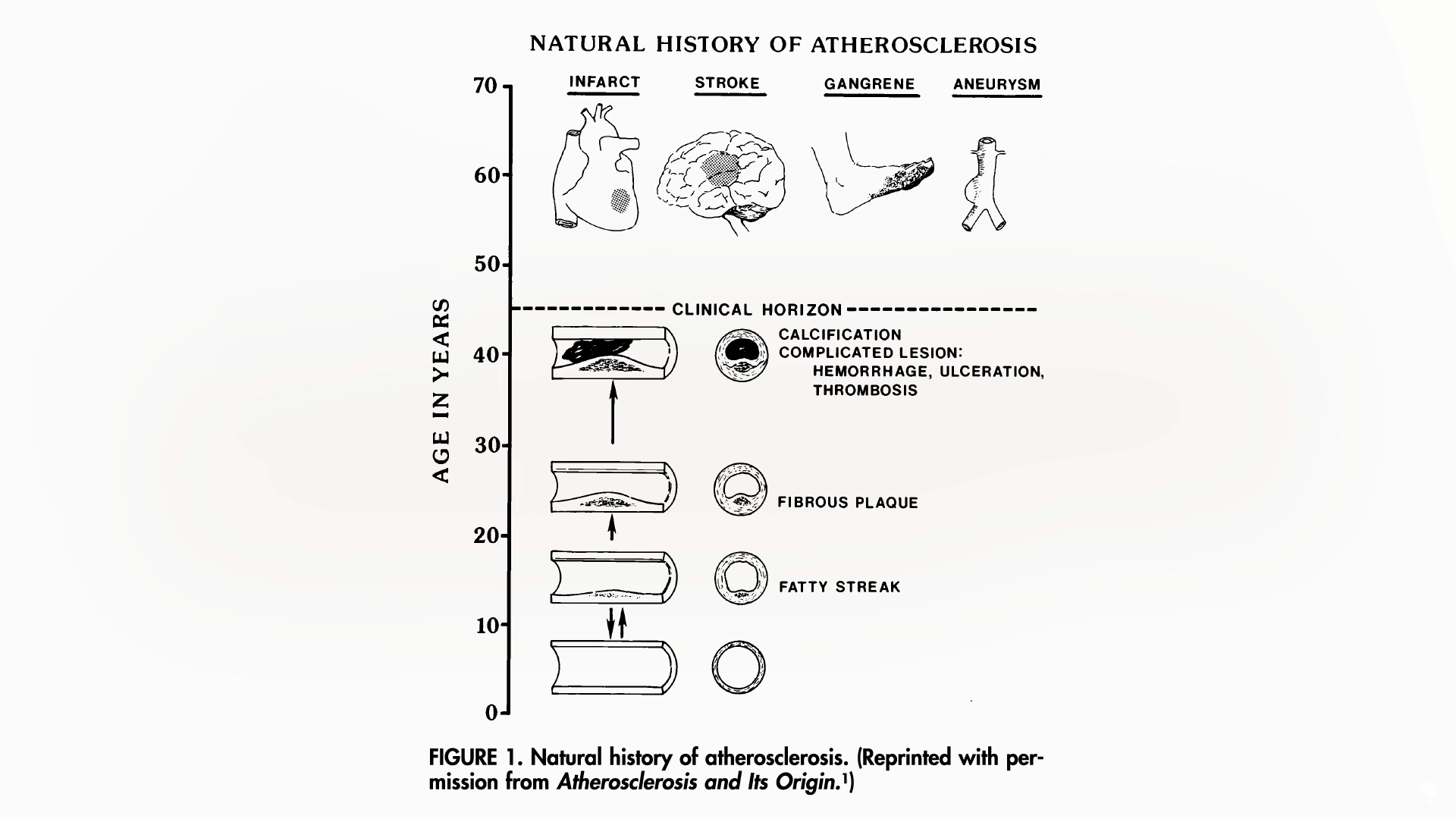
Atherosclerosis, commonly known as the hardening of the arteries, is a progressive disease that often begins silently and insidiously. Research has revealed that on a typical Western diet, the initial stages of this arterial damage can commence as early as adolescence. A significant study involving approximately 3,000 coronary arteries and aortas collected from individuals aged 15 to 34, who unfortunately died from accidents, homicides, or suicides, provided compelling evidence. These investigations demonstrated that fatty streaks, the earliest precursors to atherosclerotic plaques, can start to form in the arteries during the teenage years. By the twenties, these streaks can evolve into more developed atherosclerotic plaques, which tend to worsen in severity throughout the thirties. This arterial deterioration is the direct pathway leading to critical cardiovascular events. When atherosclerosis affects the coronary arteries supplying the heart, it can result in a heart attack. Similarly, when it impacts the arteries leading to the brain, it can trigger a stroke.
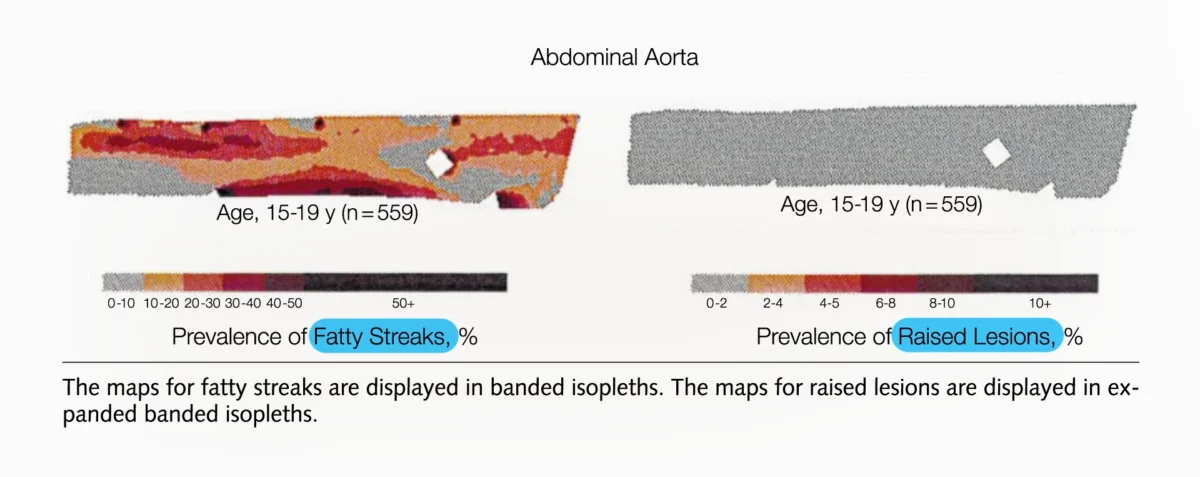
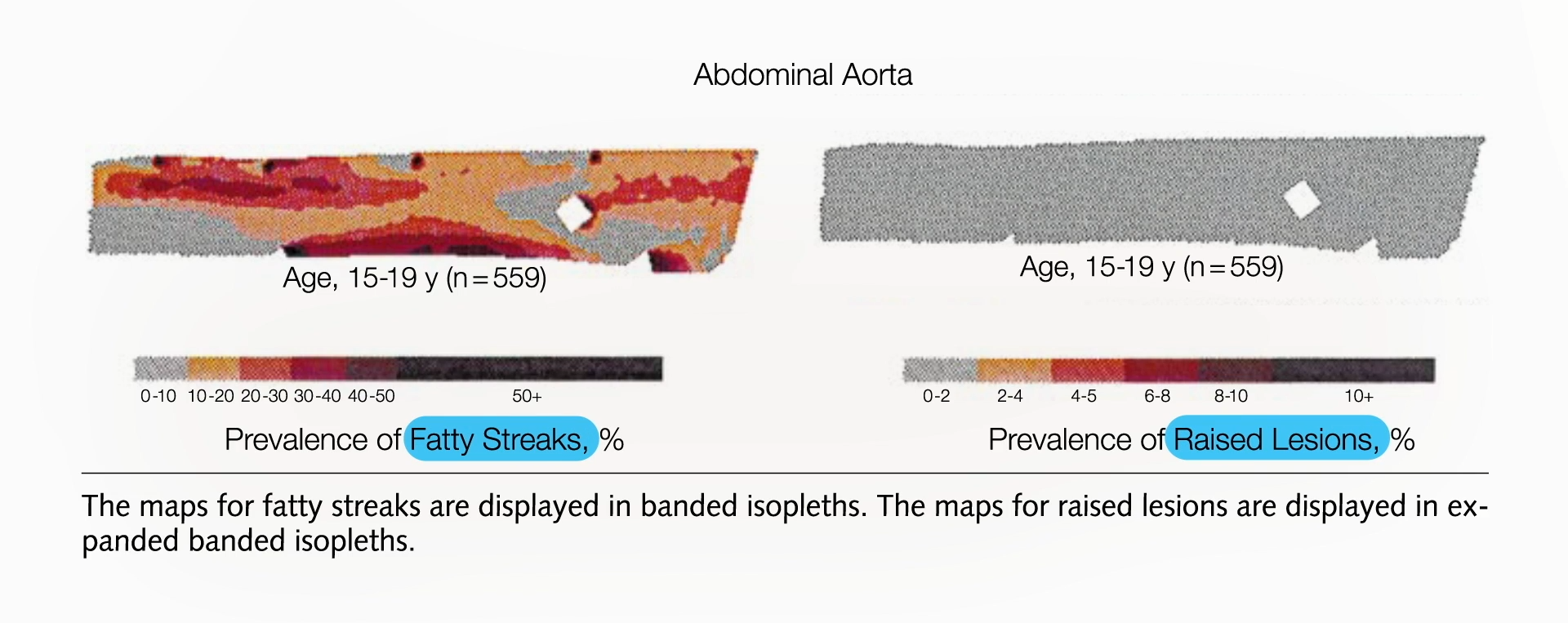
The progression of this disease is alarmingly widespread. In the aforementioned study, an astonishing 100% of the teenage participants exhibited evidence of fatty streaks accumulating within their arteries. By their early thirties, a significant majority of these individuals had already developed these fatty streaks into mature atherosclerotic plaques that protruded into the arterial lumen, narrowing the passageway for blood flow. For the age group of 15 to 19 years, fatty streaks were found to be pervasive throughout their aortas, though overt plaques had not yet formed on average.

A Timeline of Arterial Deterioration
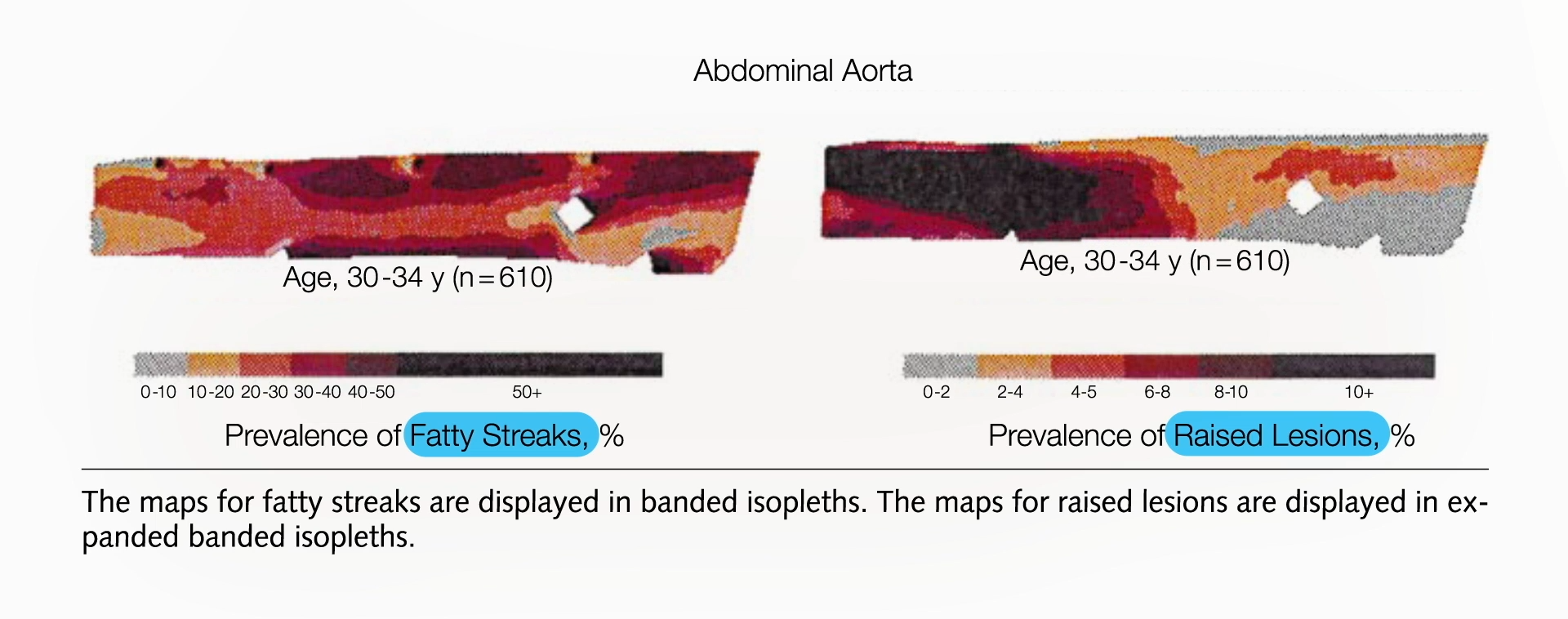
The development of atherosclerotic plaques followed a discernible timeline within the study cohort. Plaques began to manifest in the abdominal aorta, the main artery extending through the torso, during the early twenties. Their presence and severity increased by the late twenties, by which time fatty streaks had infiltrated extensively. By the early thirties, the arteries of most individuals in this age group were found to be significantly compromised by the progression of atherosclerosis.
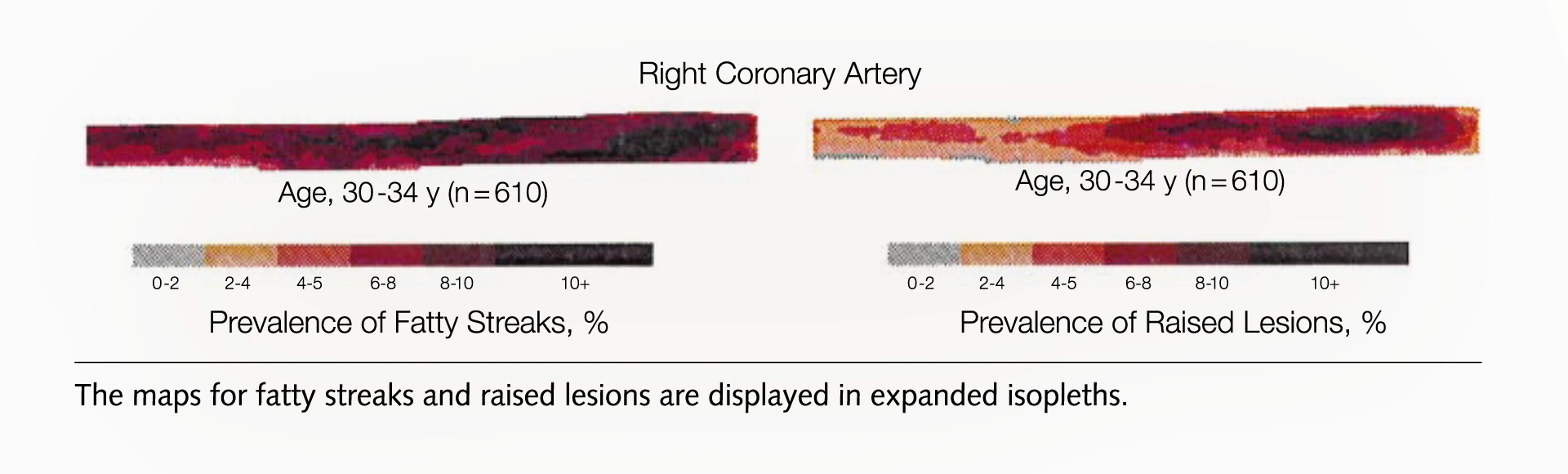
Crucially, this pattern of arterial damage was not confined to the aorta. Researchers observed a similar progression in the coronary arteries, which are vital for supplying oxygenated blood to the heart muscle. Studies revealed that fatty streaks were present in the coronary arteries of teenagers, with early signs of plaque formation appearing in the early twenties. This process continued to advance with age, and by the early thirties, the majority of individuals already harbored plaques in their coronary arteries.
This evidence strongly suggests that atherosclerosis is not an age-related disease that suddenly appears in later life but rather a chronic condition with origins in youth. The implication is clear: interventions to prevent or mitigate heart disease should ideally commence much earlier than typically considered.
The Imperative for Early Intervention
The early onset of atherosclerosis highlights why delaying the treatment of heart disease until symptoms become apparent is a flawed strategy. If the pathological processes begin in our youth, then preventative measures and interventions should also be initiated during these formative years. Analogous to how a cancerous tumor or diabetes would not be left untreated until they reach advanced, symptomatic stages, atherosclerosis warrants proactive management from an early age.
Addressing Atherosclerosis: The Lifestyle Prescription
The primary method for combating atherosclerosis involves lowering LDL cholesterol levels. This is most effectively achieved through dietary modifications that significantly reduce saturated fat and cholesterol intake. Such a diet typically entails minimizing or eliminating the consumption of eggs, meat, and dairy products, as well as processed and junk foods that are often laden with unhealthy fats and sugars.
A Call for Behavioral Transformation
To effectively combat the epidemic of heart disease, a fundamental shift in lifestyle choices is necessary, commencing as early as infancy or early childhood. While such a comprehensive alteration of deeply ingrained behaviors may seem challenging, it is far from impractical. The success observed in dramatically reducing smoking rates and subsequent lung cancer incidence serves as a powerful precedent for the potential of widespread behavioral change.
Furthermore, the safety and efficacy of healthy eating patterns are well-established. The Academy of Nutrition and Dietetics, a leading professional organization, affirms that appropriately planned plant-based diets are suitable for all stages of life, including pregnancy. This endorsement from a respected authority underscores the viability and safety of dietary interventions as a cornerstone of cardiovascular health.
The "Cure Atherosclerosis" Imperative
A landmark study published in the Journal of the American College of Cardiology declared that "Curing Atherosclerosis Should Be the Next Major Cardiovascular Prevention Goal." This bold statement emphasizes the urgent need to move beyond mere risk reduction and aim for a complete reversal of this debilitating disease.
Genetic Insights: The PCSK9 Mutation and Lifelong LDL Control
Compelling evidence supporting the long-term benefits of consistently low LDL cholesterol levels comes from studies of individuals with a specific genetic mutation. Approximately 1 in 50 African Americans are born with a mutation in the PCSK9 gene. This genetic anomaly results in significantly lower LDL cholesterol levels throughout their entire lives. These individuals exhibit markedly reduced rates of coronary heart disease – an impressive 88% decrease in risk compared to those without the mutation, even when other cardiovascular risk factors are present. Notably, many individuals with this mutation have high blood pressure, are overweight, a substantial portion smoke, and nearly 20% have diabetes. Despite these adverse factors, their lifelong history of low LDL cholesterol dramatically mitigates their risk of heart disease.
Duration of Low LDL: The Key Differentiator
This near 90% reduction in events such as heart attacks and sudden cardiac death was observed in individuals with an average LDL cholesterol level of 100 mg/dL, in contrast to the 138 mg/dL average seen in those without the genetic mutation. This finding is significant because it demonstrates that LDL cholesterol can be maintained below 100 mg/dL.
The critical question arises: why does a reduction in LDL cholesterol by approximately 40 mg/dL, achieved through a fortunate genetic predisposition, lead to an almost 90% decrease in coronary heart disease risk, while the same reduction achieved through statin medications typically yields only about a 20% decrease? The most plausible explanation lies in the duration of this LDL reduction. When it comes to lowering LDL cholesterol, the length of time it has been maintained at a lower level appears to be as crucial, if not more so, than the absolute degree of reduction.
Lifestyle’s Enduring Impact vs. Pharmaceutical Intervention
This distinction in duration is precisely why healthy lifestyle choices can potentially eliminate about 90% of heart attack risk, while pharmaceutical interventions, when initiated later in life, offer a more limited benefit of 20% to 30%. When individuals rely on medication later in life to halt the progression of coronary atherosclerosis, they may need to achieve LDL levels below 70 mg/dL. However, if healthier choices are adopted earlier in life, it may be sufficient to lower LDL cholesterol to around 100 mg/dL, a target achievable for a broad segment of the population. This aligns with observational data from various countries suggesting that heart disease mortality plateaus at a population average LDL cholesterol level of approximately 100 mg/dL.
The Challenge of Late-Stage Intervention
The necessity for more aggressive LDL reduction with medication later in life underscores the cumulative damage of years of unhealthy habits. If individuals are attempting to reverse a lifetime of poor dietary choices with pharmaceuticals, they may require LDL levels as low as 55 mg/dL to approach zero coronary heart disease events. For those who have already experienced a heart attack and are seeking to prevent a recurrence, pushing LDL levels down to around 30 mg/dL might be the ideal scenario.
Reversing and Stabilizing Plaque
Achieving such exceptionally low LDL cholesterol levels offers significant benefits beyond simply preventing new atherosclerotic plaque formation. It can also help stabilize existing plaques, making them less prone to rupture. Plaque rupture is a primary trigger for blood clots that can block arteries, leading to heart attacks and strokes. By stabilizing these arterial lesions, the risk of these life-threatening events is substantially reduced.
Safety of Low Cholesterol Levels: A Continuing Inquiry
A critical question that arises is the safety of maintaining cholesterol levels at such extremely low thresholds. Can LDL cholesterol ever be too low? This remains an area of ongoing research and public health discussion. While the data from individuals with the PCSK9 mutation and those achieving very low LDL through lifestyle or medication suggest significant cardiovascular benefits, further investigation into potential adverse effects at these very low levels is warranted.
Doctor’s Note: Early Detection and Prevention
The revelation that atherosclerosis can begin at such a young age should prompt a reevaluation of public health strategies. Resources such as "Heart Disease Starts in Childhood" provide valuable insights into the early origins of this disease. Similarly, comparative analyses of lifestyle versus pharmaceutical benefits, like those found in "The Actual Benefit of Diet vs. Drugs," offer further clarity on effective intervention strategies. The concept of "primordial prevention," focusing on maintaining low risk throughout life, as explored in "When Low Risk Means High Risk," is paramount. Additionally, understanding the nuances of cholesterol, such as whether cholesterol size matters, contributes to a comprehensive approach to cardiovascular health.
The stark contrast in risk reduction between adopting a healthy lifestyle and relying solely on medications highlights the power of proactive, long-term health choices. While drugs play a role, particularly in managing existing conditions, they cannot replicate the profound and enduring protective effects of a consistently healthy diet and lifestyle initiated early in life. The path to significantly reducing heart attack risk, and potentially achieving a "cure" for atherosclerosis, lies in embracing these foundational health behaviors.

