

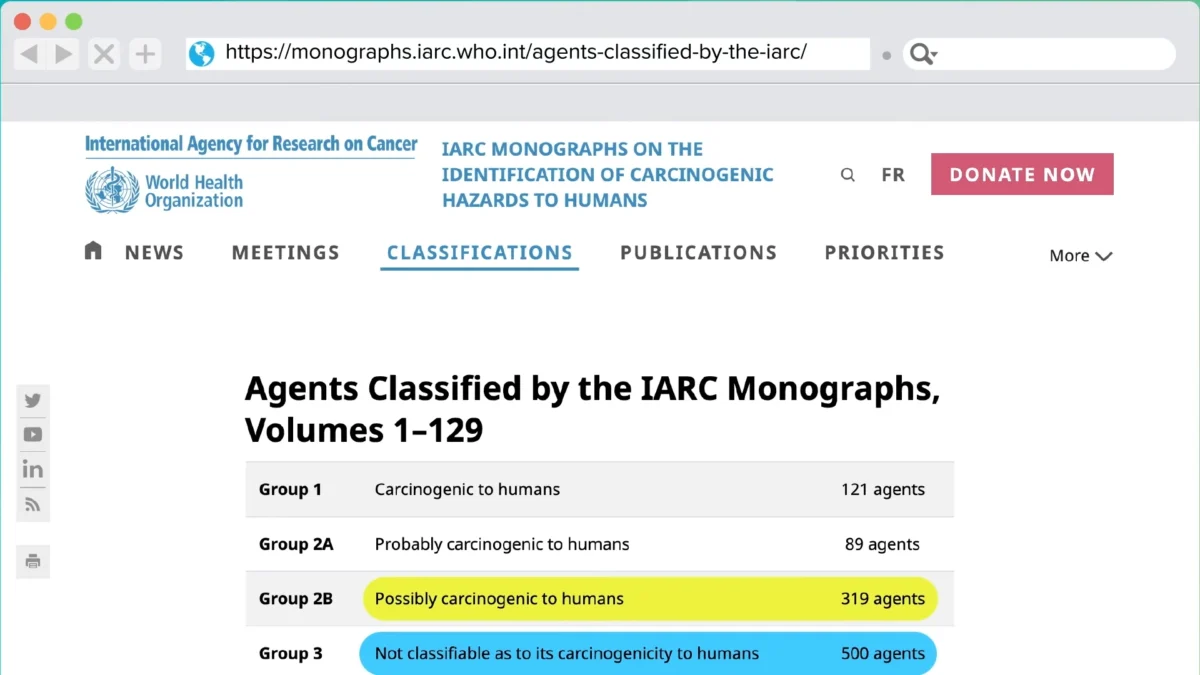
The International Agency for Research on Cancer (IARC), a specialized agency of the World Health Organization (WHO), has solidified its position as a leading authority in carcinogen evaluation. Established in 1965, its genesis was rooted in a profound humanitarian impulse, inspired by a grieving husband’s letter to national governments urging greater investment in cancer research and prevention. This plea, advocating for a portion of military budgets to be redirected towards combating a significant human affliction, catalyzed the creation of an international body dedicated to understanding and mitigating cancer risks. The IARC’s primary mandate, from its inception, has been the systematic evaluation of scientific evidence to determine whether various agents, substances, and exposures are capable of causing cancer in humans.
At the core of the IARC’s work are its renowned Monographs on the Identification of Carcinogenic Hazards to Humans. These comprehensive, book-length reports meticulously analyze an extensive body of scientific literature, comprising thousands of studies, to reach conclusions about the carcinogenic potential of specific agents. These evaluations are widely regarded as the most authoritative assessments in the field, offering a crucial benchmark for public health policy and individual decision-making.
In 2018, the IARC published its 114th monograph, which focused specifically on the carcinogenicity of red meat and processed meat. This landmark publication represented the culmination of an exhaustive review process, involving a panel of 22 expert scientists from 10 countries. Over an extended period, these experts rigorously examined more than 800 studies, scrutinizing epidemiological data, laboratory animal studies, and mechanistic evidence. The findings were stark and presented in a tiered classification system designed to reflect the strength of the evidence.
The report classified red meat, which includes beef, lamb, pork, and veal, as "probably carcinogenic to humans" (Group 2A). This designation signifies that there is limited evidence of carcinogenicity in humans and less than sufficient evidence in experimental animals. It suggests a probable causal relationship, but with a degree of uncertainty.
However, the classification for processed meat was far more definitive. Processed meats, defined by the IARC as meats that have been transformed through salting, curing, fermentation, smoking, or other processes to enhance flavor or improve preservation, were placed in Group 1. This category represents "carcinogenic to humans," the highest level of certainty in the IARC’s classification system. This means that the scientific evidence overwhelmingly supports a causal link between the consumption of processed meats and the development of cancer in humans.
The implications of this Group 1 classification are profound. It directly implicates a wide array of commonly consumed food products. These include, but are not limited to, bacon, ham, hot dogs, sausages, and various lunch meats, such as turkey deli slices. The IARC’s research specifically linked the consumption of processed meat to an increased risk of colorectal cancer, which encompasses cancers of the colon and rectum. Globally, colorectal cancer is the second leading cause of cancer-related mortality, surpassed only by lung cancer, which is predominantly linked to smoking. In the United States, colorectal cancer also holds the position of the second leading cause of cancer death, and importantly, it is not solely a disease of older individuals, but also a significant cause of cancer and death at earlier stages of life.
Industry and Organizational Responses to the IARC Classification
The release of the IARC’s findings triggered immediate and significant reactions from various stakeholders, most notably the meat industry, government bodies, and cancer advocacy organizations.
The Meat Industry’s Counteroffensive:
The meat industry, predictably, did not welcome the IARC’s conclusions. Industry representatives swiftly voiced strong opposition, characterizing the classification as an "overreach" and a "dramatic and alarmist" interpretation of the scientific data. The North American Meat Institute, for instance, issued statements asserting that the IARC’s findings were not consistent with the broader scientific consensus and highlighted what they perceived as methodological limitations in the agency’s review.
In a particularly strong reaction, an Italian agricultural group issued a press release that decried the IARC’s findings as "terrorism on meat," a phrase that underscored the deep antagonism and sense of attack felt by some within the industry. This sentiment was echoed in lobbying efforts by meat industry organizations in both Canada and the United States.
Lobbying and Funding Challenges:
Evidence emerged of concerted efforts by the meat industry to influence government policy and undermine the IARC’s credibility. In Canada, the meat industry reportedly lobbied the federal government, urging the Health Minister to cease funding for the IARC. The rationale presented was that the agency’s conclusions regarding meat were unacceptable and that its funding should be re-evaluated in light of such "questionable" findings. Similarly, the U.S. meat industry engaged in parallel actions, aiming to exert pressure on governmental bodies to withdraw financial support from the IARC.
Internal documents later revealed, in the context of other controversial IARC classifications, that corporate entities, including those in the agricultural and chemical sectors, actively sought to challenge the agency’s evaluations. These efforts extended to attempting to discredit the IARC’s findings on issues beyond meat, such as the herbicide Roundup, manufactured by Monsanto (now owned by Bayer). Reports indicated instances of corporate scientists discussing strategies to "ghost-write" scientific papers and suppress research that contradicted their companies’ assertions about product safety.

The Chemical Industry’s Alliance:
The chemical industry joined the chorus of criticism, aligning with the meat industry’s concerns. Representatives from this sector also labeled the IARC monographs as "dubious and misleading." This coordinated opposition from major industrial sectors drew parallels to historical tactics employed by the tobacco industry in the face of mounting evidence of the dangers of smoking. Experts noted that the strategies—including denial, discrediting scientific bodies, and lobbying for deregulation—were remarkably similar, suggesting a pattern of corporate behavior aimed at protecting commercial interests by obfuscating scientific consensus. The argument that the IARC "never met a carcinogen it didn’t like" was frequently deployed as a rhetorical tool to dismiss the agency’s work, despite the fact that a substantial majority of substances evaluated by the IARC are classified as only "possibly carcinogenic" (Group 2B) or lack sufficient data for definitive classification.
The IARC’s Position and Broader Context
The IARC has consistently maintained its scientific integrity and its commitment to evidence-based evaluation. The agency emphasizes that its role is strictly to assess the evidence and classify agents based on their carcinogenic potential. It does not engage in policy-making or dictate public health recommendations. The IARC’s mandate is to provide the scientific foundation upon which governments and public health organizations can build their strategies.
Official Responses and Public Health Guidance:
Following the publication of the 2018 monograph, the World Health Organization (WHO) received numerous inquiries, concerns, and requests for clarification regarding the findings on processed meat. The WHO’s response, disseminated through official channels, clarified that the IARC had not issued a directive for individuals to cease consumption of processed meat entirely. Instead, the agency emphasized that its report indicated that reducing the intake of these products could significantly lower the risk of developing a major cause of cancer death. The message was framed as an informational service, empowering individuals to make informed choices, with the implicit understanding that a higher risk of cancer is associated with higher consumption levels.
The IARC itself reiterated that it is a research body focused on evidence evaluation. The responsibility for translating these scientific findings into public health advice rests with other organizations.
Cancer Organizations’ Stance:
Major cancer organizations offered varying degrees of clarity and guidance in response to the IARC’s classification. The American Cancer Society, for example, adopted a more direct stance regarding alcohol consumption, stating unequivocally that "it is best not to drink alcohol" when it comes to cancer prevention. However, concerning processed meats, the organization’s advice was somewhat more nuanced, suggesting that individuals could manage their risk by "limiting" their intake.
In contrast, the European Commission provided a more explicit set of recommendations. To reduce cancer risk, the Commission advised a diet rich in whole grains, pulses, fruits, and vegetables, while simultaneously recommending limitations on sugary, fatty, and salty foods. Crucially, their guidance explicitly called for the avoidance of soda, sausages, and other processed meats. This aligns with the IARC’s finding that the question of a "safe level" of processed meat consumption remains unknown, suggesting that complete avoidance is the most prudent approach for risk reduction.
Broader Implications and Scientific Rigor
The IARC’s classification of processed meat as carcinogenic is not an isolated event but part of a broader scientific endeavor to identify and understand the multifactorial causes of cancer. The agency’s rigorous methodology, involving extensive literature reviews and expert consensus, lends significant weight to its findings. The classification system, from Group 1 (carcinogenic) to Group 3 (not classifiable), provides a structured framework for communicating risk.
The pushback from industry groups highlights the inherent tension between public health advocacy and commercial interests. The tactics employed by the meat and chemical industries bear striking resemblances to those historically used by industries facing scientifically validated risks, such as the tobacco and asbestos industries. These tactics often involve questioning the science, attacking the messengers, and lobbying for deregulation, all with the aim of delaying or preventing public health interventions.
The IARC’s work serves as a critical reminder that dietary choices can have a significant impact on long-term health outcomes. While the agency’s role is to provide the scientific evidence, the translation of this evidence into actionable public health policies and individual behaviors is a complex process involving governments, health organizations, and the public. The ongoing debate surrounding the classification of processed meats underscores the importance of transparency, robust scientific evaluation, and the need for effective communication of health risks to empower individuals to make informed decisions about their well-being. The IARC’s continued commitment to independent, science-based assessment remains a vital bulwark against the influence of commercial interests on public health.
Furthermore, the effects of processed meat consumption are not limited to cancer. Emerging research is exploring its impact on other physiological functions, such as lung function, indicating a broader spectrum of potential health consequences associated with its regular consumption. The IARC’s classification, therefore, represents a significant data point in a larger constellation of evidence pointing towards the need for careful consideration of processed meat in a healthy diet.

