

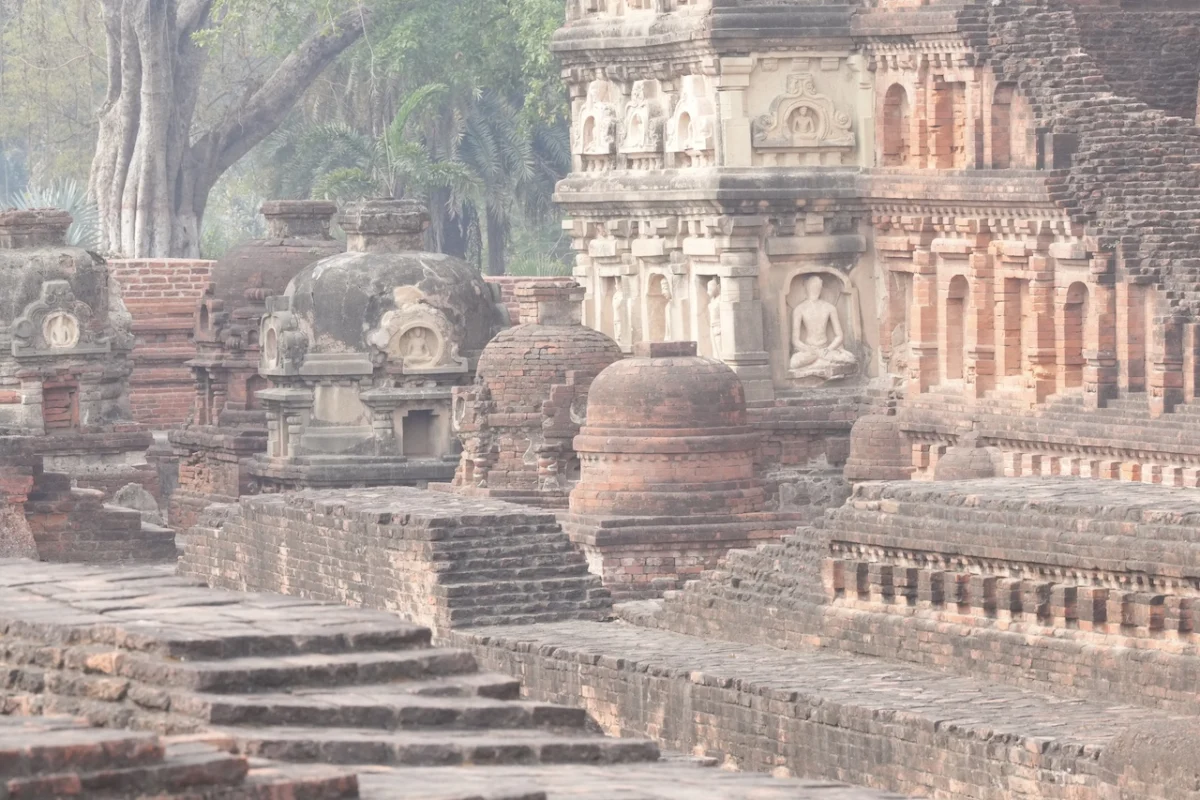
The ascent to Vulture’s Peak, or Gridhakuta Hill, near Rajgir in India, presents a deceptively gentle slope, yet the journey is far from easy. This ancient path, winding along the ridges that once fortified the city of Rajagriha, is a testament to enduring faith and the palpable presence of history. Under the relentless Indian sun, the paved, yet largely unshaded, path heats rapidly, a stark reminder of the physical challenges faced by countless pilgrims throughout the centuries.
The modern "Walking with the Buddha" tour, a meticulously planned itinerary covering key sites in the Buddha’s life, brings together a diverse array of devotees. Among them, an especially prominent contingent of Sri Lankans, clad in blinding white, adds a vibrant splash of color to the landscape. The air is alive with the calls of vendors selling flowers and souvenirs, many intended as offerings to the resident monkeys and dogs who wisely seek refuge in the scant shaded areas. Interspersed among them are alms-seeking supplicants, their presence a constant, humble reminder of the precariousness of life and the spiritual act of giving. The rhythmic murmur of mala sellers, their persuasive calls forming the soundtrack to the climb, underscores the arduous nature of their profession. They traverse the sacred mountain multiple times a day, from dawn until dusk, undeterred by the solitary rest area dedicated to King Bimbisara, a significant patron of the Buddha.
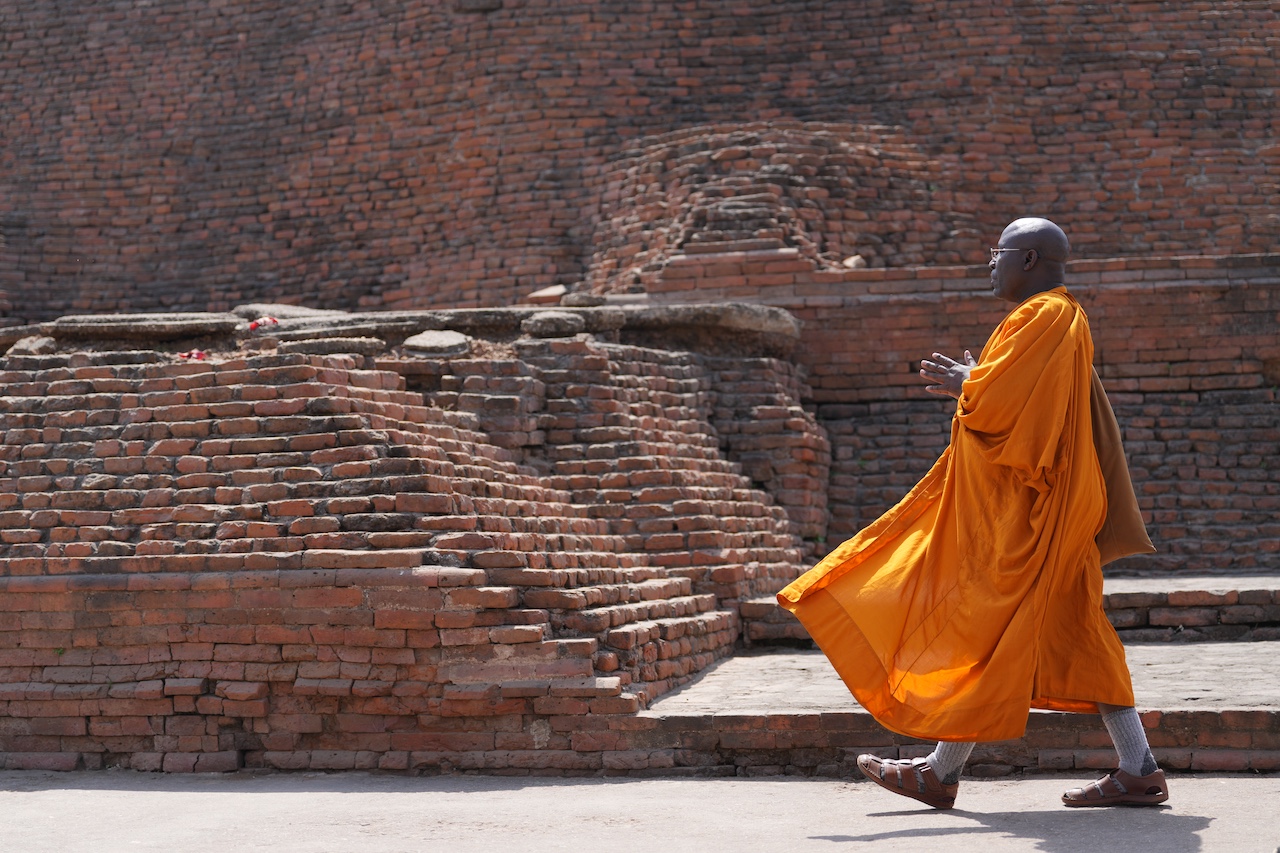
Vulture’s Peak holds profound significance in Buddhist tradition. It is on this very summit that the Buddha is said to have delivered many of his pivotal teachings. Notably, the Mahaparinibbana Sutta, a discourse detailing the Buddha’s final days, commences here. Below the summit lie the caves of Sariputta and Ananda, venerated as places where these principal disciples attained enlightenment. At Ananda’s cave, pilgrims engage in chanting the Heart Sutra, guided by Zen monks from SokukoJi Monastery in Michigan, USA. Another notable group, a cheerful assembly of Vietnamese Vajrayana practitioners, adds to the international tapestry of devotion, their vibrant attire a joyful expression of their faith.
While the physical summit of Vulture’s Peak is modest, capable of accommodating perhaps a hundred monks, ancient texts like the Lotus Sutra speak of audiences numbering in the thousands, including 80,000 bodhisattvas and 20,000 devas. The broad hillside overlooking the peak, reminiscent of an ancient amphitheater, allows for the visualization of such vast congregations. As pilgrims descend, the scene transforms: the vendors and alms-seekers, many facing hardship, become the devas of the sutras, while the pilgrims themselves embody the bodhisattvas. The Lotus Sutra’s grand pronouncements find a tangible echo in the daily reality of Vulture’s Peak, where devotees from across the globe converge, and where the vulnerable strive to sustain themselves and their families. The Buddha’s audience, it becomes clear, is not confined to a historical moment but is an ever-expanding, living entity.
A Journey Through Sacred Landscapes
The pilgrimage, which began a week prior in Varanasi, the ancient city on the Ganges sacred to Shiva, traces a path through four principal sites central to Buddhist pilgrimage, as encouraged by the Buddha himself: Sarnath, Bodh Gaya, Kushinagar, and Lumbini. This journey also encompasses several other locations of historical and spiritual import. As scholar Malcolm David Eckel notes, in medieval India, "To see the evidence of the Buddha and hear his teaching did not require an elaborate study of texts. All it took was the stamina to travel in the steps of the Buddha, see the remnants of his presence, and hear the stories that placed each site in the sacred narrative of the Buddha’s life." The question remains whether this holds true in the 21st century.
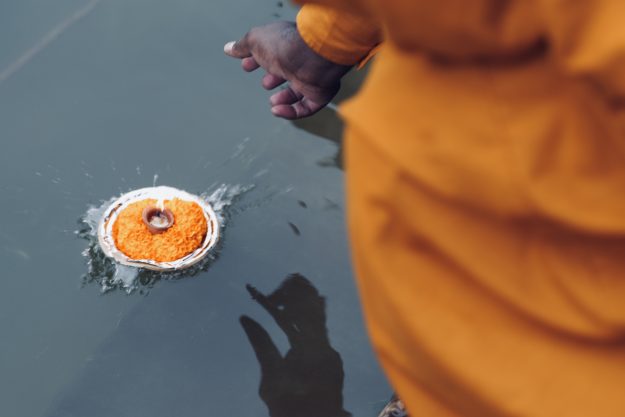
Varanasi, a city pulsating with life, scholarship, and religious fervor since the Buddha’s era, offered a poignant start. A cruise on the Ganges, shrouded in mist, led to a crematory ghat where the solemnity of continuous cremation rituals, a practice spanning five millennia, was palpable. In this deeply spiritual setting, the author performed a private puja, scattering a portion of their mother’s ashes into the sacred river, a personal moment of remembrance at a place visited together years prior.
Sarnath: The First Teaching
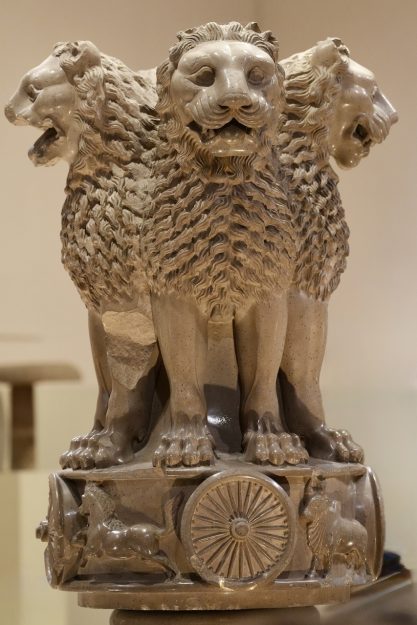
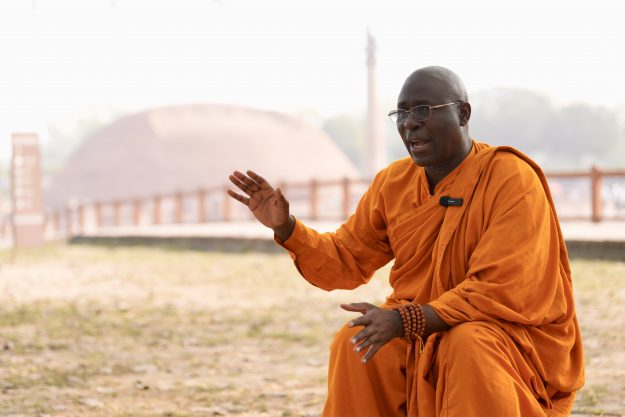
A short distance from Varanasi lies Sarnath, historically known as Isipatana in the Pali suttas. It was here, in the Deer Park, that the Buddha delivered his first sermon to his five former ascetic companions, setting in motion the Dharma wheel. The spiritual leader of the pilgrimage, Bhante Buddharakkhita, delivered a teaching here, echoing the Buddha’s discourse on the Middle Way, the Four Noble Truths, and the Eightfold Path. Sarnath, though marked by the ruins of ancient monasteries, some rumored to have reached six stories in height, exudes a profound sense of peace. The Ashokan pillar, topped by the iconic four lions now serving as India’s national emblem, stands as a testament to the site’s historical and cultural significance. The museum here houses exquisite Buddha statues from the Gandharan and Mathuran styles, offering a visual journey through the evolution of Buddhist art.
Bodh Gaya: The Seat of Enlightenment
The pilgrimage then ventured into Bihar, a state whose name itself derives from vihara, meaning monastery. Despite attracting significant Buddhist tourism, Bihar remains one of India’s poorest states, with a GDP per capita of approximately $800 annually. Bodh Gaya, a vibrant hub dotted with numerous monasteries and temples, stands as a beacon of spiritual activity. Richard H. Davis, in his seminal work Religions of Early India, describes Bodh Gaya as a "sacred center" for Buddhists worldwide, comparable to Mecca or Jerusalem for other faiths. He highlights its role as a nexus where the "transnational character of the modern Buddhist world" is vividly displayed through the diversity of nationalities, attire, languages, and customs.
Bodh Gaya has been a preeminent pilgrimage destination since the reign of Emperor Ashoka in the 3rd century BCE. By the 16th century, the Mahabodhi Temple complex had come under the stewardship of Shaivite Hindus, yet local memory preserved its Buddhist heritage. Resumption of pilgrimage followed refurbishment in the mid-19th century, a period scholars suggest saw the emergence of the "Protestant or secular Buddha" concept, driven by the tangible connection to the sites and the stories they evoked.
The Mahabodhi Temple, a masterpiece of Gupta-era architecture, is currently undergoing extensive restoration work, encased in bamboo scaffolding. This ongoing preservation effort, while essential, has altered the visitor experience, making circumambulation challenging. Nevertheless, beneath the sacred Bodhi tree, devotees from all corners of the globe gather for prayer, meditation, and chanting, their offerings of flowers, candles, and oil lamps creating an atmosphere of profound devotion, even amidst the hum of cleaning machinery. The site is jointly administered by Hindus and Buddhists, a unique arrangement facilitated by the efforts of Sri Lankan Buddhist reformer Anagarika Dharmapala. However, the daily frisking of monks and nuns at security gates, a practice common at airports, is viewed as an indignity by some, particularly Theravada monks, at the very site of the Buddha’s awakening.
Nalanda and Vaishali: Legacies of Learning and Republics
Near Rajgir, the historical capital of King Bimbisara, pilgrims also visited the Vulture’s Peak and the bamboo grove where the Buddha frequently taught. The journey continued to the vast ruins of Nalanda, once a renowned ancient university that flourished until its destruction in the late 12th century. At its zenith, Nalanda may have hosted 10,000 students and 2,000 faculty. The most striking feature of the ruins is the immense library, Dharmaganja, said to have burned for three months due to the sheer volume of its manuscripts. The scale of the devastation, with burn marks still visible on the bricks, underscores the profound loss of ancient knowledge.

Traveling north through Patna, the former capital of Emperor Ashoka, the pilgrims reached Vesali (Vaishali). This ancient city is recognized as the oldest republic on Earth and is historically significant as the place where the Buddha was persuaded to ordain women. Ruled by the Licchavi clan, Vaishali was a favored resting place for the Buddha. The visit coincided with the wheat harvest, offering a glimpse into the enduring agricultural rhythms of the region.
Kesariya and Kushinagar: Teachings and Parinirvana
The journey then led to Kesariya, formerly Kesaputta, the city of the Kalamas. Here stands a monumental stupa, originally built during Ashokan times and expanded over centuries. Bhante Buddharakkhita delivered a teaching here, drawing from the Kalama Sutta, emphasizing the importance of personal inquiry and discernment over blind adherence to tradition or hearsay.
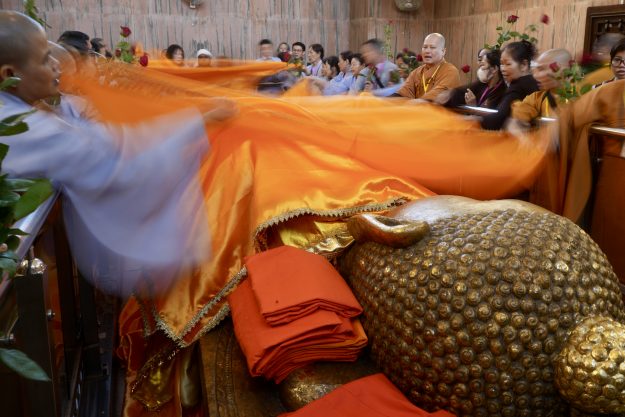
The pilgrimage reached its poignant conclusion at Kushinagar (Kusinara), the site of the Buddha’s passing into parinirvana. At the Mahaparinibbana Temple, a striking Art Deco structure maintained by Burmese monks, pilgrims participated in a ritual, laying a large yellow robe upon the twenty-foot reclining Buddha statue. The site holds the unique theological significance that all Buddhas, past and future, enter parinirvana here, a concept that compresses time and emphasizes the universal nature of the Buddha’s enlightenment and passing.
Lumbini and Kapilavastu: Birthplace and Upbringing
Crossing into Nepal, the pilgrims visited Lumbini, the birthplace of Prince Siddhartha Gautama. The exact spot of birth, marked by a stone under glass within a modest structure, is a focal point of devotion. The surrounding restored garden and planned monastic zone are vast, suggesting an ambitious vision for the spiritual center.
Nearby lies Kapilavastu, the capital of the Sakyan republic where the Buddha-to-be spent his formative years. The historical context of the gana-sanghas, or republics, that briefly flourished in the region during the Buddha’s lifetime is significant, as these political structures were largely extinguished around the time of his death. While the exact location of Kapilavastu is contested between Piprahwa in India and Tilaurakot in Nepal, the latter, visited by the pilgrims, presents a far more extensive ancient urban layout. The remnants of the palace and the gates through which the young prince departed his sheltered life offer a tangible link to his past. A small temple dedicated to the Buddha’s mother remains active within the walls, where processions of local women offer prayers and flowers.
The Enduring Presence of the Buddha
In Kapilavastu, amidst the stark ruins, the question arises: where does the Buddha reside? Scholar Donald S. Lopez Jr. posits the distinction between the historical Buddha and the "Buddha function," the tradition’s enduring need to derive authority from the Buddha himself. He questions whether the Buddha himself can be found, or if only the "Buddha function" persists.
The modern landscape surrounding these sacred sites, often burdened by pollution and commercialism, starkly contrasts with romanticized notions of ancient India. Yet, the physical remnants of the Buddha’s life are imbued with a palpable sacred energy, a testament to the continuous devotion of pilgrims. As the article concludes, "The Buddha is not in the ruins but in the continuous devotion of the people who visit." This enduring faith, the collective presence of devotees from across Asia and beyond, transforms these historical sites into living embodiments of the Dharma, bringing pilgrims ever closer to the Blessed One.

