

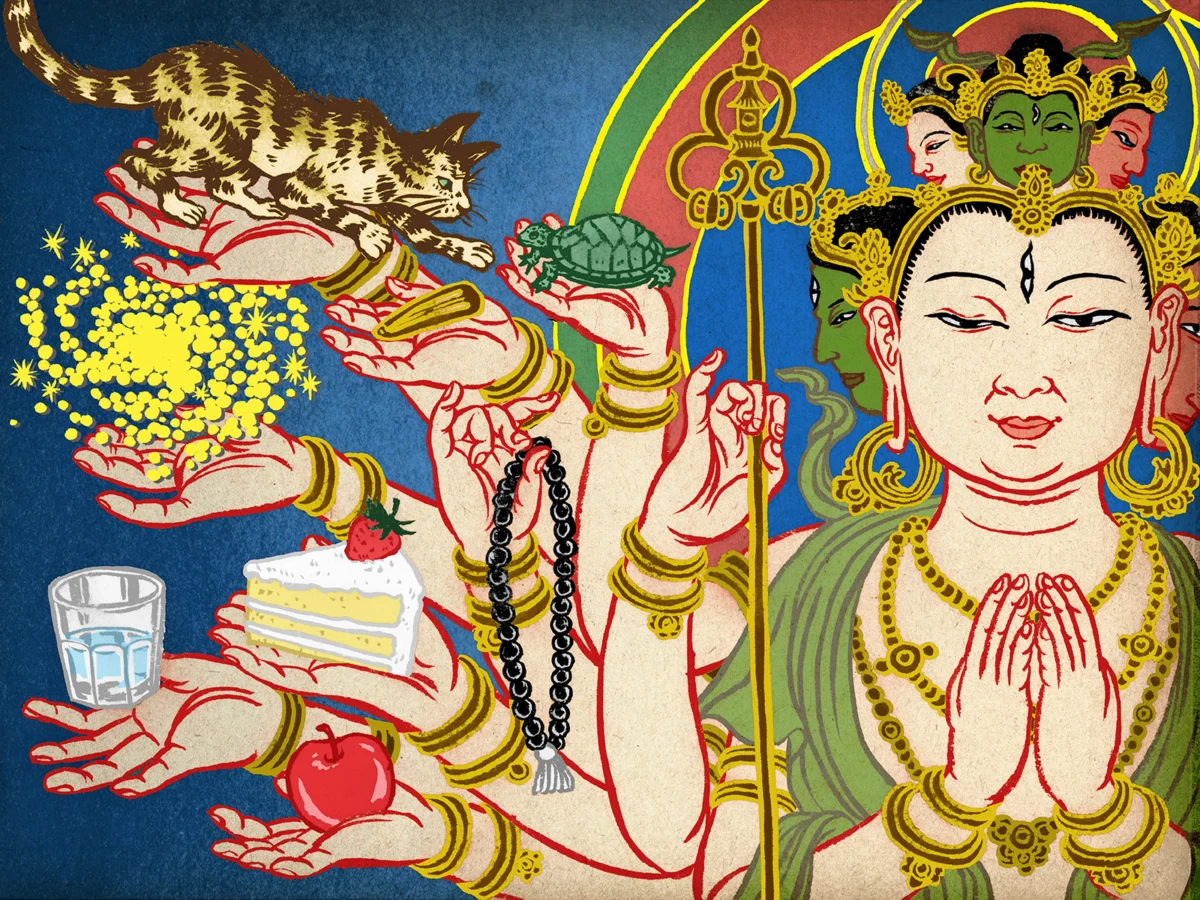
Hiromi Ito’s profound exploration of the Heart Sutra, translated into English for the first time by Jeffrey Angles, offers a unique and deeply personal lens through which to understand ancient Buddhist teachings. Originally published in Japan in 2010, this serialized excerpt from "Reading the Heart Sutra" delves into the poet’s personal life, weaving her experiences of motherhood, loss, and familial care with the intricate philosophical concepts of Buddhism. The publication, appearing monthly in Tricycle, invites readers to engage with a text that has resonated for centuries, presented through the intimate dialogue between a mother and her daughter.
A Poet’s Groundbreaking Voice
Hiromi Ito, a celebrated poet, first gained national recognition in Japan during the 1980s for her unflinching and groundbreaking exploration of themes such as pregnancy, childbirth, and female sexuality. Her literary career has consistently challenged societal norms and offered a candid perspective on the female experience. In "Reading the Heart Sutra," Ito turns her insightful gaze toward fundamental Buddhist texts, reflecting on their teachings in the context of her own life. The book navigates the complexities of raising children, coping with grief, and the responsibilities of caring for aging parents, making the abstract tenets of Buddhist philosophy remarkably relatable.
The Heart Sutra: An Ancient Text for Modern Times
The Heart Sutra, formally known as the Prajñāpāramitā Hṛdaya Sūtra, is one of the most well-known and concise Buddhist scriptures. It distills the essence of the Prajñāpāramitā (Perfection of Wisdom) literature, which emphasizes the concept of emptiness (śūnyatā) as the ultimate nature of reality. The sutra’s brevity belies its profound depth, offering a path to liberation from suffering through the understanding that all phenomena are devoid of inherent existence. Its enduring appeal lies in its ability to address fundamental human questions about existence, suffering, and the nature of reality.
A Daughter’s Perspective: Kanoko’s Engagement with the Sutra
The narrative unfolds through a series of conversations between Ito and her daughter, Kanoko. Kanoko, now an adult, works with patients suffering from autism and schizophrenia and moonlights as an improvisational musician. Her interest in Buddhism, sparked by a desire to become a nun and a recent engagement with a Christian church, leads her to discuss the Heart Sutra with her mother. This intergenerational dialogue provides a dynamic framework for exploring the sutra’s teachings. Kanoko’s unique perspective, marked by her past difficulties with verbal expression and her engagement with both Japanese and English languages, adds a nuanced layer to the interpretation. Her particular fascination with the "five aggregates" (skandhas) forms a central pillar of their discussion.
Deconstructing the Five Aggregates: Form and Emptiness
The conversation begins with Kanoko’s explanation of the Heart Sutra’s opening lines, spoken by Avalokiteśvara Bodhisattva (referred to by the Japanese name Kannon). Kanoko interprets Kannon’s realization: "When practicing deep Prajñāpāramitā, I perceived all five aggregates to be empty, and at once was saved from all suffering and distress." She elaborates that Kannon understood the things he perceived as true to be mere formulations of the five aggregates, which lack inherent substance. This understanding, she explains, is the key to escaping suffering.
The five aggregates, or skandhas, are the fundamental components that constitute a sentient being and are traditionally understood as: form (rūpa), sensations (vedanā), perceptions (saṃjñā), mental formations (saṃskāra), and consciousness (vijñāna). Ito and Kanoko dissect each aggregate, exploring its meaning within the context of the sutra.
- Form (Rūpa): Kanoko clarifies that "form" refers not just to visual appearances but to the inherent existence of things, independent of perception. It is "what’s there, whether I’m trying to see it or not."
- Sensations (Vedanā): This is described as the initial contact with form. Ito notes that it’s the individual making contact, not form acting upon them.
- Perceptions (Saṃjñā): Represented by the thought, "Oh, a cake," when looking at a cake, this stage involves recognizing and categorizing sensory input.
- Mental Formations (Saṃskāra): This involves connecting perceptions to other sensory experiences and learned associations, such as thinking a cake "looks tasty."
- Consciousness (Vijñāna): The culmination where all previous aggregates coalesce, leading to recognition and the bringing to mind of associated memories and meanings.
Kanoko uses the example of a hairpin and a cake to illustrate the concept of emptiness. She argues that the perceived nature of these objects is not inherent but a projection of human understanding. A cat might see the hairpin as a toy, and a turtle might not perceive it at all. Similarly, a cake, seemingly solid and present, is in constant flux, subject to decay and transformation over time. This impermanence, Kanoko suggests, is the basis of the sutra’s assertion that forms are empty.
Emptiness: Not Nothingness, but the Absence of Inherent Self
A crucial aspect of their discussion revolves around the meaning of "empty." Kanoko posits that it signifies "empty of meaning." Things are not inherently imbued with the significance we assign to them; rather, their meaning arises from coincidental circumstances and our subjective interpretations. The character for "empty" (空, kū in Japanese, śūnya in Sanskrit) also meaning "sky," is noted as a potential connection, suggesting a vast, encompassing nature where individual phenomena are but transient parts.
Ito and Kanoko reflect on the human tendency to assign absolute truth to fleeting occurrences, like the "chance happening" of a birthday coinciding with a cake. The sutra, they conclude, points out that things do not possess intrinsic, special meanings or reasons. This perspective does not deny the reality of our experiences but encourages a deeper analysis of their true nature.
The Universal Nature of Dharmas
The conversation then moves to the assertion that "All dharmas are marks of emptiness." Dharmas in Buddhism refer to phenomena, constituents of existence, or teachings. The sutra states that these dharmas "do not arise nor disappear; they are not tainted nor pure; they do not increase nor decrease."
Kanoko interprets this through a cosmic lens. The universe, she suggests, is in constant flux. While individuals perceive life and death, from a universal perspective, birth and death are balanced. Similarly, concepts of purity and impurity are human constructs, relative to our perception and fears, not absolute qualities of the phenomena themselves. The transfer of water from a glass to a stomach, for instance, illustrates that substance is not truly lost but transformed.
This leads to the profound conclusion that concepts like life, death, purity, and defilement, as well as increase and decrease, are ultimately empty constructs. The sutra emphasizes that "in emptiness, there is no form… no eyes, ears, noses, tongues, bodies, or minds… No color, sound, smell, taste, touch, or binds on the mind." This suggests a state beyond conventional dualities and sensory perceptions, a realm where the illusions created by our senses and mind dissolve.
The Bodhisattva’s Path: Prajñāpāramitā and Nirvana
The discussion culminates with the invocation of prajñāpāramitā – the perfection of wisdom – as the path to liberation. Kanoko explains that when a bodhisattva achieves this wisdom, they overcome mental obstacles and fears, leading to the realization of nirvana. This ultimate discernment allows one to transcend suffering. The sutra declares that all buddhas, past, present, and future, rely on prajñāpāramitā to attain complete enlightenment.
The mantra, "Gate gate pāragate pārasaṃgate bodhi svāhā," is presented as the embodiment of this wisdom. While its literal translation is complex, its essence is conveyed as a powerful incantation that removes suffering and leads to the "far shore" of enlightenment. The repeated phrase "gate gate" is interpreted as a call to move beyond limitations, a transition towards awakening.
Clinical Parallels: Understanding the Mind-Body Connection
An intriguing element of the narrative emerges when Ito shares an experience from her work. She recounts a patient who can see but cannot relate visual stimuli to himself, matching pictures of apples but not recognizing an apple as such. This observation profoundly connects with the sutra’s exploration of the five aggregates. The patient’s inability to form conscious recognition or assign meaning to visual input mirrors the sutra’s deconstruction of how we construct our reality. Ito highlights that names, like visual impressions, lack inherent meaning, explaining the patient’s lack of response to them. This condition suggests a disconnect in the process where sensory input normally enters consciousness through the assignment of meaning. The patient’s ability to recognize a real apple through instinct, bypassing the usual aggregate-driven recognition, further deepens the contemplation of how perception and consciousness function.
The Poet’s Rendition: A Contemporary Poetic Interpretation
Following their detailed exploration, Ito presents her own poetic rendition of the Heart Sutra, transforming the ancient text into contemporary verse. This personal interpretation offers a more accessible entry point for readers, capturing the essence of the sutra’s message through evocative language and imagery.
Her rendition emphasizes the journey of discernment, the realization of emptiness, and the subsequent liberation from suffering. The repeated address to "Śāriputra" serves as a direct invitation to listeners to engage with these profound truths. Ito’s poetic translation grapples with the seemingly paradoxical statements of the sutra, such as "Being is not any different than nonbeing," and "All things that are, ‘are not’." She interprets these not as denials of existence but as profound insights into the impermanent and interdependent nature of all phenomena.
The poem’s structure mirrors the sutra’s progression, moving from the initial realization of emptiness to the description of the five aggregates and their illusory nature, and finally to the ultimate state of liberation. The concluding lines reiterate the power of prajñāpāramitā as a mantra that leads to clarity, freedom from suffering, and awakening.
Conclusion: A Universal Message of Liberation
Hiromi Ito’s "Reading the Heart Sutra" offers a compelling fusion of personal narrative and philosophical inquiry. Through the intimate dialogue with her daughter, the complex teachings of the Heart Sutra are rendered accessible and deeply relevant. The work underscores the enduring power of ancient wisdom to guide individuals through the universal experiences of life, loss, and the search for meaning. The serialized publication ensures a sustained engagement with these profound ideas, inviting readers to embark on their own journey of understanding and liberation, guided by the timeless wisdom of the Heart Sutra.

