

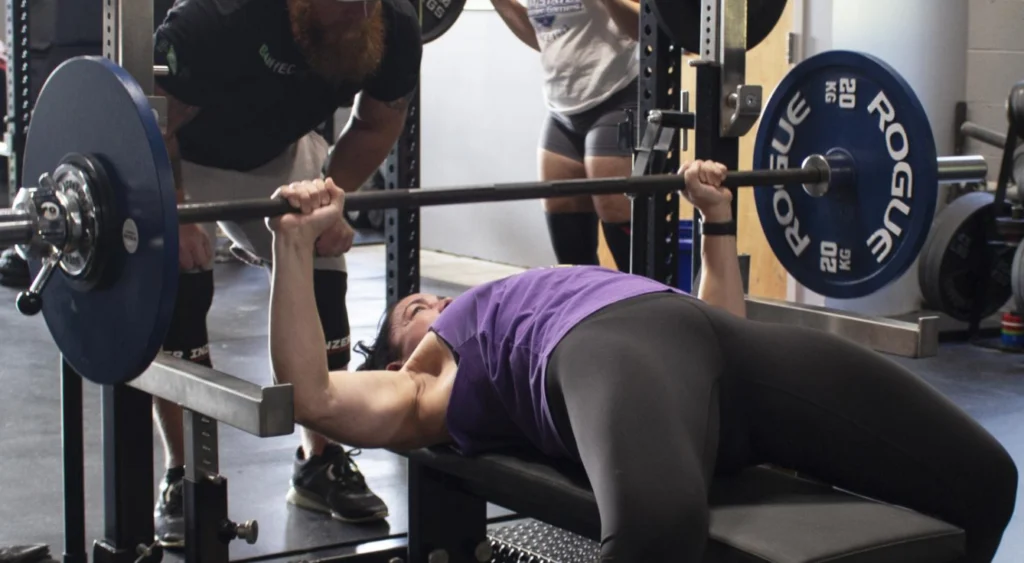
The bench press serves as a fundamental metric of upper-body strength in both competitive powerlifting and general resistance training. While the movement is often categorized as a simple horizontal push, the technical nuances of the lift—specifically the placement of the feet—remain a subject of significant debate among strength and conditioning professionals. Traditionally, the bench press is performed with the feet firmly planted on the floor to maximize stability and force production. However, contemporary training methodologies have seen a resurgence in variations where the feet are placed on the bench or suspended in the air, most notably the Larsen Press. Understanding the biomechanical implications, safety profiles, and physiological outcomes of these two distinct foot positions is essential for optimizing athletic performance and mitigating injury risk.
The Evolution of Bench Press Mechanics
The history of the bench press has seen a transition from the "floor press" of the early 20th century to the highly specialized, technical lift seen in modern International Powerlifting Federation (IPF) competitions. In the mid-century bodybuilding era, "feet-up" benching was frequently utilized to isolate the pectoral muscles, based on the belief that removing the lower body from the equation forced the upper body to work harder. As powerlifting emerged as a distinct sport in the 1960s and 70s, the emphasis shifted toward moving the maximal amount of weight possible. This shift prioritized the use of "leg drive" and a significant lumbar arch, both of which require the feet to be anchored to the floor.
In recent years, the coaching community has moved toward a more nuanced middle ground. Rather than viewing foot placement through a binary lens of "correct" or "incorrect," experts now analyze the choice based on specific training objectives. The re-emergence of the Larsen Press—named after powerlifter Adrian Larsen—highlights a trend toward using "feet-up" variations as a strategic accessory movement to address technical deficiencies in the conventional lift.
The Functional Anatomy of the Conventional Bench Press
The conventional bench press, characterized by the feet being placed on the floor, is a full-body movement that utilizes a kinetic chain starting from the ground. Biomechanically, this position offers three primary advantages: stability, force transfer, and a reduced range of motion.
Stability is the most immediate benefit of floor placement. By creating a wide base of support, the lifter can prevent lateral oscillation and maintain a consistent bar path. According to strength coach Tony Bonvechio, a wider stance allows for a more stable base of support, which is critical when handling near-maximal loads. This stability is not merely about balance; it allows the nervous system to exert maximal force without the inhibitory signals that occur when the body senses an unstable environment.
The concept of "leg drive" involves the lifter pushing their feet into the floor to generate horizontal force. This force is transferred through the hips and into the upper back, which is pinned against the bench. This tension helps maintain the "structural arch." Greg Robins of The Strength House compares this to a structural arch in architecture, where pressure from two opposing sides—the feet pushing one way and the weight of the barbell pushing down—creates a rigid, stable bridge. This arch serves a dual purpose: it places the glenohumeral joint in a more advantageous position for the pectorals and shortens the distance the bar must travel to touch the chest.
The Larsen Press and the Biomechanics of Instability
In contrast to the conventional method, the Larsen Press involves the lifter extending their legs straight out or placing them on the bench, effectively removing the lower body from the lift. While this position significantly reduces the total weight a lifter can move, it serves as a potent diagnostic and developmental tool.
The primary objective of the Larsen Press is to increase the demand on the musculature of the upper back and core. Without the floor to provide stability, the lifter must rely entirely on the contact point between their shoulder blades and the bench to maintain a rigid torso. Bonvechio notes that this variation is particularly effective for teaching lifters to maintain their upper back arch and scapular position. A common technical error in the bench press is the "collapse" of the chest as the bar descends; the Larsen Press makes this error immediately apparent, as any loss of upper-back tension results in a loss of balance.
Furthermore, the removal of the arch increases the range of motion (ROM). Biomechanical data suggests that increasing the ROM can lead to greater hypertrophy in the pectoralis major and anterior deltoids, as the muscles are under tension for a longer duration and at more extreme lengths. This makes the Larsen Press an excellent variation for hypertrophy-focused training blocks or for lifters who need to build "off-the-chest" strength.
Comparative Data on Muscle Activation and Force Production
Research into Electromyography (EMG) activity during various bench press forms indicates that foot position significantly alters muscle recruitment patterns. In a conventional bench press with leg drive, there is a higher degree of activation in the lower body and erector spinae to maintain the arch. However, because the leg drive aids in the initial "ascent" of the bar, the peak demand on the triceps and pectorals may actually be lower for a given weight compared to a "feet-up" version where no momentum can be generated.
Conversely, the Larsen Press forces a higher relative intensity. Because the lifter cannot "cheat" the movement with a hip drive, the primary movers—the pectoralis major, anterior deltoid, and triceps brachii—must handle 100% of the load. This allows athletes to achieve a high level of muscular fatigue and stimulus using lighter absolute weights, which can be beneficial for reducing systemic fatigue and joint stress during high-frequency training phases.
Safety Profiles and Spinal Health
A recurring point of contention in fitness circles is the safety of the lumbar arch used in conventional bench pressing. Critics often argue that arching the back puts the spine at risk of injury. However, sports medicine professionals point out that the lumbar spine possesses a natural lordotic curve. During a bench press, the load is distributed across the upper back and the feet, not directly onto the lumbar vertebrae.
For most healthy lifters, the arch is a safe and efficient way to press. However, for individuals with specific pathologies, such as spondylolysis or certain types of hip impingement, the aggressive "tucked" foot position required for a high arch can be uncomfortable or contraindicated. In these instances, the Larsen Press or benching with feet on the bench provides a viable alternative. By flattening the lower back against the bench, the lifter can continue to train the horizontal push pattern without aggravating the lower back or hips.
Expert Perspectives and Official Responses
The consensus among elite coaches suggests that the choice of foot placement should be dictated by the athlete’s specific needs rather than dogmatic adherence to one style. Tony Gentilcore, a prominent strength coach, admits that his perspective has evolved from a strict "feet on the floor" stance to a more integrated approach. He highlights that the Larsen Press is not a "stupid" variation but a "stellar movement" when applied correctly.
Greg Robins emphasizes the psychological and proprioceptive benefits of the feet-up variation. He notes that it builds "awareness" in how to stay tight. When the safety net of the floor is removed, the lifter becomes acutely aware of their center of mass and the path of the barbell. This "instability training" translates back to the conventional lift by making the lifter feel significantly more "locked in" once they return to a stable, feet-on-floor position.
Strategic Programming and Training Implications
To maximize the benefits of both techniques, coaches often implement a phased approach to programming:
- The Hypertrophy/General Preparatory Phase: During this period, the Larsen Press or feet-on-bench variations are prioritized. The goal is to build muscle mass through increased ROM and to fix technical flaws in scapular retraction without the ego-driven temptation of using maximal weights.
- The Strength/Peaking Phase: As the athlete approaches a competition or a one-rep max test, the conventional bench press with feet on the floor becomes the primary focus. This allows the lifter to practice the specific skill of leg drive and to acclimate the central nervous system to the heaviest possible loads.
- The Rehabilitation/Deload Phase: For lifters dealing with "tweaks" in the lower back or hips, the feet-up variations serve as a "spine-friendly" way to maintain upper-body pressing volume while allowing the lower body to recover.
Conclusion: A Nuanced Approach to Strength
The debate between benching with feet on the floor versus the bench is ultimately resolved through the lens of specific adaptation to imposed demands (SAID principle). The conventional bench press remains the gold standard for absolute force production and competitive performance due to the stability and leverage provided by the floor. However, the Larsen Press and other feet-up variations have proven to be indispensable tools for hypertrophy, technical refinement, and injury management.
By integrating both styles, lifters can develop a more robust pressing movement, ensuring that they are not only strong but also technically proficient and resilient. The evolution of this coaching philosophy reflects a broader trend in the strength and conditioning industry: a move away from rigid dogmatism toward an evidence-based, objective analysis of biomechanical efficiency. For the modern athlete, the question is no longer "which is better," but rather "which is most appropriate for my current goal."

