


The journey of reconciling the demanding realities of early parenthood with the structured discipline of dharma training has been a profound, often arduous, and ultimately transformative experience for many practitioners. Adriana DiFazio, a writer and scholar, recently shared her personal reflections on this complex intersection, detailing a path marked by initial devastation, disillusionment, and eventual acceptance. Her narrative offers a poignant counterpoint to idealized notions of seamless integration, highlighting the inherent challenges and the potential for a redefined understanding of spiritual practice.
DiFazio’s story began at age 27, amidst the promising trajectory of her first year of graduate studies. The unexpected discovery of an eleven-week pregnancy with her first child, Bo, was met with profound distress. Unprepared for parenthood in every conceivable way, she grappled with the decision of abortion, ultimately choosing to carry the pregnancy to term. This period, she recalls, was fraught with a pervasive sense of grief and shame, a feeling that her burgeoning dharma path, and indeed her life as she envisioned it, was irrevocably over.
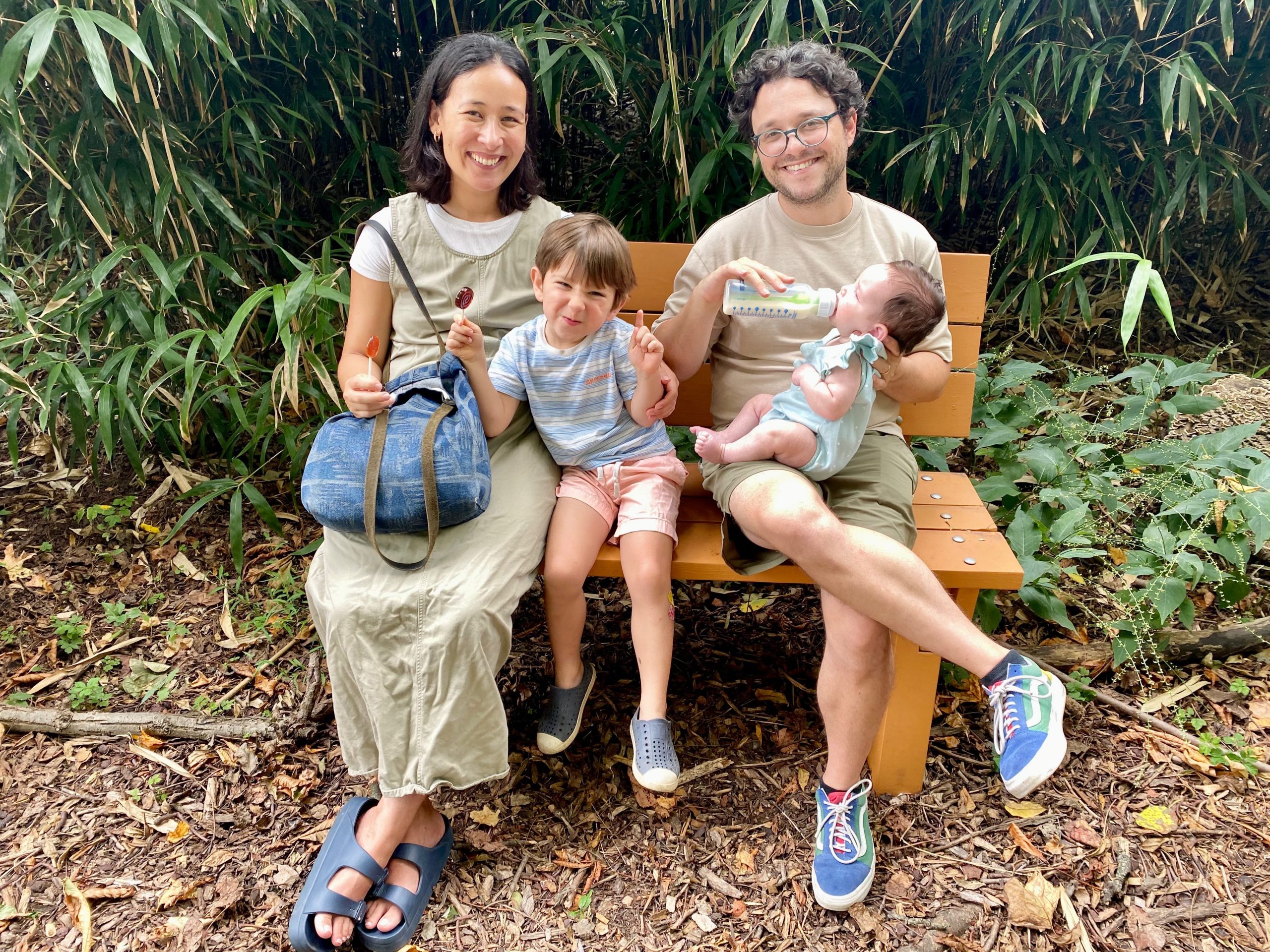
The early months of Bo’s life presented an overwhelming physical and emotional challenge. DiFazio describes a baby who could not be soothed by anyone but her, who only slept while attached to her and nursing, and whose needs consumed her waking and sleeping hours. This intense, unrelenting caregiving, coupled with sleep deprivation, led to a profound sense of exhaustion and isolation. "I remember my therapist asking me if I thought I had postpartum depression," DiFazio writes. "I simply responded, no, I think I have the same type of depression anyone would develop if they only showered once a week, and spent their days in a dark room with an inconsolable infant attached to their nipple."
During this time, DiFazio continued her academic engagement with Buddhism, but her faith in the dharma began to wane. The structured practices she had come to rely on, particularly seated meditation, felt disconnected from her lived reality. Standard advice for "mindful mamas" often seemed to be either platitudinous or implicitly exclusionary, designed for parents with less demanding infant care situations.
A pivotal moment of disillusionment arose during her independent study on the sacred feminine in Tibetan Buddhism. Reading the autobiography of Yeshe Tsogyal, a prominent female bodhisattva, instead of finding inspiration, DiFazio felt a deepening of her grief and resentment. Yeshe Tsogyal’s repeated assertions of not wanting to be "tied down" by children and marriage, and her belief that these attachments would impede awakening, resonated with DiFazio’s own feelings of being trapped. When she sought guidance from a female dharma teacher about reconciling her practice with young children, the teacher’s response—that she had traveled to Nepal for a month, leaving her two-year-old behind for the sake of her practice—further amplified DiFazio’s sense of failure. She found herself unable to fathom leaving her own nearly two-year-old for even a single night.
The narrative of female bodhisattvas like Machig Labdron, who did have children, was often presented as evidence that motherhood and serious practice could coexist. However, for DiFazio, these figures instead represented an unattainable level of dedication, discipline, or prioritization that highlighted her own perceived shortcomings. This led her to a crucial realization: the formal Buddhist training that had shaped her often presupposed a specific set of life circumstances—namely, the absence of constant, intensive childcare responsibilities.
The Dichotomy of Formal Practice and Parental Demands
DiFazio’s analysis underscores a significant challenge in Western Buddhist adaptations: the tendency to translate monastic training models for lay practitioners. While these adaptations, such as advocating for early morning meditation sessions, are well-intentioned, they often fail to account for the radical differences in parental experiences. A parent whose child sleeps through the night can indeed establish a consistent 5 a.m. meditation practice, while a parent of an infant experiencing frequent night wakings faces a fundamentally different reality.
Historical and cross-cultural Buddhist traditions offer examples of families integrating children into practice. Monasteries in some traditions have welcomed children into meditation halls, allowing for their natural fidgeting and movement. Practices like ritual offerings, storytelling, chanting, and devotional acts have long served as age-appropriate methods for engaging children with Buddhist principles globally. However, DiFazio argues that these integrated practices, while valuable, differ in nature from the systematic, intentional cultivation of the mind that characterizes formal training.

The profound spiritual and personal growth inherent in parenting itself is not overlooked by DiFazio. She acknowledges that caring for a child has "blasted my heart wide open and demanded a bodhisattva level of patience." The process has necessitated the relinquishing of ego-driven preferences and, in her experience of home births with both children, revealed a profound sense of personal power.
Yet, she contends, it is a disservice to parents to suggest that the demands of raising children are a direct, interchangeable substitute for the systematic training required to develop equanimity and reduce habitual reactivity. While life inevitably presents opportunities to exercise the fruits of practice, DiFazio distinguishes this from having the conditions to systematically train in them. This requires a confluence of time, energy, and repetition that is often severely curtailed for parents of young children.
The suggestion of brief mindfulness exercises, such as paying attention to a hot cup of coffee or washing dishes, while well-meaning, can be insufficient or even irritating for overstimulated parents with children actively demanding their attention. DiFazio posits that these short practices are most effective when they supplement a foundation of sustained formal practice, rather than serving as its sole replacement.
Reaching a Point of Acceptance
For an extended period, DiFazio’s grief stemmed from the perceived need to either postpone her practice until her children were older or to force her existing practice into the mold of parenthood, a process that felt like a loss. She struggled to maintain the identity of the practitioner she had been before Bo, seeking ways to weave his presence into her path without diminishing her spiritual life.
Now, with an infant and an older, more independent child, DiFazio’s perspective has shifted. Responding to a friend’s inquiry about being a mom and practicing the dharma, her answer has evolved. She has found peace in releasing the need to conflate parenting with her understanding or practice of Buddhism. While acknowledging that the dharma is indeed connected to all aspects of life, she no longer feels compelled to force a direct integration or require them to make logical sense to each other. Instead, she appreciates their independent value and meaning.
This evolving perspective suggests a broader implication for the Buddhist community in the West. As the demographics of practitioners shift and more individuals enter spiritual paths with existing family commitments or choose to start families while engaged in practice, there is a growing need for nuanced approaches that acknowledge the diverse realities of lay life. The challenge lies in developing forms of dharma training that are both rigorous and adaptable, allowing for the cultivation of wisdom and compassion without demanding a set of circumstances that are inaccessible to many. DiFazio’s journey, from initial despair to a place of peaceful acceptance, offers a valuable testament to the possibility of finding spiritual meaning, even when the path deviates significantly from established models. It suggests that perhaps the most profound dharma training can sometimes be found not in the structured forms we anticipate, but in the raw, demanding, and ultimately transformative experience of raising a family.

