

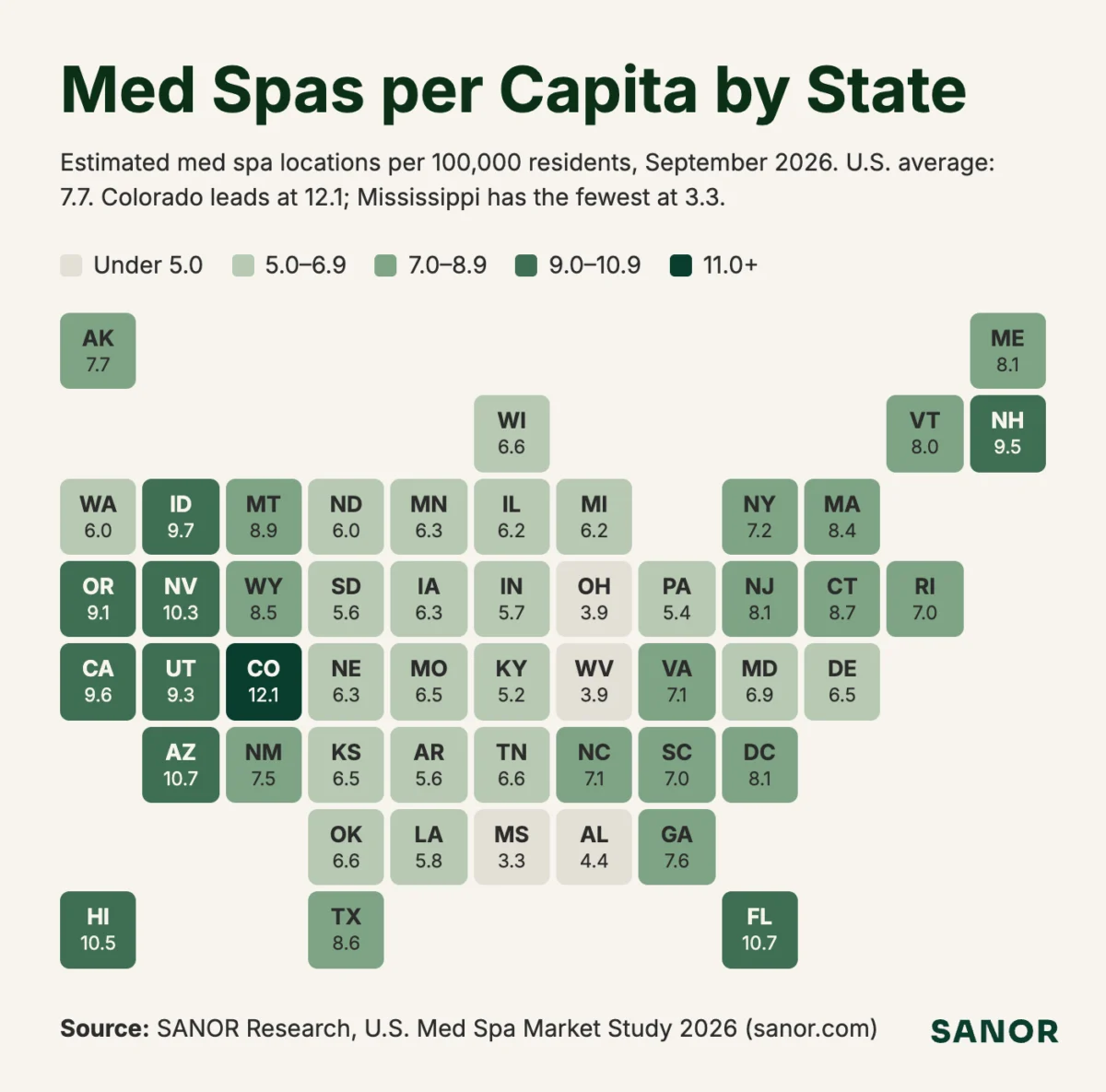
A recent market analysis reveals a dramatic divergence in growth trajectories between two segments of the wellness industry: medical spas and traditional yoga and Pilates studios. New data indicates that medical spas are expanding at a rate more than 40 times faster than their holistic wellness counterparts, prompting a re-evaluation of societal priorities concerning health, appearance, and well-being. This significant shift in consumer spending and industry development signals a profound evolution in what individuals seek from the burgeoning wellness economy.
The Data Divide: A Closer Look at the Numbers
The striking disparity in growth rates comes from a comparison of findings by leading industry research firms. According to IBISWorld, the count of yoga and Pilates studios across the United States has experienced a modest annual growth of approximately 0.4% since 2020. This incremental expansion suggests a market nearing maturity, with projections estimating around 37,300 studios operating by 2025. For an industry that saw explosive growth in the late 20th and early 21st centuries, this figure indicates a plateau, suggesting a steady but not dynamic market.
In stark contrast, a comprehensive market study released by SANOR, a prominent research firm specializing in the aesthetic and medical spa industry, paints a picture of explosive growth for medical spas. As of September 2026, the United States boasted 26,171 operational med spa locations. This represents a substantial increase from the 22,368 locations recorded just a year prior in September 2025. The addition of 3,803 new med spas within a single twelve-month period translates to an astounding 17% growth rate annually. When placed alongside the 0.4% growth for yoga and Pilates studios, the acceleration of the med spa sector is approximately 42.5 times greater, underscoring a rapid reorientation of consumer interest and investment within the wellness sphere.
Evolution of Wellness: From Ancient Practices to Modern Aesthetics
The contemporary wellness landscape is a complex tapestry woven from diverse threads, ranging from ancient spiritual practices to cutting-edge medical advancements. Understanding the current divergence requires a brief journey through the evolution of these two distinct, yet often interconnected, segments.
The Enduring Appeal of Yoga and Pilates
Yoga, with its roots in ancient Indian philosophy and spiritual practices, found its way into Western culture in the late 19th and early 20th centuries. Its popularity surged dramatically in the latter half of the 20th century, evolving from niche spiritual practice to mainstream fitness and wellness activity. Pilates, developed by Joseph Pilates in the early 20th century, similarly gained widespread adoption for its focus on core strength, flexibility, and mind-body connection.
By the early 2000s, both yoga and Pilates studios had become ubiquitous in urban and suburban areas, symbolizing a broader societal embrace of holistic health, stress reduction, and mindful living. They offered not just physical exercise but also a sense of community, spiritual grounding, and a path to long-term well-being. The growth of these studios was fueled by increasing awareness of the benefits of physical activity, mental health, and the desire for non-pharmaceutical approaches to chronic pain and stress management. For decades, they represented the vanguard of preventative health and self-care, establishing themselves as pillars of what many considered "being well." The steady, albeit slow, growth post-2020 indicates a mature market where demand remains consistent but new entrants face higher barriers, and expansion is more about incremental gains than disruptive innovation.
The Ascent of Aesthetic Medicine and Med Spas
The rise of medical spas is a more recent phenomenon, born from the confluence of advancements in aesthetic medicine, changing consumer attitudes towards cosmetic procedures, and a desire for accessible, non-surgical beauty solutions. Historically, significant aesthetic improvements often required invasive plastic surgery, a costly and recovery-intensive option primarily accessible to a select few.
The late 20th and early 21st centuries witnessed a revolution in non-invasive and minimally invasive cosmetic treatments. The approval of botulinum toxin (Botox) for cosmetic use in 2002 marked a watershed moment, democratizing wrinkle reduction. Concurrently, advancements in dermal fillers, laser therapies for skin rejuvenation, chemical peels, and body contouring technologies offered effective solutions with minimal downtime.
Medical spas emerged as a hybrid model, bridging the gap between traditional spas (focused on relaxation and superficial beauty treatments) and medical clinics (offering clinical-grade procedures). They are typically overseen by a licensed medical doctor, but treatments are often performed by nurses, physician assistants, or highly trained aestheticians. This model offered a more relaxed, spa-like environment for medical procedures, making them less intimidating and more appealing to a broader demographic. The regulatory landscape, often less stringent for med spas than for full medical clinics, also facilitated their rapid proliferation. This combination of medical efficacy, spa ambiance, and increased accessibility laid the groundwork for the exponential growth observed today.
Driving Forces Behind the Aesthetic Boom
Several interconnected factors are propelling the meteoric rise of medical spas, reflecting deeper societal and economic currents.
The "Quick Fix" Economy and Instant Gratification
One of the most potent drivers is the pervasive societal demand for instant gratification. In an era dominated by same-day delivery, on-demand streaming, and immediate digital feedback, the expectation for rapid results has permeated nearly every aspect of life, including personal well-being. Med spa treatments align perfectly with this paradigm. Procedures like neuromodulator injections (e.g., Botox) can be completed in under 30 minutes—often dubbed a "lunchtime procedure"—with visible results appearing within days and full effects manifesting in about two weeks. This contrasts sharply with the long-term commitment and delayed gratification inherent in practices like yoga, which promise benefits over months or even years of consistent practice. The immediate, tangible change offered by med spas taps into a fundamental human desire for quick solutions and visible improvement without the sustained effort required by traditional wellness routines.
Social Media and Visual Culture: The "Zoom Boom" Effect
The proliferation of social media platforms like Instagram, TikTok, and Snapchat has profoundly reshaped perceptions of beauty and self-image. A highly visual culture, augmented by filters and constant self-presentation, has amplified self-scrutiny and the desire to project an idealized image. The rise of video conferencing during the COVID-19 pandemic further exacerbated this trend, leading to the phenomenon dubbed the "Zoom Boom." Individuals, spending hours staring at their own reflections in virtual meetings, became acutely aware of perceived facial imperfections, driving a surge in demand for aesthetic enhancements. Social media influencers and celebrity endorsements have also normalized and even glamorized med spa treatments, turning them into aspirational lifestyle choices rather than secretive procedures. This constant visual feedback loop and the pressure to maintain a youthful, flawless appearance contribute significantly to the demand for accessible aesthetic interventions.
Technological Advancements and Accessibility
Continuous innovation in aesthetic technology has made treatments safer, more effective, and less invasive. The refinement of injectables, the development of sophisticated laser platforms for skin resurfacing and hair removal, and advancements in non-surgical body contouring devices have expanded the menu of services med spas can offer. These technologies have also reduced downtime, making treatments more convenient for busy individuals. Furthermore, the increasing affordability of these procedures, relative to traditional plastic surgery, has broadened their appeal across different socioeconomic strata. What was once considered a luxury for the ultra-wealthy is now within reach for a growing segment of the middle class, making aesthetic enhancements a more democratic pursuit.
Business Model Innovation: The "Built-in Subscription"
A critical factor contributing to the med spa industry’s rapid growth is its inherent business model, particularly for services like neuromodulator injections and dermal fillers. These treatments are not permanent; their effects typically wear off after three to four months. This creates a natural, recurring revenue stream, effectively building a "subscription model" directly into the product. Clients must return periodically for maintenance, ensuring a consistent flow of repeat business. This stands in stark contrast to traditional wellness offerings like yoga, where studios must constantly re-engage clients, battling against competing priorities like work, family, and leisure. The onus is on the individual to maintain the habit, whereas the med spa model leverages the physiological impermanence of its services to drive customer loyalty and repeat visits.
The Broader Implications: Redefining "Well-being"
The dramatic shift in consumer spending and industry growth between med spas and yoga studios prompts a critical societal introspection: are we prioritizing "looking well" over "being well"?
Appearance vs. Intrinsic Health
This trend reflects a broader cultural shift in the definition of "wellness." Traditionally, wellness encompassed holistic health – physical, mental, emotional, and spiritual well-being achieved through practices like exercise, nutrition, mindfulness, and stress management. While med spa treatments can certainly boost confidence and improve self-perception, their primary focus remains external, addressing visible signs of aging or perceived imperfections. The concern raised by many health and wellness advocates is that a disproportionate focus on superficial enhancements may divert attention and resources from foundational health practices that yield deeper, long-term benefits. This isn’t to say aesthetic treatments are inherently detrimental, but rather to question the balance of societal values when external fixes gain such overwhelming precedence over intrinsic health cultivation.
Economic Shifts and Investment
The economic implications of this divergence are substantial. It signifies a redirection of consumer discretionary income towards aesthetic services, potentially at the expense of other wellness expenditures. This shift influences investment patterns, job creation, and the overall economic landscape of the wellness industry. Real estate developers, investors, and entrepreneurs are increasingly recognizing the lucrative nature of the med spa sector, pouring capital into its expansion, while traditional wellness businesses may find themselves competing for a slower-growing slice of the market. This also indicates a growing commercialization of beauty and anti-aging, transforming them from optional luxuries into perceived necessities for a competitive appearance.
Expert Perspectives and Concerns
Medical professionals, while acknowledging the advancements in aesthetic treatments, often voice concerns regarding the rapid, sometimes unregulated, expansion of med spas. Issues such as practitioner qualifications, patient safety, and the potential for over-treatment are frequently highlighted. Dermatologists and plastic surgeons emphasize the importance of choosing reputable clinics with board-certified professionals to minimize risks.
Conversely, wellness advocates and traditional health practitioners often reiterate the irreplaceable value of practices like yoga and Pilates for mental resilience, chronic disease prevention, improved mobility, and overall quality of life. They argue that true well-being is cultivated from within and cannot be bought as a quick fix. There’s a growing call for a more integrated approach, where aesthetic enhancements are seen as complementary to, rather than a replacement for, foundational health practices.
Challenges and Opportunities for the Traditional Wellness Sector
The stark contrast in growth rates presents both challenges and opportunities for the traditional wellness sector, particularly for yoga and Pilates studios.
Learning from the Med Spa Model
The original article rightly suggests that the wellness world could learn from the "good product design" principles exemplified by med spas: making results visible, fast, and easy to come back for. While the intrinsic benefits of yoga and Pilates are often subtle and cumulative, there is an opportunity to innovate in how progress is tracked and communicated. This could involve:
- Quantifiable Metrics: Leveraging wearable technology and in-studio diagnostics to show improvements in flexibility, strength, balance, heart rate variability, sleep quality, and stress markers.
- Gamification and Milestones: Introducing challenges, progress tracking, and celebratory milestones to make the journey more engaging and rewarding.
- Personalized Feedback: Providing more personalized feedback and visible progress reports to members, demonstrating tangible improvements that might otherwise go unnoticed.
- Community and Social Reinforcement: Enhancing the community aspect, which is already strong in many studios, to create a supportive environment that encourages consistent participation.
Innovation in Holistic Health
Rather than competing directly, traditional wellness providers can emphasize their unique value proposition: sustainable, holistic health. This might involve:
- Integrated Offerings: Partnering with other wellness professionals (nutritionists, therapists, physical therapists) to offer comprehensive well-being packages.
- Digital Engagement: Developing engaging digital content, virtual classes, and wellness apps that extend the studio experience beyond physical walls and provide flexible access.
- Focus on Mental Health: Highlighting the proven benefits of mindfulness and movement practices for mental health, a growing concern in modern society.
- Authenticity and Long-Term Value: Reaffirming the deep, intrinsic rewards of consistent practice, focusing on vitality, resilience, and inner peace, which quick fixes cannot provide.
The Path Forward: Integration or Divergence?
The future of wellness may see both continued divergence and increasing integration. Some consumers will undoubtedly continue to seek out rapid aesthetic enhancements, while others will remain committed to traditional holistic practices. A more nuanced future might involve a blurring of lines, with "wellness centers" offering a spectrum of services from traditional yoga classes to non-invasive aesthetic treatments, catering to a broader definition of self-care.
Ultimately, the growth of the med spa industry is a powerful indicator of shifting consumer desires and societal values. It challenges the traditional wellness sector to innovate in how it communicates its profound, albeit often slow-acting, benefits. Until health and well-being learn to effectively "sell" the visible and tangible aspects of what they deliver, the numbers are likely to continue moving in the direction of immediate, perceptible change. This trend compels a deeper reflection on what true well-being means in the 21st century and how society chooses to invest in it.

