

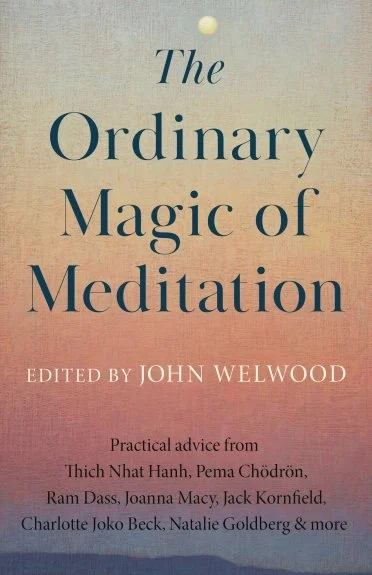
In an era often characterized by a yearning for escape from the complexities of existence, the teachings of Pema Chödrön, as presented in her recent discourse, offer a profound counterpoint: the embrace of duality rather than the preference for one extreme over another. This philosophical framework, articulated with characteristic clarity and depth, centers on the practice of holding both the inherent sadness of the human condition and the illuminating power and vision of what is termed the "Great Eastern Sun." This potent synthesis, Chödrön argues, is the very essence of meaningful practice and the foundation for engaging with life fully, even in the simplest of acts, such as making a cup of tea.
Understanding the Dual Neuroses: Samsara and Nirvana
Chödrön begins by deconstructing human experience into two fundamental elements: stillness and occurrence, or what can be understood as the background and the foreground of existence. The common human tendency, she observes, is to develop a bias, a preference for one over the other, leading to two primary forms of neurosis.
The first, often referred to as "samsara," is characterized by an incessant engagement with the "busyness" of life. This neurosis manifests as being "caught up in worry and fear and hope, in wanting and not wanting." It involves a relentless pursuit of external comforts and distractions – jobs, families, possessions, vacations, entertainment, and even extreme environments like war or peace – as a means to escape perceived pain. This cycle, Chödrön illustrates with the analogy of a person constantly adjusting their environment to escape discomfort: opening windows when too hot, then putting on sweaters when too cold, leading to a perpetual state of agitation and an inability to truly appreciate the present moment. The core of this neurosis lies in a preference for occurrence, a continuous attempt to find comfort and pleasure within the ever-changing flux of phenomena, leading to a cycle of striving and dissatisfaction. Data from psychological studies consistently highlight the prevalence of anxiety and dissatisfaction in modern societies, often linked to the relentless pursuit of external validation and the avoidance of uncomfortable emotions, a phenomenon that directly aligns with Chödrön’s description of samsaric entanglement.

Conversely, the second neurosis involves an equally potent, though seemingly opposite, bias: an attachment to peace, quiet, liberation, or what is often termed "nirvana." This inclination manifests as a desire to transcend the perceived "awfulness of life" and to remain in a state of pure clarity, bliss, and freedom from all hindrances. Chödrön recounts encounters with individuals who actively sought such liberation, even believing in external interventions like flying saucers to whisk them away from earthly suffering. This desire to cling to experiences of clarity or bliss, she notes, is a subtle but pervasive form of addiction, where the goal is to maintain a state of feeling good indefinitely. This can translate into structuring one’s life for extreme simplicity and quietude, leading to resentment and resistance towards any disruption, such as the presence of boisterous children or pets. The danger here lies in developing a "sacred outlook" – a profound insight into the vastness and wonder of reality – but then becoming so dissatisfied with ordinary life that this insight becomes a source of perpetual poverty rather than enrichment. The implication is that a premature or incomplete understanding of spaciousness can lead to an inability to engage with the grounded realities of existence. This phenomenon is echoed in clinical observations where individuals experiencing profound spiritual insights may struggle with integration into daily life, sometimes leading to psychological distress.
The Danger of Ego’s Manipulation
Chödrön emphasizes that the ego, that persistent sense of self, is adept at co-opting both samsara and nirvana to perpetuate itself. Whether one is caught in the whirlwind of worldly concerns or seeking refuge in serene detachment, the ego can find ways to reinforce its own existence. This is particularly evident in some religious and spiritual groups that, in their earnest desire to escape suffering, advocate for a complete renunciation of the earthly realm and a permanent resting in nirvana. However, drawing from Buddhist tradition, Chödrön points to the concept that the Buddha "does not abide in nirvana. He abides in the ultimate perfection." This suggests that true spiritual realization lies not in escaping samsara, but in recognizing the inherent oneness of samsara and nirvana, and developing the capacity to live fully within both without preference.
The Chögyam Trungpa Rinpoche Quotation: A Catalyst for Insight
A pivotal moment in Chödrön’s discourse comes with the recollection of a quotation from her teacher, Chögyam Trungpa Rinpoche: "Hold the sadness and pain of samsara in your heart and at the same time the power and vision of the Great Eastern Sun. Then the warrior can make a proper cup of tea." This seemingly simple statement served as a profound personal revelation for Chödrön, highlighting her own subtle preference for the "power and vision of the Great Eastern Sun" – the quality of continuous wakefulness – over the act of holding the sadness and pain of existence.
The Great Eastern Sun, in this context, symbolizes a radiant, omnipresent awareness, a state of being fully awake and alive to the present moment. However, Chödrön realized that a true spiritual practitioner, a "warrior" in the Buddhist sense, must cultivate the capacity to simultaneously embrace the undeniable sorrow inherent in the human condition. This includes acknowledging one’s own sadness and the pervasive suffering in the world, not as something to be eradicated or escaped, but as an integral part of life.

The Significance of Ritual: Bridging Worlds
This realization leads directly to the transformative power of ritual. Chödrön posits that ritual is not merely a set of rote actions, but a profound practice of joining disparate elements: vision and practicality, heaven and earth, samsara and nirvana. When approached with genuine understanding, the entirety of one’s life can become a sacred ceremony. The mundane gestures of daily living transform into mudras, symbolic movements that imbue actions with meaning, and the sounds of life become mantras, resonant vibrations that connect us to deeper energies.
The effectiveness of ritual, Chödrön explains, lies in its ability to act as a "time capsule." For millennia, individuals have had profound insights into the sacredness of existence. Rather than allowing these insights to fade, they have been preserved and transmitted through formalized practices. The act of greeting the sun each morning with a stylized chant, offerings, or bows, for instance, is not simply an arbitrary act. It is a way of connecting with a timeless richness, a direct experience of the "magic, power, and sacredness" that was perceived by an earlier practitioner. This connection is then passed down through generations, allowing individuals today to tap into the same wellspring of awareness. This concept is analogous to the preservation of scientific or culinary knowledge; the "recipe" for fresh-baked bread, discovered thousands of years ago, remains potent and accessible today through the enduring practice of baking.
Ritual as Expression of Appreciation and Connection
The act of ritual, therefore, becomes a tangible expression of appreciation for life. The sound of a gong calling practitioners to a shrine room, the gesture of putting hands together in prayer, or the simple act of holding an eating bowl with specific finger placement – these are all ways of honoring the fundamental elements of existence: food, objects, and the richness of the world.
Crucially, genuine, heartfelt ritual serves to reconnect us with both the power and vision of the Great Eastern Sun and the inherent sadness and pain of the human condition. When these two aspects converge, there arises a sense of performing actions "properly for their own sake." Making a cup of tea, for example, is not just about quenching thirst or fulfilling a social obligation. It is about engaging with the entire process with full attention and appreciation: the boiling water, the tea leaves, the transformation into a nourishing beverage. This "proper" act is performed without the anxiety of external judgment or the haste that obliterates the experience itself.

The Broader Implications: Integrating Sacredness into the Mundane
The implications of Chödrön’s teachings are far-reaching. They challenge the common perception of spirituality as something separate from everyday life. Instead, they suggest that the path to profound understanding and contentment lies in integrating the sacred into the mundane. Whether one is smoking a cigarette, drinking tea, making a bed, or washing dishes, these actions can become rituals when performed with the awareness that encompasses both the profound beauty and inherent sorrow of existence.
The ability to hold both the sadness of samsara and the vision of the Great Eastern Sun simultaneously is not a passive state, but an active practice. It requires courage, vulnerability, and a willingness to confront the full spectrum of human experience. This integration, Chödrön concludes, is the very purpose of spiritual practice, leading to a balanced and complete engagement with life, where even the simplest act, like making a cup of tea, becomes an expression of profound connection and reverence. This perspective offers a compelling framework for understanding the human tendency towards seeking solace and meaning, suggesting that true fulfillment is found not in escape, but in the courageous embrace of all that life presents. The enduring relevance of these teachings underscores a timeless human need for practices that foster resilience, compassion, and a deep appreciation for the intricate tapestry of existence.

