

By Michael Greger M.D. FACLM
August 13, 2026
A micromort, a unit for comparing and communicating risk to patients, is equivalent to a one-in-a-million chance of dying. This novel approach to quantifying risk aims to bridge the gap between the often-abstract nature of statistical probabilities and the tangible anxieties individuals experience when facing potentially life-altering decisions, particularly within the healthcare landscape.
The introduction of the micromort (mM) as a standardized unit of risk offers a potential solution to a persistent challenge in patient communication: translating complex medical statistics into easily digestible and comparable figures. For years, healthcare professionals have grappled with patients who, when informed of the risks associated with medical procedures, might dismiss them with casual analogies like, "I could die just as easily crossing the road." This sentiment, while understandable, often reveals a fundamental disconnect in the perceived magnitude of risk.
The Challenge of Communicating Risk
The sheer volume of medical interventions underscores the need for effective risk communication. Globally, hundreds of millions of surgical procedures are performed annually. While advancements in medicine have significantly improved outcomes, the inherent risks associated with invasive procedures remain a critical consideration. For many common surgeries, the risk of mortality hovers around the half-percent mark. However, conveying this percentage to a patient can be met with apprehension or misunderstanding, particularly when compared to everyday activities that also carry risk.
For instance, undergoing anesthesia, a routine component of many surgical procedures, carries an approximate 1-in-100,000 chance of not waking up. While this number might seem small, its real-world implication can be difficult for individuals to grasp. To provide a more tangible comparison, this risk is often likened to that of an expert skydiver. Yet, even such analogies can fall short of providing true clarity for many. The difficulty lies in comprehending minuscule probabilities and the abstract nature of risk when applied to personal well-being.

Introducing the Micromort: A Standardized Unit
The micromort, defined as a one-in-a-million chance of death, emerges as a practical tool to overcome these communication barriers. This unit allows for the standardization of diverse risks, transforming them into a common currency for comparison. To contextualize a single micromort, consider the odds of flipping a coin and achieving heads 20 consecutive times, or the slightly lower probability of being dealt a royal flush in a game of poker. While these are intriguing statistical curiosities, the true power of the micromort lies in its ability to create a framework for comparing vastly different activities and medical interventions.
Micromorts in Action: Comparing Everyday Risks
The utility of micromorts becomes evident when applied to everyday activities. Driving a distance of approximately 100 miles, for example, is associated with a one-in-a-million chance of fatality, thus equating to one micromort. This allows for a direct comparison with other activities. Scuba diving, for instance, carries a risk of about five micromorts per dive. This means that a single scuba diving excursion is equivalent in risk to driving 500 miles. This quantifiable comparison empowers individuals to make more informed decisions about their leisure activities and understand the relative risks involved.
The application of micromorts extends to significant life events as well. The act of giving birth, a natural process for many, is associated with a risk comparable to driving from New York to Los Angeles and back again. However, undergoing a Cesarean section significantly increases this risk, more than doubling it. Even seemingly minor surgical procedures, such as a hernia repair, carry a risk of death equivalent to that of performing 200 skydives.
The Broader Implications for Healthcare and Lifestyle Choices
The micromort framework also sheds light on the relative risks of elective versus necessary medical procedures. While some interventions, like those for varicose veins or circumcision, may present avoidable risks that can be mitigated through informed choices, others, such as life-saving surgeries, are undertaken despite inherent risks due to their medical necessity.
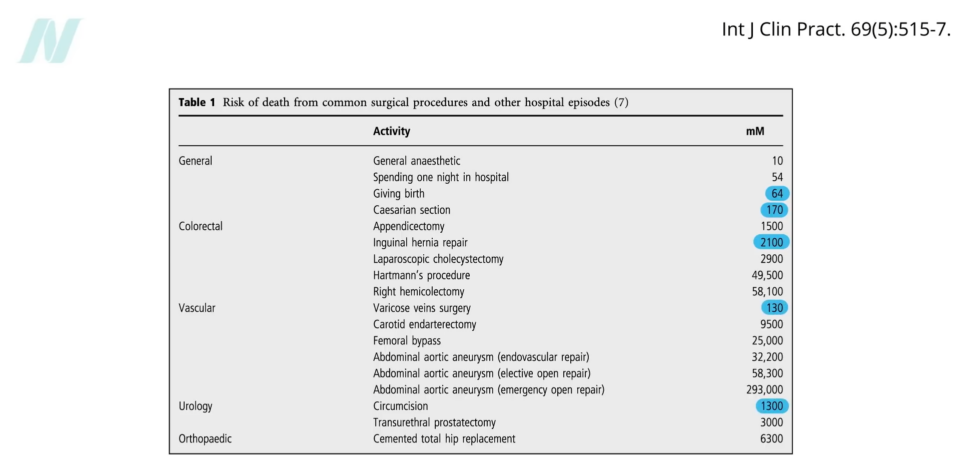
The data suggests that certain elective procedures might carry a risk profile that warrants careful consideration. For example, the risk associated with varicose vein surgery or circumcision, when weighed against the potential benefits for individuals who do not have severe medical indications, can be viewed through the lens of micromorts. This encourages a more nuanced discussion between patients and physicians regarding the necessity and potential downsides of non-essential medical interventions.
Furthermore, the micromort unit can help demystify the risks associated with cancer treatments. While chemotherapy and radiation for head and neck cancer are undeniably serious interventions, their associated risks can be quantified and compared to other activities. The data reveals that these treatments carry a risk comparable to rock climbing for 500 years, driving 5 million miles, or skydiving 5,000 times. This perspective, while stark, can help patients understand the magnitude of the risks they undertake in their fight against cancer.
Accidental Deaths and Unforeseen Hazards
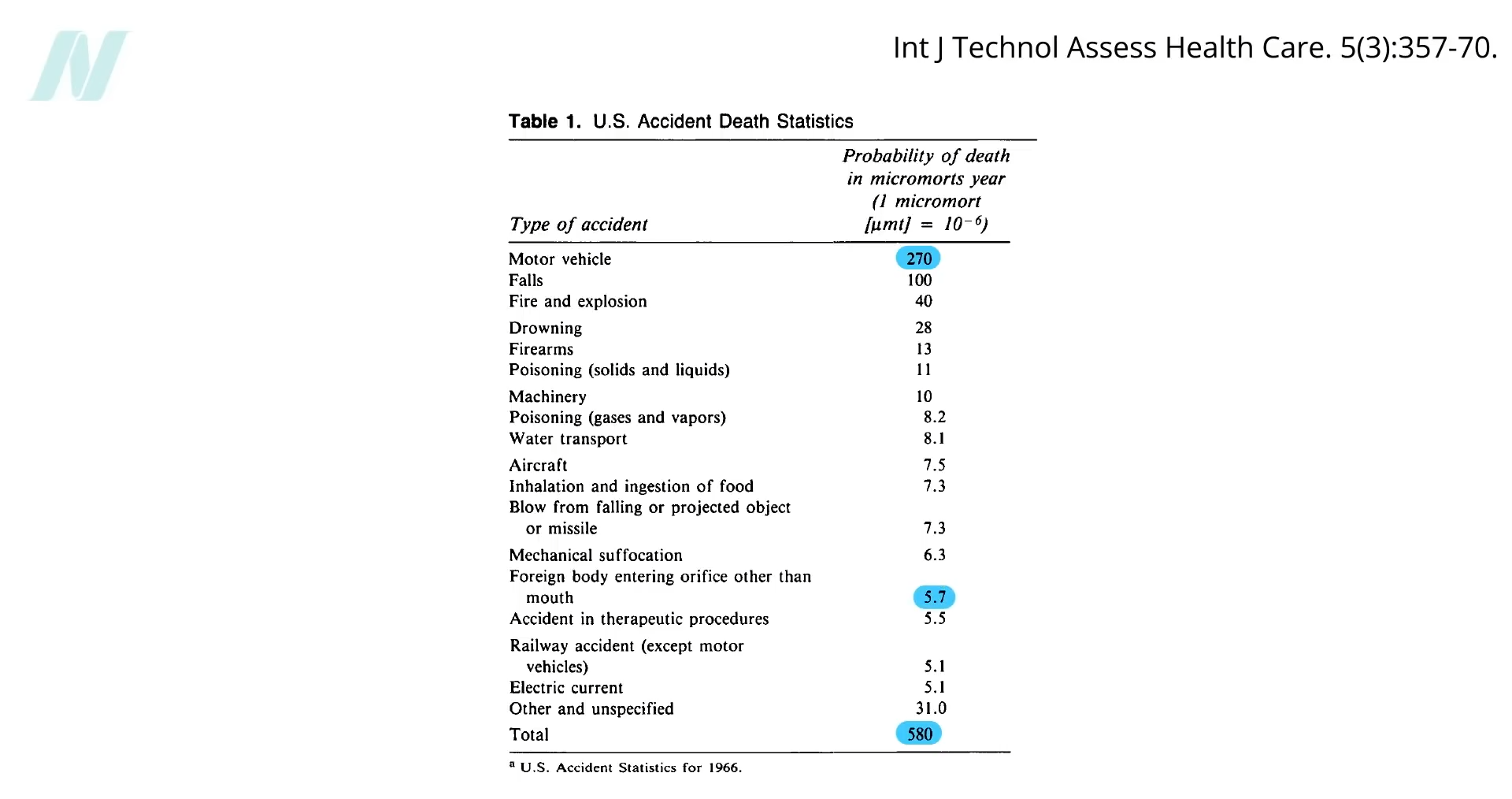
Beyond planned medical interventions, micromorts also offer a means to quantify the risks associated with accidental deaths. Annually, individuals face approximately a one-in-a-million chance of dying from an accident on any given day. A significant portion of this risk, around half, is attributed to car crashes, based on U.S. averages. However, a myriad of other accidental hazards contribute to this overall risk.
Surprising statistics emerge when examining less common accidental risks. For instance, Americans face an annual risk of about 1-in-200,000 of dying from a foreign object entering an orifice other than the mouth. This highlights the diverse and sometimes unexpected sources of risk in daily life.
When considering extreme activities, the micromort metric provides stark comparisons. Climbing Mount Everest, for example, is estimated to be about 30 times riskier than coal mining or base jumping. In terms of transportation, trains and airplanes exhibit similar risk profiles over equivalent distances. However, riding a motorcycle is approximately 50 times more perilous than traveling in a car. Cycling, while often perceived as a healthier alternative, carries a near-term risk about 10 times greater than driving.
Contextualizing Medical Device Risks
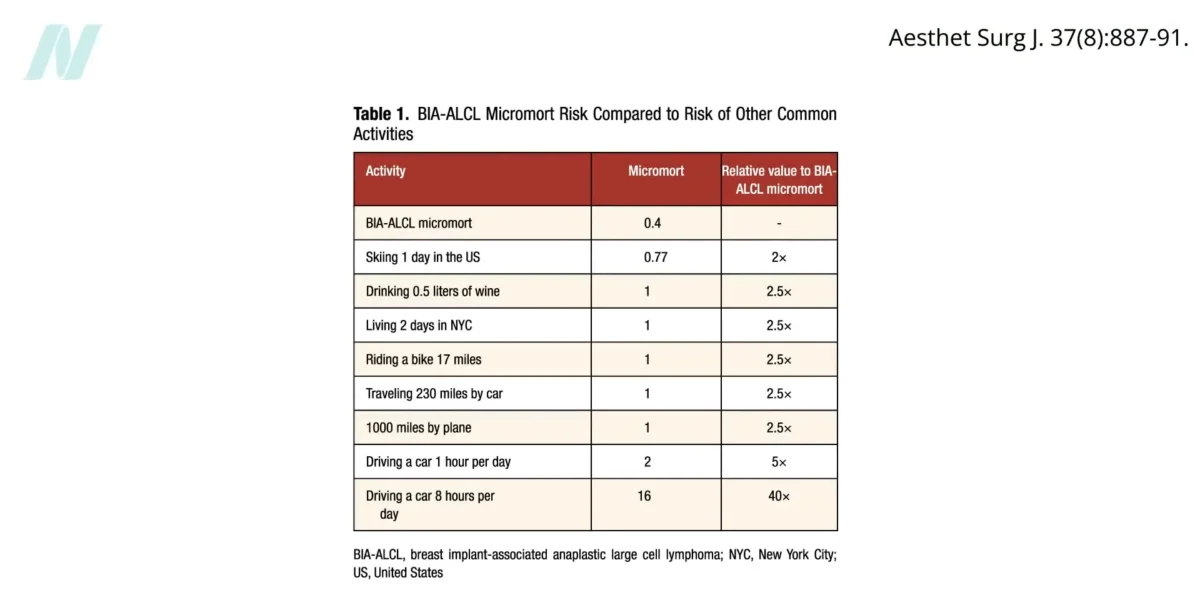
The application of micromorts is particularly valuable when assessing the risks associated with medical devices. Certain types of breast implants, for instance, have been linked to a rare form of cancer: breast implant-associated lymphoma. For the millions of women with implants, this information can be a source of considerable anxiety. However, by contextualizing this risk using micromorts, its magnitude can be better understood. The risk of dying from this specific type of cancer is less than the risk incurred from a single day of skiing. While this comparison does not diminish the seriousness of the cancer, it places the risk in perspective relative to other activities and potential outcomes.
Physicians as a Source of Risk: A Doctor’s Perspective
In a broader medical context, it is crucial to acknowledge that medical interventions themselves, and the actions of healthcare providers, can contribute to mortality. Research has indicated that physicians are, surprisingly, a leading cause of death. This assertion, while provocative, underscores the importance of focusing on preventative healthcare strategies and continuous improvement within the medical field.
Understanding the risks associated with medical interventions, whether through the micromort metric or other robust statistical analyses, is paramount. This knowledge empowers patients to engage in more informed decision-making, facilitates clearer communication between patients and healthcare providers, and ultimately contributes to a safer and more effective healthcare system. The micromort, by offering a standardized and relatable unit of risk, represents a significant step forward in achieving these critical goals.

