


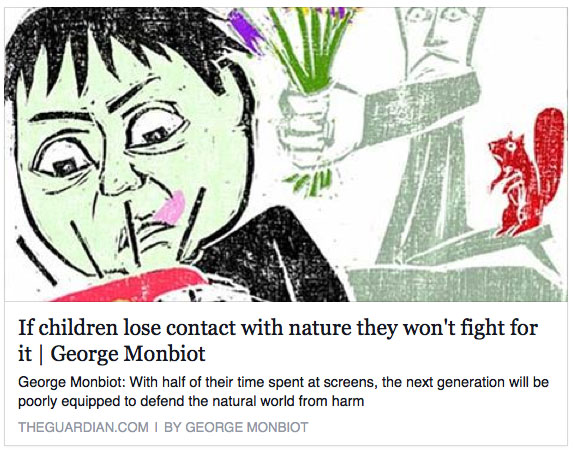
A recent commentary published by George Monbiot in The Guardian has ignited a robust discussion regarding the perceived disconnect between contemporary youth and the natural world, and its potential ramifications for future environmental stewardship. Monbiot’s article, titled "If Children Lose Contact With Nature They Won’t Fight For It," posits a direct correlation between declining engagement with the outdoors and a diminished capacity for environmental advocacy among younger generations. While the core sentiment of the piece resonates with many concerned observers, the author’s framing has drawn nuanced critique, particularly regarding the emphasis placed on digital media as the primary antagonist.
Amy Lenzo, writing for ecopsychology.org, acknowledged the prescience of Monbiot’s central argument regarding the importance of nature connection for fostering environmental consciousness. However, Lenzo’s perspective offers a counterpoint, suggesting that the issue is more multifaceted than a simple indictment of screen time. She contends that while societal shifts have undoubtedly altered children’s freedoms and access to natural environments, digital platforms themselves may also offer avenues for re-establishing this crucial connection, rather than solely representing a barrier.
The Shifting Landscape of Childhood and Nature Engagement
The debate underscores a broader societal trend observed over the past several decades: a documented decline in children’s unstructured outdoor play. This phenomenon is not confined to a single region or demographic but is a global concern. Data from various studies paint a concerning picture. For instance, a 2013 report by the UK’s National Trust revealed that children spend, on average, half the time outdoors compared to their parents at the same age. Similar trends have been observed in North America and other developed nations, with research by groups like the American Academy of Pediatrics highlighting concerns about increased sedentary lifestyles and reduced exposure to natural settings.
Several converging factors are often cited as contributing to this shift:
- Urbanization and Suburban Sprawl: As populations increasingly concentrate in urban and suburban areas, accessible natural spaces for children’s exploration can become limited. Green spaces may be smaller, more manicured, and less wild, offering fewer opportunities for genuine discovery.
- Increased Parental Concerns for Safety: Modern parenting often involves heightened awareness of potential risks associated with outdoor play, leading to greater supervision and restrictions on children’s independent exploration. This can limit the spontaneous encounters with nature that were common in previous generations.
- The Rise of Digital Entertainment: The proliferation of sophisticated digital devices, video games, and online content has undeniably captured a significant portion of children’s leisure time. This offers an easily accessible and highly stimulating form of entertainment that can compete with, and often overshadow, the allure of outdoor activities.
- Educational System Pressures: A greater emphasis on standardized testing and academic achievement has, in some cases, led to a reduction in time allocated for outdoor learning and physical education.
Monbiot’s Argument: The Digital Divide and Nature’s Guardians
George Monbiot’s article, published in November 2012, drew attention to the potential long-term consequences of this nature deficit. His argument is rooted in the premise that emotional connection and personal experience are fundamental drivers of advocacy. He posits that individuals who grow up without direct, meaningful interactions with the natural world are less likely to develop a sense of stewardship or a deep-seated desire to protect it. In his view, the generation currently immersed in digital environments may not possess the intrinsic motivation to defend the planet when faced with environmental crises.
Monbiot’s critique is not a condemnation of technology itself but rather a concern about its dominant role in shaping childhood experiences. He argues that while the internet offers vast information, it often fails to replicate the sensory, emotional, and deeply personal connections that come from direct engagement with nature. This lack of visceral experience, he suggests, can lead to a detachment from environmental issues, rendering them abstract and less compelling.
Lenzo’s Counterpoint: The Digital Bridge to Nature
Amy Lenzo’s response, while agreeing with the urgency of Monbiot’s central concern, challenges the notion that digital engagement is solely detrimental. She draws from her own experiences, describing how her passion for the natural world, even in the "prickly" environment of the Arizona desert, was initially ignited by books. This suggests that mediated experiences, even those from earlier eras, can be powerful catalysts for nature appreciation.
Lenzo contends that contemporary digital platforms, with their multimedia capabilities, can serve as potent tools for drawing children into the "mystery and magic of the natural world." She highlights the potential for these platforms to:
- Inspire curiosity: Documentaries, nature photography, virtual tours of ecosystems, and interactive educational apps can spark an interest in the natural world, prompting further exploration.
- Provide accessible knowledge: Digital resources can offer in-depth information about flora, fauna, ecological processes, and conservation efforts, making learning engaging and readily available.
- Foster a sense of global connection: The internet can connect children with nature enthusiasts and conservationists worldwide, fostering a sense of shared responsibility and collective action.
- Supplement direct experience: Digital content can serve as a precursor or complement to outdoor activities, enhancing understanding and appreciation when children do venture into nature.
Lenzo’s argument is not to replace direct experience with screen time but to advocate for a more integrated approach. She suggests that the digital realm can be utilized to "imbue our own online engagement with nature-connection." This involves mindful use of technology, such as:
- Maintaining embodied awareness: Reminding individuals that online interactions are with real people in real environments, fostering empathy and a connection to the physical world.
- Utilizing sensory language and imagery: Employing descriptive language and evocative photography or videography that captures the essence of natural experiences, grounding online content in tangible realities.
- Promoting ethical online engagement: Encouraging discussions and sharing of information that promotes respect for nature and supports conservation efforts.
Analysis of Implications: A Call for Integrated Approaches
The divergence in perspectives between Monbiot and Lenzo highlights a critical debate in contemporary environmentalism and child development. While the importance of direct, unmediated engagement with nature is undeniable, dismissing the potential of digital tools may overlook valuable opportunities.
- The "Nature Deficit Disorder" Context: Lenzo’s critique can be viewed within the broader context of Richard Louv’s concept of "nature-deficit disorder," which describes the human costs of alienation from nature. While Louv emphasizes direct experience, his work also acknowledges the role of education and awareness in fostering connection.
- The Digital Divide as a Bridge: For children in urban environments or those with limited access to wild spaces, digital media might be the only initial gateway to learning about and appreciating nature. This can then serve as a crucial stepping stone towards seeking out direct experiences.
- The Need for Balanced Engagement: The most effective strategy likely involves a balanced approach. Encouraging outdoor play and exploration remains paramount. However, leveraging digital platforms to supplement, inspire, and educate can amplify these efforts. The challenge lies in discerning how to use technology constructively rather than allowing it to become a complete substitute for real-world interaction.
- Future of Environmental Advocacy: The implications for future environmental advocacy are significant. If younger generations are to become effective champions for the planet, they must develop a profound connection to it. This connection can be cultivated through a variety of means, with both traditional outdoor experiences and innovative digital approaches playing potentially vital roles. The focus should perhaps shift from a binary "either/or" to a more nuanced "how to integrate."
Broader Impact and Future Directions
The discussion initiated by Monbiot and elaborated upon by Lenzo has far-reaching implications for educators, parents, policymakers, and environmental organizations.
- Educational Strategies: Schools and educational institutions may need to re-evaluate their curricula to incorporate both enhanced outdoor learning opportunities and the responsible use of digital tools for environmental education.
- Parental Guidance: Parents can be encouraged to find a balance between screen time and outdoor activities, utilizing digital resources to enrich their children’s understanding of the natural world while prioritizing physical exploration.
- Technological Innovation: Developers of educational apps and digital content have an opportunity to create engaging and scientifically accurate resources that foster a genuine love for nature. This could include virtual reality experiences that simulate natural environments or gamified learning platforms that teach ecological principles.
- Conservation Messaging: Environmental organizations can explore innovative ways to integrate digital storytelling, social media campaigns, and online communities to connect with younger audiences and mobilize them for conservation efforts.
Ultimately, the debate underscores a fundamental truth: nurturing a generation of environmental stewards requires cultivating a deep and abiding love for the natural world. While the methods of fostering this connection may evolve with technological advancements, the underlying principle remains constant. The challenge for society is to ensure that both direct experience and mediated engagement contribute to a robust and enduring bond between humanity and the planet it calls home.

