

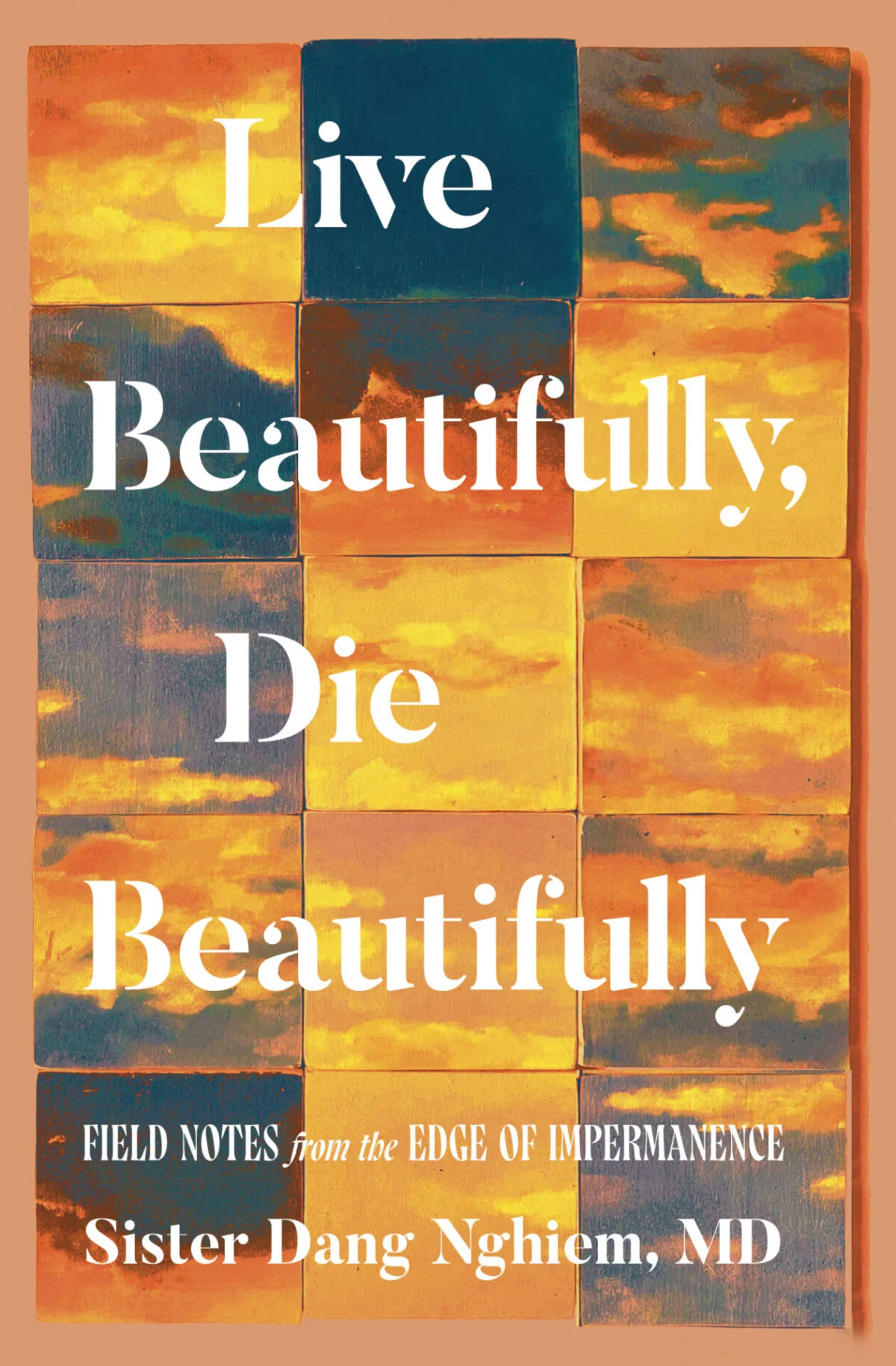
The stark reality of life’s impermanence, a truth often acknowledged but rarely deeply integrated, served as a catalyst for profound transformation in the life of Sister Dang Nghiem. Her journey, from a promising young physician grappling with personal trauma to a Buddhist nun dedicated to teaching the art of living and dying mindfully, offers a compelling narrative of resilience, acceptance, and the search for true peace. This chronicle explores the pivotal moments that shaped her path, the philosophical underpinnings of her teachings, and the universal relevance of embracing impermanence to live a more meaningful life.
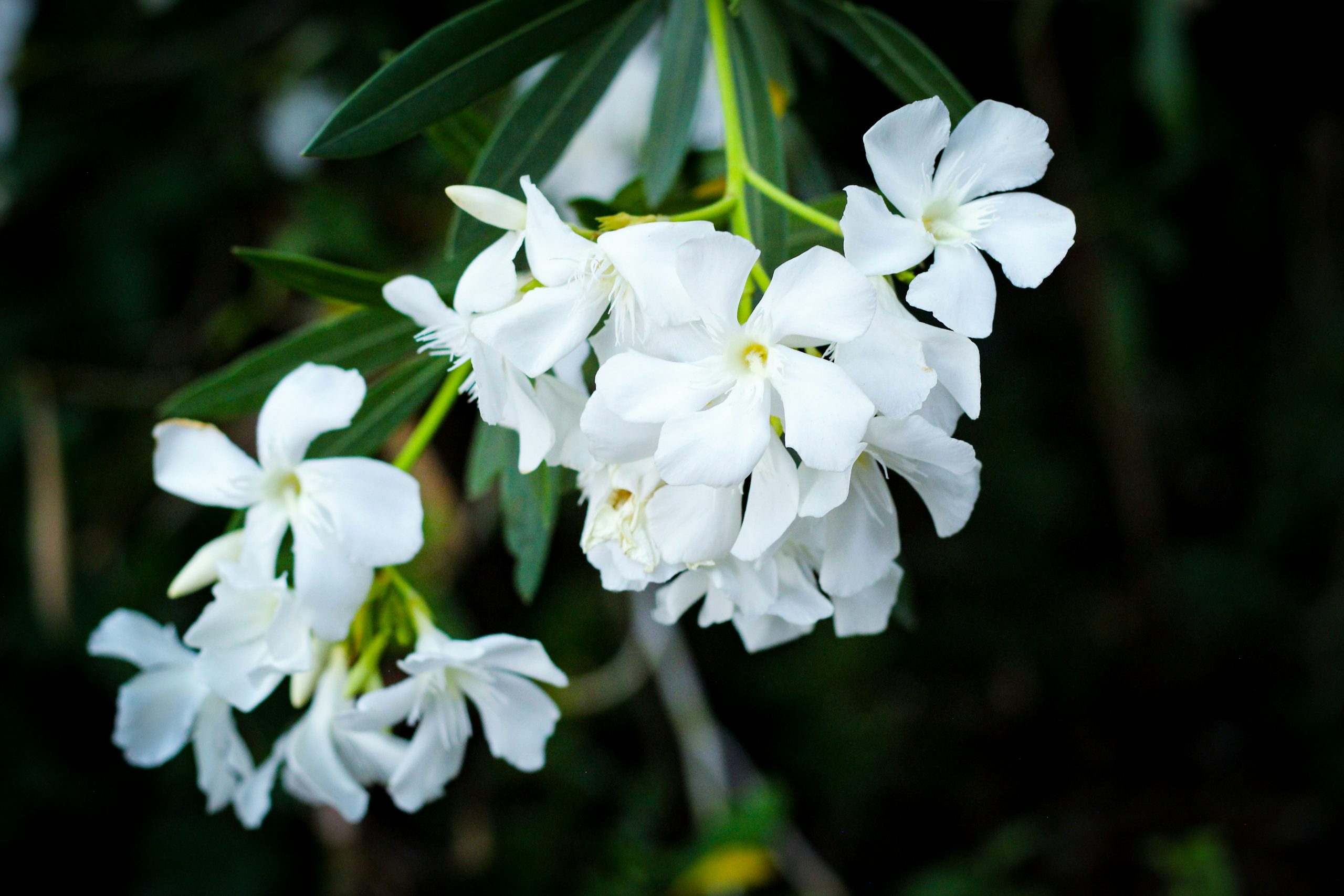
The initial spark for Sister Dang Nghiem’s spiritual awakening was not a grand revelation, but a simple, poignant observation: a flower bud falling from an oleander branch as she walked towards her morning meditation. This seemingly minor event, witnessed with a mind honed by practice, resonated deeply. It underscored the Buddhist principle that life’s transience is not confined to its final stages; even nascent potential can be swept away by the winds of circumstance. This profound realization, that a flower can fall at any stage of its life, became a cornerstone of her understanding, offering a pathway to reframe one’s perception of self, circumstances, and life itself, not as a surrender to despair, but as an invitation to embrace the present moment with astonishing beauty.
A Life Interrupted: Early Encounters with Loss and the Call to Healing
Sister Dang Nghiem’s early life was marked by profound loss, experiences that, in retrospect, foreshadowed her later spiritual path. The disappearance of her mother when she was just twelve years old, followed by the passing of her grandmother who had provided solace during that difficult period, introduced her to the concept of absence at a tender age. However, it was the sudden, tragic death of someone she loved deeply that would irrevocably shatter her perception of permanence and propel her towards a more profound engagement with life’s inherent impermanence.
Before dedicating her life to monasticism, she was a practicing physician, a career that demanded rigorous intellect and outward composure. Beneath the surface, however, she navigated the quiet, persistent currents of depression and unresolved emotional wounds. It was during her time at an HIV clinic that a seemingly casual remark by an attending physician altered the trajectory of her existence. He mentioned an upcoming retreat led by the esteemed Zen Master Thich Nhat Hanh. Despite never having discussed Buddhism with him, she was handed a pamphlet, an unassuming object that would become the key to unlocking a new way of being.
The decision to attend the retreat felt less like a choice and more like an inevitability. She requested five days off from her demanding medical schedule, fully anticipating a denial. To her surprise, permission was granted the very next day. Her pursuit of financial assistance led her to Parallax Press, the publishing house associated with Plum Village, Thich Nhat Hanh’s community. There, she was offered the opportunity to offset costs by assisting with tasks, further solidifying the sense that the path was unfolding with an almost preordained grace.
The Retreat That Changed Everything: A Glimpse of True Awakening
The farewell to her partner, John, at the airport was imbued with a strain that stemmed not from any specific transgression, but from the growing emotional distance within her. This pattern of withdrawal, a deeply ingrained habit she was only beginning to comprehend, made the relationship feel increasingly dim. John had inquired about joining the retreat, but she felt an urgent, unarticulated need to embark on this journey alone. Her pronouncement, "This retreat will decide the direction of my life," was spoken with an intuition she could not yet fully articulate.
Upon arriving at the retreat, she embraced the schedule with unwavering diligence. Although she had encountered Thich Nhat Hanh’s seminal work, Peace Is Every Step, on John’s bookshelf, her practical experience with meditation was non-existent. Listening to Thich Nhat Hanh, or "Thay" as his students affectionately called him, his gentle presence evoked a profound sense of familiarity, reminiscent of her grandmother. His dharma talks became a conduit for her tears, a release of pent-up grief and emotional blockage. It was during his teachings on the Four Noble Truths that a profound realization dawned: despite having been a victim of abuse, she had also, through her own thoughts, speech, and habitual patterns of avoidance and resistance, become an active participant in her own suffering. The ubiquitous truth echoed within her: "Wherever I went, there I was."
The practice of walking meditation along the sea was particularly transformative. On her first walk, finding herself behind Thay, a familiar impulse surfaced: the urge to measure herself against him, the thought, "I can walk like him!" However, the profound peace emanating from his steps offered a more potent teaching. Her heart opened, and she began to follow his footsteps with a newfound humility and gratitude. On the final day of the retreat, she received the five mindfulness trainings and was given the dharma name, Joyful Service of the Heart.
The Return Home: A Collision of Practice and Reality
Returning home, her love for John re-emerged with a clarity and tenderness that surprised her. Yet, the newly embraced mindfulness trainings presented a challenge. The third training, emphasizing a commitment to long-term fidelity before engaging in sexual intimacy, created a chasm. She informed John that she could no longer share their bed, relocating her pillow to the couch. His confusion and hurt were palpable. The distance between them widened, and her old patterns—rigidity, righteousness, and the insidious creep of depression—rushed to fill the void. Despite the profound insights gained at the retreat, within two weeks, she felt herself slipping away, succumbing once again to the familiar grip of despair.
As her birthday approached, John expressed a desire to celebrate. However, citing her on-call duties, she remained uncertain about her availability. Driving towards Oakland on a crisp, sunlit morning, she felt their love anew and promised herself she would see him the following day. Upon reaching Oakland, a thick fog descended, obscuring everything. This sudden shift in visibility struck her as a potent metaphor for life itself: suddenly unclear, even when the underlying warmth of the sun remained.
That night, while on duty in the emergency room, her pager buzzed. It was her best friend, Jennifer. The instant she heard her voice, an ominous certainty settled in. Jennifer delivered the devastating news: John had gone swimming at Half Moon Bay and never returned. His clothes were found on the beach, his car still in the parking lot. A Coast Guard search had yielded no trace.
Overwhelmed, she drove to the ocean, calling John’s name, her cries swallowed by the vast darkness and the relentless crash of the waves. She felt impossibly small, her only recourse a fervent prayer. In the depths of her heart, she knew she would never see him again.
On the drive back, she confessed to Jennifer, "I’m not going back to medicine." Something within her had irrevocably fractured, opening a space for clarity. She understood with stark precision that no amount of professional success or personal love could fill the cavern of unresolved suffering that resided within her. Her grandmother’s long-held wish for her to become a nun, a notion she had long dismissed, resurfaced with an arresting intensity. It appeared to be the only path remaining, a lifeline other than succumbing to the abyss.
Upon her return to their shared apartment, a sense of warmth and tenderness pervaded the space, as if John had left a final, lingering blessing. He had completed the laundry and neatly folded her clothes. She lit incense and knelt before an altar adorned with images of Avalokiteshvara, the bodhisattva of compassion; her grandmother; and her mother. A profound stillness settled over her mind. As the incense burned out, she stood and gazed out at the city. The morning sun, reflecting off distant windows, coalesced into the form of a giant anatomical heart. A choked cry escaped her lips, "I see you, John!"
The following morning, her birthday, they returned to the beach. A foil balloon, emblazoned with "Happy Birthday," drifted across the water and landed near her, a poignant, almost surreal message from John. His mother and sister arrived soon after. Her only request was for his poncho and sleeping bag. That night, she dreamt of floating on a vast, silent ocean—peaceful and infinite. She felt a deep certainty that John, too, had let go peacefully, fulfilling his long-held wish to die at sea.
The Path Home: Navigating Grief and the Embrace of Renunciation
In the two months following John’s death, Sister Dang Nghiem began her preparations to join Plum Village. She divested herself of nearly all her possessions, the weeks feeling like a liminal passage between two distinct lives. She slept on the floor of the now-bare apartment, cocooned in John’s sleeping bag. Fear of ghosts was absent; she felt like a ghost herself. Grief hollowed her out, emptying her, leaving her to move through days as if her body were functioning independently, her spirit lagging far behind.
For days, the despair was so overwhelming that she found herself driving along Highway 1, her gaze fixed on the precipitous cliffs and the churning waves below. This road, once a symbol of shared joy and exploration with John, now represented a constant temptation, a place where life could end in an instant with a mere flick of the steering wheel. Yet, an inner strength held her. The thought of her brother, Sonny, discovering she had given up became a powerful deterrent. Instead of succumbing to the edge, she would turn back, return to the apartment, curl into John’s sleeping bag, and weep until dawn. The simple act of eating often eluded her; raw despair had become her sustenance.
One morning, she drove to the hospital to submit her resignation from her medical residency. Hospital administrators and colleagues responded with empathy and kindness, though they struggled to fully comprehend her decision. Questions arose: "Will you really shave off your beautiful hair?" and "What if you realize you made the wrong decision?" Her response, "I will give monastic life five years," belied an inner certainty: this was not a career change, but an act of profound self-preservation.
Life during this period felt strangely perilous. Strangers seemed to sense her vulnerability, some with kindness, others with a predatory intent. She found herself in situations that teetered on the brink of disaster: a man driving her down a deserted road, a mechanic attempting to coerce her into a clandestine meeting, colleagues professing their love. Each time, an internal current—a blend of courage, intuition, and a protective force—carried her through, maintaining her equilibrium. Her singular desire was for true peace.
Eventually, the moment for departure arrived. Her brother, Sonny, flew to San Francisco to be with her on the forty-ninth day after John’s passing, a day marked by Buddhist ceremonies for the deceased. Unable to accept her decision to become a nun, Sonny sat alone in his car outside the temple during John’s ceremonies. Despite their shared childhood trauma of losing their parents young, she had always been a stable presence for him. Now, he feared losing her as well.
She carried only what could fit into a backpack: a few sets of clothes, John’s sleeping bag and poncho, and the pair of Teva sandals, his first gift to her. Upon arriving at Plum Village, she was raw and jagged with grief, stripped of her former sense of direction. The profound quietude of the monastery was both unsettling and deeply consoling. Monks and nuns moved with deliberate slowness, each step placed with mindful intention upon the earth. She penned a letter to Thay, pouring her heart onto the page—her despair, her near-suicidal drives along Highway 1, the nights spent wrapped in John’s sleeping bag, the hollow ache of losing every plan she had meticulously crafted for her life. Most critically, she wrote, "I no longer know how to live."
Thay’s response was not one of advice or explanation, but of pure presence: the way he drank his tea, the gentle smile that graced his lips, the collective, silent breath of the sangha. It was as if the entire community whispered a collective reassurance: "You are safe now. Stay. Breathe!" Slowly, moment by moment, her breath returned, not without tears, but with a quiet resilience.
Learning to Die Daily: The Art of Living Fully Through Impermanence
John’s death had irrevocably opened a door within her, a gateway she would never choose to close. Upon her arrival at Plum Village, Thay began to guide her in confronting death directly, not with dread, but with an unwavering clarity. The lessons learned there have since become the bedrock of her daily existence.
To face death, she explains, is not merely to confront the final cessation of breathing. It is to embrace the truth of impermanence in every breath, every step, every act of letting go. Learning to "die daily" is the practice that allows us to live more fully. Through diligent practice, one begins to perceive that nothing can be held onto—not our bodies, not our thoughts, not even the people we cherish. When this fundamental truth is accepted, a different kind of tenderness emerges, freeing us from the destructive cycle of sacrificing our health for material gain, only to then expend that wealth in a futile attempt to reclaim our well-being. Recognizing our mortality illuminates the profound wastefulness of living with such anxiety about the future that we forfeit the present moment’s potential for joy. By ceasing to live as if we will never die, we ensure that we do not die without having truly lived.
A simple yet potent practice of "dying daily" involves maintaining order in one’s personal space. Replacing a cup’s lid, tidying one’s room, making the bed—these are small acts that serve as constant reminders that true ownership is an illusion. Monastics, for instance, engage in this practice before each three-month winter retreat, meticulously sorting through their belongings to identify items that can be relinquished. This mindful approach extends to the realization that one could depart this body at any given moment. As she prepares for sleep, she anticipates waking, yet simultaneously acknowledges the possibility of not doing so. Similarly, when embarking on a journey, the return is not a foregone conclusion. This awareness, far from being morbid, is profoundly liberating.
The Buddha himself taught that among all wholesome actions, the greatest merit accrues from the simple contemplation of impermanence. Everything is in a constant state of flux: our joys, our sorrows, our youth, our strength—none of it is permanent. Even the earth itself is subject to change. When we lose sight of this fundamental truth, we become ensnared in clinging to the past or relentlessly pursuing a future that may never materialize. Conversely, when we remember impermanence, we cease waiting for life to begin. We recognize the abundance of what is available to us in the present moment: our breath, our health, our relationships, our community, and our capacity for spiritual practice. Gratitude then blossoms as an inexhaustible wellspring of energy and joy.
Many individuals become so engrossed in their ambitions and external achievements that they neglect the care of their bodies and minds. When life deviates from their envisioned path, they often succumb to despair and feelings of worthlessness. The intensity of fighting external battles can leave them feeling estranged from themselves when they finally turn inward. This underscores the critical importance of daily practice.
With each breath, we touch the profound truth of life and death: to inhale, we must release the exhalation; to exhale, we must release the inhalation. Each breath is a miniature cycle of life and death. Mindfulness, therefore, becomes a rehearsal for dying with dignity and without fear—a practice of letting go, of loosening our grip, of opening the heart. In the Buddhist understanding, death transcends the mere cessation of respiration. It also signifies the extinguishing of craving, fear, or despair. This deeper sense of death is not solely the end of the physical form; it encompasses any moment when we lose the capacity to see clearly, to love, or to extend kindness. Misconceptions such as craving, fear, and hatred are, in essence, forms of dying. Conversely, awareness, presence, and understanding represent forms of birth.
The Buddha once likened human beings to "fresh young grass, cut and laid out in the sun to dry"—vibrant with potential, yet rapidly withering when consumed by regret for the past, fear of the future, and distraction in the present. Not long ago, a young man, brimming with life and vitality, confessed, "I feel like I am dying. I can’t live my life. I’m full of anxiety and unable to do anything!" He embodied that fresh young grass—physically robust, yet already losing its life force, consumed by fear, longing, and restlessness. If one ever feels dimmed by a sense of bleakness or disconnection, visualizing oneself as that freshly cut grass, exposed to the drying sun, can powerfully illustrate how swiftly life slips away when we are not firmly rooted in the present moment. The antidote lies in returning to the breath, gently and consistently.
The flower, even in its wilting, does not cease to be. It transforms into fragrance, compost, soil, and ultimately, nourishment for new seeds. When we look deeply, we realize that dying is not separate from living; it is merely another form of continuation. To live fully, we must embrace the practice of "dying" in each moment—letting go of what no longer serves us, softening our rigid ideas, releasing our possessive grasp on those we love. In this way, life becomes authentic, precious, and truly possible.
Adapted from Live Beautifully, Die Beautifully: Field Notes from the Edge of Impermanence by Sister Dang Nghiem © 2026. Reprinted with permission from Parallax Press, parallax.org.

