

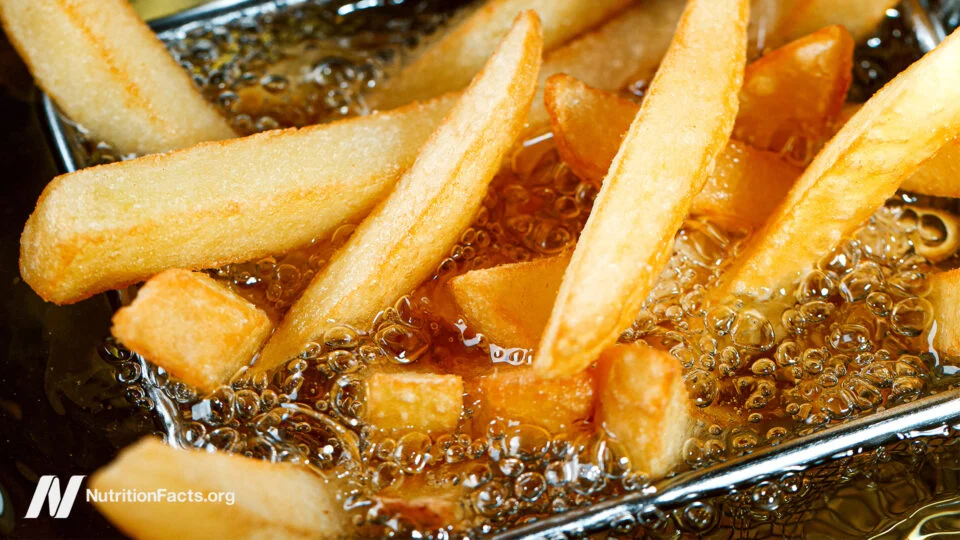
The seemingly innocuous act of frying foods, a culinary practice cherished worldwide for its ability to enhance palatability and create desirable textures, may harbor a darker secret. Emerging scientific evidence points to the formation of a potent carcinogen, glycidol, during the high-temperature processing of oils, raising significant concerns for public health. While the food industry has long grappled with the presence of such compounds, the genotoxic nature of glycidol, meaning it can directly damage DNA and initiate the cascade towards cancer, presents a particularly challenging and potentially unavoidable threat in many processed foods and cooking oils.
The primary objective of frying, from a consumer perspective, is to achieve a high degree of acceptability. However, as food chemists delve deeper into the complex reactions occurring at elevated temperatures, it becomes increasingly clear that not all foods that appeal to our senses are necessarily safe for consumption. For over a century, the refinement of vegetable oils has been a cornerstone of food manufacturing, aimed at improving their stability, appearance, and shelf life. Yet, it is precisely this refining process, particularly when applied to oils that are subsequently heated to high temperatures for frying, that has been identified as a source of concerning compounds.
Among these compounds, 3-monochloropropane-1,2-diol (3-MCPD) and glycidol have emerged as significant areas of scientific scrutiny. While 3-MCPD is classified as a non-genotoxic carcinogen, meaning it is thought to cause cancer through indirect mechanisms and for which a tolerable daily intake (TDI) can be established, glycidol presents a more alarming profile. Glycidol is recognized as a genotoxic carcinogen, capable of directly interacting with and damaging cellular DNA. This fundamental difference in mechanism has profound implications for risk assessment and regulatory approaches, as substances that directly damage DNA are generally presumed to operate without a safe threshold of exposure.
Understanding the distinction between genotoxic and non-genotoxic carcinogens is crucial in evaluating the risks associated with glycidol. For non-genotoxic compounds, scientific models often assume the existence of a "no-effect level," a concentration below which the substance is considered unlikely to cause harm. This allows for the establishment of regulatory limits and acceptable daily intakes. However, genotoxic substances, by their very nature, can initiate mutations even at very low doses. The prevailing scientific consensus is that there is no "safe level of intake" for genotoxic carcinogens, and the principle of "As Low As Reasonably Achievable" (ALARA) or "As Low As Reasonably Practicable" (ALARP) is applied. This means that manufacturers and regulators are expected to reduce exposure to such substances to the lowest feasible levels, acknowledging that complete elimination may be technically or economically unfeasible.
The potential health implications of glycidol exposure are underscored by risk assessments that attempt to quantify the cancer risk associated with typical dietary intakes. For instance, a lifetime cancer risk of 1 in 100,000 is often used as a benchmark for acceptable risk in the general population. Based on extrapolated data from laboratory animal studies, this risk threshold could be exceeded by consuming less than a microgram of glycidol per day for an individual weighing approximately 150 pounds. However, the reality of modern diets, which heavily rely on refined oils used in a vast array of processed foods, suggests that average glycidol exposure may be significantly higher, potentially exceeding 50 micrograms per day. The situation is particularly concerning for vulnerable populations, such as infants. Studies have indicated that the level of glycidol intake from certain infant formulas can exceed acceptable cancer risk levels by as much as 200-fold.
The link between fried food consumption and increased cancer risk has been a subject of ongoing research. While epidemiological studies have consistently shown a correlation between frequent consumption of fried foods and an elevated risk of chronic diseases, the primary drivers have often been attributed to cardiovascular health issues. For example, a large-scale study involving over 100,000 women revealed that regular intake of fried foods, particularly fried chicken and fried fish, was associated with a higher risk of all-cause mortality, implying a reduced lifespan for frequent consumers. This increased mortality was largely driven by cardiovascular events, with fried food consumption not consistently linked to an elevated risk of dying from cancer. However, in men, a notable association has been observed between higher fried food intake and a 35% increased risk of developing prostate cancer. This finding suggests that while the broad health impacts of fried foods may be multifactorial, specific cancer risks, such as prostate cancer in men, warrant particular attention and precautionary measures.
Beyond the general adult population, the presence of glycidol in refined oils raises critical concerns for infants who are not breastfed. Infant formulas, which are manufactured using refined vegetable oils, have been found to contain glycidol at levels that have prompted official warnings. The German Federal Institute for Risk Assessment, for instance, has concluded that infants exclusively fed industrially prepared infant milk formula may ingest harmful levels of glycidol. Reports indicate that glycidol contamination levels in U.S. formulas are comparable to those found in Europe, reinforcing the established scientific consensus that breastfeeding is the optimal choice for infant nutrition. This situation underscores the urgent need for manufacturers to implement strategies to minimize glycidol formation in infant formulas to the lowest achievable levels.
The challenge for the food industry lies in the inherent difficulty of refining vegetable oils without generating these undesirable by-products, while simultaneously maintaining the desired quality and characteristics of the final product. Scientific literature suggests that current refining processes have not yet yielded a definitive solution that completely eliminates glycidol formation without compromising product quality. This has led to the conclusion in some industry circles that the problem lacks simple solutions. However, from a public health perspective, a clear and effective solution exists: the avoidance of oils and fried foods that are known sources of glycidol.

The scientific journey to identify and quantify glycidol as a significant food contaminant has been a gradual process. Research into the chemical changes occurring during food processing has intensified over the past few decades, leading to the discovery and characterization of various potentially harmful compounds.
Timeline of Key Developments and Research:
- Early 2000s: Increased scientific interest in processing contaminants in edible oils, leading to the identification of 3-MCPD as a significant concern.
- Mid-2000s: Emerging research begins to identify glycidol as another critical processing contaminant, with early studies focusing on its formation mechanisms in refined oils.
- Late 2000s – Early 2010s: Studies begin to establish the genotoxic and carcinogenic potential of glycidol through in vitro and in vivo laboratory experiments. This period sees the development of analytical methods for more accurate detection and quantification of glycidol in food products.
- Mid-2010s: Regulatory bodies and scientific organizations worldwide begin to review and assess the risks associated with glycidol. European Food Safety Authority (EFSA) and other national agencies publish opinions and recommendations on mitigating glycidol exposure.
- Late 2010s – Present: Continued research focuses on identifying optimal processing parameters to minimize glycidol formation, evaluating dietary exposure levels in various populations, and exploring the association between glycidol-containing foods and human health outcomes. Efforts to regulate glycidol levels in infant formulas and other sensitive food products gain momentum.
The implications of these findings extend beyond individual dietary choices, impacting food safety regulations, industry practices, and public health strategies. The ongoing challenge for regulatory agencies is to set appropriate limits and guidelines that protect consumers while remaining technically feasible for manufacturers. The principle of ALARA, while a guiding framework, requires continuous monitoring and technological advancement to achieve ever-lower levels of exposure.
The food industry faces the dual challenge of innovation and responsibility. Developing new refining techniques or alternative processing methods that inherently minimize glycidol formation without compromising product quality is a significant research and development undertaking. Industry associations and individual companies are engaged in efforts to understand the formation pathways of glycidol and 3-MCPD and to implement best practices to reduce their presence in finished products. This includes optimizing temperature and time during refining, exploring different raw materials, and investigating novel purification steps.
Consumer awareness is also a critical factor in driving change. As more information becomes available about the potential risks associated with glycidol, consumers may increasingly seek out foods prepared using methods that minimize the formation of such contaminants. This can create market pressure for manufacturers to prioritize safety and transparency in their production processes.
Broader Impact and Implications:
The scientific understanding of glycidol’s presence in processed foods and its potential health risks has several far-reaching implications:
- Regulatory Scrutiny: Health and food safety agencies globally are under increasing pressure to establish and enforce stricter regulations on glycidol levels in food products, particularly those consumed by vulnerable populations like infants.
- Industry Innovation: The food industry is compelled to invest in research and development to find innovative solutions for oil refinement and food processing that reduce or eliminate glycidol formation. This could lead to significant advancements in food technology.
- Public Health Campaigns: Public health organizations and nutrition advocates may intensify efforts to educate consumers about the risks associated with fried foods and refined oils, encouraging healthier dietary choices.
- Shift in Dietary Recommendations: Future dietary guidelines may place greater emphasis on minimizing the consumption of foods known to contain high levels of processing contaminants like glycidol, promoting whole, minimally processed foods.
- Global Food Trade: Harmonization of international food safety standards regarding glycidol will be crucial for facilitating global food trade and ensuring consistent consumer protection across different regions.
In conclusion, the identification of glycidol as a genotoxic carcinogen formed during the processing of edible oils presents a significant public health concern. While the food industry continues to explore technical solutions, consumers are empowered to make informed choices by prioritizing whole, unprocessed foods and limiting their intake of fried items and products reliant on heavily refined oils. The ongoing scientific investigation and regulatory oversight are vital to mitigating the risks associated with this pervasive food contaminant and safeguarding long-term public health.

