

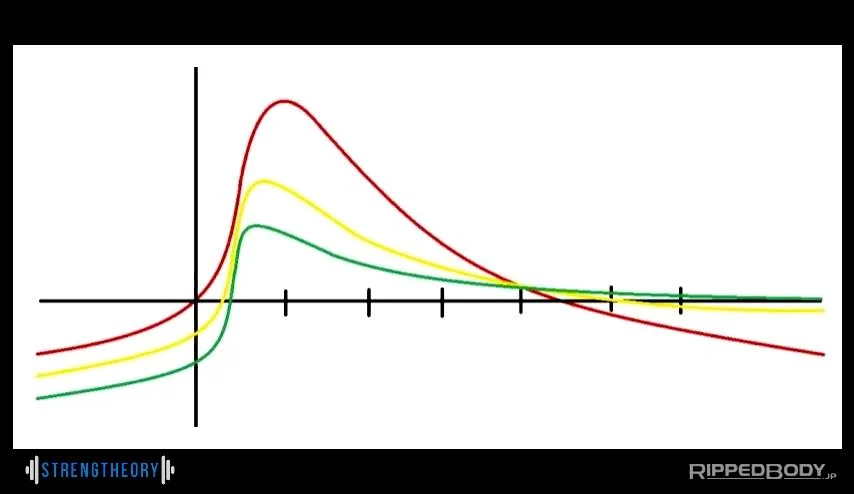
The landscape of modern strength and conditioning is currently defined by a sophisticated debate regarding the optimal application of physical stress to induce muscular hypertrophy and performance gains. For decades, the fitness industry has operated between two ideological poles: the "stimulation" school of thought, which advocates for moderate training loads to encourage growth without excessive fatigue, and the "annihilation" philosophy, which emphasizes pushing physiological limits to force adaptation. Current consensus among elite coaches and exercise scientists suggests that neither extreme is entirely sufficient. Instead, a nuanced approach involving the strategic management of stress through periodized programming has emerged as the gold standard for sustainable athletic development.
The Science of Stress Management in Athletic Performance
At the core of contemporary strength training is the principle of stress management. Dr. Pat Davidson, a prominent figure in the field of exercise physiology, posits that the role of a strength coach is essentially that of a stress manager. This perspective aligns with Hans Selye’s General Adaptation Syndrome (GAS), which describes how the body responds to stressors through three stages: alarm, resistance, and exhaustion. In a training context, the "alarm" phase is the workout itself, while the "resistance" phase is the body’s attempt to adapt and become stronger.
The objective of professional coaching is to apply a "maximal recoverable volume"—a level of stress that pushes the trainee to the brink of their capabilities without crossing into the "exhaustion" or overtraining phase. Experts like Alex Viada and Chad Wesley Smith advocate for high-work capacities, but they emphasize that such work must be governed by a carefully structured, periodized plan. This involves fluctuating training variables—intensity, volume, and frequency—to ensure that the central nervous system (CNS) and musculoskeletal system can recover sufficiently to manifest performance improvements.
Differentiating Between Fatigue and Overtraining Syndrome
A significant point of confusion within the fitness community is the distinction between acute fatigue and Overtraining Syndrome (OTS). While social media discourse often labels any instance of post-workout soreness or temporary performance dips as "overtraining," clinical OTS is a serious physiological condition characterized by long-term decreases in performance, hormonal imbalances, and neurological disturbances.
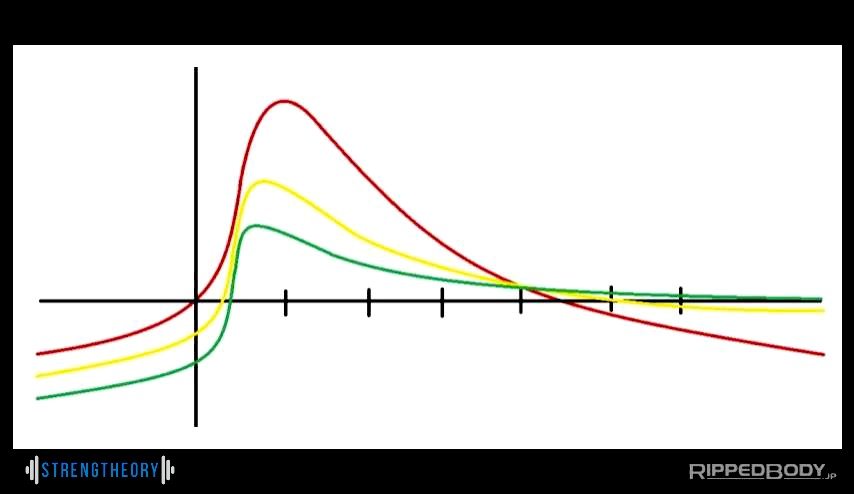
Data suggests that true overtraining is remarkably difficult to achieve for the average trainee. A notable case study in human endurance and recovery is James Lawrence, known as the "Iron Cowboy," who completed 50 iron-distance triathlons in 50 states over 50 consecutive days. Despite the extreme physiological toll, Lawrence’s performance was maintained through meticulous attention to nutrition, sleep, and metabolic management. This illustrates that the human body is capable of surviving immense stress if recovery protocols are proportionately robust. For the standard gym-goer, what is perceived as overtraining is usually "non-functional overreaching," which can be corrected with a brief period of reduced volume.
The Elite Athlete Fallacy and General Population Limitations
One of the primary challenges in modern fitness programming is the "elite athlete fallacy"—the tendency for amateur trainees to adopt the high-frequency, high-intensity protocols used by professional competitors. Elite athletes often possess superior genetic predispositions for recovery and, crucially, their entire lifestyle is structured around their training. They may dedicate four to six hours daily to exercise and several more to specialized recovery modalities.
In contrast, the general population typically faces significant external stressors that compete with training for the body’s recovery resources. Sedentary professional environments, which often involve 8 to 10 hours of sitting, can lead to reduced joint mobility and postural issues. When these individuals attempt to replicate "daily max" squatting programs—such as those popularized by strength icons like Chris Duffin—the risk of injury increases exponentially. Professional analysis suggests that for the non-elite trainee, "smart" training involves recognizing that the body does not distinguish between the stress of a heavy deadlift and the psychological stress of a demanding career; both draw from the same systemic "stress bucket."
Physiological Demands of High-Threshold Movements
The deadlift remains one of the most debated exercises regarding frequency and recovery. While it is a foundational movement for building total-body strength, it is uniquely taxing on the central nervous system. Observations from veteran strength coaches indicate a point of diminishing returns once a trainee reaches a certain strength threshold, typically defined as a deadlift of twice their body weight.
The high neurological demand of pulling heavy loads from a dead stop requires significant recovery time. Unlike the squat, which features a prominent eccentric (lowering) phase that can aid in the stretch-shortening cycle, the deadlift is often performed as a purely concentric movement when done for maximal effort. This places a heavy burden on the spinal erectors and the CNS. Current programming trends suggest that "max effort" deadlifting (loads exceeding 85% of a one-rep maximum) should be limited to once every two to three weeks for most individuals. To maintain technical proficiency without inducing systemic "annihilation," coaches often substitute heavy sets with speed or technique work, utilizing lighter loads (60-70%) to refine movement patterns.

Strategic Implementation of Low-Mechanical Loading
To balance the need for high-intensity stimulation with the requirement for recovery, many practitioners are turning to low-mechanical loading strategies. This involves using bodyweight or lighter external loads while increasing the time under tension or the metabolic demand.
A prominent example is the Bulgarian Split Squat performed for time rather than repetitions. By removing the heavy axial loading (weight on the spine) associated with traditional back squats, trainees can achieve significant muscular failure and metabolic stress without the same level of joint wear and tear or CNS fatigue. Incorporating controlled tempos—such as a three-second descent and three-second ascent—allows for hypertrophic stimulus while providing the skeletal system a "break" from maximal loads.
The Role of Active Recovery and Deloading Cycles
The integration of recovery is no longer viewed as "time off" but as an active component of the training cycle. Casual walking has been identified as a highly effective, low-impact method for enhancing blood flow and facilitating the clearance of metabolic byproducts without adding to the total stress load. Unlike high-intensity interval training (HIIT) or weighted carries, a standard walk serves to down-regulate the nervous system, shifting the body from a sympathetic (fight or flight) state to a parasympathetic (rest and digest) state.
Furthermore, the "deload week"—typically the fourth week of a monthly training block—has become a staple of professional programming. There are two primary methods for deloading:
- Volume Deload: Maintaining high intensity (weight on the bar) but significantly reducing the number of sets and repetitions. This keeps the nervous system primed for heavy loads while allowing the muscular and connective tissues to recover.
- Intensity Deload: Reducing the weight used while maintaining a moderate volume. This is often used for athletes in a competitive season or those recovering from minor injuries.
Research into training volume suggests that most "overtraining" incidents are a result of excessive volume rather than excessive intensity. Therefore, reducing total tonnage (sets x reps x weight) during a deload week is often the most effective way to prepare the body for the next high-stress training block.

Broader Implications for the Fitness Industry
The shift toward "stress management" over "annihilation" reflects a maturing fitness industry that is increasingly grounded in exercise science rather than anecdotal bravado. This evolution has significant implications for public health and longevity. By prioritizing sustainable progress and recognizing the physiological limits of the human body, coaches can help prevent the high burnout and injury rates often associated with "hardcore" gym cultures.
As the understanding of the relationship between physical stress and systemic recovery deepens, the focus is expected to shift further toward individualized, data-driven programming. The use of Heart Rate Variability (HRV) and other biofeedback markers is already becoming common among high-level trainees to determine daily readiness. Ultimately, the goal of modern strength and conditioning is to push the boundaries of human performance while ensuring that the "annihilation" of the muscle today does not preclude the progress of tomorrow.

