

The pervasive issue of elevated dietary sodium intake, commonly referred to as high salt intake, stands as the foremost dietary risk factor contributing to a significant global health burden. This omnipresent dietary culprit is estimated to be responsible for millions of deaths annually, primarily through its detrimental effects on blood pressure and its direct correlation with an increased risk of stroke, heart attack, and kidney damage. Hypertension, or high blood pressure, continues to be labeled the "silent and invisible killer" due to its often asymptomatic nature, yet it remains one of the most potent independent predictors of leading causes of mortality worldwide.
Human evolutionary history is marked by a diet intrinsically rich in potassium and low in sodium. However, contemporary dietary patterns have seen a dramatic reversal of this fundamental balance. This shift is a direct reflection of a move away from traditional, plant-based diets abundant in potassium and sparse in sodium – a departure from staples like fruits, leafy greens, roots, and tubers. Simultaneously, there has been an escalating reliance on highly processed, sodium-laden foods that are often stripped of their natural potassium content. Potassium itself is now recognized as a "nutrient of public health concern" in many developed nations, with a staggering 98% of the U.S. population failing to meet the recommended minimum daily intake. As numerous health experts have previously noted, insufficient potassium intake is independently linked to elevated blood pressure and cardiovascular disease. Despite this established connection, physicians infrequently advise patients to increase their consumption of potassium-rich foods, such as fruits and vegetables, as a primary strategy for blood pressure management, even though a substantial body of meta-analytic evidence confirms that higher potassium intake appears to confer a reduced risk of stroke.
The protective effects of potassium extend beyond its influence on blood pressure, demonstrating a reduction in stroke risk even independently of its effects on hypertension. This suggests other beneficial mechanisms at play, including the potential for potassium to mitigate clot formation, reduce arterial stiffness, and limit the generation of harmful free radicals within the body. In stark contrast, higher sodium intake has been demonstrably associated with a 20% increased risk of premature mortality, while higher potassium intake is linked to a corresponding 20% reduced risk of premature death. Given that sodium is predominantly found in less healthy, processed foods, and potassium is concentrated in nutrient-dense, whole foods like beans and leafy greens, the question arises: could achieving both low sodium and high potassium intake simply be a proxy for a healthier overall dietary pattern, characterized by increased consumption of plant-based foods and a reduction in processed "junk" food?
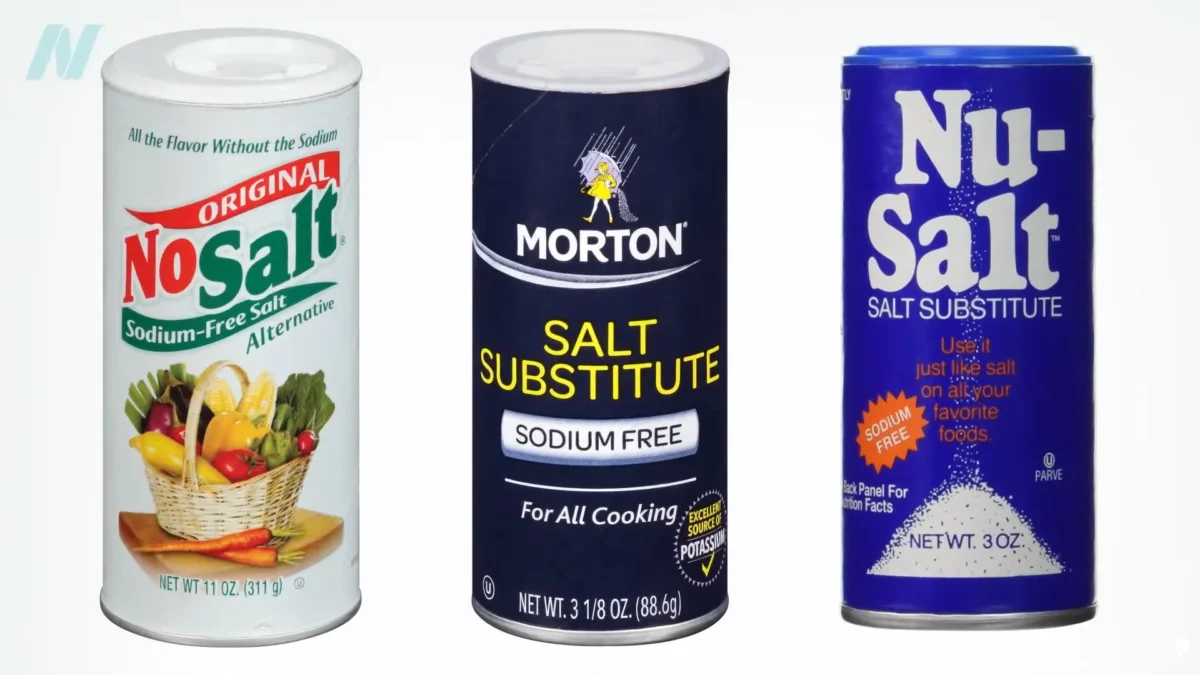
The causal link between sodium and adverse health outcomes is firmly established. Randomized controlled trials (RCTs) have unequivocally demonstrated that sodium reduction leads to a commensurate decrease in blood pressure. Similarly, RCTs have shown that supplementation with potassium can effectively lower blood pressure. This leads to a critical inquiry: what about the utility of potassium chloride as a salt substitute, used in place of traditional sodium chloride? Potassium chloride is the primary component in many zero-sodium salt substitutes, a topic explored in depth in scientific literature and public health resources.
The Rise of Potassium Chloride as a Salt Substitute
Potassium chloride is recognized as a naturally occurring mineral salt, extracted through processes analogous to those used for common salt. Given the widespread prevalence of excessive sodium consumption and insufficient potassium intake, the prospect of potassium chloride as a dual-action solution—reducing sodium and increasing potassium—presents a compelling public health strategy. While whole, unprocessed plant foods remain the ideal source for increasing potassium intake, offering a spectrum of beneficial phytonutrients, the efficacy of potassium chloride as a direct dietary intervention is gaining significant traction.
Current research, encompassing over ten studies comprising eleven randomized controlled trials, indicates that the strategic substitution of a portion of regular salt with potassium chloride can lead to significant reductions in blood pressure among individuals diagnosed with hypertension. These findings further suggest that salt substitutes may play a role in the prevention of hypertension itself. While the ability of salt substitutes to lower blood pressure is well-documented, the more profound questions revolve around their impact on the incidence of hypertension and, crucially, on major disease endpoints such as stroke and overall mortality. Answering these questions requires rigorous, long-term investigation.
Landmark Studies Illuminate the Benefits
A pivotal randomized controlled trial provided compelling evidence for the impact of salt substitution. In this study, households had their regular salt supply replaced with a blend containing one-quarter potassium chloride. At this proportion, the majority of participants were unable to discern a significant taste difference, with some even expressing a preference for the potassium-enhanced salt. The health implications were profound: the use of even this modest substitution was associated with a halving of the risk of developing hypertension.
Further extending these findings, a study tracked individuals over time to assess the impact on cardiovascular disease mortality. In a controlled experiment involving five kitchens at a veterans’ retirement home, meals were prepared using either regular salt or, unbeknownst to the cooks and residents, a 50/50 blend of potassium chloride and sodium chloride. Over a period of approximately two and a half years, participants in the group consuming the half-potassium blend experienced a remarkable 40% reduction in their risk of dying from cardiovascular disease. Moreover, they lived, on average, nearly a year longer. The observed difference in life expectancy at age 70 was described as "equivalent to that which would have naturally occurred in 14 [years]," suggesting that this dietary modification effectively made individuals appear more than a decade younger in terms of their mortality risk from cardiovascular causes.
More recently, a massive randomized controlled trial conducted in China, involving over 20,000 participants across 600 villages over five years, provided further robust evidence. Participants were assigned to receive either a salt substitute comprising a quarter potassium chloride or regular salt. The results were striking: the salt substitute not only led to a reduction in strokes and overall cardiovascular events but also significantly lowered the risk of death from all causes combined.
Contextualizing the Chinese Study
China serves as an ideal setting for such research due to the significant contribution of home-prepared meals to overall sodium intake. In China, up to 75% of the population’s sodium intake originates from salt added during cooking or at the dining table. This contrasts with the American dietary landscape, where a substantial portion of sodium is incorporated into prepackaged meats and processed foods before purchase. Nevertheless, the findings from China carry significant implications for global dietary strategies.
The Question of Adoption and Industrial Response
Despite the compelling scientific evidence, the widespread adoption of these beneficial salt substitutes has been notably slow. A key question remains: why haven’t food manufacturers transitioned more readily to incorporating potassium chloride, and why have consumers been hesitant to embrace these alternatives? A review from the Mayo Clinic, titled "Achieving the Benefits of a High-Potassium, Paleolithic Diet, Without the Toxicity," highlights the potential of such strategies. Meanwhile, a commentary questioning "Is Salt Substitution Ready for Prime Time?" underscores the ongoing debate and the need for broader implementation.
Addressing Safety Concerns
While the benefits appear substantial, concerns regarding the safety of salt substitutes have been raised. Arguments highlighting their significant health advantages are countered by discussions about potential risks, including the "inclusion of potentially fatal salt substitutes in the food supply." This complex issue necessitates a thorough examination of potential downsides, which will be explored in subsequent discussions.
Broader Implications for Public Health Policy
The evidence strongly suggests that a widespread shift towards potassium chloride-based salt substitutes could yield significant public health dividends. Such a transition could contribute substantially to reducing the global burden of hypertension, stroke, and cardiovascular disease. The relatively low cost and accessibility of these substitutes, coupled with their demonstrated efficacy and generally palatable nature, position them as a critical tool in preventive medicine.
The slow uptake by the food industry and consumers may stem from a combination of factors, including ingrained dietary habits, the perceived complexity of dietary changes, and a lack of widespread public awareness regarding the benefits of potassium and the risks of excessive sodium. Public health campaigns and policy interventions aimed at educating consumers and incentivizing manufacturers to reformulate products could accelerate this necessary transition.
The Path Forward: Research and Recommendations
The ongoing research into the long-term effects and optimal implementation of potassium chloride salt substitutes is crucial. Future studies should continue to explore potential contraindications, particularly for individuals with kidney disease or those on specific medications that affect potassium levels. However, for the general population, the evidence overwhelmingly supports the judicious use of these alternatives.
This exploration into potassium chloride salt substitutes is part of a larger discourse on mineral intake and its impact on health. Previous discussions have highlighted the alarming deficit in meeting mineral intake recommendations, with a significant minority of the population failing to meet basic requirements. This underscores the urgent need for dietary interventions that address both excesses and deficiencies.
The evidence presented from randomized controlled trials offers a clear and actionable pathway towards improving cardiovascular health on a population level. By understanding the detrimental impact of excessive sodium and the protective benefits of adequate potassium, individuals and policymakers alike can make informed decisions to foster healthier dietary environments and, consequently, healthier lives. The potential for salt substitution to act as a powerful, yet simple, intervention in the fight against chronic diseases cannot be overstated. As the scientific community continues to refine our understanding, the message is clear: a strategic embrace of potassium chloride could represent a significant leap forward in global public health.
Doctor’s Note: This article is the second in a three-part series examining salt and potassium. The first part, "The Mineral Intake Recommendations Only 1 in 6,000 U.S. Adults Meet," is available for review. The series concludes with "Are Potassium Chloride Salt Substitutes Safe and Effective?" Further details on the evidence supporting sodium’s role in raising blood pressure can be found in "The Evidence That Salt Raises Blood Pressure."

