

The landscape of diabetes management was dramatically altered by a simple yet profound dietary intervention: the oatmeal diet. Decades before the groundbreaking discovery of insulin, a physician named Carl von Noorden pioneered a revolutionary approach that offered a lifeline to individuals battling diabetes. His findings, published in 1903, initially met with considerable skepticism within the medical community. However, as evidence mounted and clinical observations accumulated in the ensuing years, the efficacy of von Noorden’s "oatmeal cure" became undeniable, fundamentally reshaping how diabetes was understood and treated.
The historical context surrounding von Noorden’s work is crucial to appreciating its impact. At the turn of the 20th century, diabetes was a devastating and often rapidly fatal disease. Without effective treatments to regulate blood glucose levels, patients, particularly children, experienced severe complications and a drastically shortened lifespan. Medical interventions were largely supportive, focusing on calorie restriction and symptomatic relief, with limited success. It was within this challenging therapeutic vacuum that von Noorden’s research emerged, offering a beacon of hope.
Von Noorden’s pivotal publication in 1903 detailed his observations and advocated for a diet centered around oatmeal, specifically emphasizing the strict exclusion of animal protein. The rationale behind this dietary prescription was not immediately clear to his contemporaries, leading to the initial resistance. However, the clinical outcomes reported by von Noorden were compelling. He observed significant improvements in the health and longevity of his diabetic patients who adhered to this regimen.
Among the early adopters and staunch advocates of von Noorden’s approach was Dr. James B. Herrick, a highly respected physician. Herrick, initially a skeptic himself, began implementing the oatmeal diet in his own practice. The transformative results he witnessed among his patients astonished him. This personal experience led to a significant endorsement: by 1909, Herrick publicly declared that no child or adolescent diagnosed with diabetes should be denied the potential benefits of the oatmeal treatment. This proclamation marked a critical turning point, signaling broader acceptance and encouraging the wider adoption of this dietary strategy.
The influence of von Noorden’s work extended to other prominent figures in the field of diabetes research. Dr. Elliott Joslin, a name synonymous with diabetes care and the founder of the world’s oldest and largest diabetes clinic, described the effects of the oatmeal diet as "sometimes magical." He referred to the oatmeal cure as an "unsolved mystery," a phrase that captured the intrigue and scientific curiosity surrounding its potent effects. Back then, it was widely regarded as "one of the greatest puzzles in diabetes."
Despite the mystery, researchers at the time did identify key components of the diet that appeared to be essential for its success. A critical observation was the absolute necessity of strictly excluding animal protein. It was noted that the presence of animal protein seemed to "annihilate" the beneficial actions of the oatmeal-based diet. This empirical finding foreshadowed modern understanding of insulin resistance.
The Science Unveiled: How Oatmeal Modulates Blood Sugar and Insulin Sensitivity
More than a century after von Noorden’s initial findings, contemporary scientific research has illuminated the mechanisms behind the remarkable efficacy of oatmeal and plant-based diets in managing diabetes. The core of these benefits lies in the composition of oats, particularly their rich content of a fermentable fiber known as beta-glucan.
Beta-Glucan: The Fiber Powerhouse
Beta-glucan, a soluble dietary fiber found abundantly in oats, plays a multifaceted role in improving glycemic control and overall metabolic health. Scientific studies have consistently demonstrated that increased consumption of whole grains, including oats, is associated with a reduced risk of developing diabetes. Randomized controlled trials, numbering over a dozen, have provided robust evidence that oats significantly enhance both short-term and long-term blood sugar regulation. Beyond glycemic control, these studies also report favorable impacts on cholesterol levels.
The precise mechanisms by which beta-glucan exerts its beneficial effects are now better understood. One prominent pathway involves the modulation of the gut microbiome. Beta-glucan acts as a prebiotic, selectively feeding beneficial gut bacteria. This interaction is believed to be a key factor in its cholesterol-lowering capabilities, suggesting a profound link between gut health and cardiovascular well-being.
The Gut Microbiome Connection: Fueling Beneficial Bacteria
The intricate relationship between dietary fiber and the gut microbiome is central to the "oatmeal cure’s" enduring success. Our beneficial gut flora, often referred to as "good gut flora," utilizes dietary fiber as a primary food source. Through fermentation, these microbes produce short-chain fatty acids (SCFAs), which possess significant anti-inflammatory properties. Dozens of randomized controlled trials have substantiated the role of fibers found in oats and beans in improving long-term blood sugar control among individuals with diabetes.
The prevailing hypothesis is that the gut bacteria, selectively promoted by dietary fiber intake, can contribute to alleviating the underlying conditions associated with type 2 diabetes. Specifically, the oat fiber itself has been identified as a potent prebiotic. It actively stimulates the growth of beneficial bacterial species such as Lactobacillus and Bifidobacteria. This symbiotic relationship, coupled with the absence of animal protein and animal fat in the original diet, likely explains why oatmeal-based dietary regimens became a cornerstone of clinical diabetes management.
A Rapid and Lasting Impact: The Timeline of Oatmeal’s Benefits
The speed at which individuals can experience the benefits of an oatmeal-rich diet is particularly striking. Research has indicated that even a few days of consuming oatmeal can lead to positive effects that persist for approximately one month.
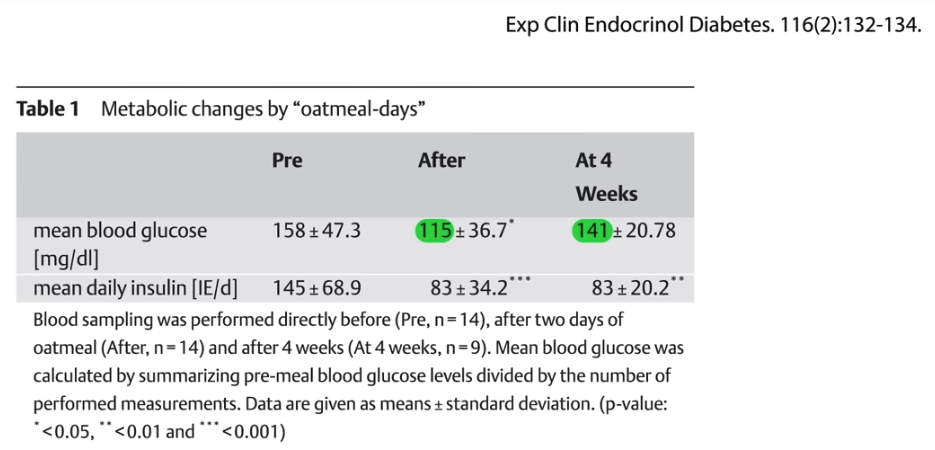
A notable randomized, controlled, crossover trial provided compelling evidence of this rapid and sustained impact. In this study, participants who consumed oatmeal experienced a remarkable reduction in their insulin needs by approximately 40% within just two days. This was a significant improvement compared to a control group that followed a calorie-restricted diabetic diet. Crucially, a measure of long-term blood sugar control, assessed four weeks later, reflected the enduring benefits of the short-term oatmeal intervention.
Subsequent studies have corroborated these findings. Two days of adhering to an oatmeal diet have been shown to significantly decrease the required insulin dosage and improve blood sugar levels, with beneficial effects observed for up to four weeks post-intervention. In patients with uncontrolled type 2 diabetes, a two-day oatmeal intervention resulted in a 40% reduction in insulin dosage, accompanied by near-normalization of average blood glucose levels. Even after participants resumed their regular diets, researchers observed a lasting and significant reduction in insulin dosage and improved mean blood sugar levels for weeks.
Further research into plant-based diets rich in oats, beans, fruits, vegetables, and nuts has revealed a direct correlation between an increase in fiber-feeding gut bacteria and improved metabolic markers. Within one month, fasting blood sugars in these individuals dropped by approximately 25%. The extent of this improvement was directly proportional to the number of fiber-feeding microbes fostered. When the diversity and abundance of SCFA-producing bacteria, promoted by dietary fiber, were higher, participants exhibited better control of their hemoglobin A1c levels, a key indicator of long-term blood sugar management.
Potential Downsides and Critical Considerations
While the benefits of oatmeal in diabetes management are substantial, it is imperative to acknowledge potential risks and the need for careful medical supervision. The potent hypoglycemic effects of an oatmeal-rich diet necessitate close monitoring by healthcare professionals.
If an individual adopts an oatmeal diet, their physician must be prepared to "deprescribe" blood sugar medications rapidly. Failure to do so could lead to dangerously low blood sugar levels (hypoglycemia), a condition that can have severe consequences. Furthermore, oatmeal interventions should be approached with caution in patients who may have difficulty recognizing or reporting the symptoms of low blood sugar, such as those with neuropathy or cognitive impairment.
The primary "downside" of implementing short-term oatmeal interventions is that they can be too effective, leading to an overcorrection of blood glucose. Therefore, these dietary approaches must be undertaken with close medical supervision to ensure patient safety and to adjust medication regimens appropriately.
The Glycemic Index of Oatmeal: Understanding Processing and Impact
The form in which oats are consumed significantly influences their glycemic impact. While all whole grains are beneficial, intact whole grains generally offer superior health advantages. Among oats, oat groats—where the inedible outer husk has been removed—represent the least processed form.
- Steel-Cut Oats (Groats): When oat groats are sliced into two to four pieces, they become steel-cut oats, also known as pinhead or Irish oats. These are considered low-glycemic-index (GI) foods, typically scoring below 55.
- Scottish Oatmeal and Rolled Oats: Oat groats can also be coarsely ground to produce Scottish oatmeal or steamed and flattened into "old-fashioned" rolled oats. These varieties have a slightly higher glycemic index, averaging around 55.
- Instant Oats: Instant oats undergo more extensive processing, including prolonged steaming and thinner rolling. With a glycemic index score of 79, they are categorized as high-GI foods. While higher than other oat varieties, they are still generally considered less detrimental than many processed breakfast cereals, which can have GI scores in the 80s or 90s.
The processing of oats impacts the rate at which their carbohydrates are digested and absorbed, influencing the subsequent rise in blood glucose levels. Opting for less processed forms like steel-cut or rolled oats generally leads to a more gradual and sustained release of glucose into the bloodstream.
Enhancing the Oatmeal Experience: Culinary Versatility
Oatmeal, a classic whole-grain breakfast, offers remarkable versatility in preparation and flavor. Beyond its health benefits, it can be a delicious and satisfying meal. A foundational approach to preparing oatmeal involves a "BROL" base, standing for Beans, Rolled Oats, and Legumes. This forms a nutrient-dense foundation for a variety of toppings.
For those with a preference for sweetness, creative flavor combinations can be explored. A "chocolate-covered-cherry sensation" can be achieved using frozen dark red cherries, cocoa powder, dates, and walnuts or pumpkin seeds. This demonstrates how wholesome ingredients can be combined to create indulgent yet healthy sweet options.
The savory potential of oatmeal is equally vast. A "BROL bowl with sautéed greens" exemplifies how the base can be transformed into a savory dish. Exploring recipes for "savory oatmeal" reveals a world of culinary possibilities, incorporating ingredients like mushrooms, herbs, curry spices, and roasted vegetables. This adaptability allows oatmeal to be integrated into diverse palates and meal preferences, further promoting its regular consumption.
Broader Implications and Future Directions
The historical significance of the oatmeal diet underscores a fundamental principle that continues to gain traction in modern nutritional science: the power of whole, plant-based foods in managing chronic diseases. The legacy of Carl von Noorden’s pioneering work serves as a potent reminder that effective therapeutic strategies can sometimes be found in the simplest of dietary interventions.
The resurgence of interest in dietary approaches to diabetes management, driven by scientific advancements in understanding the gut microbiome and insulin resistance, echoes the early discoveries made by physicians like von Noorden and Joslin. The implication for public health is substantial: promoting the consumption of fiber-rich plant-based foods, such as oats, can be a cornerstone of preventative and therapeutic strategies for type 2 diabetes and prediabetes.
Further research continues to explore the synergistic effects of various plant-based components and their impact on metabolic health. As our understanding deepens, the principles laid down by early pioneers in diabetes care, like the "oatmeal cure," offer enduring lessons in harnessing the body’s own healing capabilities through nutrition. The journey from the skepticism of 1903 to the evidence-based acceptance of today highlights the iterative nature of scientific discovery and the profound, sometimes overlooked, wisdom embedded in historical medical practices. The humble oat, once a revolutionary treatment, remains a potent ally in the ongoing global effort to combat diabetes.

