

Written By Michael Greger M.D. FACLM • August 13, 2026
Last updated: August 13, 2026 • 3 min read
A micromort, a unit for comparing and communicating risk to patients, is equivalent to a one-in-a-million chance of dying. This innovative metric offers a standardized approach to understanding the inherent dangers associated with various activities, from routine medical procedures to everyday choices, thereby empowering individuals with clearer insights into risk assessment.
The Challenge of Risk Perception
Communicating the magnitude of risk, particularly in the context of medical procedures, has long presented a significant challenge for healthcare professionals. Patients often struggle to grasp the statistical implications of medical interventions, leading to misinterpretations and anxieties. This difficulty is exacerbated by the vast difference in scale between everyday perceived risks and the actual statistical probabilities of adverse outcomes. For instance, while hundreds of millions of surgical operations are performed annually, with a typical mortality risk hovering around 0.5%, patients may casually remark, "I could die just as easily crossing the road." This sentiment highlights a fundamental disconnect in understanding the comparative severity of risks.
To bridge this gap, the concept of risk analogy has been employed. For example, undergoing anesthesia is associated with approximately a 1-in-100,000 chance of not waking up. While this figure offers a specific medical risk, translating it into a relatable context can still be problematic. Comparing this to the risk of an expert skydiver provides a point of reference, but for many, abstract numbers remain difficult to internalize. The challenge lies in making these infinitesimal probabilities tangible and comprehensible. The sheer scale of such small numbers, when presented as raw data, can obscure their true meaning. Visualizing a rug with dimensions of 0.0017 miles by 0.00227 miles, for instance, offers little intuitive understanding of its size. This need for more digestible and relatable units of risk measurement has led to the development and adoption of the micromort.

Introducing the Micromort: A Standardized Unit of Risk
The micromort (mM) has emerged as a crucial tool for quantifying and comparing risks, defining a one-in-a-million chance of death. This standardized unit allows for a more accessible and consistent way to discuss the inherent dangers of various activities and interventions. To contextualize the magnitude of a single micromort, it can be likened to the odds of flipping a coin and achieving heads (or tails) 20 consecutive times. Alternatively, it represents slightly less than the probability of being dealt a royal flush in a game of poker.
However, the true power of the micromort lies in its ability to facilitate direct comparisons between disparate risks. For example, driving 100 miles is associated with approximately one micromort, meaning a one-in-a-million chance of death. This established baseline allows for the assessment of other activities. Scuba diving, for instance, carries a risk of about five micromorts per dive. This translates to each dive being as risky as driving 500 miles. This comparative framework enables individuals to more effectively weigh the risks of surgical procedures against common daily activities, fostering a more informed decision-making process.
Diverse Applications of Micromort Analysis
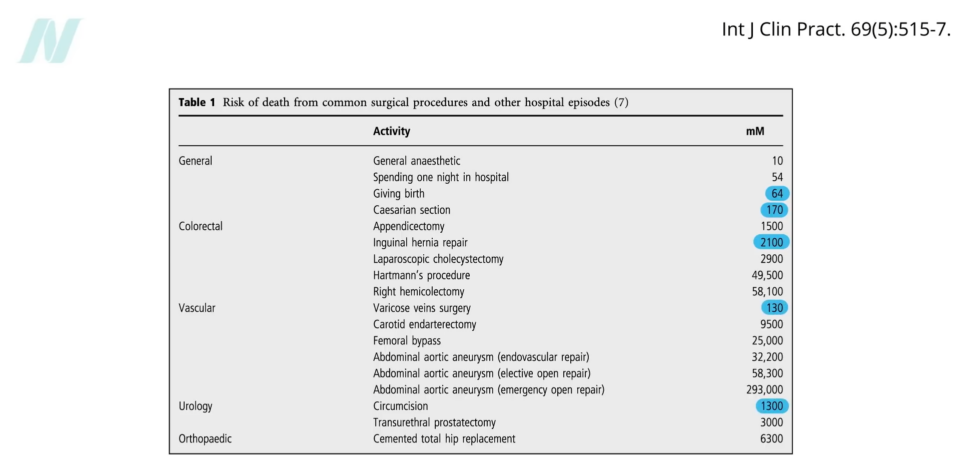
The application of micromort analysis extends across a broad spectrum of activities, providing valuable insights into relative risks. For instance, the act of giving birth is associated with a risk equivalent to driving from New York to Los Angeles and back again. However, undergoing a Caesarean section elevates this risk to more than double that of natural childbirth. Even seemingly minor surgical interventions, such as a hernia repair, carry a risk of mortality comparable to skydiving 200 times.
While some medical interventions are unavoidable, others, like certain elective surgeries such as varicose vein removal or circumcision, present risks that may be considered avoidable. The data suggests that the risk associated with these procedures, when measured in micromorts, can be substantial enough to warrant careful consideration and comparison with other life activities.
A striking example of the utility of micromort comparisons was highlighted in a study comparing the risks of various activities. It was found that horseback riding is approximately four times more dangerous than rock climbing. Furthermore, undergoing chemotherapy and radiation therapy for head and neck cancer presents a risk far exceeding that of rock climbing for an extended period, extensive driving, or multiple skydives. This comparative data underscores the importance of understanding the relative risks associated with medical treatments versus recreational pursuits.
Accidental Deaths: A Significant Contributor to Mortality
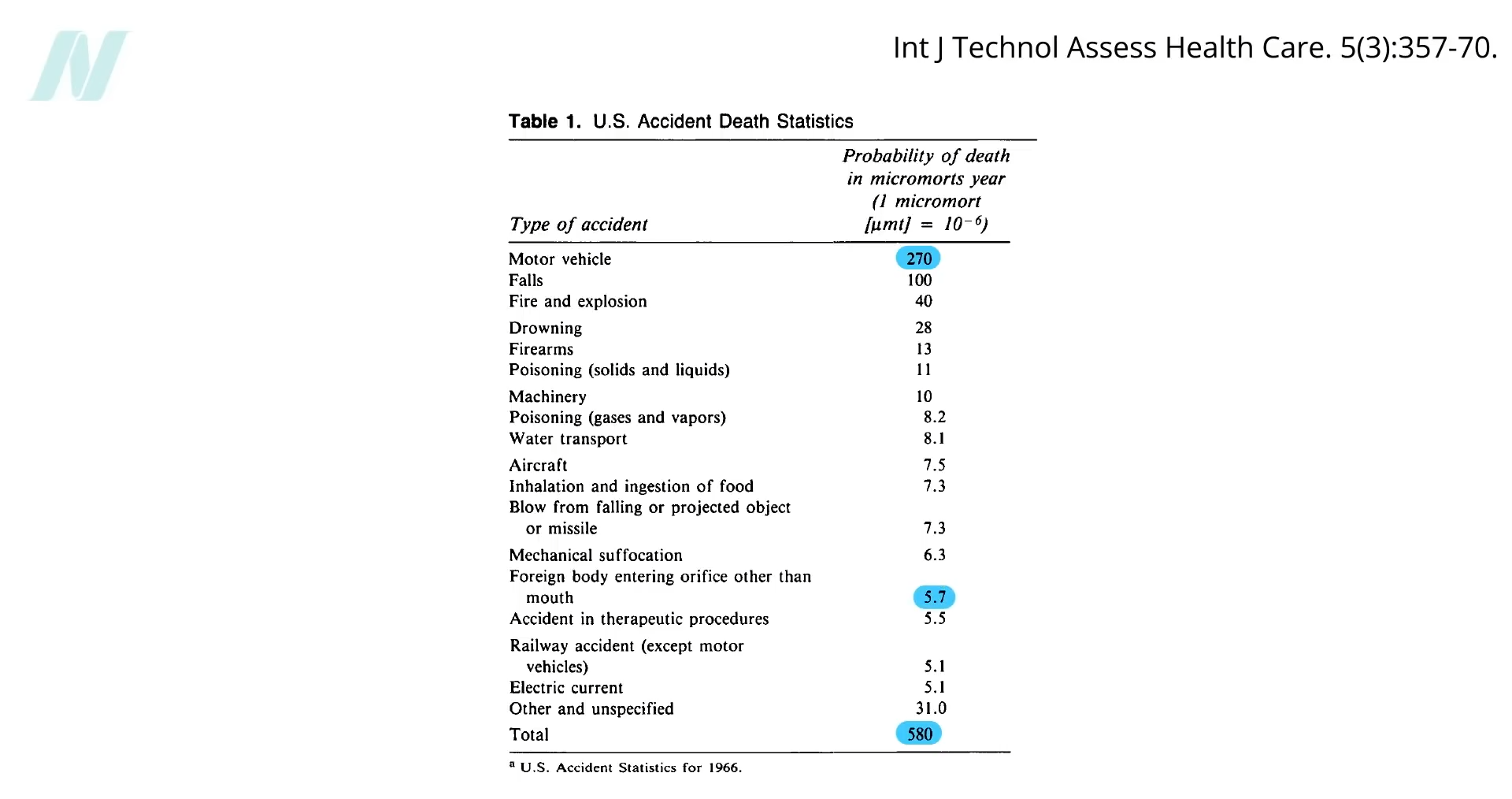
Accidental deaths represent a significant, yet often underestimated, category of mortality. On average, individuals face approximately a one-in-a-million chance of dying from an accident each day. Within this category, car crashes account for roughly half of the risk, based on United States averages. However, a multitude of other hazards contribute to accidental deaths, ranging from falls to drowning and poisoning.
An unexpected finding from research indicates that Americans have a yearly risk of about 1-in-200,000 of dying from a foreign body entering an orifice other than the mouth. This highlights the diverse and often subtle dangers present in daily life.
Further comparisons reveal substantial differences in risk across various modes of transportation and activities. Climbing Mount Everest, for example, is approximately 30 times riskier than coal mining or base jumping. While trains and airplanes present equivalent risks over the same distance, riding a motorcycle is about 50 times deadlier than traveling by car. Even cycling, a seemingly benign activity, carries a near-term risk approximately 10 times greater than driving.
Breast Implants and Cancer Risk: A Case Study in Contextualization
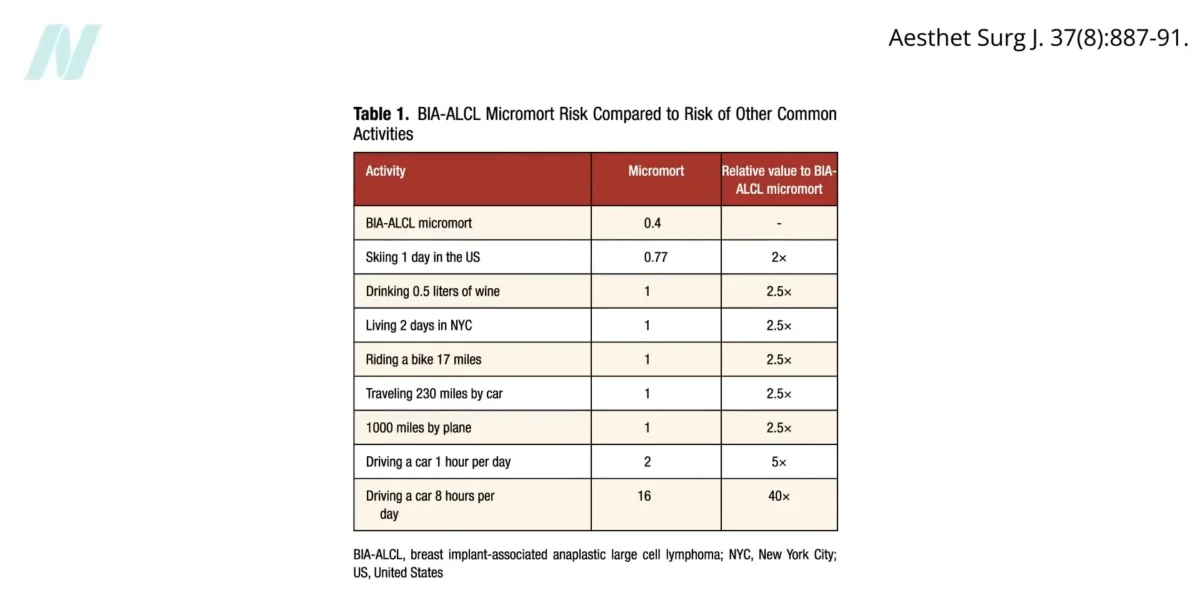
The utility of micromort comparisons is particularly evident when examining risks associated with medical devices. Certain types of breast implants have been linked to a rare form of cancer, breast implant-associated lymphoma. For the millions of women with implants, this association can be a source of considerable anxiety. However, by contextualizing this risk using the micromort scale, a clearer perspective can be achieved.
The risk of dying from this specific type of cancer associated with breast implants is less than the risk incurred from a single day of skiing. While some may argue that a swift end on the slopes is preferable to the prolonged suffering of cancer, and without the potential financial devastation, understanding the relative risk of the implant-associated cancer in comparison to other activities is crucial for informed decision-making. This juxtaposition of risks allows individuals to weigh the potential benefits and drawbacks of medical interventions and devices against a backdrop of commonly understood hazards.
Medical Interventions and Physician-Induced Mortality
In a broader context, the safety of medical interventions themselves warrants careful examination. While healthcare aims to heal and preserve life, it is a recognized fact that physicians, through the interventions they perform, are also a leading cause of death. This phenomenon, often referred to as iatrogenic harm, encompasses a range of adverse events stemming from medical treatment.
Research into patient safety and medical errors has consistently highlighted the significant impact of medical interventions on mortality rates. Understanding the statistical contribution of medical procedures to overall death rates is essential for developing strategies to improve patient outcomes and enhance the safety of healthcare systems. This includes a continuous effort to minimize preventable medical errors and to critically evaluate the risks and benefits of all medical interventions. The ongoing dialogue surrounding physician-induced mortality necessitates a proactive approach to medical quality improvement and patient advocacy.
The integration of micromort units into public health discourse and patient education has the potential to revolutionize how risks are understood and communicated. By providing a common, quantifiable metric, micromorts empower individuals to make more informed decisions about their health, lifestyle choices, and engagement with medical procedures, ultimately contributing to a more risk-aware society.

