

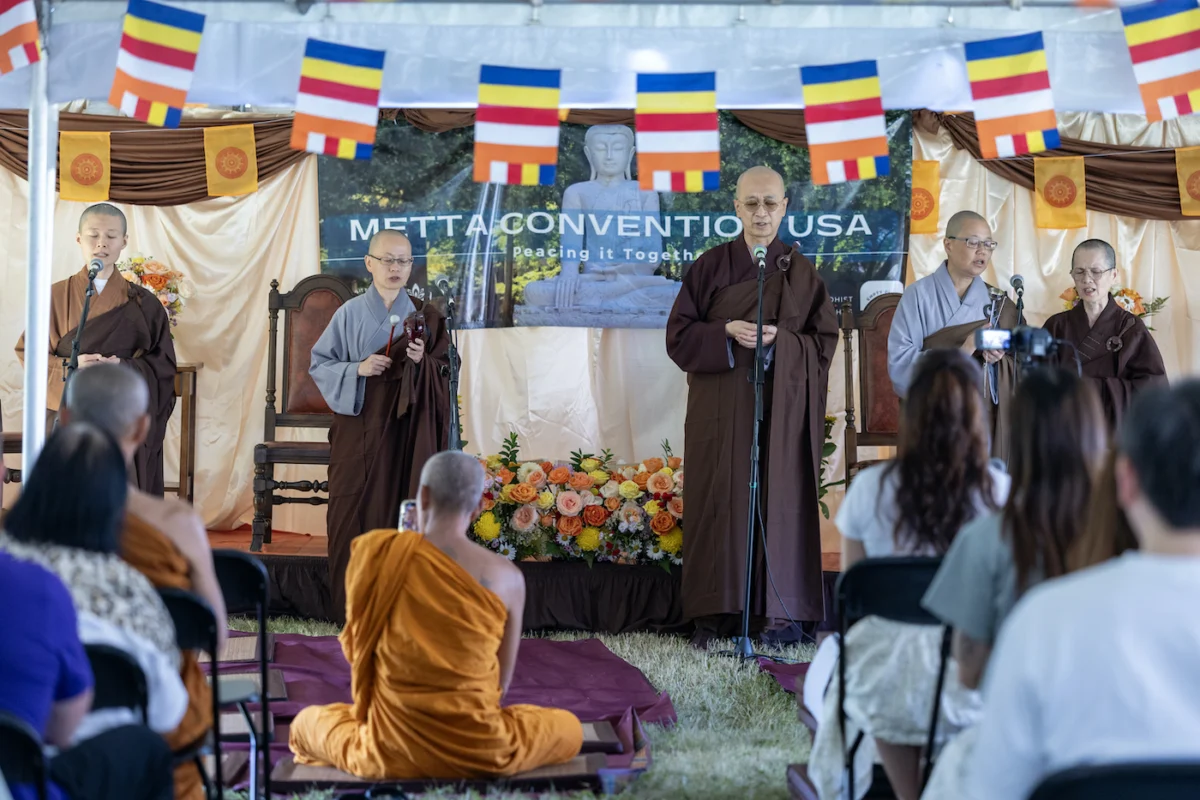
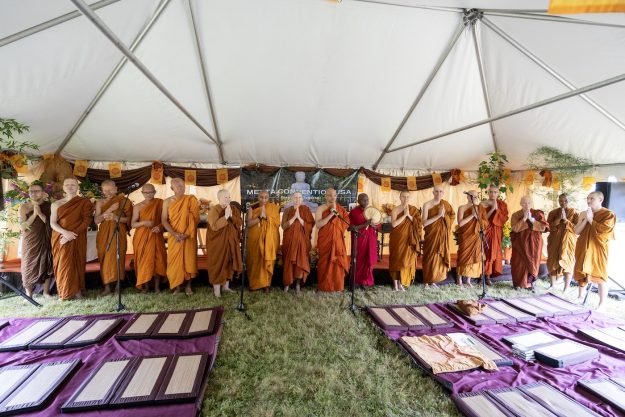
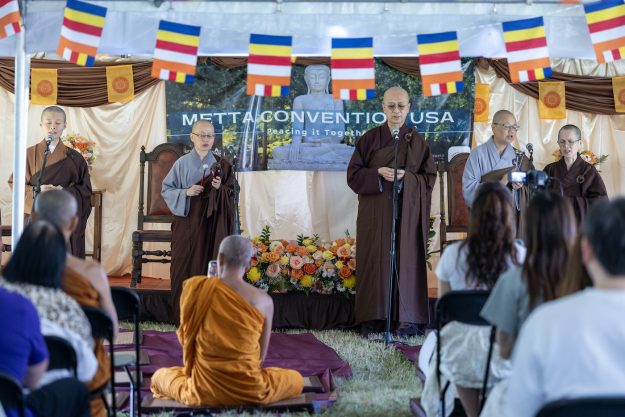
On July 18-19, amidst the gentle drumming of rain on tent fabric and the serene embrace of Empty Cloud Monastery in West Orange, New Jersey, a diverse assembly of monastics and laypeople convened. Their shared purpose: to delve into the profound discourse on peace. This historic gathering marked the inaugural Metta Convention USA, a landmark event meticulously organized by Metta Centre, an Australian Buddhist nonprofit, in collaboration with Buddhist Insights, a New York-based nonprofit. The convention’s overarching aim was to bridge divides across Buddhist traditions and make timeless Buddhist teachings relevant and accessible to a global audience.
A Transnational Endeavor for Peace
The Metta Convention, a nonsectarian Buddhist conference that has become a cornerstone event in Australia for fostering dialogue, sharing teachings, and engaging in meditation practice, expanded its reach internationally for the first time. Metta Centre, with its established track record of bringing together esteemed teachers, monastics, and practitioners, partnered with Buddhist Insights, an organization dedicated to creating accessible Buddhist resources. Their combined vision is to cultivate connections across the vast landscape of Buddhist thought and practice, a mission that found a welcoming home at Empty Cloud Monastery.
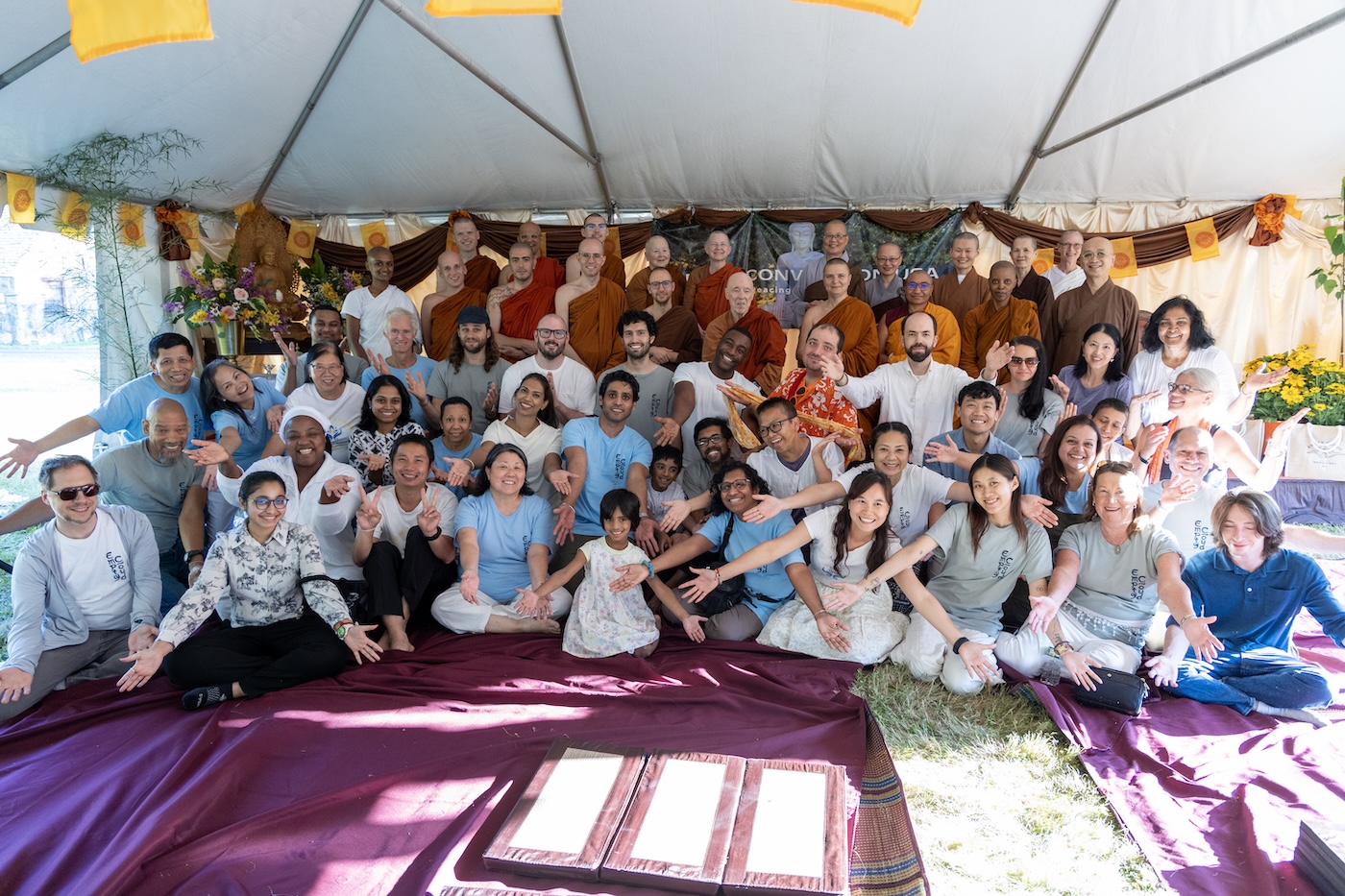
Empty Cloud Monastery itself provides a unique setting for such a contemplative gathering. Situated on a tranquil cul-de-sac in West Orange, this medieval-style property, once a Catholic monastery, has been transformed into a gender-inclusive sanctuary rooted in the Theravada tradition. Cofounded by Bhante Suddhaso and Ayya Soma, the monastery is described by Ven. Sobhana, who leads the resident community, as "an island of peace and serenity amid the busyness of the New York-New Jersey area." Its rolling lawns seamlessly blend into a public park, where mature sycamore trees stand as silent witnesses to the palpable sense of peace that permeates the grounds.
"Peacing it Together": A Weekend of Wisdom and Practice
The convention’s theme, "Peacing it Together," resonated deeply throughout the weekend, underscored by the diverse backgrounds and perspectives of the participants. Monks and teachers from various Buddhist traditions, hailing from different corners of the globe, shared their wisdom within an open tent adorned with vibrant flowers. The event drew attendees of all ages, with many more joining virtually via a livestream, underscoring the organizers’ commitment to broad accessibility. The convention was offered free of charge and open to all, a testament to the spirit of generosity that underpinned the event, made possible by the dedicated efforts of numerous volunteers. The culinary offerings were described as "amazing spreads of food," appearing with an almost magical abundance. The weather, characteristic of an East Coast summer, provided a dramatic backdrop, transitioning from the downpours of Saturday to clear blue skies on Sunday, mirroring the ebb and flow of discussions and practices. Participants were actively encouraged to engage through guided meditations, question-and-answer sessions, and small group discussions held across the monastery grounds.
Cultivating Inner Peace as the Foundation for World Peace
As the meteorological tapestry shifted, so too did the flow of wisdom, with certain core teachings on peace emerging repeatedly. A central tenet emphasized was the understanding that global peace begins with cultivating inner peace. Ven. Sobhana articulated this by stating that while challenges and change are inherent to life, it is our response to these circumstances that ultimately determines our level of peace. Instead of succumbing to negativity, challenges can be reframed as opportunities for growth. U.S.-based teacher Ven. Revata likened this process to using challenges as fertilizer, enabling personal development, much like the rain that poured down during his discourse. Echoing this sentiment, Ayya Soma quoted a Zen proverb: "Obstacles do not block the path. They are the path."

This philosophy was further illuminated by Rev. Doyeon Park, who advises on Buddhist matters for prestigious institutions like the United Nations, Columbia University, and New York University. Rev. Park shared an anecdote about encountering a psychic in New York City. When offered a solution to a personal problem, she declined, recognizing that while the psychic might offer temporary relief, new challenges would inevitably arise. The true resolution, she realized, lay in developing a capacity to be comfortable with life’s inherent uncertainties. Ven. Sudhamma, founder of the Charlotte Buddhist Vihara in North Carolina, eloquently summarized this perspective: "I don’t have faith I’ll get everything I need, but I have faith I’ll be OK no matter what."
The Practice of Compassion and Detachment
The cultivation of compassion was identified as a vital tool for navigating life’s complexities and preventing burnout. Ven. Courtin, a world-touring dharma teacher, explained that an increased capacity for compassion stems from diligent work on one’s own mind. Practices such as mindfulness and loving-kindness are instrumental in fostering a state of inner joy, lightness, and buoyancy, leading to a reduction in suffering, both internal and external. Ven. Courtin further elaborated that burnout is not a consequence of compassion but rather of attachment. When confronted with suffering, an attached self can react with anger, sadness, and aversion, ultimately leading to exhaustion. By relinquishing attachment, individuals can mitigate these negative emotions and act with greater compassion. Crucially, it is also essential to understand one’s own limits and capacity for coping. As Ven. Courtin advised, to effectively practice more compassion, one must first tend to the inner landscape of the mind.
Translating Inner Peace into Worldly Action
The convention strongly underscored the imperative for inner peace to translate into tangible actions in the world. Rev. Park observed a prevalent disconnect where individuals aspire to peace yet engage in daily choices that undermine it. She emphasized, "it’s what we do in our daily lives that matters." This interconnectedness was metaphorically described as a bird needing two wings: wisdom and compassion. Meditation serves as the "meditation wing," fostering inner peace and wisdom, while the "action wing" is realized through the application of that wisdom in compassionate action.
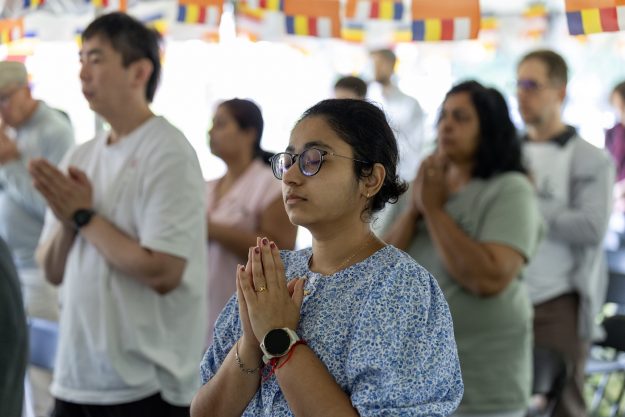
The venerables present exemplified this dual practice. Ven. Sudhamma works with individuals struggling with addiction in North Carolina, while Ven. Courtin established the Liberation Prison Project, an organization dedicated to supporting incarcerated individuals. Ven. Bhikkhu Bodhi, a renowned translator of Buddhist scriptures, cofounded Buddhist Global Relief, a nonprofit addressing global humanitarian needs. Ven. Clear Grace, through her nonprofit "the Traveling Nunk," utilizes a mobile monastery—a camper van—to provide outreach to communities facing systemic oppression. These are just a few of the many examples of how Buddhist principles are being translated into impactful action.
The Power of Embodied Practice and Mindful Engagement
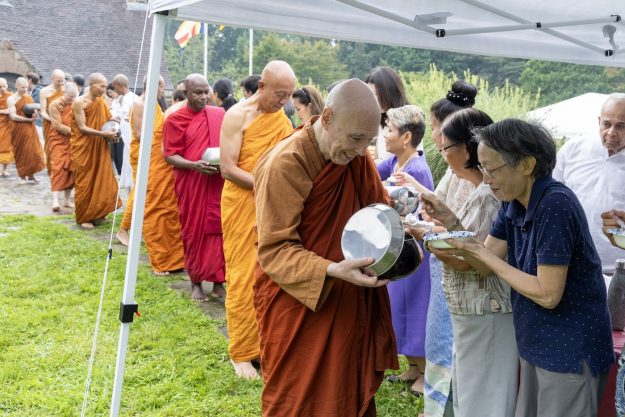
The practice of walking was highlighted as a significant component of the Buddha’s own ministry, traversing villages to share the dharma. In the West, monastics walking in their robes can elicit curiosity, described by Ven. Sumitta, founder of Dhamma USA, as akin to "goldfish," serving as an "advertising tool for loving-kindness." Ven. Clear Grace drew a parallel to the civil rights movement, where walking was a potent expression of nonviolence. Her experience walking as a Buddhist in the American South, from Mississippi Main Streets to Confederate trailer parks, became a "sacred act . . . to heal the land in places that need it most." She poignantly remarked, "When the world is on fire, to see someone walking for peace is an invitation."
This principle extends to all forms of practice. Ven. Satima shared her experience of coming from a large Southern Baptist family, where her monastic path was perceived as belonging to a cult. While unable to overtly preach her beliefs back home in Arkansas, she found that embodying generosity, loving-kindness, and mindfulness fostered a less defensive, more curious response from her family. Ven. Sanathavihari further stressed the importance of observing how teachers interact with others, not merely listening to their words. In essence, the most effective way to share the dharma is to live it.
Addressing Global Conflict Through Buddhist Principles
The convention, while held in a tranquil setting, did not shy away from addressing the realities of the global political landscape. In West Orange, a region proximate to major centers of power, Ven. Sudhamma posed a pertinent question: "Any greed, hatred, or delusion anyone’s noticing at the moment?"
Ven. Bhikkhu Bodhi reflected on the day’s headlines, citing ongoing conflicts in Ukraine, Iran, and Palestine. He posed a thought-provoking question: what would be the global impact if all nations adhered to the Five Precepts? This would signify an end to killing, territorial aggression, and the spread of propaganda. He envisioned a world where nations embraced complete disarmament, recognizing the futility of war in resolving conflict. The trillions of dollars currently allocated to military spending, he suggested, could be redirected to transform economic, social, and environmental systems. "When you adopt the five precepts," he stated, "you give immeasurable safety, security, and well-being to countless beings."
While acknowledging the immense complexity of resolving global conflicts, Ven. Bhikkhu Bodhi affirmed that by personally observing the Five Precepts, individuals become "sources and ambassadors of peace to the rest of the world." This principle extends to civic engagement. He reminded attendees of their power to vote and participate in citizen action groups, including Buddhist organizations such as One Earth Sangha and the Buddhist Coalition for Democracy. He clarified that this is not about "politicizing Buddhism but taking conscientious action based on Buddhist principles," a pathway toward achieving systemic peace.
Extending Compassion to All Beings, Even Adversaries
The convention emphasized that true compassion must extend to all sentient beings, including those who cause harm. While compassion is readily extended to the vulnerable—those living in poverty, sickness, or war zones, or as Ven. Courtin put it, "a few animals and a few children"—it is equally crucial to extend it to their oppressors, including serious criminals and those in positions of wealth and power. This approach involves meeting such individuals with wisdom and compassion. Ven. Courtin offered a novel perspective: "Thank you, Mr. President, for showing me how not to act," followed by the application of wisdom.
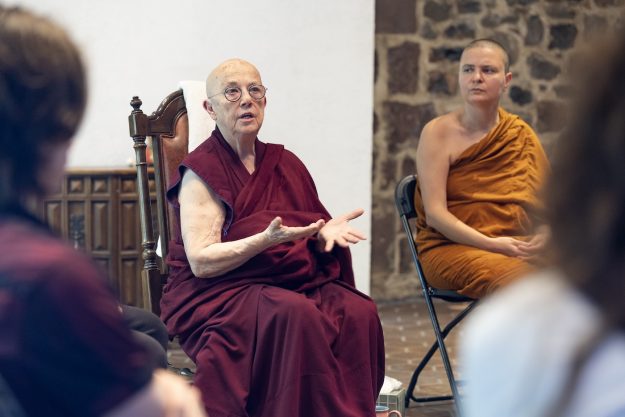
Leading a forgiveness meditation, Ven. Zhai invited participants to extend forgiveness to those who have wronged them, emphasizing that all sentient beings are potential Buddhas deserving of respect and an open heart. Ven. Suddhaso reminded attendees that just as humans are not consistently perfect, patient, and kind, it is unrealistic to expect such qualities from others. Instead, focusing on their inherent goodness and acknowledging their efforts is more constructive. Even within monastic communities, conflicts can arise, as noted by Ven. Soma, who humorously suggested that most disagreements are over trivial matters like misplaced pots, urging participants to focus on what truly matters.
Ven. Sudhamma proposed that when faced with criticism, one should first assess its validity, acknowledging that everyone has blind spots. She cautioned against demonizing opposing viewpoints, as this closes off opportunities for finding common ground. By listening with an open mind, even small truths can be found, fostering connection. She encouraged the practice of directing loving-kindness towards individuals one finds challenging, even for a few minutes daily. In instances of negative behavior, she advised taking action after first expressing love, stating, "Before you do, tell them, ‘I love you.’ And then get ’em."
The Long Path to Enlightenment and Practical Application
Ven. Satima cautioned against a "McDonald’s attitude" towards Buddhism, characterized by a desire for a quick, drive-through approach to enlightenment. The cultivation of peace, both inner and outer, is a lifelong endeavor requiring deep faith and may often feel distant. To make these teachings practical and actionable, speakers underscored the importance of grounding them in everyday reality, understanding "the nuts and bolts of karma."
Even a minute of daily practice, Ven. Satima suggested, by closing one’s eyes and reciting words from the Metta Sutta, can have a profound impact. Ven. Nanda, president of the Long Island Buddhist Meditation Center, recommended reciting the phrase, "May all beings be well and safe," each morning before leaving home, perhaps placing a reminder on a car’s dashboard or a front door. Ven. Nisabho, founder of Washington’s Clear Mountain Monastery Project, likened meditation to brushing one’s teeth—a daily mental hygiene practice to cleanse the mind. He advised that minor annoyances in relationships can be addressed by pausing before speaking, allowing anger to subside and responding from a place of loving-kindness.
Ven. Nanda offered a lighthearted assurance: "Joy and happiness, 100 percent guaranteed."
The Enduring Significance of Gatherings for Peace
Regardless of external circumstances, events like the Metta Convention hold significant value. They serve as powerful reminders that the dharma manifests in diverse forms and is accessible to all. The intrinsic connection between inner and outer peace was highlighted, likened to "twin springs" that nourish each other. As Ven. Sobhana articulated, "There’s no security or stability in the world, but there is at the end of this path."
This gathering was characterized by its generosity, energy, and richness. Participants shared umbrellas and homemade food during the downpour, and later spread out on sunlit grass as the skies cleared. Although a small group in a quiet New Jersey town, the collective aspiration was significant. Ven. Nanda reminded attendees that "If we’re all peaceful and mindful, we can build this up—to our friends, family, society." The ripple effect of their hearts and actions, it was envisioned, would contribute to the peaceful world that Ven. Bhikkhu Bodhi had so eloquently described.
The question of whether the Metta Convention will return to the United States remains open, dependent on community desire, according to Tina Ng, Metta Centre founder. "If there’s a desire for gatherings like this to continue, Metta Centre will do our part to make that happen, and help the network grow," she stated. By fostering connections between temples, teachers, and communities through innovative initiatives, the dharma has the potential to spread exponentially across the globe.
In tribute to the convention’s Australian origins, a quote from Ven. Courtin offers a concise yet profound perspective: "Every day, rejoice and delight, use it for good, help yourself and others, and then you’ll die. It’s very simple." Indeed, with such simplicity, the path to peace unfolds.

