

The introduction of calorie labeling on menus in national chain restaurants, a move intended to empower consumers with nutritional information, has yielded a perplexing outcome: the presence of healthier choices can paradoxically drive individuals toward even more indulgent and less nutritious decisions. This phenomenon, rooted in a fascinating and often counterintuitive aspect of human psychology, challenges the straightforward assumption that more information inherently leads to better choices. Despite the widespread implementation of menu labeling, studies suggest its impact on reducing overall calorie consumption has been negligible, raising questions about the effectiveness of such interventions and the complex factors influencing dietary behavior.
The Mandate for Calorie Information and Its Limited Impact
In 2017, a significant regulatory shift occurred in the United States with the mandatory display of calorie information on menus at national chain restaurants. The aim was clear: to equip diners with the data necessary to make informed decisions about their food intake outside the home, potentially curbing excessive calorie consumption and promoting healthier eating habits. The logic seemed sound; armed with caloric data, consumers could more effectively manage their daily energy balance. However, empirical evidence has painted a different picture. Research indicates that these calorie labels have had a minimal, almost insignificant, effect on consumer choices, with studies showing an average reduction of a mere eight calories per meal. This underwhelming outcome suggests that the mere presence of nutritional data does not automatically translate into substantial dietary shifts.
A History of Ineffective Nutritional Interventions
The limited success of calorie labeling is not an isolated incident in the realm of public health interventions. The history of nutritional policy is replete with examples where well-intentioned regulations have struggled to achieve their desired behavioral outcomes. For instance, the fierce industry opposition to front-of-pack traffic light labeling systems, which use color-coding to indicate nutritional value, can be seen as an indicator of its potential effectiveness. Conversely, the relatively smooth passage and subsequent limited impact of calorie labeling regulations might have foreshadowed their futility.
A notable precedent was set in 2012 when McDonald’s voluntarily began posting calorie information nationwide, following a labeling mandate in New York City that had been found to have no discernible effect on consumer behavior. This voluntary initiative by a major fast-food corporation was met with praise, but it also served as an early indicator that such measures might not fundamentally alter consumer habits. While calorie labeling might enhance a restaurant’s perception of being concerned for customer well-being, studies suggest it does so without significantly deterring the consumption of popular, high-calorie items like the Big Mac.
The Paradox of "Healthy" Options
Concurrent with its calorie labeling efforts, McDonald’s also announced plans to introduce seasonal produce to its menu. On the surface, this appears to be a positive step towards offering healthier alternatives. However, research has uncovered a peculiar psychological phenomenon: the introduction of a healthy option can, in some instances, lead individuals to make even less healthy choices. This counterintuitive effect stems from a complex interplay of psychological mechanisms.

Vicarious Goal Fulfillment: The Illusion of Progress
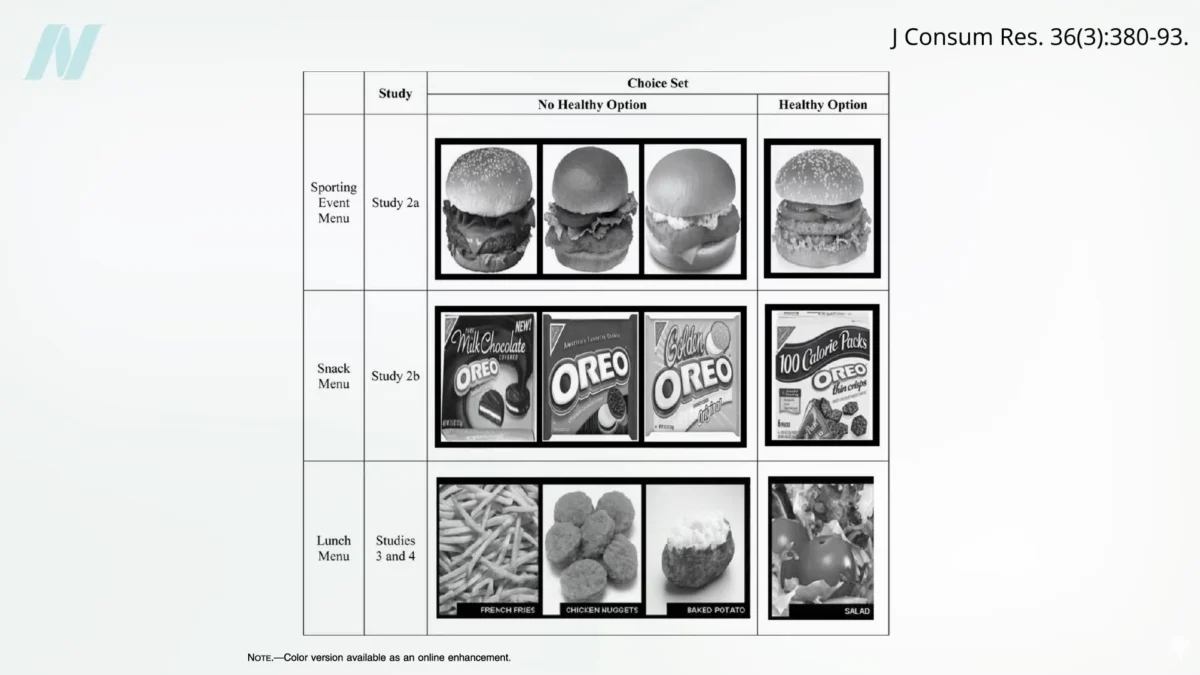
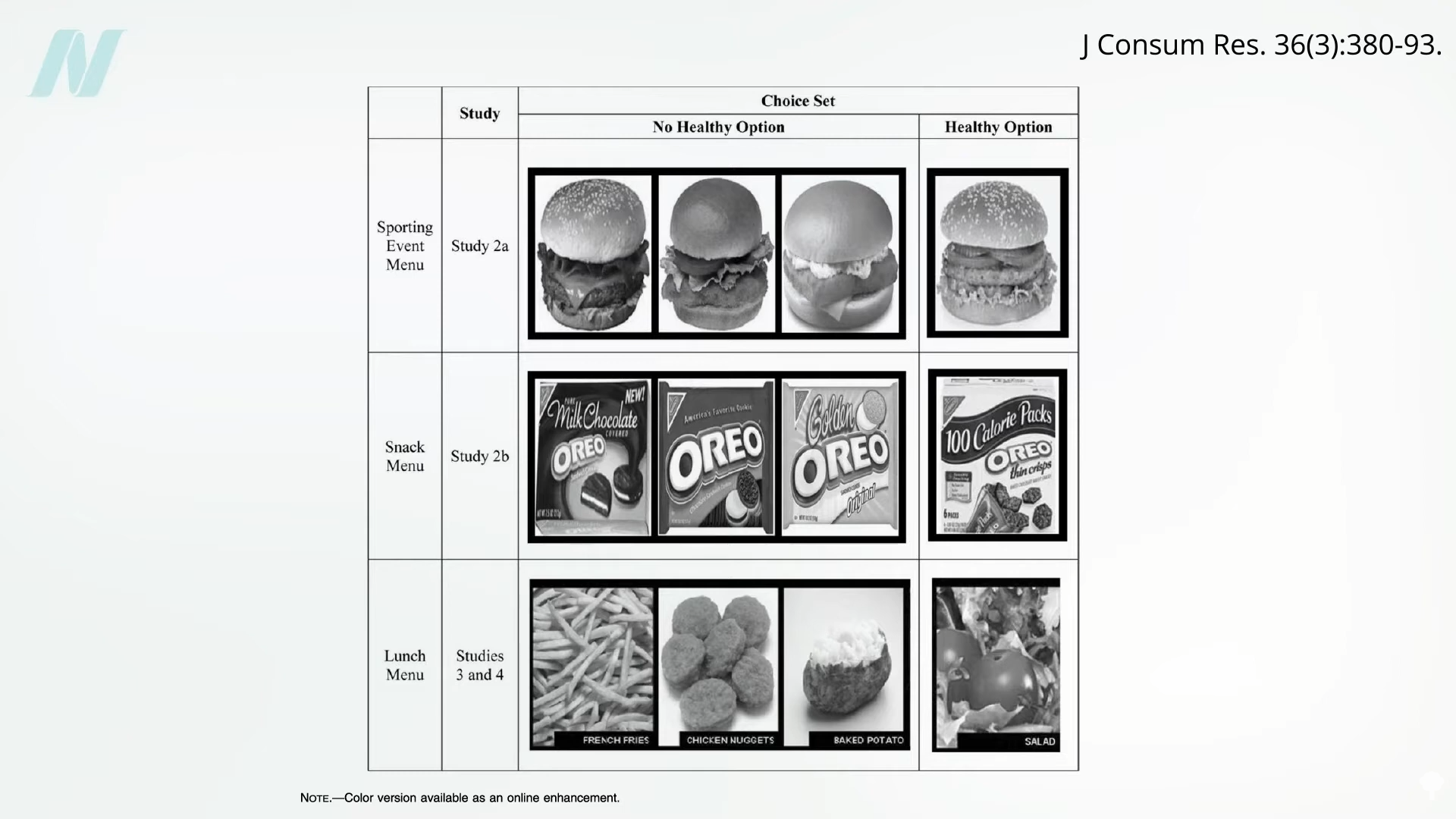
One of the primary explanations for this phenomenon is termed "vicarious goal fulfillment." This concept, explored in academic studies, suggests that the mere presence of a healthy option can create a psychological sense of having already achieved a health-related goal. For example, when presented with a choice of side dishes, such as French fries, a baked potato, or a side salad, people often opt for the more neutral baked potato over the fries if no healthier option is available. However, when a side salad is introduced as a third option, a surprising shift occurs. Instead of more people choosing the salad, the indulgence in French fries often triples. This happens because the presence of the salad allows individuals to mentally "check off" the healthy choice, thereby liberating them to indulge in less healthy options.
This effect extends to main courses as well. In experiments comparing choices between a bacon cheeseburger, a chicken sandwich, and a fish sandwich, researchers found that when the fish sandwich was replaced with a veggie burger, the preference for the bacon cheeseburger doubled. This demonstrates that the mere consideration of a healthy alternative can create a psychological buffer, enabling individuals to justify more indulgent choices. The underlying theory is that by seeing a healthy option, people make a mental note to choose it at some future, unspecified time. This perceived progress towards a health goal provides a subconscious justification for indulging in less healthy options in the present.
Self-Licensing: Rewarding Progress with Indulgence
Closely related to vicarious goal fulfillment is the psychological concept of "self-licensing." This occurs when individuals unconsciously grant themselves permission to deviate from their goals after having made a decision that aligns with them. For instance, someone who has recently engaged in healthy behaviors, such as dieting or exercising, might feel justified in indulging in an unhealthy treat. This perceived "good deed" effectively licenses the subsequent indulgence, creating a self-defeating cycle.
This effect has been observed in various contexts. Studies have shown that smokers who believe they are taking vitamin C supplements, a perceived health benefit, subsequently smoke more cigarettes than those who believe they are taking a placebo. The subconscious reasoning might be: "I’ve done something good for my health, so I can afford to engage in this unhealthy behavior." This "rewarding" of perceived good behavior with indulgence can paradoxically undermine overall health goals.
The "What the Hell Effect" and Perceptual Distortions
Another significant psychological mechanism at play is the "what the hell effect." This phenomenon describes the tendency for individuals, particularly those on diets, to abandon their restrictive eating patterns entirely once they have deviated from their plan, even if the deviation is minor. The logic is, "I’ve already had one forbidden cookie, so I might as well eat the whole bag." This all-or-nothing mindset can lead to significant overconsumption of unhealthy foods.
This effect is amplified by the "health halo" effect, where the presence of a healthy item can make an otherwise unhealthy item appear less so. For example, when participants were shown a burger alone, they estimated its calorie count to be around 734 calories. However, when the same burger was presented with three celery sticks, the estimated calorie count dropped to 619 calories. This perceptual distortion occurs because the juxtaposition of the burger with a low-calorie vegetable like celery makes the burger seem comparatively healthier, even though most individuals are aware that celery has its own caloric content. This halo effect can extend to ordering habits, with people being more likely to order dessert or sugary drinks alongside a "healthier" sub sandwich, even if the sub itself is calorie-dense.
The Illusion of Health: Manipulating Perceptions
The manipulation of perceptions through the health halo effect is a powerful tool. Research has demonstrated that simply adding a reference to healthy foods can significantly alter how consumers perceive the calorie content of less healthy options. For instance, when a picture of a Big Mac was accompanied by the text "For your health, eat at least five fruits and vegetables per day," the estimated calorie count of the burger dropped from 646 calories to 503 calories. This illustrates how the mere suggestion of healthy eating, even when unrelated to the specific product, can create a psychological illusion of lower calorie density.
This subtle psychological manipulation can lead to unintended consequences. Restaurants offering salads or fruit alongside their main offerings may gain accolades and boost consumer loyalty, but without necessarily improving the overall health outcomes of their patrons. The focus shifts from making genuinely healthier choices to feeling a sense of accomplishment through perceived healthy actions, which can then license further indulgence.
Broader Implications for Public Health Policy
The findings surrounding these psychological phenomena have significant implications for the design of public health interventions. Simply providing calorie information or offering healthy options may not be sufficient to drive meaningful behavioral change. Instead, policymakers and health professionals may need to consider more nuanced strategies that account for the complex and often irrational nature of human decision-making.
Potential Strategies and Considerations:
- Framing and Choice Architecture: Designing menus and ordering systems to subtly guide consumers towards healthier choices, beyond simply listing calorie counts. This could involve strategically placing healthier options, using descriptive language that emphasizes positive attributes, or limiting the number of indulgent choices available.
- Education on Psychological Biases: Educating consumers about these psychological effects, such as self-licensing and vicarious goal fulfillment, could empower them to recognize and counteract these tendencies in their own decision-making.
- Holistic Nutritional Guidance: Moving beyond single-metric interventions like calorie counting to offer more comprehensive nutritional guidance that considers the overall dietary pattern, macronutrient balance, and the importance of mindful eating.
- Industry Responsibility: Encouraging food companies to adopt responsible marketing practices that do not inadvertently exploit these psychological biases. This might involve a greater focus on promoting genuinely healthy products and avoiding misleading associations.
- Long-Term Behavioral Change Programs: Recognizing that sustainable dietary change often requires sustained effort and behavioral support, rather than relying on single-point interventions.
The journey towards healthier eating is clearly more complex than a simple equation of information equals good choices. The human mind, with its intricate biases and psychological quirks, plays a profound role in shaping our dietary decisions. Understanding these underlying mechanisms is crucial for developing effective strategies that genuinely support public health and well-being. The paradox of healthy options serves as a stark reminder that well-intentioned interventions must be carefully designed to navigate the labyrinth of human psychology.

