

The unequivocal declaration by the International Agency for Research on Cancer (IARC), a specialized agency of the World Health Organization (WHO), that processed meats, including familiar items like bacon, ham, hot dogs, and lunch meats, are carcinogenic to humans has ignited a fierce debate, drawing sharp rebukes from the meat industry and prompting calls for greater public health awareness from cancer organizations. This classification, the highest level of certainty for a carcinogen, places processed meats in the same category as tobacco smoking and asbestos, a designation that has sent ripples through both industrial and public health sectors.
Genesis of a Cancer Consensus: The IARC’s Mission
The establishment of the IARC itself has a compelling origin story, rooted in a profound act of personal tragedy that underscored a broader societal need for dedicated cancer research and prevention. In the early 1960s, a grieving husband’s letter, detailing his wife’s suffering from cancer, served as a catalyst. This deeply personal plea cascaded into an open letter addressed to global leaders, advocating for governments to allocate a significant portion of their military budgets – specifically, half of one percent – towards combating cancer, a disease that weighed heavily on humanity. This impassioned call to action, born from loss, ultimately led to the creation of the IARC within the World Health Organization just 18 months later. The agency’s foundational mission was clear: cancer prevention.
The Landmark Monograph: A Deep Dive into Meat’s Carcinogenic Potential
The IARC is widely recognized for its comprehensive monographs, exhaustive reports that meticulously evaluate the carcinogenic potential of various substances. These monographs are considered authoritative, offering a near-definitive assessment of whether a particular agent causes cancer. The agency’s 114th monograph, published in 2018, focused specifically on the complex relationship between meat consumption and cancer. This pivotal report was the culmination of an extensive review process, involving the deliberation of over 800 scientific studies and a thorough examination of existing scientific literature.
A panel of 22 international experts from 10 different countries convened to analyze the evidence. Their rigorous evaluation led to a significant conclusion: the consumption of red meat was classified as "probably carcinogenic to humans" (Group 2A), indicating a level of evidence that suggests a likely link to cancer. However, the classification for processed meat was more definitive. The experts unanimously placed processed meat into Group 1, the highest category of carcinogenicity, signifying that the consumption of processed meat is definitively carcinogenic to humans based on the strongest available scientific evidence.
Defining the Threat: What Constitutes Processed Meat and Its Cancer Link
The IARC’s definition of processed meat is broad, encompassing any meat that has been transformed through salting, curing, fermentation, smoking, or other processes to enhance flavor or improve preservation. This definition includes common dietary staples such as bacon, ham, hot dogs, breakfast sausages, and various lunch meats, including turkey deli slices.
The primary cancer identified as being causally linked to the consumption of processed meat is colorectal cancer, which encompasses cancers of the colon and rectum. This form of cancer represents a significant global health burden. Worldwide, colorectal cancer is the second leading cause of cancer death, surpassed only by lung cancer, which is largely attributed to smoking. In the United States, colorectal cancer is also the second leading cause of cancer-related mortality. Furthermore, it is a growing concern that colorectal cancer is increasingly affecting younger demographics, not just older individuals, making it a leading cause of cancer and cancer-related death earlier in life.
Industry’s Rebuttal: Accusations of Alarmism and Tactics of Discreditation
The IARC’s findings were met with immediate and forceful opposition from the meat industry. Representatives from the industry characterized the classification as a "dramatic and alarmist overreach." This sentiment was echoed by an Italian agricultural group, which issued a press release with the provocative headline, "Just say no to terrorism on meat."
The backlash extended to concerted efforts to undermine the IARC’s funding and influence. The Canadian meat industry, for instance, actively lobbied the Canadian government, urging the Health Minister to withdraw all financial support for the IARC following its classification of meat. Similarly, the U.S. meat industry engaged in parallel efforts to cut off funding to the agency.
These actions are indicative of a broader trend where the IARC finds itself "under siege by corporate interests" seeking to challenge its cancer evaluations, not only concerning meat but also other substances like Monsanto’s Roundup pesticide. These corporate entities have employed strategies aimed at discrediting the agency and eroding its financial backing. Internal documents have previously revealed instances where scientists associated with Monsanto allegedly discussed "ghost-writing" scientific papers and suppressing research that contradicted corporate claims about the safety of Roundup.

The chemical industry has also joined this chorus of opposition, labeling the IARC monographs as "dubious and misleading." These tactics bear a striking resemblance to those historically employed by the tobacco industry, a parallel that has been drawn by public health advocates. The underlying strategy appears consistent: to sow doubt, discredit scientific findings, and protect industry profits, regardless of the potential public health consequences. This corporate playbook, characterized by delaying tactics and the discrediting of scientific consensus, has been observed across various industries, from tobacco and alcohol to the food sector.
Challenging the Narrative: IARC’s Approach to Carcinogen Identification
A common talking point deployed by industry critics is that the IARC is predisposed to labeling many substances as carcinogenic. However, this assertion overlooks the agency’s rigorous selection process. The IARC typically initiates investigations into substances for which there is already a "body of scientific literature indicating a degree of carcinogenic hazard to humans." This means the agency is not randomly testing substances but rather focusing on those that have already raised concerns within the scientific community.
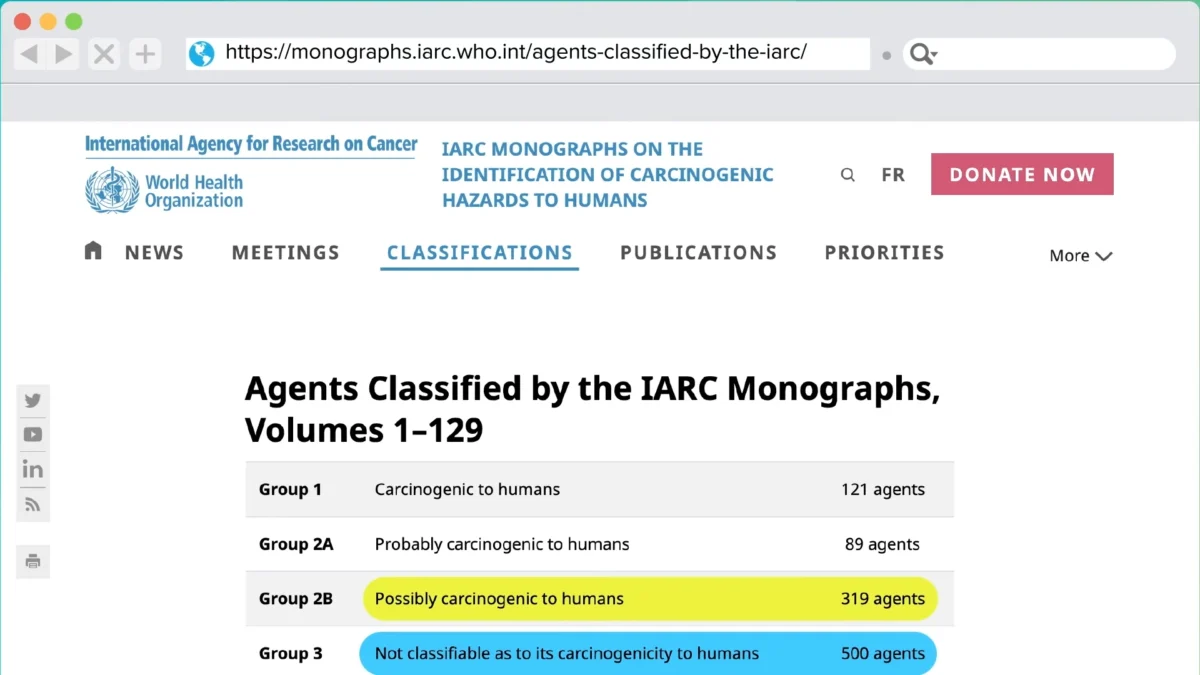
The agency’s own data supports this. A significant majority of the agents evaluated by the IARC are ultimately classified as "possibly carcinogenic to humans" (Group 2B) or have insufficient data for a definitive determination. Only a smaller proportion are classified as definitively carcinogenic to humans (Group 1) or probably carcinogenic to humans (Group 2A). This nuanced approach underscores the IARC’s commitment to evidence-based evaluation, rather than a blanket condemnation of various agents.
Official Responses: Navigating Public Health Guidance Amidst Industry Pressure
In response to the wave of criticism and requests for clarification following the publication of its report on meat and cancer, the World Health Organization issued a measured response. The organization clarified that the IARC’s report was not intended as a directive to cease all consumption of processed meat. Instead, the report aimed to inform the public about the potential health risks associated with these products. The WHO’s stance can be summarized as: while individual dietary choices are paramount, the scientific evidence indicates that reducing the intake of processed meats can significantly lower the risk of developing a leading cause of cancer death.
The IARC itself maintains its role as a research organization dedicated to evaluating scientific evidence on carcinogens. The agency emphasizes that its findings provide the scientific basis for public health policies, but the implementation of these policies and individual behavioral changes are ultimately the responsibility of governments and individuals.
Other prominent cancer organizations have offered varying degrees of clarity on the issue. The American Cancer Society, for instance, has been unequivocal regarding alcohol consumption, stating that "it is best not to drink alcohol" to reduce cancer risk. However, their guidance on processed meats has been somewhat more cautious, suggesting that limiting intake may be sufficient.
The European Commission, on the other hand, has provided clearer recommendations. To mitigate cancer risk, they advocate for a diet rich in whole grains, pulses, fruits, and vegetables, while also recommending the limitation of sugary, fatty, and salty foods. Crucially, the European Commission explicitly advises the avoidance of soda and other processed meats. When questioned about the existence of a safe level of processed meat consumption, the IARC’s response was direct: it remains unknown whether any safe level of consumption exists.
Broader Implications: Public Health and the Future of Food Consumption
The IARC’s classification of processed meat as a Group 1 carcinogen has far-reaching implications. It serves as a stark reminder of the complex interplay between dietary choices, industrial practices, and public health outcomes. The robust opposition from the meat industry highlights the significant economic interests at stake and the lengths to which these industries may go to protect their markets.
This situation underscores the critical importance of independent scientific research and the need for transparency in food production and marketing. It also places a greater onus on public health organizations and government bodies to effectively communicate complex scientific findings to the public, enabling informed decision-making.
The debate also extends beyond cancer. Emerging research is exploring the broader health impacts of processed meat consumption, including its effects on lung function. As the scientific understanding of the health consequences of our dietary habits continues to evolve, the evidence consistently points towards a need for greater caution regarding the consumption of processed foods. The IARC’s classification of processed meat is not merely a scientific finding; it is a public health imperative that demands careful consideration by individuals, policymakers, and industries alike. The ongoing dialogue and the actions taken in response to this classification will undoubtedly shape future public health strategies and dietary recommendations.

