

Weight stigma, often described as the "last acceptable form of bias," is a pervasive and deeply entrenched societal problem, particularly evident within healthcare settings. This discrimination and stereotyping of overweight and obese individuals manifests in myriad ways, impacting daily life and, critically, the quality of medical care received. Research consistently highlights the significant and often detrimental effects of this bias, underscoring the urgent need for greater awareness and systemic change.
The Daily Reality of Weight Stigma
The lived experiences of individuals facing weight stigma are starkly illustrated by numerous studies. One impactful investigation involved fifty overweight women who meticulously documented instances of weight-based discrimination over a single week. The findings were alarming, with participants recording over a thousand instances of stigmatization. On average, these women encountered such bias approximately three times per day, encompassing verbal harassment (e.g., insults or name-calling), physical barriers (such as difficulty fitting into public seating), and perceived differential treatment in commercial settings (like receiving poorer service in restaurants or stores).
While the experiences of women are well-documented, obese men also face discrimination, though at a lower reported rate. Studies suggest that obese men experience roughly one-third the amount of discrimination reported by women of similar size, with stigma potentially occurring on a daily basis for them. This gender disparity in reported discrimination is a critical aspect of understanding the multifaceted nature of weight stigma.
Empirical Evidence of Bias
The reality of weight stigma is not merely anecdotal; it is supported by robust empirical evidence. Research utilizing professional actors to simulate job applicants has demonstrated significant discrimination against individuals appearing overweight due to theatrical prostheses. These actors were substantially more likely to face rejection or bias compared to when they appeared at their normal weight. This employment bias was found to be particularly pronounced against overweight women, further exacerbating their challenges in the professional sphere.
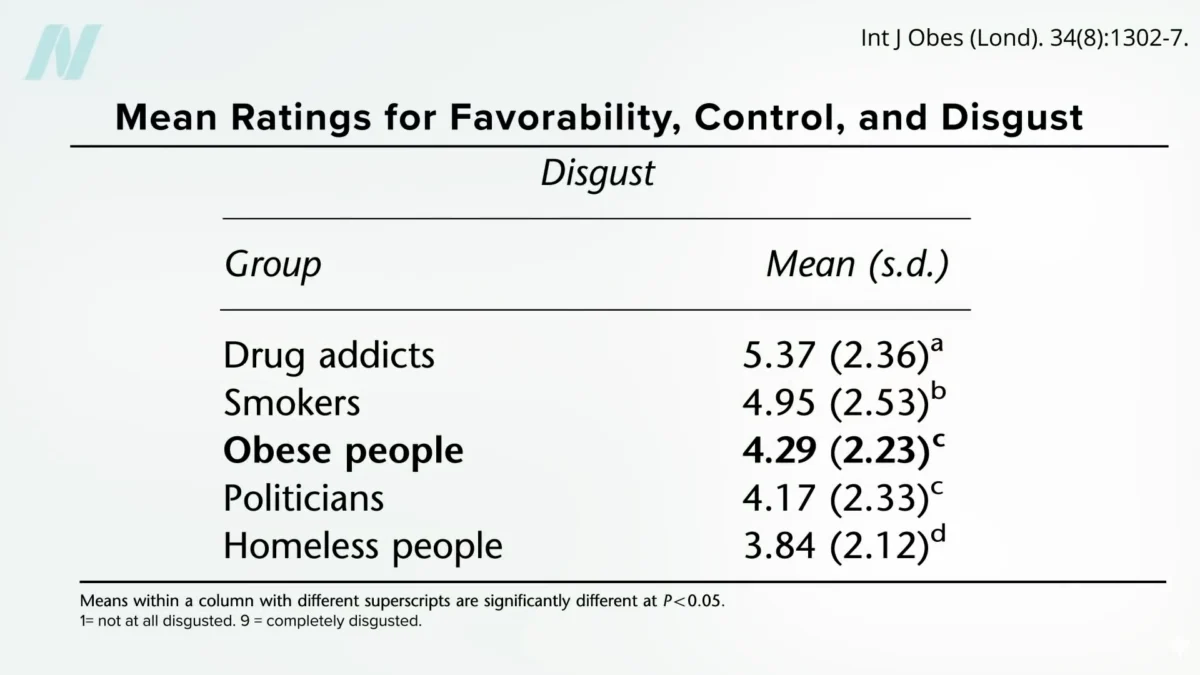
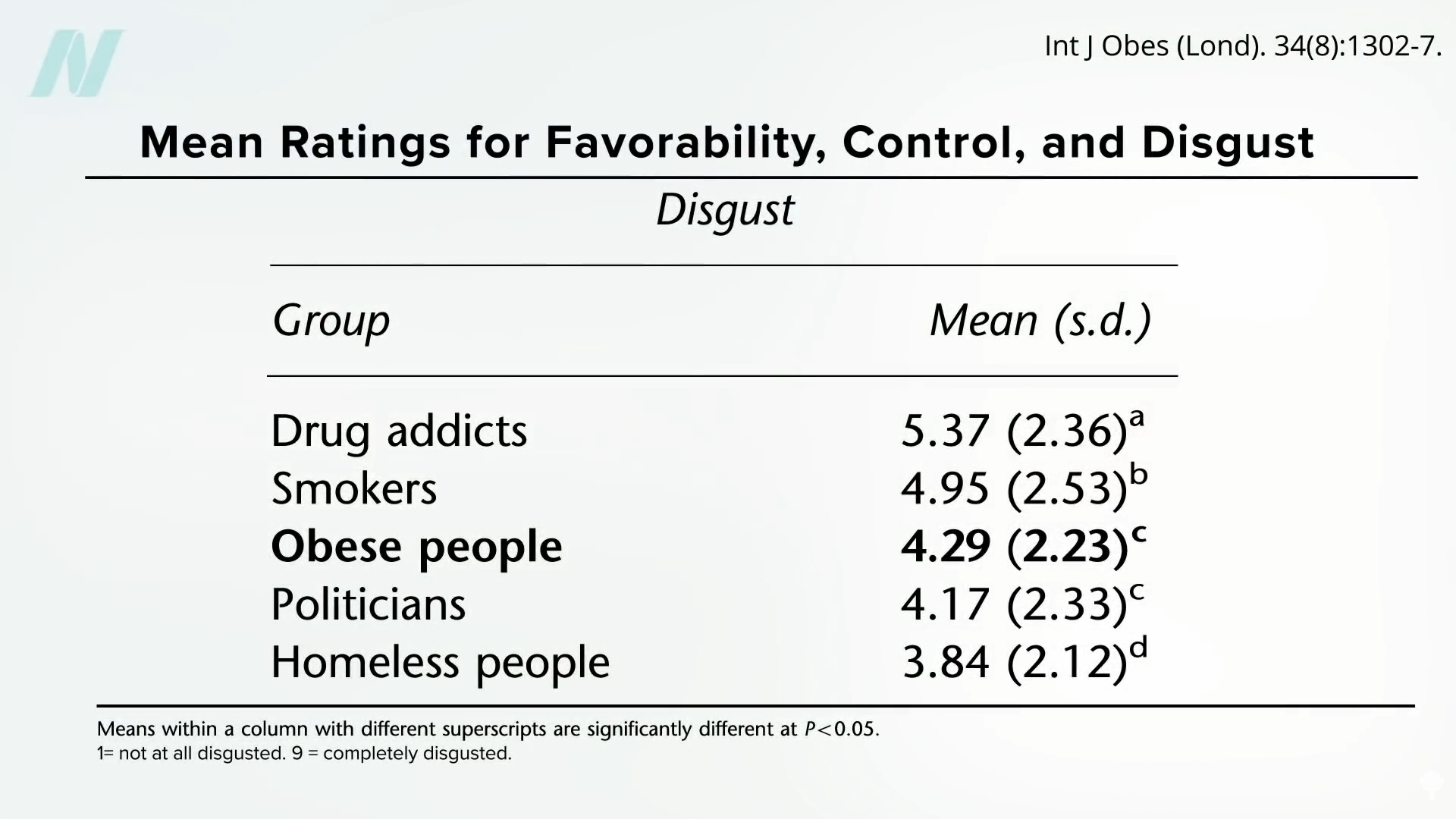
Attitudes towards weight can also be quantified through surveys. In a comparative study examining sixteen stigmatized social groups, including individuals experiencing homelessness, obese people were found to be perceived as more disgusting than most. Only drug addicts and smokers were rated similarly or worse in terms of perceived disgust. While this finding is sobering, researchers noted an interesting parallel: obese individuals were rated as equally disgusting as politicians, suggesting a widespread and deeply ingrained negative perception across various demographics.
The Early Roots of Weight Stigma
The roots of weight stigma are surprisingly deep, manifesting at a very young age. Children as young as three years old have been observed to describe overweight peers with negative adjectives such as "mean," "stupid," "lazy," and "ugly." This negative language tends to intensify with age, indicating that societal prejudices are absorbed and internalized from an early stage of development.

A seminal study conducted in 1961 provided early, compelling evidence of this phenomenon. Children across diverse social, cultural, and ethnic backgrounds in California, Montana, and New York were shown pictures of children with various physical challenges, including a child with crutches, a child in a wheelchair, a child missing a hand, a facially disfigured child, and an obese child. In every group tested, the obese child was consistently ranked last in terms of likeability.
The concerning trend of weight stigma was further illuminated by a follow-up study in 2003, exactly 40 years later. Titled "Getting Worse: The Stigmatization of Obese Children," this research replicated the original study’s methodology. The findings revealed a disturbing continuation and exacerbation of the bias: the obese child was liked even less in the 2003 study than in 1961. This trend mirrors broader societal shifts, with national surveys indicating a nearly 70% increase in perceived weight discrimination since the mid-1990s.
Institutional and Familial Biases
The pervasiveness of weight stigma extends to crucial institutions and even familial relationships. Educational environments are not immune. A significant proportion of teachers and school staff surveyed expressed the belief that becoming obese is "one of the worst things that could happen to a person." This sentiment can translate into biased treatment and attitudes towards overweight students, potentially impacting their educational experiences and self-esteem.
Even parents, who are expected to provide unconditional support, can exhibit weight bias. Studies have shown that parents may offer less support for college education to their overweight daughters compared to their thinner siblings. As noted by prominent obesity researchers, "It is strong prejudice indeed when parents discriminate against their own children," highlighting the profound impact of weight stigma within the family unit.
Healthcare Professionals: A Critical Nexus of Stigma
Perhaps the most concerning arena for weight stigma is healthcare. A representative national survey revealed that over half of physicians held negative perceptions of obese patients, viewing them as "awkward, unattractive, ugly, and noncompliant." Furthermore, approximately a quarter of nurses agreed or strongly agreed with the statement, "Caring for an obese patient usually repulses me." These attitudes among healthcare providers can have serious repercussions for patient care.
The antagonism experienced by overweight and obese individuals in healthcare settings can lead to tangible negative health outcomes. For instance, obese women face a higher risk of developing certain cancers, including cervical, endometrial, and ovarian cancers. Despite these increased risks, they are less likely to receive recommended screenings. Studies indicate that morbidly obese patients have approximately half the likelihood of receiving recommended pelvic exams.
This disparity in care can be attributed to several factors, including potential patient avoidance due to anticipated stigma. However, some healthcare providers actively refuse care. A poll of OB/GYN practices in Florida found that as many as one in seven refused to see overweight women, setting weight cut-offs for new patients starting as low as 200 pounds. This exclusionary practice directly impedes access to essential medical services.
Even physicians who do not outright refuse patients can inadvertently provide substandard care due to implicit bias. Research involving physicians presented with migraine patient charts, varied by weight (average, overweight, or obese), found that those presented with an obese patient allocated approximately 28% less time to their care. Moreover, recorded doctor-patient interactions reveal that physicians tend to build "less emotional rapport with overweight and obese patients," suggesting a qualitative deficit in the patient-provider relationship.
The Paradox of Obesity Specialists
Alarmingly, even specialists in obesity management are not immune to harboring anti-fat attitudes. Surveys conducted between 2001 and 2013 indicated a worsening of these biases among obesity specialists. During this period, these professionals increasingly described "fat people as significantly more lazy, stupid, and worthless compared to thin people." This internal bias within the field dedicated to addressing obesity presents a significant challenge to effective patient care and public health initiatives.
The medical literature itself has not always been free from stigmatizing language. Examples exist, such as a statement in the Annals of Internal Medicine that declared, "Obesity is an aesthetic crime: it is ugly." Such language, even if framed as observation, contributes to the broader societal stigmatization of weight.
The Facade of Respect: A Deeper Concern
Despite these pervasive negative attitudes, a study titled "Obese Patients Overestimate Physicians’ Attitudes of Respect" revealed a concerning disconnect. While physicians harbored negative attitudes toward their obese patients, the same patients often reported satisfaction with their providers. The researchers concluded, "While physicians may be successfully playing the part, the lack of true respect suggests… the authenticity of the patient-physician relationship should be questioned." This suggests that while overt discrimination may be consciously avoided by some clinicians, the underlying bias can still undermine the quality and genuineness of care.
Broader Implications and Future Directions
The pervasive nature of weight stigma has profound implications for public health, individual well-being, and social justice. It contributes to delayed or avoided healthcare, exacerbates mental health issues such as depression and anxiety, and perpetuates harmful stereotypes that limit opportunities and foster social exclusion.
Addressing weight stigma requires a multi-pronged approach. This includes:
- Education and Training: Implementing comprehensive anti-bias training for healthcare professionals, educators, and the general public.
- Policy Change: Developing and enforcing policies that prohibit weight discrimination in employment, education, and healthcare.
- Media Representation: Promoting responsible and nuanced media portrayals of individuals of all sizes, challenging harmful stereotypes.
- Research and Awareness: Continued research into the causes and consequences of weight stigma, coupled with public awareness campaigns to foster empathy and understanding.
- Patient Empowerment: Supporting individuals who have experienced weight stigma and advocating for their rights and equitable treatment.
The ongoing struggle against weight stigma is not merely about accommodating diverse body types; it is about ensuring fundamental human dignity, equitable access to healthcare, and the creation of a more just and inclusive society for all. The next installment in this series will delve deeper into "The Burden of Weight Bias," exploring its far-reaching consequences.

