

The early months of 2016 have been marked by significant public pronouncements on climate change, with two high-profile media communications delivering potent messages that have resonated globally. Leonardo DiCaprio’s long-awaited Academy Award for Best Actor and Al Gore’s latest TED Talk have, in their distinct ways, amplified the urgency of the climate crisis while simultaneously offering pathways toward optimistic solutions, igniting a fresh wave of dialogue and potentially influencing public and political will.
DiCaprio’s Oscar Moment: A Platform for Planetary Action
Leonardo DiCaprio’s victory at the 88th Academy Awards on February 28, 2016, for his harrowing performance in "The Revenant" transcended the typical celebratory fanfare. His acceptance speech, delivered on one of the world’s most prominent stages, transformed into a fervent plea for immediate and collective action against climate change. This was not an abstract lament; DiCaprio grounded his message in tangible realities, urging a unified global response to what he characterized as the most critical threat facing humanity.
The actor’s powerful words, echoing across millions of television screens, served as a stark reminder of the scientific consensus on global warming and its escalating impacts. He specifically highlighted the need for a paradigm shift in how societies approach environmental stewardship. The speech’s significance was amplified by the fact that it was delivered in the context of the film itself, which depicted the brutal challenges of survival in a harsh natural environment, a subtle but potent allegory for the planet’s own struggle against human-induced environmental degradation.
Background of the Event: The Academy Awards, often criticized for its perceived detachment from pressing global issues, provided an unexpected but impactful platform. DiCaprio, a known environmental advocate for years, had been nominated multiple times without winning. His eventual triumph, coupled with his preparedness to use the spotlight for advocacy, marked a turning point in celebrity engagement with climate change. This particular year also saw increased media attention on climate-related events, including extreme weather patterns and ongoing international climate negotiations, creating a fertile ground for DiCaprio’s message to land with significant weight.
DiCaprio’s Key Points:
- Urgency of Climate Change: DiCaprio explicitly stated that climate change is "the most urgent threat to our species." This direct language aimed to cut through any remaining complacency.
- Collective Responsibility: He emphasized that the solution requires a collective, global effort, moving beyond individual actions to systemic change.
- Critique of "Politics of Greed": A particularly poignant moment was his condemnation of the "politics of greed" that have historically hindered progress on environmental issues. This implicitly targeted the influence of fossil fuel industries and vested interests that have often prioritized short-term economic gains over long-term ecological sustainability.
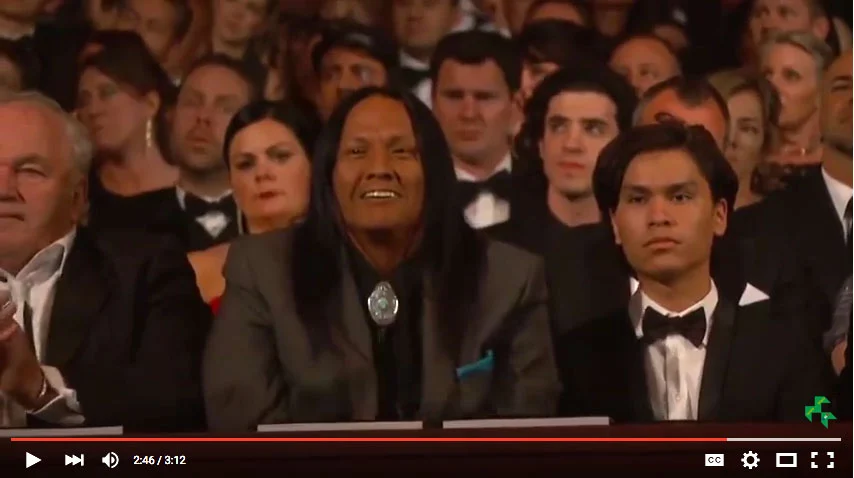
- Recognition of Indigenous Voices: DiCaprio’s special acknowledgment of "First Nations peoples" whose "voices have been drowned out by the politics of greed" was a crucial element. This highlighted the often-overlooked wisdom and historical stewardship of Indigenous communities, who are frequently on the front lines of climate impacts and possess invaluable knowledge of sustainable living. This call for amplifying marginalized voices underscored a commitment to environmental justice.
Inferred Reactions and Implications: DiCaprio’s speech likely generated a spectrum of reactions. Environmental organizations lauded his courage and the amplified reach of their message. Climate scientists and activists saw it as a vital endorsement, potentially galvanizing public support and pressuring policymakers. Conversely, those resistant to climate action or critical of celebrity activism might have dismissed or downplayed his remarks.
The immediate implication was a surge in media coverage and social media discussion surrounding climate change. DiCaprio’s words, coming from a globally recognized figure, offered a powerful counter-narrative to the often-discouraging statistics and dire predictions. It provided a moment of shared concern and a call to action that was accessible to a broad audience, potentially inspiring a new generation of activists and environmentally conscious citizens.
Al Gore’s TED Talk: A Case for Optimism Amidst the Crisis
Complementing DiCaprio’s urgent call to action, Al Gore’s TED Talk, delivered in early 2016, offered a different but equally vital perspective: a compelling case for optimism on climate change. Gore, a Nobel Laureate and a pivotal figure in raising global awareness about the climate crisis through his 2006 documentary "An Inconvenient Truth," returned to the stage to present a nuanced and forward-looking assessment.
Gore’s approach acknowledged the continuing seriousness and undeniable ongoing effects of climate change, a crucial grounding in reality. However, he strategically shifted the narrative to highlight the significant progress being made and the emergent possibilities for a sustainable future. His talk aimed to counter the pervasive sense of despair that can paralyze action, arguing that the solutions are not only available but are actively being implemented, creating a virtuous cycle of innovation and positive change.
Background of the Event: TED Talks are renowned for their platform of "ideas worth spreading." Al Gore’s participation in this format allowed him to present complex information in an engaging and accessible manner. His previous work had established him as a leading voice on climate change, and this latest presentation was keenly anticipated as an update on the state of the global effort. The timing was also significant, following the landmark Paris Agreement reached in December 2015, which provided a crucial international framework for climate action.
Gore’s Key Arguments:
- Acknowledging the Severity: Gore did not shy away from the ongoing and worsening impacts of climate change, underscoring the need for continued vigilance and mitigation efforts.
- Highlighting Progress: The core of his optimism lay in detailing the tangible advancements being made. This included:
- Renewable Energy Growth: He likely presented data on the exponential growth of solar and wind power, emphasizing their increasing affordability and efficiency.
- Technological Innovation: Gore would have discussed breakthroughs in energy storage, carbon capture, and energy efficiency, showcasing human ingenuity in addressing the challenge.
- Policy Shifts: He would have pointed to the increasing number of countries and corporations committing to emissions reductions and renewable energy targets.
- Economic Opportunities: The talk likely framed the transition to a green economy not as a burden, but as a source of new jobs, economic growth, and innovation.
- The Power of "What Is Now Possible": Gore’s central theme was the transformative potential of current developments. He presented a vision of a future where clean energy is abundant, sustainable practices are the norm, and the planet is on a path to recovery.
Supporting Data and Context:
To bolster his case, Gore would have likely drawn upon a wealth of data and statistics. For instance, reports from the International Energy Agency (IEA) and the International Renewable Energy Agency (IRENA) consistently show significant year-on-year increases in renewable energy deployment. Data from organizations like BloombergNEF would have illustrated the dramatic cost reductions in solar photovoltaic (PV) and wind power over the past decade, making them competitive with, and often cheaper than, fossil fuels in many regions.
The Paris Agreement itself, with its commitment from nearly 200 nations to limit global warming to well below 2 degrees Celsius, preferably to 1.5 degrees Celsius, above pre-industrial levels, serves as a crucial piece of background context. Gore’s message likely reinforced the importance of this agreement and highlighted how existing and emerging solutions could help nations meet their commitments.
Inferred Reactions and Implications: Gore’s optimistic outlook was likely met with enthusiasm by those already engaged in climate action, providing a much-needed morale boost. It offered a counter-narrative to the often-overwhelming sense of doom associated with climate change, encouraging continued participation and investment. For policymakers and business leaders, his talk would have underscored the economic and technological viability of climate solutions, potentially influencing investment decisions and policy frameworks.
The implication of Gore’s TED Talk is the reinforcement of a narrative that links environmental responsibility with economic progress and human ingenuity. By showcasing what is already being achieved, he provided a tangible blueprint for the future, demonstrating that a sustainable world is not a utopian fantasy but an achievable reality. This approach can empower individuals and communities by showing them that their efforts contribute to a larger, positive movement.
The Synergy of Urgency and Optimism
The impact of these two distinct, yet complementary, communications in early 2016 cannot be overstated. DiCaprio’s impassioned plea on the global stage of the Oscars served as a powerful wake-up call, emphasizing the immediate and dire threat of climate change and the moral imperative to act. His focus on the marginalized and the critique of greed resonated deeply, calling for a more just and equitable approach to environmental solutions.
Conversely, Al Gore’s TED Talk offered a roadmap of hope, demonstrating that the solutions are not only available but are rapidly evolving and becoming economically viable. His articulation of progress and potential provided the "how" to DiCaprio’s "why," offering a vision of a future where humanity has successfully transitioned to a sustainable path.
Broader Impact and Implications:
- Elevated Public Discourse: Together, these messages significantly elevated the public discourse surrounding climate change, moving it from a niche environmental issue to a mainstream concern with broad societal implications.
- Increased Political Pressure: The amplified public awareness and concern generated by these high-profile statements likely translated into increased pressure on political leaders to take more decisive action on climate policy.
- Economic Signaling: Gore’s emphasis on the economic opportunities of the green transition, coupled with the growing global momentum towards renewable energy, sent a strong signal to investors and businesses, encouraging further investment in sustainable technologies and practices.
- Empowerment and Engagement: By presenting both the urgency and the solutions, these communications empowered individuals and communities. They provided a framework for understanding the problem and a sense of agency in contributing to the solution. DiCaprio’s call to action and Gore’s vision of possibility offered a powerful dual message that could galvanize a new wave of environmental activism.
- Long-Term Influence: The messages from DiCaprio and Gore are likely to have a lasting influence on how climate change is perceived and addressed. They have contributed to a growing global consciousness that recognizes the interconnectedness of environmental health, social justice, and economic prosperity, paving the way for more comprehensive and effective climate action in the years to come.
In conclusion, the combined impact of Leonardo DiCaprio’s Oscar speech and Al Gore’s TED Talk in early 2016 marked a pivotal moment in the ongoing global conversation about climate change. They served as powerful catalysts, injecting both urgency and optimism into the discourse, and highlighting the critical need for collective action grounded in both scientific understanding and a vision of a sustainable future.

