

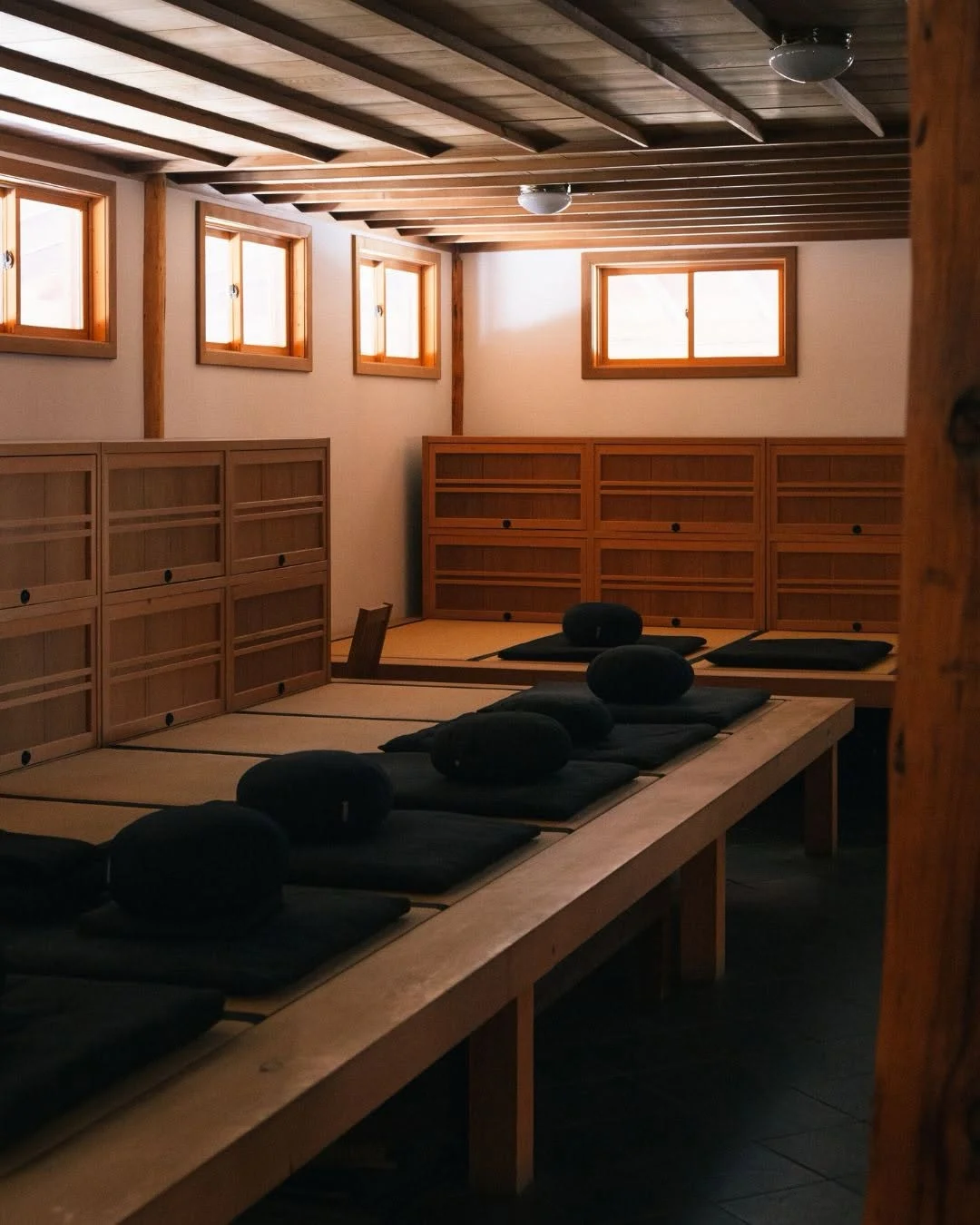
At the age of 24, a pivotal decision reshaped the trajectory of my life: I chose to enter a Zen monastery. This wasn’t a sudden impulse, but rather the culmination of seven years immersed in the practice of insight meditation, a period punctuated by frequent retreats. Meditation had become the bedrock of my existence, yet my life outside these periods of deep introspection felt fragmented. I would oscillate between intense spiritual practice and the necessity of earning a living through transient jobs like waiting tables or painting houses, diligently saving each penny to return to retreat.
It was during this phase that I discovered the Crestone Mountain Zen Center, nestled high in the majestic mountains of southern Colorado. The environment was breathtaking: fourteen-thousand-foot peaks loomed overhead, a vast desert valley unfolded below, and a serene creek meandered through the monastery grounds. The monastery itself exuded a profound beauty. Each room featured a statue, seemingly offering silent guidance on posture and presence. The community was deliberately small and intensely dedicated, comprised of individuals who had committed years, even decades, to their practice. It felt like a sanctuary where genuine maturation was not just possible, but actively fostered. Our days began before dawn, at 3:30 AM. In the hushed darkness, we would don our robes and proceed to the meditation hall, where we sat in profound stillness, facing the wall. The monastic discipline extended beyond the meditation hall, permeating every aspect of our lives. We bowed upon entering rooms, bowed when encountering fellow practitioners on the paths, and shared meals and work with a unified intention. Nearly every moment of the day was imbued with this singular purpose.
Within this structured environment, my practice deepened, and for the first time, I glimpsed a path where my entire life could be dedicated to the dharma. My teacher at Crestone, Zentatsu Richard Baker Roshi, offered a profound perspective on renunciation, describing it as a source of power derived from limitation. He articulated, "When we limit ourselves, when we really choose one thing, it empowers that thing and shapes our lives around that thing. We give something up to empower our lives." This concept resonated deeply, offering a framework for understanding the sacrifices inherent in a life devoted to spiritual pursuit.
Echoes of Divergent Paths: Friendship and Formative Choices
The stark contrast between my chosen path and the lives of my peers became acutely apparent during my college years. I had a close friend who shared my passion for writing. We would meticulously critique each other’s work, engage in lengthy discussions about literature, and harbored a shared ambition to become published authors.
Following graduation, our paths diverged dramatically. She relocated to New York City to pursue a career as a publicist at Vintage, while I entered the monastic life. At the time, I viewed her career choice as a compromise, a form of "selling out." Conversely, she found my decision to embrace monasticism to be peculiar, even outlandish.
Approximately a year later, she shared an email with a group of our mutual friends detailing the chaotic realities of navigating life in Manhattan. She recounted an incident where she had managed to lock herself out of her apartment three times in a single day, each time requiring the assistance of the same increasingly exasperated locksmith. Another friend on the email thread, an editor at the Village Voice, ingeniously transformed her anecdote into a published piece. This article subsequently caught the attention of an editor at Riverhead Books, who approached her with an offer to write a book.
The book she penned became a bestseller, gracing the pages of The New York Times. Suddenly, she was a literary celebrity, hobnobbing with the very authors we had once debated passionately in college coffee shops. In the wake of her burgeoning success, she ceased returning my calls. The sting of this perceived rejection, this widening chasm in our shared history, was palpable.
A similar experience unfolded with another friend who had secured significant equity in a burgeoning tech company. He invited me to his wedding in Napa, but the cost of the hotel and the flight proved prohibitive. The distance between our lives grew, and our friendship gradually faded.
The lingering pain of these severed connections and the sense of separation remains. Updates on my friends’ lives – their careers, marriages, residences, literary achievements, and financial successes – arrived through emails, phone calls, and infrequent visits. Meanwhile, my own existence was becoming increasingly focused, narrowing in scope but deepening in intensity. I owned very little, possessed almost no financial resources, and my days were largely structured by the monastic routine. Month after month, I would rise before dawn, don my robes, sit in meditation, engage in manual labor, study Buddhist texts, and then sit again.
There was an undeniable and profound pleasure in this disciplined existence. I cherished the gravity of our pursuit, the aesthetic beauty of the monastic forms, and the deep intimacy forged through practicing alongside the same individuals day after day. I reveled in the sense of having my life coalesced around a singular, profound purpose.
However, the arrival of news from the outside world, detailing the lives of others, would inevitably cast a shadow. In contrast, my deliberately simple life would momentarily appear inadequate. Questions would arise: Why had I abandoned my writing? What else was I missing out on? Who else could I be spending my time with if not dedicating it to the flowing black robes of monastic life?
Six years represent a significant portion of one’s twenties. By the time I departed Crestone, some of the life paths I had envisioned for myself at 24 were no longer viable possibilities. The choice to embrace a monastic life involved a conscious renunciation of a multitude of potential futures.
The Arithmetic of Happiness: Understanding Sacrifice
The ancient Buddhist scripture, the Dhammapada, offers a timeless insight: "If by renouncing a lesser happiness one may realize a greater happiness, let the wise one renounce the lesser, having regard for the greater." On paper, this equation seems straightforward. However, in the lived experience of an individual, grasping that the "lesser happiness" is indeed still a form of happiness presents a significant challenge.
At 24, I possessed a clear understanding of what I was relinquishing. I knew the joy of late-night conversations with friends, the satisfaction of creative writing, the allure of travel, the ecstasy of falling in love, and the simple pleasure of an unscheduled afternoon. I could envision a future career path because I had peers embarking on their own professional journeys. Marriage, financial security, urban living, and authorship were all tangible possibilities I could readily imagine. These were not perceived as temptations in the sense of being inherently detrimental; rather, they were simply desires.
What I understood far less clearly was the other side of this profound equation. Despite years of dedicated meditation practice, I could not fully comprehend the transformative impact that six years of monastic life would have on me. The cumulative effect of thousands of hours of silent sitting, of living within a community dedicated to spiritual realization, and of making the same conscious choice each morning for years remained an unknown variable.
This inherent uncertainty is precisely what makes the concept of renunciation so complex to articulate. It is tempting to frame the relinquished aspects of life as mere illusions or counterfeit pleasures. However, the Dhammapada verse does not dismiss these as trivial; it refers to them as happiness.
The lost friendships represented a genuine loss of happiness. The decision to cease writing meant foregoing a different form of happiness. I could envision an alternative life brimming with art, music, love, intellectual curiosity, and playful exploration. Such a life would undoubtedly contain its own forms of happiness, and the pain of relinquishing that potential was very real.
The Pervasive Influence of Renunciation Beyond Monasticism
The fundamental arithmetic of renunciation is not confined to the walls of a monastery. Engaging in a regular meditation practice, for instance, requires a reallocation of time. Choosing to sit for forty-five minutes means foregoing forty-five minutes of scrolling through social media, reading a novel, or sleeping. Committing to a week-long retreat necessitates foregoing a weeklong vacation with loved ones.
Some of these choices are relatively easy to make. Others are more challenging. A vacation with cherished family members can be an immensely rewarding experience. Similarly, the simple pleasures of sleeping in late, accumulating wealth, engaging with popular culture, or enjoying a meal at a restaurant are all valid and desirable. The practice of meditation does not demand a denial of these realities.
However, when the practice begins to hold genuine significance, individuals often find themselves making these choices consistently. An hour dedicated to practice expands into a morning, then a day, and eventually an entire week. Over the course of decades, these deliberate choices accumulate, representing a substantial portion of an individual’s life. This gradual but persistent commitment to a chosen path, often at the expense of other appealing opportunities, is a universal aspect of dedicated practice, whether spiritual or otherwise.
The Evolution of Practice: Outgrowing the Sanctuary
After six years, the confines of the monastery began to feel constricting. My meditative practice, which had flourished so profoundly in the initial five years, seemed to have reached a plateau. I found myself struggling to stay awake during zazen sessions. Furthermore, my relationship with my teacher became increasingly strained. I could no longer overlook perceived inconsistencies in his conduct and struggled to reconcile these observations with my commitment to him.
More significantly, certain aspects of my own being felt unexpressed and undeveloped. I harbored a desire to contribute to the broader cultural discourse, to write books, to engage in meaningful conversations with diverse groups of people, and to immerse myself in the vibrant, often chaotic, fabric of everyday life. The very limitations that had once served as powerful shapers of my character now felt like constraints on my burgeoning aspirations for growth and expression.
Consequently, I made the difficult decision to leave. I departed with absolutely no clear plan for my future. The ensuing year was marked by a profound sense of disorientation and apprehension. Having spent the majority of my twenties in a monastery, I possessed virtually no marketable skills. The prospect of supporting myself seemed daunting. I briefly considered applying to business school, but the thought of dedicating my life to commerce felt deeply unappealing. A similar, even stronger, aversion arose when I contemplated law school.
Ultimately, I decided to pursue a PhD in psychology. This path seemed to offer the closest approximation to the work I had already been doing. People had sought me out at the monastery to discuss their lives, and I had learned to listen with empathy, offer support, and attempt to guide them.
When I first entered Crestone at 24, I relinquished one potential life without any certainty of what the monastic experience would ultimately offer me. Six years later, I repeated a similar act of faith, leaving a life I cherished without knowing what would replace it. This cyclical process of stepping into the unknown, driven by a commitment to a deeper unfolding, became a defining characteristic of my journey.
Unexpected Harvests: Lessons from the Altar and Community
My twenties were largely dedicated to mastering the seemingly mundane tasks of monastic life: trimming altar candles, arranging ashes, dusting the Buddha statues, and arranging flowers. At the time, I could not conceive of how these activities might prepare me for future endeavors. I often questioned their practical utility. Who, in the grand scheme of things, would ever need to know how to tend to an altar?
The same held true for the experience of living within the monastic community itself. Privacy was a rare commodity, and respite from constant interaction with others was virtually non-existent. I used to jest that monastic life was akin to being married to a dozen individuals I hadn’t chosen, some of whom I found actively irritating. There was no escape when interpersonal friction arose. We were compelled to continue sitting together, eating together, working together, and facing each new day collectively.
Years later, after entering into marriage, I began to truly appreciate the profound lessons gleaned from those years of communal living. Marriage, and indeed all intimate relationships, can be challenging. Human connections are often fraught with difficulties. Yet, my six years in the monastery had provided me with invaluable practice in navigating closeness with others, even when experiencing discomfort, irritation, hurt, or simply a desire for solitude. This ability to remain present and engaged, despite internal resistance, proved to be a foundational skill for sustained relationships.
Other aspects of my life also resurfaced in unexpected forms. I believed I had abandoned my aspirations as a writer upon entering Crestone. In a sense, I had: the specific literary career I had envisioned in college never materialized. However, I did indeed become an author. Instead of crafting literary novels, I began writing about the dharma, a path that allowed me to integrate my spiritual practice with my creative impulses.
My current life encompasses nearly everything I desired at 24, albeit in forms I could scarcely have imagined then. I share a happy marriage. I have a rich network of friends, including many from my monastic years, some from college, and others I have met along the way. I teach the dharma, sharing its principles and practices with others. I have achieved a comfortable level of financial security.
Each morning, I awaken with a profound sense of gratitude for my good fortune. When I encounter individuals living lives of conventional success, the same kind of lives that once made my own appear comparatively meager, I no longer experience the pang of comparison. I can recognize the inherent value and desirability in their achievements without coveting their life paths for myself. My prevailing sentiment is one of genuine appreciation: "Good for them."
The Unfolding of the Greater Happiness: A Calculated Risk
At times, I reflect on the 24-year-old version of myself, sitting in the Crestone meditation hall, facing a blank wall while news of other, seemingly more vibrant lives reached him from afar. I would not presume to tell him that any of it was insignificant. It mattered deeply to him then, and indeed, elements of it still hold significance for me now. He was relinquishing things of genuine worth, undertaking a considerable risk without any certainty of what those years in the monastery would ultimately yield.
Perhaps this is the most challenging aspect of the Dhammapada verse: we typically must relinquish the lesser happiness before we can truly understand and appreciate the greater one. Our choices are often made with incomplete information, based on an incomplete understanding of the potential outcomes.
At 24, the lives I was not living were far more vivid and discernible than the life I was actively constructing. I could not have conceived of the life I lead today. My sole guiding principle was an intuitive sense of the direction I wished to travel, a deep-seated yearning for a path that resonated with my innermost being. This profound trust in that inner compass, even in the face of uncertainty and the relinquishing of tangible pleasures, was the true essence of my journey.

