


The history of diabetes management offers a compelling testament to the power of dietary intervention, with oatmeal emerging as a surprising and remarkably effective cornerstone of treatment long before the advent of insulin therapy. In the early 20th century, German physician Carl von Noorden’s pioneering work with an oatmeal-centric diet provided a lifeline for countless individuals diagnosed with diabetes, a condition then often considered a death sentence. Von Noorden’s groundbreaking findings, published in 1903, initially met with significant skepticism from the medical establishment. However, the overwhelming clinical evidence that accumulated in the subsequent years gradually silenced the critics and firmly established the oatmeal diet as a vital therapeutic strategy.
The impact of von Noorden’s research was profound, influencing prominent physicians of the era. Among them was Dr. James B. Herrick, a renowned American physician who, despite his initial reservations, began incorporating the oatmeal regimen into his practice. Herrick was reportedly astonished by the dramatic improvements observed in his patients. This positive experience culminated in his influential 1909 declaration, asserting that no child or adolescent with diabetes should be denied the potential benefits of this "oatmeal cure." This advocacy underscored the growing recognition of dietary approaches in managing the disease when pharmaceutical interventions were severely limited.
Further bolstering the reputation of the oatmeal diet was Dr. Elliott Joslin, a towering figure in the field of diabetes research and the founder of the world’s oldest and largest diabetes clinic. Joslin described the effects of the oatmeal regimen as "sometimes magical," acknowledging it as an "unsolved mystery" and "one of the greatest puzzles in diabetes" of his time. While the precise mechanisms were not fully understood, researchers had begun to identify crucial dietary components that influenced its efficacy. A key observation was the absolute necessity of excluding animal protein. It was recognized that the presence of animal protein invariably undermined the beneficial effects of the oatmeal-type diets. This empirical finding foreshadowed modern understanding of insulin resistance, the underlying cause of prediabetes and type 2 diabetes, which is exacerbated by animal protein intake, while plant-based foods are known to enhance insulin sensitivity.
The Science Behind Oatmeal’s Efficacy
More than a century after von Noorden’s initial discoveries, scientific research has illuminated the mechanisms by which oatmeal exerts its potent benefits for individuals with diabetes. It is now well-established that a diet rich in whole grains, including oats, is associated with a reduced risk of developing diabetes. Numerous randomized controlled trials, as detailed in research such as NutritionFacts.org’s video "How Does Oatmeal Help with Blood Sugars?", have consistently demonstrated that oats significantly improve both short-term and long-term blood sugar control. Furthermore, these studies have also reported positive effects on cholesterol levels.
The primary driver of these benefits is believed to be a specific type of fermentable fiber found in oats called beta-glucan. This soluble fiber plays a crucial role in modulating the gut microbiome, which in turn influences metabolic health. One of the recognized cholesterol-lowering mechanisms of oatmeal consumption is its capacity to positively alter the composition and function of intestinal bacteria, creating a more favorable internal environment for metabolic regulation.
The Power of Fiber: A Prebiotic Marvel
The fiber content of oatmeal, particularly beta-glucan, is a key determinant of its therapeutic value. Even modest amounts of fiber can have a substantial impact. Beneficial gut bacteria, often referred to as the gut flora, ferment dietary fiber to produce short-chain fatty acids (SCFAs). These SCFAs possess significant anti-inflammatory properties and play a vital role in maintaining overall health, including metabolic health.
Dozens of randomized controlled trials have provided compelling evidence that the types of fiber found in oats and legumes are instrumental in improving long-term blood sugar control in individuals with diabetes. The explanation lies in the ability of dietary fiber to selectively promote the growth of beneficial gut bacteria, which can then help alleviate the mechanisms underlying type 2 diabetes.

Specifically, oat fiber acts as a prebiotic, fostering the proliferation of beneficial bacterial species such as Lactobacillus and Bifidobacteria. The synergistic effect of a diet low in animal protein and animal fat, combined with a rich supply of prebiotic fiber, explains why oatmeal-based diets became a standard component of diabetes management for decades.
Rapid and Lasting Improvements
The remarkable efficacy of oatmeal in managing diabetes is not only about long-term benefits but also about rapid results. Studies, including those discussed in the NutritionFacts.org video "Oatmeal Diet Put to the Test for Diabetes Treatment," suggest that even a few days of incorporating oatmeal into the diet can yield beneficial effects that persist for approximately a month.
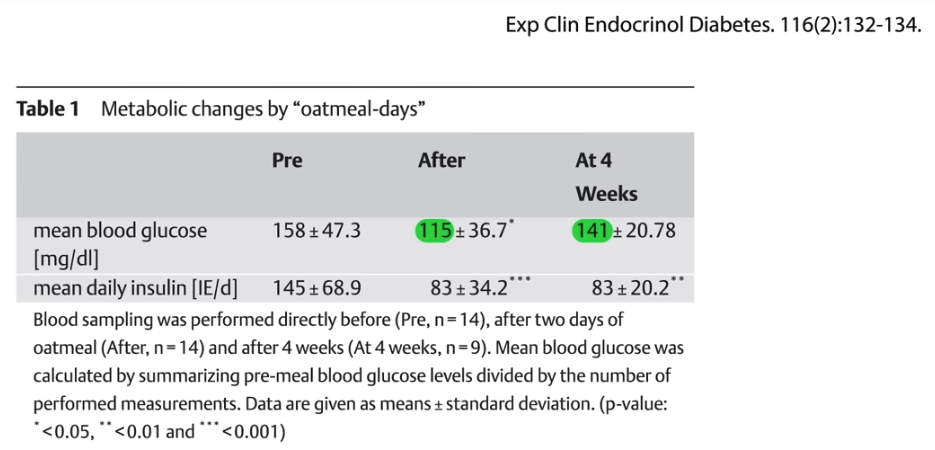
One notable randomized, controlled, crossover trial revealed that in just two days, individuals on an oatmeal diet experienced a significant reduction in their insulin needs, dropping by approximately 40% compared to those on a calorie-restricted diabetic diet alone. Crucially, a measure of long-term blood sugar control, assessed four weeks later, reflected these immediate improvements.
Further research has corroborated these findings. Studies have shown that a two-day oatmeal intervention can substantially decrease the required insulin dosage and improve blood sugar levels, with beneficial effects extending for up to four weeks. In one study involving patients with uncontrolled type 2 diabetes, a two-day oatmeal diet led to a 40% reduction in insulin dose and an almost normalization of average blood sugar levels. Remarkably, even after participants resumed their regular diets, researchers observed a sustained and significant reduction in insulin dosage and improved mean blood sugar levels for several weeks post-intervention.
The impact extends beyond insulin dosage. When individuals are placed on diets rich in oats, beans, fruits, vegetables, and nuts, there is a notable increase in the population of gut fiber-feeders that produce beneficial short-chain fatty acids. This dietary shift has been associated with a drop in fasting diabetic blood sugars by approximately 25% within one month. The degree of improvement in blood sugar control was found to be directly correlated with the number of fiber-feeding bacteria fostered. A greater diversity and abundance of fiber-promoted SCFA producers were linked to better improvements in hemoglobin A1c levels, a key indicator of long-term blood sugar management.
Potential Downsides and Considerations
While the benefits of oatmeal for diabetes management are substantial, it is crucial to acknowledge potential risks and necessary precautions. Any significant dietary intervention aimed at improving blood sugar control, particularly one as potent as an oatmeal-focused diet, requires close medical supervision. If a physician prescribes blood sugar-lowering medications, they must be prepared to rapidly adjust or "deprescribe" these medications as the patient’s condition improves. Failure to do so could lead to dangerously low blood sugar levels (hypoglycemia), which can have severe consequences.
Furthermore, individuals who may have difficulty recognizing or reporting symptoms of low blood sugar should exercise particular caution. The primary "downside" of implementing dedicated oatmeal days is that the intervention may be highly effective, potentially leading to overmedication if not managed carefully. Therefore, such dietary strategies should always be undertaken under the watchful eye of a qualified healthcare professional.
Understanding the Glycemic Index of Oatmeal
The form of oatmeal consumed plays a role in its glycemic impact. While all whole grains are beneficial, intact whole grains generally offer superior advantages. Oat groats, which are whole oats with their inedible outer husks removed, represent the least processed form.
When oat groats are processed, they can be transformed into various types of oatmeal:
- Steel-cut oats (also known as pinhead or Irish oats) are made by slicing oat groats into two to four pieces. These are considered a low-glycemic-index (GI) food, typically scoring below 55.
- Scottish oatmeal is produced by coarsely grinding oat groats.
- Rolled oats (often referred to as "old-fashioned" oats) are created by steaming and flattening oat groats. Both Scottish oatmeal and old-fashioned rolled oats generally have a glycemic index around 55.
- Instant oats undergo more extensive processing, including longer steaming and thinner rolling. These tend to have a higher glycemic index, scoring around 79. While this is higher than steel-cut or rolled oats, it is still generally lower than many highly processed breakfast cereals, which can reach GI values in the 80s and 90s.
For optimal blood sugar management, opting for less processed forms of oats, such as steel-cut or rolled oats, is generally recommended.
Enhancing Oatmeal for Palatability and Nutrition
Oatmeal, a classic whole-grain breakfast, offers a versatile foundation for a variety of culinary creations. Beyond its basic preparation, numerous options exist to enhance its flavor and nutritional profile. The "BROL" (Beans, Rolled Oats, Legumes) base, for instance, can be customized with a wide array of toppings.
For those with a preference for sweetness, a "chocolate-covered-cherry sensation" can be prepared using frozen dark red cherries, cocoa powder, dates, and nuts like walnuts or pumpkin seeds. This approach transforms a simple bowl of oatmeal into a decadent yet healthy treat.
Alternatively, the BROL bowl can be adapted for savory palates. Recipes incorporating sautéed greens, mushrooms, herbs, curry spices, or roasted vegetables offer a diverse range of flavorful and nutritious options. A quick search for "savory oatmeal" reveals an extensive collection of innovative dishes that cater to various taste preferences, demonstrating the adaptability of oatmeal as a culinary staple.
The historical significance of oatmeal in diabetes management, coupled with contemporary scientific understanding, underscores its enduring value. From its role as a life-saving intervention in the pre-insulin era to its current status as a scientifically validated dietary tool for improving metabolic health, oatmeal continues to be a powerful ally in the fight against diabetes. Its benefits, rooted in its rich fiber content and capacity to modulate the gut microbiome, offer a compelling argument for its inclusion in a balanced and health-conscious diet.

